

Free Ifalik Atoll Travel Guide & Mobile App
Explore Ifalik Atoll with free travel guides. Discover regional history, expert tips, proposed trips, and audio guides on web or mobile app.




Ifalik Atoll offers remote Carolinian island life, a sheltered lagoon, reef scenery and a rare chance to travel slowly through Yap State.
Read more about Ifalik Atoll
When is the best time to visit Ifalik Atoll?
Best: December–February · 30°C| Month | High (°C) | Rainfall (mm) |
|---|---|---|
| January (best) | 30 | 200 |
| February (best) | 30 | 250 |
| March | 30 | 300 |
| April | 31 | 350 |
| May | 31 | 400 |
| June | 31 | 450 |
| July | 31 | 500 |
| August | 31 | 450 |
| September | 31 | 400 |
| October | 30 | 350 |
| November | 30 | 300 |
| December (best) | 30 | 250 |
Getting to and around Ifalik Atoll
How to get there
Transportation
Best attractions in Ifalik Atoll
Ifalik’s attractions are primarily environmental and cultural rather than built or commercial. The ring of low coral islets, the protected lagoon and the open Pacific provide opportunities for shore walking, bird observation, photography and, when local conditions permit, snorkelling or swimming over reef areas. Such activities should be arranged with residents who understand passages, tides and customary access. The settlement itself is an important part of the visitor experience: homes, gardens, shoreline paths, canoes, churches and communal spaces reveal how an atoll community adapts to a narrow strip of land and a marine economy. There are no dependable networks of museums, ticketed monuments, restaurants or organised excursions. Visitors should not expect equipment hire, lifeguards, marked nature trails or a programme of daily activities. The strongest attraction is the relationship between island, lagoon and community, observed respectfully and without treating ordinary life as a performance. Weather may make some outings impossible, and fragile coral, nesting birds and private land require careful treatment. Ifalik is therefore best approached as a place for patient, locally guided exploration rather than as a conventional sightseeing destination.
-
 Tourist attraction
Ifalik Harbor
Explore Ifalik Harbor, a hidden gem in Yap with stunning waters, vibrant marine life, and rich cultural experiences for every traveler.
Best landmarks in Ifalik Atoll
Ifalik’s most significant landmarks are geographical and communal rather than monumental. The atoll’s enclosing reef and lagoon define both its appearance and its history, creating a sheltered marine space surrounded by low islets exposed to the Pacific. Shoreline vegetation, beaches and reef passages are important visual features, but they are also working parts of the community’s environment and should not be treated as unrestricted recreational property. Within the inhabited area, churches, community buildings, homes, canoe landings and cultivated plots help express the relationship between settlement and atoll resources. Their significance is social and practical rather than architectural in the grand European sense. There are no widely known castles, cathedrals or large archaeological complexes on Ifalik, and visitors should be wary of claims that assign famous sites from other Caroline Islands to this atoll. The strongest sense of place comes from seeing how a narrow coral environment supports homes, movement, food production and communal life, preferably with a local introduction explaining what may be visited and photographed.
-
Tourist attraction
Ifalik Harbor
Experience the stunning beauty of Ifalik Harbor, a tranquil gem in Yap perfect for snorkeling, diving, and soaking in nature's serenity.
Explore Ifalik Atoll on the map
Plan your trip on one map. See where the top cities, national parks and sights are, and book hotels and experiences in a few clicks.
Best hotels in Ifalik Atoll
Best bars in Ifalik Atoll
Ifalik has no established bar or nightclub district and should not be approached as a nightlife destination. Evening life is more likely to centre on households, conversation, community relationships, church or other local activities, and the quiet changes of light over the lagoon. Alcohol availability and acceptable behaviour may vary, so visitors should never assume that drinking is appropriate in public or that imported beverages can be obtained locally. Ask hosts about local expectations, keep noise low and avoid creating pressure for residents to entertain. After dark, practical considerations are significant: lighting may be limited, paths can be uneven and boat travel should not be attempted without experienced local guidance. The atoll’s evening appeal lies in its stillness, stars and ocean setting rather than in commercial entertainment.
-
Bar
Livehouse
Experience the vibrant nightlife at Livehouse, Tumon's go-to bar for creative cocktails, live music, and a lively atmosphere.
-
Bar
Mangrove Bay Bar
Experience the vibrant nightlife and local flavors at Mangrove Bay Bar, a tropical haven in Pohnpei.
-
Tourist attraction
Ifalik Harbor
Ifalik Harbor: A serene escape into the pristine beauty and rich culture of Yap's hidden paradise, ideal for diving and cultural exploration.
-
Bar
Mangroove Bar
Discover the vibrant nightlife of Weno at Mangroove Bar, where tropical flavors and lively atmosphere await every visitor.


Best nightclubs in Ifalik Atoll
Ifalik has no established bar or nightclub district and should not be approached as a nightlife destination. Evening life is more likely to centre on households, conversation, community relationships, church or other local activities, and the quiet changes of light over the lagoon. Alcohol availability and acceptable behaviour may vary, so visitors should never assume that drinking is appropriate in public or that imported beverages can be obtained locally. Ask hosts about local expectations, keep noise low and avoid creating pressure for residents to entertain. After dark, practical considerations are significant: lighting may be limited, paths can be uneven and boat travel should not be attempted without experienced local guidance. The atoll’s evening appeal lies in its stillness, stars and ocean setting rather than in commercial entertainment.
-
Tourist attraction
Ifalik Harbor
Ifalik Harbor: A tranquil escape in Yap, where stunning views, rich culture, and vibrant marine life await every traveler.
Best shops in Ifalik Atoll
Shopping on Ifalik is very limited and should not be a central reason for visiting. There is no dependable high street, craft market or shopping centre, and supplies are shaped by infrequent transport and the needs of the resident community. Visitors may occasionally find locally made items or food products through personal introductions, but these should be bought respectfully and never removed without clear permission. Do not assume that shells, coral, archaeological material or traditional objects are available as souvenirs; collecting natural material from reefs and beaches is inappropriate, and cultural items may carry meanings or ownership rights that are not obvious to outsiders. Bring essential toiletries, medicines, batteries, snacks and gifts before leaving Yap or another major supply point. A considered contribution to an agreed host arrangement is generally more useful than attempting to find commercial souvenirs, while photographs and memories should not come at the expense of community privacy.
-
Shopping mall
Micronesia Mall
Experience shopping, dining, and local culture all in one place at Micronesia Mall, Guam's top retail destination.
-
Hobby store
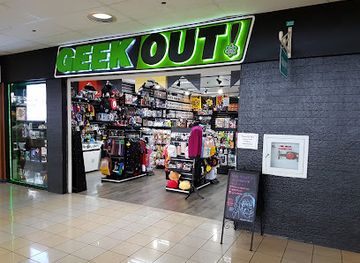
Geek Out
Discover a treasure trove of collectibles and trading cards at Geek Out in Guam's Micronesia Mall - paradise for hobbyists and pop culture enthusiasts.
-
Shopping mall
Island Mart
Discover the vibrant shopping experience at Island Mart in Weno, Chuuk, where local culture meets convenience and charm.
-
Tourist attraction
Ifalik Harbor
Explore the tranquil beauty of Ifalik Harbor, a hidden gem in Yap perfect for relaxation, adventure, and cultural immersion.


Get your free copy of our complete guide to Ifalik Atoll, delivered straight to you.
Everything on this page, from attractions and restaurants to essentials and local phrases, in one PDF you can read offline, print or share.
Already have an account? Sign in
Your Ifalik Atoll guide is ready.
We'll send it to · Not you? Sign out

Getting your guide ready…
We are putting together a fresh copy of the Ifalik Atoll guide. This can take up to a minute.
This can take a few moments. If your browser asks, choose Allow so the download can start. You'll find the guide in your Downloads folder.
Nothing happened? Download it again
Sorry, the guide is taking longer than usual. Please try again in a minute, or get it by email instead.
Ifalik Atoll essentials
Currency and Payment
Safety
Emergency Situations
Do's and Don'ts
Local Tips
From Eve
Local phrases worth knowing
You don't need to get them perfect. A few words go a long way, and locals appreciate the effort.
Basics
| English | Local | Say it |
|---|---|---|
| Hello | Mwaramut | [mwa-ra-moot] |
| Goodbye | Suhk | [sook] |
| Yes | Ai | [eye] |
| No | Ami | [ah-mee] |
| Please/You're welcome | Mwaramw | [mwa-ram-w] |
| Thank you | Kinisou | [ki-nee-sow] |
| Excuse me/Sorry | Kakuk | [kah-kook] |
| How are you? | Mwaramw a fengen? | [mwa-ram-w ah fen-gen] |
| Fine. And you? | Mwaramw. A fengen? | [mwa-ram-w ah fen-gen] |
| Do you speak English? | A na fengen English? | [ah nah fen-gen eng-lish] |
| I don't understand | A mwaramw a fengen | [ah mwa-ram-w ah fen-gen] |
Eating & Drinking
| English | Local | Say it |
|---|---|---|
| I'd like to see the menu, please | A mwara a fengen menu, mwaramw | [ah mwa-ra ah fen-gen men-oo, mwa-ram-w] |
| I don't eat meat | A mwaramw a fengen meat | [ah mwa-ram-w ah fen-gen meat] |
| Cheers! | Mwaramw! | [mwa-ram-w] |
| I would like to pay, please | A mwara a fengen pay, mwaramw | [ah mwa-ra ah fen-gen pay, mwa-ram-w] |
Emergencies
| English | Local | Say it |
|---|---|---|
| Help! | Fong! | [fong] |
| Go away! | Fahk ah! | [fahk ah] |
| Call the Police! | Na fengen Police! | [nah fen-gen po-leess] |
| Call a doctor! | Na fengen doctor! | [nah fen-gen doc-tor] |
| I'm lost | A mwaramw a fengen | [ah mwa-ram-w ah fen-gen] |
| I'm ill | A mwara a fengen | [ah mwa-ra ah fen-gen] |
Shopping
| English | Local | Say it |
|---|---|---|
| I'd like to buy... | A mwara a fengen buy... | [ah mwa-ra ah fen-gen buy] |
| I'm just looking | A mwaramw a fengen | [ah mwa-ram-w ah fen-gen] |
| How much is it? | A fengen a pinis? | [ah fen-gen ah pee-nees] |
| That's too expensive | A pinis e fengen | [ah pee-nees eh fen-gen] |
| Can you lower the price? | A na fengen a pinis? | [ah nah fen-gen ah pee-nees] |
Time & Numbers
| English | Local | Say it |
|---|---|---|
| What time is it? | A fengen a time? | [ah fen-gen ah time] |
| It's one o'clock | A fengen a one o'clock | [ah fen-gen ah one oh-clock] |
| Half past (10) | A fengen a half past (10) | [ah fen-gen ah half past (ten)] |
| Morning | Mwaramw | [mwa-ram-w] |
| Afternoon | A fengen | [ah fen-gen] |
| Evening | A fengen | [ah fen-gen] |
| Yesterday | A fengen | [ah fen-gen] |
| Today | A fengen | [ah fen-gen] |
| Tomorrow | A fengen | [ah fen-gen] |
| 1 | Tahi | [tah-hee] |
| 2 | Nau | [now] |
| 3 | Tolu | [to-loo] |
| 4 | Fā | [fah] |
| 5 | Lima | [lee-mah] |
| 6 | Ono | [oh-no] |
| 7 | Fitu | [fee-too] |
| 8 | Walu | [wah-loo] |
| 9 | Siyam | [see-yahm] |
| 10 | Sampu | [sahm-poo] |
Transport & Directions
| English | Local | Say it |
|---|---|---|
| Where's a/the...? | A fengen a ...? | [ah fen-gen ah ...?] |
| What's the address? | A fengen a address? | [ah fen-gen ah ad-dress] |
| Can you show me (on the map)? | A na fengen a map? | [ah nah fen-gen ah map] |
| When's the next (bus)? | A fengen a next (bus)? | [ah fen-gen ah next (bus)?] |
| A ticket (to ....) | A fengen a ticket (to ....) | [ah fen-gen ah tick-et (to ....)] |
History of Ifalik Atoll
Settlement of the Caroline Islands
Ifalik forms part of the wider settlement history of the Caroline Islands, whose communities developed sophisticated knowledge of reef passages, seasonal winds and open-ocean routes. The date of initial settlement on this specific atoll is not easily reduced to a single event, but Caroline Island societies were established long before European administration. Their cultural inheritance includes ocean voyaging, oral histories, land and lineage relationships, and practical knowledge of atoll environments. Much of the historical record remains embedded in community traditions rather than in monumental architecture.
Traditional Atoll Society and Navigation
For centuries, life on Ifalik was organised around extended families, customary authority, fishing, cultivation and the careful use of lagoon and reef resources. Carolinian navigational knowledge connected widely separated islands through memorised routes, stars, winds, swells and birds. These systems were not simply methods of transport: they supported exchange, kinship and political relationships across the ocean. Contemporary Ifalik remains part of this wider maritime cultural world, even though modern communications and national administration have altered how people travel and maintain connections.
European Contact and Spanish Rule
European ships entered the Caroline Islands during the early modern period, bringing the region into wider imperial maps and maritime networks. Spanish authority was asserted over the Carolines in the nineteenth century, although effective administration across distant atolls was limited. Missionary activity, trade and new patterns of outside contact gradually affected island societies. On small atolls such as Ifalik, the scale and consequences of these changes were shaped by distance, local leadership and the practical difficulty of maintaining regular colonial control.
German and Japanese Administration
Spain sold its remaining claims in the Caroline Islands to Germany in 1899, and German administration was followed by Japanese rule after the First World War under a League of Nations mandate. These periods connected the islands more closely with commercial, administrative and regional political systems, while also bringing new labour, religious and educational influences. Japanese rule ended during the Second World War, when the Caroline Islands formed part of the wider Pacific theatre, although the principal military concentrations were not evenly distributed across the remote atolls.
The Trust Territory Era
After the Second World War, the Caroline Islands became part of the United Nations Trust Territory of the Pacific Islands, administered by the United States. This period introduced expanded institutional links, modern schooling, public health programmes and new forms of transport and communication. It also encouraged migration and stronger connections between outer islands and administrative centres. For Ifalik and other remote atolls, the era brought opportunities and dependencies that continue to influence access to services, education, employment and government.
The Federated States of Micronesia
The Federated States of Micronesia became self-governing in stages before entering into a Compact of Free Association with the United States in the 1980s. Yap State, which includes Ifalik, manages many matters of local government within the federation. Modern Ifalik consequently combines customary community life with national services, outside employment, formal education and irregular links to regional centres. The atoll’s contemporary history is therefore one of continuity and adaptation: marine and communal traditions remain important while residents negotiate the practical pressures of remoteness, migration and climate change.
Ifalik Atoll in Photos
Browse through our photo collection highlighting the charm and character of the destination.
Neighbouring regions of Ifalik Atoll
The closest regions to Ifalik Atoll, if you have time for more than one.
-

-

-

-

-


Swipe for more regions
Explore more

Explore more of Micronesia
Discover Micronesia: A Pacific paradise with vibrant coral reefs, rich cultural heritage, and breathtaking landscapes.
Explore Micronesia