

Free Minnesota River Valley Travel Guide & Mobile App
Explore Minnesota River Valley with free travel guides. Discover regional history, expert tips, proposed trips, and audio guides on web or mobile app.


Explore Minnesota River Valley landscapes, Dakota history, prairie wildlife, state parks and welcoming towns from Mankato to the western border.
Read more about Minnesota River Valley
When is the best time to visit Minnesota River Valley?
Best: June, August–September · 22–27°C| Month | High (°C) | Rainfall (mm) |
|---|---|---|
| January | -6 | 23 |
| February | -4 | 20 |
| March | 6 | 36 |
| April | 13 | 58 |
| May | 21 | 86 |
| June (best) | 25 | 102 |
| July | 28 | 102 |
| August (best) | 27 | 97 |
| September (best) | 22 | 76 |
| October | 16 | 58 |
| November | 8 | 36 |
| December | -2 | 31 |
Getting to and around Minnesota River Valley
How to get there
Transportation
Top city travel guides in Minnesota River Valley
The cities of Minnesota River Valley, and the easiest places to base yourself.

Swipe for more cities
Best attractions in Minnesota River Valley
The Minnesota River Valley’s attractions are spread across a long corridor of state parks, wildlife areas, historic sites and river towns. Minneopa State Park near Mankato combines wooded ravines, prairie, waterfalls and a bison range, while nearby Flandrau State Park is centred on the Big Cobb River and a wooded river valley. Fort Ridgely State Park preserves a military-site landscape and offers trails with views across rolling farm country. Upper Sioux Agency State Park, west of Granite Falls, carries particular historical and cultural importance as well as bluff, prairie and river scenery. The Minnesota Valley National Wildlife Refuge, extending through parts of the eastern valley near the metropolitan area, protects wetland and floodplain habitat for wildlife observation. New Ulm’s museums and historic attractions provide context for German-American settlement and the U.S.-Dakota War, while the wider region includes local museums, galleries, community parks, farm landscapes and seasonal festivals. Hiking, paddling where conditions and access allow, fishing, cycling and birdwatching are the principal outdoor pursuits, but water levels and weather can change access quickly.
-
Shopping mall
Mall of America®
Explore the ultimate shopping and entertainment destination at Mall of America®, featuring shops, attractions, and dining options for every taste.
-
Zoo
Como Park Zoo & Conservatory
Discover the charm of Como Park Zoo & Conservatory, where wildlife encounters meet breathtaking botanical beauty in St. Paul, Minnesota.
-
Zoo
Minnesota Zoo
Experience wildlife like never before at the Minnesota Zoo, where adventure and education come together in a stunning natural setting.
-
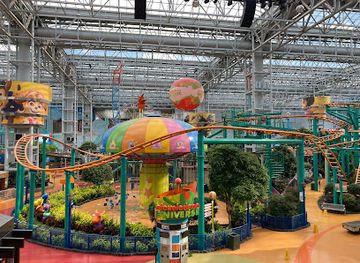
Theme park
Nickelodeon Universe
Experience the magic of Nickelodeon Universe, an indoor theme park filled with thrilling rides, beloved characters, and endless family fun in Minnesota.


Best landmarks in Minnesota River Valley
The Minnesota River itself is the valley’s defining landmark, occupying a broad glacial channel whose wooded bluffs and floodplain reveal the scale of the landscape. At New Ulm, the Hermann Monument rises above the city as a prominent symbol of German-American heritage, while the town’s historic buildings and civic monuments reflect its nineteenth-century development and memories of the 1862 conflict. Fort Ridgely’s surviving structures and grounds mark a strategically important military post overlooking the river country. Upper Sioux Agency State Park preserves the setting of a former federal agency and is one of the most significant places for interpreting Dakota history in the valley. Near Granite Falls, the river’s rapids and hydropower landscape demonstrate its continuing industrial importance. Minneopa Falls, within Minneopa State Park near Mankato, is a memorable natural feature created where the stream cuts through the surrounding terrain. Together, these landmarks show the valley as a place shaped by geology, Indigenous history, settlement, conflict, agriculture and water power.
-
State park
Minneopa State Park
Explore the breathtaking landscapes and outdoor adventures at Minneopa State Park in Minnesota, featuring stunning waterfalls, hiking trails, and diverse wildlife.
-
State park
Minneopa State Park Bison Drive
Explore Minneopa State Park, home to the majestic bison, breathtaking landscapes, and exciting outdoor adventures for the entire family.
-
Swimming lake
Red Jacket Valley Lake
Experience the serene beauty and recreational opportunities at Red Jacket Valley Lake in Mankato, Minnesota, a perfect getaway for nature lovers.
-
Scenic spot
Devils Gulch
Experience the breathtaking beauty of Devils Gulch in Mankato, Minnesota—nature's serene getaway with stunning landscapes and rich local lore.


Explore Minnesota River Valley on the map
Plan your trip on one map. See where the top cities, national parks and sights are, and book hotels and experiences in a few clicks.
Best hotels in Minnesota River Valley
Best restaurants in Minnesota River Valley
Dining in the Minnesota River Valley reflects both agricultural abundance and the histories of its communities. New Ulm is the clearest centre for German-influenced food and drink, with traditions of sausages, breads, pastries and beer expressed in restaurants, bakeries and local events. Across the valley, cafés, family restaurants, traditional pubs and rural eateries make use of familiar Midwestern ingredients, while seasonal produce appears at farmers’ markets, roadside stands and community markets. Mankato offers the broadest range of contemporary dining, international food and coffee shops, and smaller towns provide practical places to eat between excursions. Expect menus shaped by beef, pork, grains, dairy and garden produce rather than a single signature valley dish. Local breweries and bakeries are useful ways to explore regional tastes, but opening arrangements and seasonal availability vary, especially outside the larger towns.
-
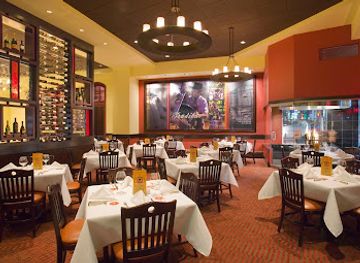
Brazilian
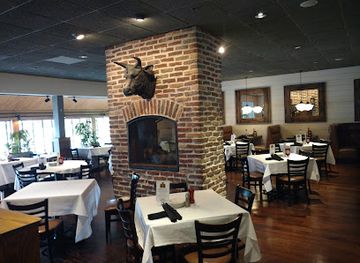
Fogo de Chão Brazilian Steakhouse
Experience authentic Brazilian churrasco at Fogo de Chão in Minneapolis - where exceptional flavors meet vibrant dining.
-
New American
Hazelwood Food and Drink
Experience the best of New American cuisine at Hazelwood Food and Drink in Bloomington, MN – where flavor meets creativity in every dish.
-
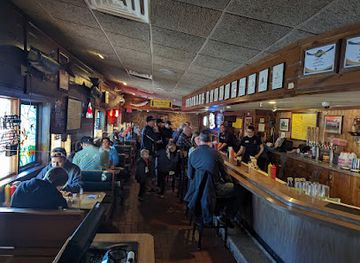
Hamburger
Lions Tap
Experience mouthwatering burgers at Lions Tap in Eden Prairie - where quality meets great service in a vibrant atmosphere.
-
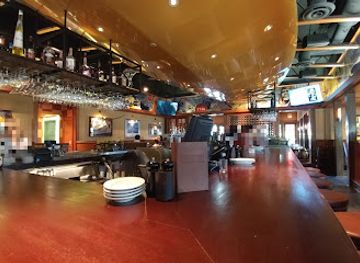
American
Doolittles Woodfire Grill
Discover Doolittles Woodfire Grill: where American flavors meet cozy ambiance in Eagan, MN.

Best bars in Minnesota River Valley
Evenings in the Minnesota River Valley generally centre on traditional pubs, breweries, restaurants, live music and community events rather than a large nightclub scene. Mankato has the widest choice of bars, music venues and late-evening restaurants, reflecting its role as the region’s largest city and a university centre. New Ulm’s evening culture is closely connected with German-American brewing and pub traditions, while smaller towns such as Redwood Falls, Montevideo and Granite Falls tend towards local bars, taverns and occasional live entertainment. Rural communities may have limited late-night options and longer distances between venues, so arrange transport in advance and do not rely on walking along highways. Seasonal festivals, theatre performances and town events can add evening activity, but programmes and opening arrangements change regularly.
-
American
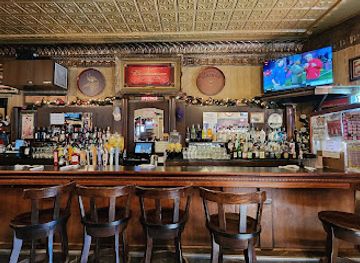
Pub 42
Experience the vibrant taste of American and seafood cuisine at Pub 42 in New Hope, Minnesota, where every meal is a delightful adventure.
-
Grill
River Inn Bar & Grill
Experience delicious grill cuisine and stunning river views at the River Inn Bar & Grill in Hanover, Minnesota, perfect for all visitors.
-
Bar
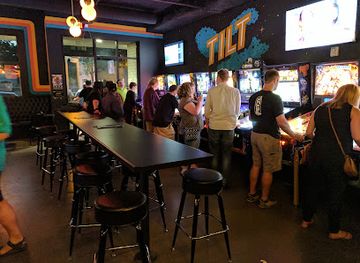
LITT Pinball Bar
Experience the ultimate fusion of amusement and flavor at LITT Pinball Bar, where pinball meets delicious food and drinks in Minneapolis.
-
Bar
Icehouse
Discover the lively ambiance and culinary delights of Icehouse, a premier bar and live music venue in the heart of Minneapolis.
Best nightclubs in Minnesota River Valley
Evenings in the Minnesota River Valley generally centre on traditional pubs, breweries, restaurants, live music and community events rather than a large nightclub scene. Mankato has the widest choice of bars, music venues and late-evening restaurants, reflecting its role as the region’s largest city and a university centre. New Ulm’s evening culture is closely connected with German-American brewing and pub traditions, while smaller towns such as Redwood Falls, Montevideo and Granite Falls tend towards local bars, taverns and occasional live entertainment. Rural communities may have limited late-night options and longer distances between venues, so arrange transport in advance and do not rely on walking along highways. Seasonal festivals, theatre performances and town events can add evening activity, but programmes and opening arrangements change regularly.
-
Night club
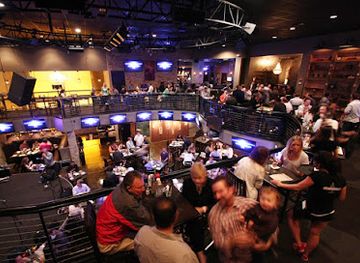
The Pourhouse
Experience the vibrant nightlife at The Pourhouse in Minneapolis, where delicious American cuisine meets live music and a lively atmosphere.
-
Gay bar
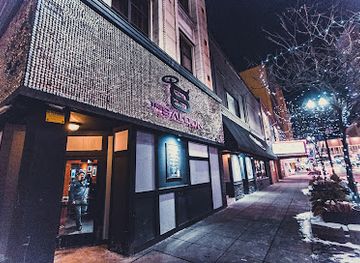
The Saloon
Experience the vibrant nightlife at The Saloon, Minneapolis' premier gay bar and dance club with an energetic atmosphere and inclusive community.
-
Night club
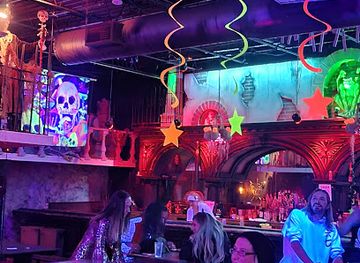
Ground Zero Nightclub
Discover the electrifying nightlife of Minneapolis at Ground Zero Nightclub, a vibrant venue for dancing and socializing with friends.
-
Night club
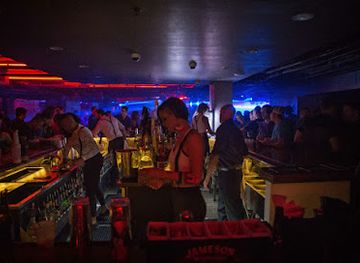
The Exchange & Alibi Lounge
Experience the vibrant nightlife at The Exchange & Alibi Lounge, where great music and lively crowds come together for unforgettable nights in Minneapolis.
Best shops in Minnesota River Valley
Shopping in the Minnesota River Valley is concentrated in the high streets and commercial areas of Mankato, New Ulm, Redwood Falls, Montevideo and other county-seat communities rather than in one continuous retail district. Mankato offers the broadest selection of national retailers, independent shops, galleries and practical outdoor goods, while New Ulm is the strongest stop for German-influenced food products, specialist gifts, books, crafts and bakery purchases. Farmers’ markets and seasonal stands offer produce, preserves, baked goods and locally made items, with availability varying through the growing season. Antique shops, craft galleries and small-town boutiques appear along historic main streets, although opening days may be limited outside larger centres. Regional breweries, bakeries, maple products, honey, pottery and handmade goods can make more meaningful souvenirs than generic merchandise; check agricultural and market regulations before carrying food across international borders.
-
Outlet mall
Twin Cities Premium Outlets
Experience incredible savings and a variety of top brands at Twin Cities Premium Outlets, the ultimate shopping destination in Eagan, Minnesota.
-
Shopping mall
Ridgedale Center
Explore Ridgedale Center: your ultimate shopping and dining destination in Minnetonka, Minnesota, featuring diverse shops and delightful eateries.
-
Shopping mall
The Shoppes at Arbor Lakes
Explore a vibrant shopping paradise at The Shoppes at Arbor Lakes, featuring top brands, dining delights, and a charming outdoor atmosphere.
-
Outlet mall
Albertville Premium Outlets
Discover unbeatable savings and a diverse selection of stores at Albertville Premium Outlets, your ultimate shopping destination in Minnesota.

Get your free copy of our complete guide to Minnesota River Valley, delivered straight to you.
Everything on this page, from attractions and restaurants to essentials and local phrases, in one PDF you can read offline, print or share.
Already have an account? Sign in
Your Minnesota River Valley guide is ready.
We'll send it to · Not you? Sign out

Getting your guide ready…
We are putting together a fresh copy of the Minnesota River Valley guide. This can take up to a minute.
This can take a few moments. If your browser asks, choose Allow so the download can start. You'll find the guide in your Downloads folder.
Nothing happened? Download it again
Sorry, the guide is taking longer than usual. Please try again in a minute, or get it by email instead.
Minnesota River Valley essentials
Currency and Payment
Safety
Emergency Situations
Do's and Don'ts
Local Tips
From Eve
Local phrases worth knowing
You don't need to get them perfect. A few words go a long way, and locals appreciate the effort.
Basics
| English | Local | Say it |
|---|---|---|
| Hello | Hi | [hai] |
| Goodbye | See ya | [si ya] |
| Yes | Yup | [yuhp] |
| No | Nah | [nah] |
| Please/You're welcome | Sure thing | [shur thing] |
| Thank you | Thanks | [thangs] |
| Excuse me/Sorry | Oh, sorry | [oh, sor-ree] |
| How are you? | How’s it going? | [how's it go-ing] |
| Fine. And you? | Good, how 'bout you? | [gud, how 'bout yoo] |
| Do you speak English? | You speak English? | [yoo speek ing-glish] |
| I don't understand | I don’t get it | [I don’t get it] |
Eating & Drinking
| English | Local | Say it |
|---|---|---|
| I'd like to see the menu, please | Can I see the menu? | [kan I see the men-yoo] |
| I don't eat meat | I'm a vegetarian | [I'm a veh-juh-ter-ee-an] |
| Cheers! | Cheers! | [cheers] |
| I would like to pay, please | Can I get the check? | [kan I get the chek] |
Emergencies
| English | Local | Say it |
|---|---|---|
| Help! | Help! | [help] |
| Go away! | Leave me alone! | [leev me uh-lone] |
| Call the Police! | Call the cops! | [call the cops] |
| Call a doctor! | Get a doctor! | [get a dok-tor] |
| I'm lost | I’m turned around | [I'm turned a-round] |
| I'm ill | I’m not feeling well | [I'm not feel-ing wel] |
Shopping
| English | Local | Say it |
|---|---|---|
| I'd like to buy... | I want to buy... | [I want to buy...] |
| I'm just looking | Just browsing | [just brow-zing] |
| How much is it? | What’s the price? | [what's the price] |
| That's too expensive | That’s a bit pricey | [that’s a bit pry-see] |
| Can you lower the price? | Can you knock it down? | [kan you nok it down] |
Time & Numbers
| English | Local | Say it |
|---|---|---|
| What time is it? | What time is it? | [what time is it] |
| It's one o'clock | It's one | [it's wun] |
| Half past (10) | Half past ten | [half past ten] |
| Morning | Morning | [mor-ning] |
| Afternoon | Afternoon | [af-ter-noon] |
| Evening | Evening | [eev-ning] |
| Yesterday | Yesterday | [yes-ter-day] |
| Today | Today | [to-day] |
| Tomorrow | Tomorrow | [to-mor-row] |
| 1 | One | [wun] |
| 2 | Two | [too] |
| 3 | Three | [three] |
| 4 | Four | [for] |
| 5 | Five | [five] |
| 6 | Six | [six] |
| 7 | Seven | [sev-en] |
| 8 | Eight | [ate] |
| 9 | Nine | [nine] |
| 10 | Ten | [ten] |
Transport & Directions
| English | Local | Say it |
|---|---|---|
| Where's a/the...? | Where’s the...? | [where’s the...?] |
| What's the address? | What’s the address? | [what’s the ad-dress] |
| Can you show me (on the map)? | Can you point it out? | [kan you point it out] |
| When's the next (bus)? | When’s the next bus? | [when’s the next bus] |
| A ticket (to ....) | A ticket to ... | [a tik-it to ...] |
History of Minnesota River Valley
Dakota Homeland and River Landscapes
For centuries, Dakota people have lived in and travelled through the Minnesota River Valley, using its river, prairie, wetlands and wooded bluffs as a connected cultural and economic landscape. The river was an important route, while seasonal movement, hunting, fishing and agriculture shaped relationships with particular places. Dakota history remains central to the region, and modern visitors should recognise that many sites associated with treaties, conflict and removal are part of a living cultural story rather than a closed chapter.
Fur Trade and Early American Expansion
During the late eighteenth and early nineteenth centuries, the Minnesota River formed part of a wider network linking Dakota communities, fur traders and imperial interests. Trading posts and river travel connected the valley with the Mississippi and the Upper Midwest. The growth of American settlement brought new commercial routes and government institutions, but it also imposed treaties and land changes that severely restricted Dakota sovereignty and access to traditional territories.
Treaties, the Agency System and Mission Settlement
The treaties of Traverse des Sioux and Mendota in 1851 opened large areas of southern and western Minnesota to non-Dakota settlement. The federal agency system that followed concentrated Dakota people along the Minnesota River and attempted to force cultural and economic change. The Upper Sioux Agency, near present-day Granite Falls, became one of the most important sites in this history. Its remains and interpretation help explain the pressures that preceded the U.S.-Dakota War.
The U.S.-Dakota War of 1862
In 1862, delayed payments, hunger, broken treaty promises and escalating settler-Dakota tensions contributed to war across southern and central Minnesota. Fighting and violence reached communities and military posts in the Minnesota River Valley, including New Ulm and Fort Ridgely. The conflict was followed by mass imprisonment, executions and the forced removal of many Dakota people from Minnesota. Fort Ridgely, New Ulm and Upper Sioux Agency provide different perspectives on this traumatic period.
German-American Settlement and New Towns
From the mid-nineteenth century, immigrants from German-speaking Europe and other parts of Europe established farms and towns across the valley. New Ulm, founded in 1854, developed a particularly strong German cultural identity, visible in its architecture, breweries, festivals and food traditions. Mankato and other river towns expanded as commercial centres, linking surrounding farms with markets, mills, banks and transport routes.
Railways, River Commerce and Agricultural Change
Railway construction in the later nineteenth century transformed the valley’s economic geography. Towns became shipping and service centres, while grain, livestock and other farm products moved towards larger markets. River transport remained important earlier in the century, but rail connections increasingly determined which communities prospered. Agriculture continues to dominate much of the valley’s open country, although modern mechanisation has changed both the landscape and the labour patterns of rural communities.
Conservation, Recreation and River Restoration
Twentieth- and twenty-first-century initiatives have increasingly recognised the ecological value of the valley’s floodplain, prairie remnants and wooded slopes. State parks, wildlife refuges and local conservation areas protect habitats that were reduced by cultivation, drainage and development. Restoration projects, interpretation and outdoor recreation now sit alongside farming and industry, giving visitors opportunities to understand the river as both a working landscape and an important natural corridor.
Minnesota River Valley in Photos
Browse through our photo collection highlighting the charm and character of the destination.
Neighbouring regions of Minnesota River Valley
The closest regions to Minnesota River Valley, if you have time for more than one.
-

-

-

-

-


Swipe for more regions
Explore more

Explore more of Minnesota
Discover Minnesota: From the bustling Twin Cities and cultural landmarks to the serene lakes and expansive wilderness, experience the diverse beauty and welcoming spirit of the North Star State.
Explore Minnesota