

Yaren District, Nauru Travel Guide
Discover Yaren District in Nauru: A serene coastal hub with rich cultural heritage, political landmarks, and natural beauty in the heart of the Pacific.
Yaren District is the unofficial capital of Nauru, a tiny island nation in the Pacific Ocean. Nestled on the southwestern coastline, Yaren is the political and administrative center of Nauru. While it may not boast the grandeur of sprawling metropolises, Yaren offers a unique charm with its serene beaches, friendly locals, and a rich cultural tapestry. Explore the Nauru Parliament House, a symbol of the nation's governance, and gain insight into the country's political history. The district is also home to the Aiwo Boat Harbor, where you can witness local fishermen bringing in their daily catch, offering a glimpse into the island's traditional lifestyle. For nature enthusiasts, Yaren's coastal area provides opportunities for swimming and snorkeling in crystal-clear waters. The nearby Buada Lagoon, though technically outside Yaren, is a must-visit for its lush greenery and tranquil atmosphere. Yaren may be small, but its welcoming spirit and scenic beauty leave a lasting impression on every visitor.

Know before you go
Hi, I'm Eve. Here are a few practical things to know before exploring Yaren District.
- Carry cash, as ATMs are scarce and many places do not accept credit cards.
- Visit during the dry season from May to October for the best weather.
- Dress modestly and respect local customs, especially when visiting governmental buildings.
- Explore on foot or by bike, as Yaren is small and easily navigable.
Explore Yaren District: Things to Do, Places to Eat, Hotels & More
Handpicked recommendations for top attractions, local dining, accommodations, and more

Best attractions in Yaren District


Best landmarks in Yaren District
Top-rated picks
Best Landmarks

Naoero Museum
Explore Nauru's cultural heritage at the Naoero Museum, where history comes alive through engaging exhibits and local stories.

Yaren Place
Experience the vibrant local culture and community spirit at Yaren Place, Nauru's welcoming community center where tradition meets everyday life.

Parliament House
Explore the architectural beauty and political significance of Parliament House, the heart of Nauru's governance and a symbol of its cultural identity.
Moqua Caves
Discover the stunning Moqua Caves in Yaren, a natural wonder filled with rich history and breathtaking geological formations.

Best restaurants in Yaren District
Top-rated picks
Best Restaurants

Sushi Restaurant
Discover authentic sushi in Ibwenape at this exquisite restaurant offering fresh ingredients and traditional techniques for an unforgettable dining experience.

WangJiao Breakfast Restaurant
Experience authentic local flavors at WangJiao Breakfast Restaurant in Boe International Airport—your perfect breakfast stop before exploring!
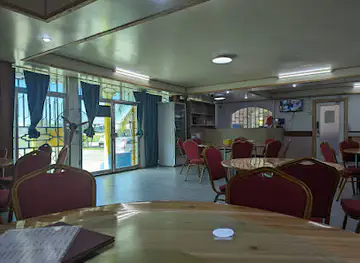
Fortuna Cantonese Restaurant
Discover the authentic taste of Cantonese cuisine at Fortuna in Yaren – a culinary haven for food lovers seeking genuine flavors.

Gabab Restaurant
Experience authentic Chinese cuisine at Gabab Restaurant in Boe - where vibrant flavors meet warm hospitality.

Best bars in Yaren District
Top-rated picks
Best Bars

Sushi Restaurant
Discover the finest sushi in Ibwenape, where culinary craftsmanship meets fresh, local ingredients for an unforgettable dining experience.

WangJiao Breakfast Restaurant
Experience the best of Boe's breakfast offerings at WangJiao Breakfast Restaurant, located conveniently in the international airport.

Fortuna Cantonese Restaurant
Experience authentic Cantonese flavors at Fortuna Cantonese Restaurant in Yaren, where culinary artistry meets a warm, inviting atmosphere.

Gabab Restaurant
Experience the best of Chinese cuisine at Gabab Restaurant in Boe, where generous portions and authentic flavors await every food lover.

Best nightclubs in Yaren District
Top-rated picks
Best Nightclubs
Angel Grog Bar
Discover the vibrant nightlife at Angel Grog Bar in Yaren, where friendly faces and live music create an unforgettable evening.

Pick n Save
Explore Pick n Save in Yaren for a delightful mix of local products and friendly service, perfect for tourists and locals alike.
AFL Linkbelt
Discover the exhilarating football culture at AFL Linkbelt in Yangor – where passion meets community!

The University of the South Pacific, Nauru Campus
Discover the unique educational and cultural experience at The University of the South Pacific, Nauru Campus—a gem in the heart of the Pacific Islands.

Best shops in Yaren District
Top-rated picks
Best Shops
MyStore
Explore Yaren's charm at MyStore, your go-to general store for local foods and essential supplies, enriching your Nauru adventure.

Elizabeth's Garden
Explore unique local treasures at Elizabeth's Garden, a charming store in Boe known for its friendly service and delightful products that capture the spirit of the region.

Halo Store
Experience the local charm and essential goods at Halo Store in Arenibek, a must-visit for travelers seeking authenticity.
Tuka Luka Store
Discover the essence of Nauru's fashion at Tuka Luka Store, where local culture meets unique style in a vibrant shopping experience.

Explore Yaren District on the Map
A handpicked selection of must-see spots in Yaren District, mapped for you.
Yaren District Essentials
-
Yaren District is located on the island nation of Nauru in the Pacific Ocean. The only way to reach Nauru is by air. Nauru International Airport (INU) is the sole airport on the island and is situated in Yaren District. Nauru Airlines operates flights to and from Brisbane (Australia), Nadi (Fiji), and Tarawa (Kiribati). Ensure you check flight schedules and availability in advance, as flights can be infrequent.
-
Yaren District is small, and many places are accessible by foot. For longer distances, taxis are available, though they can be relatively expensive. Renting a car is an option, but availability may be limited. Nauru does not have a public transport system, so arranging private transportation is often necessary for travel around the island.
-
The official currency of Nauru is the Australian Dollar (AUD). Credit cards are accepted in some hotels and larger establishments, but it is advisable to carry cash for smaller transactions. ATMs are available, but it is wise to carry sufficient cash, especially when traveling outside of Yaren District.
-
Yaren District is generally safe for tourists, with low crime rates. However, it is always prudent to take standard precautions such as avoiding walking alone at night and keeping an eye on your belongings in public places. There are no specific high-crime areas targeting tourists, but staying vigilant is recommended.
-
In case of an emergency, dial 110 for police assistance or 111 for medical emergencies. The Nauru Police Force and the Republic of Nauru Hospital are both located in Yaren District. Ensure you have travel insurance that covers medical emergencies. For minor health issues, there are pharmacies where you can purchase over-the-counter medications.
-
Fashion: Do dress modestly, especially when visiting local villages or attending events. Avoid wearing overly revealing clothing. Religion: Do respect local customs and traditions. Be mindful when visiting religious sites, and dress appropriately. Public Transport: As there is no public transport system, if using private taxis, do agree on the fare beforehand. Greetings: Do greet locals with a smile or a nod. Handshakes are common, but not obligatory. Eating & Drinking: Do try local dishes and accept food offerings graciously. Don't waste food, as it is considered disrespectful.
-
To experience Yaren District like a local, visit the local markets and interact with the residents. Attend community events or traditional ceremonies if possible. Engage with locals, as they are often friendly and willing to share stories about their culture and traditions. Don't miss visiting the Moqua Caves and the Buada Lagoon for a unique experience.
When is the best time to visit Yaren District?
Useful Local Phrases for Yaren District
You don't need to speak the language perfectly. Even learning a few simple words can make conversations warmer—and locals usually appreciate the effort.
— Eve

Here are the phrases I use most often in Yaren District. Try a few—you'll be surprised how far they go! 😊
❤️
-
- HelloIaorana
[yah-oh-rah-nah] - GoodbyeNoho
[noh-hoh] - YesE ua
[eh-ooh-ah] - NoE leai
[eh-leh-eye] - Please/You're welcomeFa'amalie
[fah-ah-mah-lee-eh] - Thank youFa'afetai
[fah-ah-feh-ta-ee] - Excuse me/SorryFa'amalie
[fah-ah-mah-lee-eh] - How are you?O fea oe?
[oh-feh-ah-oh-eh] - Fine. And you?Lelei. O oe?
[leh-leh-ee. oh-oh-eh] - Do you speak English?Ou te le tusia i le fa'ainglisi?
[oh-oo-teh-leh-too-see-ah-ee-leh-fah-ah-eeng-lee-see] - I don't understandE le mafai ona ou maua
[eh-leh-mah-fai-oh-nah-oh-mah-oo-ah]
- HelloIaorana
-
- I'd like to see the menu, pleaseO a ou te va'ai i le menu, fa'amalie
[oh-ah-oh-teh-vah-eye-ee-leh-meh-noo-fah-ah-mah-lee-eh] - I don't eat meatE le oua'ea i lauta
[eh-leh-oh-oo-eye-ah-ee-lah-oo-ah-eh-ah] - Cheers!Manuia!
[mah-noo-ee-ah] - I would like to pay, pleaseO a ou te tu'uina, fa'amalie
[oh-ah-oh-teh-too-oo-ee-nah-fah-ah-mah-lee-eh]
- I'd like to see the menu, pleaseO a ou te va'ai i le menu, fa'amalie
-
- Help!Tulou!
[too-loh-oo] - Go away!Ae ou te alu
[ah-eh-oo-teh-ah-loo] - Call the Police!Vala'au leoleo!
[vah-lah-ah-oo-leh-oh-leh-oh] - Call a doctor!Vala'au foma'i!
[vah-lah-ah-oo-foh-mai] - I'm lostUa ou te iloa
[oo-ah-oh-oo-teh-ee-loh-ah] - I'm illUa ou te mafai
[oo-ah-oh-oo-teh-mah-fai]
- Help!Tulou!
-
- I'd like to buy...O a ou te fa'atau...
[oh-ah-oh-teh-fah-ah-tah-oo] - I'm just lookingOu te va'ai fa'apea
[oh-oo-teh-vah-eye-fah-ah-peh-ah] - How much is it?E fia le totogi?
[eh-fee-ah-leh-toh-toh-gee] - That's too expensiveO lelei ma lelei le totogi
[oh-leh-leh-ee-mah-leh-leh-ee-leh-toh-toh-gee] - Can you lower the price?E mafai ona fa'ataga le totogi?
[eh-mah-fai-oh-nah-fah-ah-tah-gah-leh-toh-toh-gee]
- I'd like to buy...O a ou te fa'atau...
-
- What time is it?O le a le taimi?
[oh-leh-ah-leh-tah-ee-mee] - It's one o'clockE tasi i le taimi
[eh-tah-see-ee-leh-tah-ee-mee] - Half past (10)I le iva ma le gumu
[ee-leh-ee-vah-mah-leh-goo-moo] - MorningAoauli
[ah-oh-ah-oo-lee] - AfternoonAfiafi
[ah-fee-ah-fee] - EveningTaeao
[tah-eh-ah-oh] - YesterdayAnanafi
[ah-nah-nah-fee] - TodayA le aso nei
[ah-leh-ah-soh-neh-ee] - TomorrowAso ma le aia
[ah-soh-mah-leh-eye-ah] - 1Tasi
[tah-see] - 2Lua
[loo-ah] - 3Tolu
[toh-loo] - 4Fa
[fah] - 5Lima
[lee-mah] - 6Ono
[oh-noh] - 7Fitu
[fee-too] - 8Valu
[vah-loo] - 9Iva
[ee-vah] - 10Gumu
[goo-moo]
- What time is it?O le a le taimi?
-
- Where's a/the...?O fea le...?
[oh-feh-ah-leh] - What's the address?O le fa'amatalaga?
[oh-leh-fah-ah-mah-tah-lah-gah] - Can you show me (on the map)?E mafai ona fa'ailoa mai ia te oe?
[eh-mah-fai-oh-nah-fah-ah-ee-loh-ah-mah-ee-ah-teh-oh-eh] - When's the next (bus)?Pe aisea le susu e oti?
[peh-ah-ee-seh-ah-leh-soo-soo-eh-oh-tee] - A ticket (to ....)Tiketi (i le ....)
[tee-keh-tee-ee-leh]
- Where's a/the...?O fea le...?
History of Yaren District
-
The history of Yaren District, like much of Nauru, is deeply rooted in the traditions of the indigenous Nauruan people. The district was initially inhabited by the Micronesian and Polynesian settlers who arrived on the island thousands of years ago. The local culture was heavily influenced by these early settlers, who developed a unique societal structure based on clans and matrilineal inheritance.
-
In the late 19th century, Yaren District came under the influence of European colonial powers. In 1888, Nauru was annexed by the German Empire, and Yaren, like the rest of the island, underwent significant changes. The Germans introduced new administrative structures and began to exploit the island's natural resources, particularly phosphate, which would come to play a crucial role in Nauru's economy.
-
During World War II, Yaren District, along with the rest of Nauru, was occupied by Japanese forces from 1942 to 1945. This period was marked by hardship for the local population, as the Japanese military imposed strict controls and utilized local resources for the war effort. The occupation ended when Allied forces liberated the island in 1945.
-
After World War II, Yaren District became part of the United Nations Trust Territory of the Pacific Islands, administered by Australia. This period saw the rebuilding of infrastructure and the establishment of modern administrative systems. In 1968, Nauru gained independence, and Yaren District became the de facto capital of the newly sovereign state, housing key government buildings and institutions.
-
The discovery and intensive mining of phosphate dramatically altered the economic landscape of Yaren District. During the 20th century, phosphate mining brought considerable wealth to the area, funding infrastructure development and public services. The Yaren District became the administrative heart of the mining operations, with many government offices and facilities established to manage the industry.
-
In recent years, Yaren District has focused on balancing development with the preservation of Nauruan culture. Efforts have been made to document and celebrate traditional practices, language, and folklore. The district continues to play a central role in Nauru's political, economic, and cultural life, serving as a hub for both governance and community activities.
Cities in Yaren District
Browse our curated selection of top destinations, scenic points, and must-visit spots in the area.


Neighbouring destination travel guides
Browse our curated selection of top destinations, scenic points, and must-visit spots in the area.


Your all‑in‑one travel companion app
Explore expert travel guides, compare and book tours, experiences, hotels, and more—all from the palm of your hand. Download now for seamless trip planning wherever your wanderlust takes you.


Explore More of Meneng

Looking beyond Yaren District? Discover Meneng for broader travel guides, local hot-spots, and regional highlights.
Explore MenengExplore More of Nauru

Looking beyond Yaren District? Discover Nauru for broader travel guides, local hot-spots, and regional highlights.
Explore NauruYaren District in Photos
Browse through our photo collection highlighting the charm and character of the destination.







Yaren District: The Heartbeat of Nauru
Yaren District is the unofficial capital of Nauru, a tiny island nation in the Pacific Ocean. Nestled on the southwestern coastline, Yaren is the political and administrative center of Nauru. While it may not boast the grandeur of sprawling metropolises, Yaren offers a unique charm with its serene beaches, friendly locals, and a rich cultural tapestry. Explore the Nauru Parliament House, a symbol of the nation's governance, and gain insight into the country's political history. The district is also home to the Aiwo Boat Harbor, where you can witness local fishermen bringing in their daily catch, offering a glimpse into the island's traditional lifestyle. For nature enthusiasts, Yaren's coastal area provides opportunities for swimming and snorkeling in crystal-clear waters. The nearby Buada Lagoon, though technically outside Yaren, is a must-visit for its lush greenery and tranquil atmosphere. Yaren may be small, but its welcoming spirit and scenic beauty leave a lasting impression on every visitor.