

Old Market (Omaha) Travel Guide - Free
Explore Old Market in Omaha with Evendo's free guide. Find the best shops, historic streets, restaurants, and gems on web or mobile.


Old Market Omaha blends cobbled streets, restored warehouses, galleries, live music, independent shops and acclaimed dining in Nebraska’s historic downtown.
Warehouse Streets and Historic Character
Old Market occupies a compact part of downtown Omaha where late-nineteenth- and early-twentieth-century commercial buildings frame cobbled streets, narrow passages and richly textured façades. The district grew around the city’s wholesale and warehouse economy, particularly its connections with the railroads and the Missouri River, and many former warehouses now contain restaurants, galleries, bars, boutiques and apartments. Its recognised historic area is centred on streets such as Howard, Harney and Jackson between roughly 10th and 13th Streets, although the visitor experience naturally spills into adjacent downtown blocks.Read more about Old Market
Art, Food and Everyday Street Life
A Compact Base for Downtown Omaha
Best attractions in Old Market
Old Market’s principal attraction is the district itself: a walkable collection of brick warehouses, cast-iron details, cobbled lanes and restored storefronts that reveal Omaha’s former wholesale centre. The Old Market Passageway offers a narrow pedestrian route through the historic fabric, with public art, small businesses and changing views of the surrounding buildings. Galleries and cultural spaces provide reasons to look beyond restaurant windows, while the nearby Gene Leahy Mall and Omaha RiverFront extend the outing towards landscaped public space and the Missouri River. The Durham Museum, housed in the former Union Station just south of the district, is nearby rather than within every recognised boundary of Old Market and offers a useful context for understanding Omaha’s regional history. Seasonal activity, including the Old Market Farmers’ Market, adds a different perspective on the neighbourhood’s streets and commercial life.
-
Business center
The Old Market
Discover the charm of The Old Market in Omaha, Nebraska, where history meets modern culture with unique shops, art, and dining experiences.
3 min walk · 0.2 km from neighbourhood centre

Best landmarks in Old Market
The Old Market Historic District is the neighbourhood’s defining landmark, not because of one monumental building but because of its unusually coherent collection of commercial architecture from Omaha’s wholesale era. Brick façades, loading entrances, large upper-storey windows, cast-iron elements and cobbled streets preserve the visual language of a district built for storage, trade and distribution. The Old Market Passageway is a smaller but distinctive urban feature, threading between buildings and revealing how the area’s former service routes have been adapted for pedestrians. The district’s significance lies in this relationship between buildings and street pattern: together they document Omaha’s growth as a rail-connected commercial city. The nearby Durham Museum and Union Station are important related landmarks south of Old Market, but they should be understood as adjacent to the historic district rather than automatically counted within it.
-
Historical place
The Old Market
Discover Omaha's Old Market, a historic district brimming with unique shops, art galleries, and delightful dining options that reflect the city's rich heritage.
4 min walk · 0.3 km from neighbourhood centre

Explore Old Market on the map
A handpicked selection of must-see spots in Old Market, mapped for you.
Best hotels in Old Market
Best restaurants in Old Market
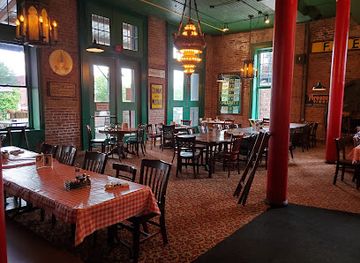
Old Market contains one of Omaha’s most concentrated selections of independent and destination dining, spread through converted warehouses and historic storefronts rather than a single food court. Long-established names such as M’s Pub and La Buvette sit alongside restaurants including V. Mertz, Le Bouillon, Block 16, Plank Seafood Provisions and Nicola’s Italian Wine & Faire, giving the district a broad range of French, Italian, seafood, contemporary American and chef-led cooking. Cafés, bakeries, brunch venues and bars fill out the daytime and evening offer, while the surrounding streets provide a setting shaped by exposed brick, older proportions and close-set façades. Menus and businesses change, so the strongest way to read the area’s culinary identity is as a mix of established local institutions and newer independent operators rather than a single defining cuisine.
-
Italian
Spaghetti Works
Discover authentic Italian flavors at Spaghetti Works in Omaha – where every dish is crafted with passion and tradition.
4 min walk · 0.3 km from neighbourhood centre
-
Restaurant
M's Pub
Discover M's Pub: A vibrant dining destination in Omaha's Old Market with delicious food and an extensive drink menu.
4 min walk · 0.3 km from neighbourhood centre
-
Grill
Twisted Fork
Discover Twisted Fork: A vibrant grill and wine bar in downtown Omaha offering delicious American cuisine in a welcoming atmosphere.
3 min walk · 0.2 km from neighbourhood centre
-
Restaurant
Le Bouillon
Discover culinary excellence at Le Bouillon in Downtown Omaha - where French cuisine meets local flavor in an unforgettable dining experience.
3 min walk · 0.2 km from neighbourhood centre


Best bars in Old Market
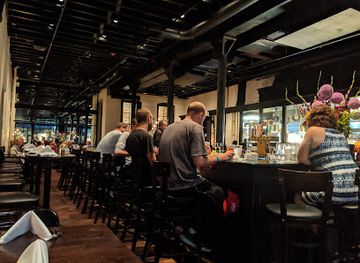
Old Market is more associated with restaurants, bars and live evening sociability than with a large club strip. After dark, people gather around cocktail bars, traditional pub-style venues and restaurant bars, with places such as The Dubliner, The Berry & Rye and Howie’s providing different interpretations of the district’s nightlife. The historic buildings give evenings an intimate, close-quarters atmosphere, while nearby theatres and downtown performance venues bring additional audiences into the area. Music and special events can make the streets busier, but the neighbourhood also contains residences, so noise and late-night behaviour matter on quieter side streets. Visitors seeking a full nightclub programme may need to look beyond Old Market, whereas those interested in drinks, conversation, live entertainment and a walk between venues will find the district’s scale more characteristic.
-
Bar
M's Pub
Experience the essence of Omaha at M's Pub, where amazing food meets a vibrant atmosphere in the heart of downtown.
4 min walk · 0.3 km from neighbourhood centre
-
Pub
Mr. Toad
Discover the vibrant atmosphere of Mr. Toad in Downtown Omaha, offering craft drinks, delicious bites, and a lively nightlife experience.
2 min walk · 0.2 km from neighbourhood centre
-
Cocktail bar
The Berry & Rye
Discover the art of mixology at The Berry & Rye, Omaha’s premier cocktail bar offering an exquisite selection of innovative drinks and vibrant atmosphere.
4 min walk · 0.3 km from neighbourhood centre
-
Bar
The Tavern
Discover the lively atmosphere of The Tavern in Omaha, a premier bar offering a diverse drink menu and a vibrant social scene.
2 min walk · 0.2 km from neighbourhood centre


Best nightclubs in Old Market
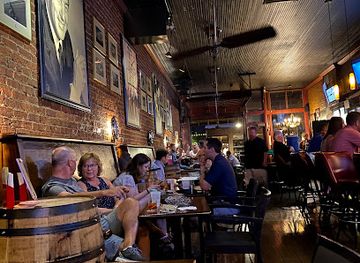
Old Market is more associated with restaurants, bars and live evening sociability than with a large club strip. After dark, people gather around cocktail bars, traditional pub-style venues and restaurant bars, with places such as The Dubliner, The Berry & Rye and Howie’s providing different interpretations of the district’s nightlife. The historic buildings give evenings an intimate, close-quarters atmosphere, while nearby theatres and downtown performance venues bring additional audiences into the area. Music and special events can make the streets busier, but the neighbourhood also contains residences, so noise and late-night behaviour matter on quieter side streets. Visitors seeking a full nightclub programme may need to look beyond Old Market, whereas those interested in drinks, conversation, live entertainment and a walk between venues will find the district’s scale more characteristic.
-
Lounge
HAVANA GARAGE
Experience the vibrant atmosphere of Havana Garage, a unique lounge and cigar shop in Omaha, perfect for cocktails and relaxation.
2 min walk · 0.2 km from neighbourhood centre
-
Bar
The Tavern
Experience the vibrant nightlife of Omaha at The Tavern, a lively pub in the historic Old Market district, offering great drinks and a welcoming atmosphere.
2 min walk · 0.2 km from neighbourhood centre

Best shops in Old Market
Shopping in Old Market focuses on independent businesses occupying former warehouses and street-level historic premises rather than large department stores. Visitors can browse clothing and design boutiques, galleries, gift shops, specialist retailers, books, records, jewellery and locally made goods, with the Old Market Passageway and the streets around Howard and Harney offering some of the most concentrated browsing. The district’s retail character is closely tied to its small-scale spaces and creative reuse: a single building may combine studios, shops, dining and residences. The seasonal Old Market Farmers’ Market adds regional produce, prepared food and craft-oriented stalls when it is operating, though its schedule and vendor mix vary. Shopping is best approached as part of a wider architectural walk, since the appeal is the combination of independent retail, local makers and historic surroundings rather than a single enclosed shopping centre.
-
Business center
The Old Market
Discover the charm of The Old Market in Omaha, where cobblestone streets meet unique shops, art galleries, and diverse dining experiences.
3 min walk · 0.2 km from neighbourhood centre
-
Gift shop
City Limits
Discover a unique shopping experience at City Limits, Omaha's charming gift shop for local treasures and heartfelt souvenirs.
4 min walk · 0.3 km from neighbourhood centre
-
Gift shop
Made in Omaha
Explore Made in Omaha, a vibrant gift shop offering unique locally crafted treasures and a glimpse into the creative spirit of the city.
3 min walk · 0.2 km from neighbourhood centre
-
Boutique
Souq Limited Boutique
Discover unique women's fashion at Souq Limited Boutique in Omaha's vibrant Downtown, where style meets individuality.
3 min walk · 0.2 km from neighbourhood centre


Old Market essentials
Getting There
Getting Around
Safety
Emergency Situations
Do's and Don'ts
Local Tips

From Eve
Local phrases worth knowing
You don't need to get them perfect. A few words go a long way, and locals appreciate the effort.
Basics
| English | Local | Say it |
|---|---|---|
| Hello | Howdy | [how-dee] |
| Goodbye | See ya | [see yuh] |
| Yes | Yup | [yup] |
| No | Nah | [na] |
| Please/You're welcome | Please/No problem | [pleez/no prah-blem] |
| Thank you | Thanks | [thanks] |
| Excuse me/Sorry | Pardon me/My bad | [par-dun me/my bad] |
| How are you? | How ya doin'? | [how yuh doin'] |
| Fine. And you? | Good. And you? | [good. and yuh?] |
| Do you speak English? | Ya speak English? | [ya speak ing-lish?] |
| I don't understand | I ain't gettin' it | [I ain't get-tin' it] |
Eating & Drinking
| English | Local | Say it |
|---|---|---|
| I'd like to see the menu, please | Can I check out the menu? | [can I chek out the menu?] |
| I don't eat meat | I don't do meat | [I don't do meat] |
| Cheers! | Cheers! | [cheers!] |
| I would like to pay, please | I wanna settle up, please | [I wanna set-tle up, please] |
Emergencies
| English | Local | Say it |
|---|---|---|
| Help! | Help! | [help!] |
| Go away! | Git! | [git!] |
| Call the Police! | Call the cops! | [call the cops!] |
| Call a doctor! | Get a doc! | [get a doc!] |
| I'm lost | I'm all turned around | [I'm all turned around] |
| I'm ill | I'm feelin' under the weather | [I'm feelin' under the weather] |
Shopping
| English | Local | Say it |
|---|---|---|
| I'd like to buy... | I wanna buy... | [I wanna buy...] |
| I'm just looking | Just browsin' | [just browsin'] |
| How much is it? | What's the damage? | [what's the dam-age?] |
| That's too expensive | That's steep | [that's steep] |
| Can you lower the price? | Can ya cut me a deal? | [can ya cut me a deal?] |
Time & Numbers
| English | Local | Say it |
|---|---|---|
| What time is it? | What's the time? | [what's the time?] |
| It's one o'clock | It's one | [it's one] |
| Half past (10) | Half ten | [half ten] |
| Morning | Mornin' | [mornin'] |
| Afternoon | Afternoon | [afternoon] |
| Evening | Evenin' | [evenin'] |
| Yesterday | Yesterdee | [yesterdee] |
| Today | Today | [today] |
| Tomorrow | Tomorrer | [tomorrer] |
| 1 | One | [one] |
| 2 | Two | [two] |
| 3 | Three | [three] |
| 4 | Four | [four] |
| 5 | Five | [five] |
| 6 | Six | [six] |
| 7 | Seven | [seven] |
| 8 | Eight | [eight] |
| 9 | Nine | [nine] |
| 10 | Ten | [ten] |
Transport & Directions
| English | Local | Say it |
|---|---|---|
| Where's a/the...? | Where's the...? | [where's the...?] |
| What's the address? | Where's it at? | [where's it at?] |
| Can you show me (on the map)? | Can ya point it out? | [can ya point it out?] |
| When's the next (bus)? | When's the next (bus)? | [when's the next (bus)?] |
| A ticket (to ....) | A ticket (to ....) | [a ticket (to ....)] |
History of Old Market
A Wholesale District Takes Shape
Old Market developed during Omaha’s nineteenth-century expansion as a commercial centre linked to rail transport, river trade and the city’s growing agricultural hinterland. Warehouses, wholesalers, grocers and other businesses occupied sturdy brick buildings near the tracks and the increasingly important downtown business district. Streets laid out for carts and deliveries served a working commercial area rather than a leisure destination, while the mix of storage, trade and offices gave the quarter its characteristic utilitarian architecture. The neighbourhood’s location south of the principal downtown retail streets helped preserve a concentration of older commercial structures as other parts of Omaha changed.
Warehouses After the Wholesale Era
During the twentieth century, changes in distribution, retailing and transport reduced the importance of the traditional warehouse trade. Some Old Market buildings lost their original commercial roles, and the district faced the same pressures that affected many older urban centres: demolition, vacancy and competition from newer development. Yet the buildings’ robust masonry construction, large floorplates and proximity to downtown made them adaptable. Former warehouses could accommodate studios, offices, shops and restaurants without erasing the physical evidence of the district’s commercial past.
Preservation and Urban Reuse
In the 1960s and 1970s, building owners, artists, preservationists and entrepreneurs helped redirect Old Market towards adaptive reuse. Rather than replacing the district wholesale, redevelopment increasingly worked with its brick façades, timber interiors, ironwork and street pattern. Restaurants, galleries, independent retailers and residences brought new activity to buildings that had once served wholesalers and distributors. This transition created the mixed-use character associated with Old Market today, while also beginning the wider debate common to revitalised historic districts about rising property values, commercial change and the relationship between visitor activity and everyday urban life.
Recognition as a Historic District
Old Market’s architectural concentration gained formal recognition when the Old Market Historic District was added to the National Register of Historic Places in 1980. The designation reflects the area’s collection of commercial buildings and its role in Omaha’s nineteenth- and early-twentieth-century economic development rather than a single monumental structure. Preservation has since remained central to the neighbourhood’s identity. New businesses and residential uses continue to occupy historic buildings, while nearby projects such as the downtown riverfront redevelopment have strengthened Old Market’s position within Omaha’s contemporary cultural and visitor landscape.
Old Market in Photos
Browse through our photo collection highlighting the charm and character of the destination.
Neighbourhoods near Old Market
The closest neighbourhoods to Old Market, if you have time for more than one stop.
-

-

-


Swipe for more neighbourhoods
Explore more

Explore more of Omaha
Discover Omaha: A Midwest treasure with top-rated attractions, rich history, and vibrant culture, perfect for families, nature lovers, and art enthusiasts.
Explore Omaha