

Free Canala Travel Guide & Mobile App
Explore Canala with free travel guides. Discover regional history, expert tips, proposed trips, and audio guides on web or mobile app.


Explore Canala in New Caledonia for green east-coast landscapes, Kanak culture, warm springs, lagoons and mountain scenery.
Read more about Canala
When is the best time to visit Canala?
Best: August–October · 22–26°C| Month | High (°C) | Rainfall (mm) |
|---|---|---|
| January | 29 | 200 |
| February | 29 | 190 |
| March | 29 | 180 |
| April | 28 | 170 |
| May | 25 | 160 |
| June | 23 | 150 |
| July | 22 | 140 |
| August (best) | 22 | 130 |
| September (best) | 24 | 120 |
| October (best) | 26 | 130 |
| November | 27 | 150 |
| December | 29 | 170 |
Getting to and around Canala
How to get there
Transportation
Best attractions in Canala
Canala’s attractions are primarily outdoor and cultural rather than large commercial facilities. The east-coast road provides changing views of forested mountains, river valleys, mangrove edges and the lagoon, while the coast offers opportunities for quiet shoreline exploration when tides, weather and local access allow. Warm springs, freshwater pools and small cascades are associated with the area, but their accessibility can vary and should be checked locally before setting out. Inland tracks and walks reveal the humid vegetation of Grande Terre, although independent exploration is not appropriate on every customary or privately managed route. Cultural visits can introduce travellers to Kanak history, local foodways, craft traditions and customary relationships with land, provided they are arranged respectfully. The settlement and surrounding valleys also offer a useful perspective on rural life beyond Nouméa and the territory’s principal resorts. Canala is best experienced through a combination of scenic driving, locally guided activities and unhurried observation rather than a checklist of formal attractions.
-
City park
Place des Cocotiers
Experience the tranquility and cultural vibrancy of Place des Cocotiers, a lush city park in the heart of Nouméa, New Caledonia.
-
Market
City Market
Explore the vibrant City Market in Nouméa, where local flavors, crafts, and cultural experiences come alive in a bustling atmosphere.
-
Animal park
Parc Zoologique Et Forestier Michel Corbasson
Explore the diverse wildlife and stunning landscapes at Parc Zoologique Et Forestier Michel Corbasson, a must-visit animal park in Nouméa, New Caledonia.
-
Historical place
Canons du Ouen Toro
Discover the breathtaking views and rich cultural heritage at Canons du Ouen Toro, a must-visit historical site in New Caledonia.


Best landmarks in Canala
Canala’s most significant landmarks are closely tied to its landscape and Kanak identity. The east-coast mountain backdrop is a defining natural feature, with steep forested ridges rising behind settlements and valleys before meeting the lagoon. The shoreline and sheltered waters express the relationship between the commune and the sea, while mangroves and river mouths mark the transition between coastal and inland environments. Canala’s church and civic buildings provide visible reminders of the colonial and missionary layers of its history, although the most important cultural landmarks are often customary places whose meaning is not fully apparent from the roadside. Roads, bridges and valley crossings also reveal how a dispersed community is connected across difficult terrain. Rather than treating every scenic viewpoint as an isolated monument, visitors should understand Canala as a cultural landscape in which mountains, gardens, rivers, villages and coast are connected through living customary relationships.
-
Aquarium
Lagoon Aquarium
Explore the vibrant marine life at the Lagoon Aquarium in Nouméa, New Caledonia – a family-friendly attraction showcasing the beauty of the Pacific Ocean.
-
City park
Place des Cocotiers
Explore the lush greenery and vibrant culture of Place des Cocotiers, a serene park in the heart of Nouméa, New Caledonia.
-
Cultural center
Tjibaou Cultural Centre
Discover the Tjibaou Cultural Centre in Nouméa, a striking hub of Kanak culture, modern art, and performing arts in New Caledonia.
-
Market
City Market
Explore Nouméa's City Market, a vibrant hub of local produce, artisan crafts, and culinary delights in the heart of New Caledonia.


Explore Canala on the map
Plan your trip on one map. See where the top cities, national parks and sights are, and book hotels and experiences in a few clicks.
Best hotels in Canala
Best restaurants in Canala
Dining in Canala is modest and locally oriented, with fewer restaurants and cafés than in Nouméa or the larger tourism centres of New Caledonia. Visitors should plan meals ahead and confirm what is available, particularly outside the main settlement. Local cooking may draw on fish and shellfish from the lagoon, chicken or pork prepared for communal occasions, root crops such as taro and cassava, sweet potato, bananas and seasonal tropical fruit. Bougna, a Kanak dish traditionally cooked with meat or seafood, coconut milk and root vegetables in an earth oven, is an important cultural food, but it should be experienced through an arranged local meal rather than expected as a daily restaurant item. Small shops and informal food outlets may provide basic supplies, while locally hosted meals offer the most meaningful connection with regional tastes. French culinary influences are also present, as they are throughout New Caledonia, alongside Pacific ingredients and imported products.
-
Restaurant
Marmite et Tire-Bouchon
Discover the rich flavors of New Caledonia at Marmite et Tire-Bouchon in Nouméa - where tradition meets innovation in every dish.
-
Restaurant
Stone Grill
Savor the exquisite flavors at Stone Grill, Nouméa's premier steakhouse offering interactive volcanic stone cooking with stunning coastal views.
-
Restaurant
Le Roof
Experience exquisite dining at Le Roof in Nouméa—where stunning ocean views meet exceptional cuisine in an unforgettable setting.
-
Mexican
Tipico Latino
Discover the rich flavors of Mexico at Tipico Latino in Nouméa - where every bite takes you on a culinary adventure.



Best bars in Canala
Canala does not have a major nightclub scene. Evening life is more likely to centre on family gatherings, community events, locally hosted meals and informal conversation than on a concentrated entertainment district. A small number of cafés, restaurants or local meeting places may provide refreshments, but opening arrangements can be limited and should not be assumed. Visitors seeking late-night bars, live music programmes or extensive clubbing will find far more choice in Nouméa, outside the region. In Canala, the quieter evening atmosphere is part of the rural character: sunset views, conversation and an early start for the next day’s road journey or outdoor activity are more realistic than a fixed nightlife itinerary. Drink responsibly, respect residential areas and follow local guidance at community events.
-
Bar
La Barca
Experience the vibrant atmosphere of La Barca, a premier bar in Nouméa offering stunning bay views and a delightful selection of drinks.
-
Bar
MV Lounge
Experience the vibrant nightlife of Nouméa at MV Lounge, a premier bar offering stunning ocean views and creative cocktails.
-
Bar
Babar Cafe
Discover Babar Cafe in Nouméa: A perfect blend of café charm and bar energy overlooking the beautiful Baie des Citrons.
-
Wine bar
Chai de l'Hippodrome
Discover the charm of Chai de l'Hippodrome, a premier wine bar in Nouméa, offering exquisite wines and delightful dishes in a cozy setting.


Best nightclubs in Canala
Canala does not have a major nightclub scene. Evening life is more likely to centre on family gatherings, community events, locally hosted meals and informal conversation than on a concentrated entertainment district. A small number of cafés, restaurants or local meeting places may provide refreshments, but opening arrangements can be limited and should not be assumed. Visitors seeking late-night bars, live music programmes or extensive clubbing will find far more choice in Nouméa, outside the region. In Canala, the quieter evening atmosphere is part of the rural character: sunset views, conversation and an early start for the next day’s road journey or outdoor activity are more realistic than a fixed nightlife itinerary. Drink responsibly, respect residential areas and follow local guidance at community events.
-
Bar
La Barca
Experience the vibrant nightlife of Nouméa at La Barca, where refreshing drinks and stunning coastal views come together in a lively atmosphere.
-
Bar
MV Lounge
Discover the vibrant nightlife of Nouméa at MV Lounge, where exquisite cocktails and a lively atmosphere await every visitor.
-
Bar
L'Etrave
Experience the vibrant atmosphere and stunning views at L'Etrave, the ultimate bar destination in Nouméa, New Caledonia.
-
Lounge
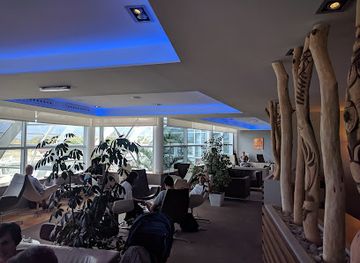
Hibiscus Lounge Aircalin
Discover tranquility at Hibiscus Lounge Aircalin, your serene getaway in La Tontouta Airport, where comfort meets convenience.


Best shops in Canala
Shopping in Canala is practical and small scale, with local provisions and everyday goods more prominent than dedicated souvenir retail. Visitors may find basic supplies in local shops, while locally arranged cultural visits can provide opportunities to learn about weaving, carving, food products or other forms of Kanak craftsmanship when these are offered by the community. Regional produce, including tropical fruit and garden crops, may be available informally and seasonally rather than through a permanent market. Canala is not a destination for extensive fashion, antiques or luxury shopping; those needs are better served in Nouméa. Buy directly and respectfully where possible, ask about the origin and appropriate use of handmade objects, and avoid purchasing shells, wildlife products or cultural items whose collection or sale may be restricted. A useful souvenir is often a locally made craft or food product obtained with clear permission and fair payment.
-
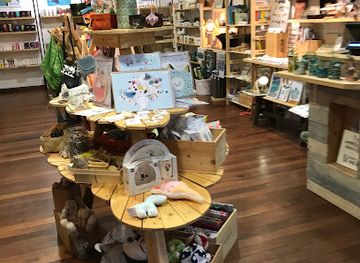
Gift shop
La Bodega del Mar
Explore La Bodega del Mar, a charming gift shop in Nouméa showcasing unique local crafts and souvenirs that capture the essence of New Caledonia.
-
Organic shop
La Boutique Partagée
Experience sustainable shopping at La Boutique Partagée, Nouméa's premier organic shop showcasing local produce and eco-friendly products.
-
Shopping mall
The Village
Explore The Village in Nouméa: Your gateway to shopping, dining, and cultural experiences in New Caledonia.
-
Shopping mall
Alimentation Le Djebel
Discover Alimentation Le Djebel in New Caledonia, a vibrant shopping mall offering clothing, groceries, and a taste of local culture.



Get your free copy of our complete guide to Canala, delivered straight to you.
Everything on this page, from attractions and restaurants to essentials and local phrases, in one PDF you can read offline, print or share.
Already have an account? Sign in
Your Canala guide is ready.
We'll send it to · Not you? Sign out

Getting your guide ready…
We are putting together a fresh copy of the Canala guide. This can take up to a minute.
This can take a few moments. If your browser asks, choose Allow so the download can start. You'll find the guide in your Downloads folder.
Nothing happened? Download it again
Sorry, the guide is taking longer than usual. Please try again in a minute, or get it by email instead.
Canala essentials
Currency and Payment
Safety
Emergency Situations
Do's and Don'ts
Local Tips
From Eve
Local phrases worth knowing
You don't need to get them perfect. A few words go a long way, and locals appreciate the effort.
Basics
| English | Local | Say it |
|---|---|---|
| Hello | Nouméa | [Noh-meh-ah] |
| Goodbye | À bientôt | [Ah byan-toh] |
| Yes | Oui | [Wee] |
| No | Non | [Noh] |
| Please/You're welcome | S'il vous plaît | [Seel voo pleh] |
| Thank you | Merci | [Mehr-see] |
| Excuse me/Sorry | Pardon | [Pahr-dohn] |
| How are you? | Comment ça va? | [Koh-mohn sah vah] |
| Fine. And you? | Bien. Et vous? | [Byan. Ay voo] |
| Do you speak English? | Parlez-vous anglais? | [Pahr-lay voo ahn-glay] |
| I don't understand | Je ne comprends pas | [Zhuh nuh kohm-prahn pah] |
Eating & Drinking
| English | Local | Say it |
|---|---|---|
| I'd like to see the menu, please | Je voudrais voir le menu, s'il vous plaît | [Zhuh voo-dray vwar luh meh-nu, seel voo pleh] |
| I don't eat meat | Je ne mange pas de viande | [Zhuh nuh mahnj pah duh vyand] |
| Cheers! | Santé! | [Sahn-tay] |
| I would like to pay, please | Je voudrais payer, s'il vous plaît | [Zhuh voo-dray pay-ay, seel voo pleh] |
Emergencies
| English | Local | Say it |
|---|---|---|
| Help! | Au secours! | [Oh suh-koor] |
| Go away! | Allez-vous-en! | [Ah-lay voo zahn] |
| Call the Police! | Appelez la police! | [Ah-peh-lay lah poh-lees] |
| Call a doctor! | Appelez un médecin! | [Ah-peh-lay uhn meh-deh-sin] |
| I'm lost | Je suis perdu | [Zhuh swee pehr-dyoo] |
| I'm ill | Je suis malade | [Zhuh swee mah-lahd] |
Shopping
| English | Local | Say it |
|---|---|---|
| I'd like to buy... | Je voudrais acheter... | [Zhuh voo-dray ah-sheh-tay] |
| I'm just looking | Je regarde juste | [Zhuh reh-gard zhuhst] |
| How much is it? | C'est combien? | [Say kohm-byen] |
| That's too expensive | C'est trop cher | [Say troh shair] |
| Can you lower the price? | Pouvez-vous baisser le prix? | [Poo-vay voo beh-say luh pree] |
Time & Numbers
| English | Local | Say it |
|---|---|---|
| What time is it? | Quelle heure est-il? | [Kel uhr eh-teel] |
| It's one o'clock | Il est une heure | [Eel eh ewn uhr] |
| Half past (10) | Dix heures et demie | [Dees uhr eh duh-mee] |
| Morning | Matin | [Mah-tahn] |
| Afternoon | Après-midi | [Ah-preh mee-dee] |
| Evening | Soir | [Swahr] |
| Yesterday | Hier | [Ee-air] |
| Today | Aujourd'hui | [Oh-zhoor-dwee] |
| Tomorrow | Demain | [Duh-mahn] |
| 1 | Un | [Uhn] |
| 2 | Deux | [Duh] |
| 3 | Trois | [Trwah] |
| 4 | Quatre | [Kah-truh] |
| 5 | Cinq | [Sank] |
| 6 | Six | [Sees] |
| 7 | Sept | [Seht] |
| 8 | Huit | [Wheat] |
| 9 | Neuf | [Nurf] |
| 10 | Dix | [Dees] |
Transport & Directions
| English | Local | Say it |
|---|---|---|
| Where's a/the...? | Où est un/une...? | [Ooh eh uhn/ewn] |
| What's the address? | Quelle est l'adresse? | [Kel eh luh-dress] |
| Can you show me (on the map)? | Pouvez-vous me montrer (sur la carte)? | [Poo-vay voo muh mohn-tray (sur lah kart)] |
| When's the next (bus)? | Quand est le prochain (bus)? | [Kahn eh luh pro-shen (boos)] |
| A ticket (to ....) | Un billet (pour ....) | [Uhn bee-yay (poor ....)] |
History of Canala
Kanak settlement and the Xaracuu customary area
Long before European colonisation, the valleys and coast of present-day Canala formed part of the settlement landscape of Kanak communities. Clan relationships, customary authority, gardening, fishing and exchange connected the interior valleys with the lagoon and neighbouring regions. Canala lies within the Xaracuu customary area, one of New Caledonia’s recognised cultural regions. Oral histories and place names remain important ways of understanding the land, alongside archaeological evidence of long-established occupation elsewhere on Grande Terre. For visitors, the significance of the region lies not only in old sites but in the continuity of customary relationships that still influence access, ceremonies and community life.
European contact and colonial expansion
European ships began charting New Caledonia in the eighteenth century, but sustained colonial transformation came after France took possession of the archipelago in 1853. Missionary activity, colonial administration and the seizure or reallocation of Kanak land altered settlement patterns and political authority across Grande Terre, including the east coast. Canala’s mountains, valleys and shoreline were incorporated into a colonial system that restricted Indigenous communities while opening land and resources to outside interests. The consequences of this period remain visible in the distribution of villages, customary land and colonial institutions.
The nickel economy and the east coast
Nickel became central to New Caledonia’s economy from the late nineteenth century, particularly after the discovery and exploitation of deposits on Grande Terre. Canala’s wider region was affected by prospecting, mining employment, roads, shipping and the environmental pressures associated with extraction. Although the most conspicuous mining landscapes are not confined to Canala itself, the industry shaped the east coast’s economy and its links with other parts of the territory. Nickel also brought enduring debates about land, development, environmental stewardship and who benefits from the exploitation of natural resources.
The 1878 Kanak revolt
The major Kanak revolt of 1878 was a response to colonial land seizure, administrative control and the degradation of Indigenous autonomy. It began in the western part of Grande Terre under the leadership of Atai, a chief associated with the La Foa area, but its impact was felt across the colony, including communities in the east. The revolt was suppressed by French forces and allied groups, with severe loss of life and further disruption to Kanak society. Its memory remains a significant part of New Caledonia’s historical consciousness and helps explain the depth of later demands for recognition and self-determination.
The Kanak cultural and political revival
During the twentieth century, Kanak communities increasingly challenged colonial inequalities and the political structures that had marginalised them. From the 1960s onwards, cultural renewal and demands for land rights developed alongside a stronger independence movement. Canala and the Xaracuu area became associated with this modern political history, as local communities participated in debates over customary authority, economic control and the future status of New Caledonia. Cultural identity was asserted through language, customary practice, art and political organisation, making the region an important setting for understanding contemporary Kanak self-representation.
The 1980s crisis and the Matignon period
Political conflict between supporters and opponents of independence intensified across New Caledonia during the 1980s, producing violence, blockades and deep divisions within communities. Canala was among the places affected by this period of tension. The 1988 Ouvéa crisis, although centred on another island, helped prompt negotiations that led to the Matignon Agreements. These agreements established a period of political and economic rebalancing, including greater recognition of customary identity and development needs. Their legacy is still relevant when travelling through regions such as Canala, where history, politics and community life remain closely connected.
The contemporary customary and environmental landscape
In recent decades, Canala has continued to balance customary responsibilities, local economic needs, tourism and the environmental pressures affecting Grande Terre. Development has been shaped by New Caledonia’s distinctive political arrangements, in which the French state, territorial institutions, provinces and customary authorities all have roles. Rivers, forests, lagoon areas and coastal settlements are valued not simply as scenery but as resources and culturally meaningful places. Contemporary visits therefore work best when they recognise local authority, support community-led initiatives and treat the landscape as inhabited and managed rather than as an empty wilderness.
Canala in Photos
Browse through our photo collection highlighting the charm and character of the destination.
Neighbouring regions of Canala
The closest regions to Canala, if you have time for more than one.
-

-

-

-

-


Swipe for more regions
Explore more
Explore more of New Caledonia
Discover New Caledonia, a captivating blend of French elegance and Pacific beauty, offering pristine beaches, vibrant culture, and unparalleled natural wonders.
Explore New Caledonia