

Pouébo, New Caledonia Travel Guide
Discover Pouébo, New Caledonia's hidden gem, where pristine beaches, lush mountains, and rich cultural heritage await you in a serene and tranquil setting.
Pouébo, nestled on the northeast coast of New Caledonia, is a serene village that captivates visitors with its stunning natural beauty and rich cultural heritage. This tranquil destination offers an escape from the hustle and bustle of city life, making it perfect for those seeking relaxation and immersion in nature. The village is surrounded by lush greenery and pristine beaches that are ideal for swimming, snorkeling, and simply soaking up the sun. The nearby mountains provide excellent opportunities for hiking, offering breathtaking views of the coastline and the expansive Pacific Ocean. Pouébo is also home to several traditional Kanak villages, where visitors can learn about the local customs and traditions. A visit to Pouébo wouldn't be complete without exploring its historical sites. The village played a significant role in New Caledonia's colonial history, and remnants of this era can be seen in the architecture and local landmarks. Be sure to visit the old Catholic church, which stands as a testament to the village's storied past.

Know before you go
Hi, I'm Eve. Here are a few practical things to know before exploring Pouébo.
- Visit the local markets early in the morning for fresh produce and handmade crafts.
- Bring sturdy hiking shoes for exploring the mountain trails.
- Respect local customs when visiting Kanak villages; always ask for permission before taking photos.
- Rent a car to explore the surrounding areas at your own pace.
- Carry cash, as some local shops and markets may not accept credit cards.
Explore Pouébo: Things to Do, Places to Eat, Hotels & More
Handpicked recommendations for top attractions, local dining, accommodations, and more

Top Attractions & Sightseeing in Pouébo
Top-rated picks
Best Attractions

Natural pool
Explore the breathtaking Natural Pool in New Caledonia, a serene retreat for snorkeling and relaxation amidst stunning tropical beauty.

NEUTOMO EXCURSION ILE DES PINS
Explore the breathtaking beauty of Ile des Pins with Neutomo Excursion's unforgettable boat and sightseeing tours.

Massif du Panié
Explore the breathtaking landscapes and vibrant biodiversity of the Massif du Panié in New Caledonia, a must-visit destination for nature enthusiasts.


Best restaurants in Pouébo
Top-rated picks
Best Restaurants

Marmite et Tire-Bouchon
Discover authentic New Caledonian flavors at Marmite et Tire-Bouchon - where culinary art meets warm hospitality.

Le Roof
Discover Le Roof: A premier dining destination in Nouméa offering stunning sea views and exquisite local cuisine.

L'Atelier Gourmand
Experience the finest flavors of New Caledonia at L'Atelier Gourmand, where culinary excellence meets local charm in every bite.

Tipico Latino
Discover authentic Mexican flavors at Tipico Latino in Nouméa—an unforgettable culinary journey awaits!

Best bars in Pouébo
Top-rated picks
Best Bars

Le Roof
Discover Le Roof, an exquisite restaurant in Nouméa offering breathtaking ocean views and a delightful menu showcasing local flavors.

MV Lounge
Discover the vibrant nightlife of Nouméa at MV Lounge - a unique bar with stunning views and local culture.
Hôtel Restaurant Hibiscus Koné
Experience relaxation and culinary delights at Hôtel Restaurant Hibiscus Koné, your serene getaway in New Caledonia's picturesque landscape.

Stonegrill Steakhouse Koné
Experience the unique dining concept at Stonegrill Steakhouse in Koné, where you can enjoy sizzling meals cooked right at your table.

Best nightclubs in Pouébo
Top-rated picks
Best Nightclubs

MV Lounge
MV Lounge in Nouméa: A must-visit bar offering delightful cocktails, stunning views, and a lively atmosphere perfect for nightlife enthusiasts.

XO Club
Discover the vibrant nightlife at XO Club in Nouméa, where dancing, music, and excitement collide for an unforgettable experience.

Bar 70's
Discover the vibrant nightlife at Bar 70's, a retro bar in Nouméa that promises lively music, delicious cocktails, and unforgettable experiences.

L'ambassade Club
Immerse yourself in the captivating jazz scene of Nouméa at L'ambassade Club, where live music and vibrant atmosphere await.

Best shops in Pouébo
Top-rated picks
Best Shops

TEARI Commercial centre
Explore the vibrant TEARI Commercial Centre in New Caledonia, where shopping, dining, and local culture come together in a unique experience.

Leader Price
Explore unique local products and vibrant culture at Leader Price, the top shopping mall in Kone, New Caledonia.

Vap'store Koné
Explore Vap'store Koné for an exceptional range of vaporizers and accessories in the heart of Kone, New Caledonia.

La Boutique Partagée
Explore La Boutique Partagée in Nouméa for organic delights and local flavors that celebrate New Caledonia's culinary heritage.

Explore Pouébo on the Map
A handpicked selection of must-see spots in Pouébo, mapped for you.
Pouébo Essentials
-
Pouébo is located on the northeastern coast of New Caledonia's main island, Grande Terre. The nearest international airport is La Tontouta International Airport in Nouméa. From Nouméa, you can take a domestic flight to the nearby town of Koumac, which is about 70 kilometers from Pouébo. Alternatively, you can rent a car in Nouméa and drive to Pouébo, a scenic journey that takes approximately 6 hours. There are also buses available from Nouméa to Pouébo, though schedules may be irregular.
-
Pouébo is a small town, and many of its attractions are accessible on foot. For longer distances, local taxis are available but can be sparse, so it is advisable to arrange transportation in advance. Renting a car is a convenient option for exploring the surrounding areas and provides flexibility in your travel plans. Keep in mind that road conditions can vary, especially in more remote parts of the region.
-
The official currency in New Caledonia is the CFP Franc (XPF). Credit cards are accepted in some hotels, restaurants, and shops in Pouébo, but it is advisable to carry cash, especially in smaller establishments and rural areas. ATMs are limited in Pouébo, so it is wise to withdraw sufficient cash in Nouméa or larger towns before traveling to Pouébo.
-
Pouébo is generally a safe destination for tourists. However, it is advisable to take standard precautions such as avoiding walking alone at night in unfamiliar areas and keeping an eye on your belongings in crowded places. There are no specific high-crime areas targeting tourists, but it is always best to stay vigilant and aware of your surroundings.
-
In case of emergency, dial 17 for police assistance, 18 for fire services, and 15 for medical emergencies. The local police station and a small medical clinic are available in Pouébo. It is recommended to have travel insurance that covers medical emergencies. For minor health issues, there are pharmacies where you can purchase over-the-counter medications.
-
Fashion: Do dress modestly, especially when visiting local villages and religious sites. Avoid wearing overly revealing clothing. Religion: Do respect local customs and traditions. Always ask for permission before taking photos in sacred or private areas. Public Transport: Do be respectful and considerate to others. Don't eat or drink on public transport. Greetings: Do greet people with a friendly 'Bonjour' and a handshake. A smile goes a long way. Eating & Drinking: Do try local dishes and accept food offerings graciously. Don't refuse hospitality, as it is considered impolite.
-
To experience Pouébo like a local, visit the local markets where you can buy fresh produce and traditional goods. Engage with locals, as they are often friendly and willing to share stories about the town's history and culture. Don't miss visiting the historic sites such as the old Catholic mission and the beautiful beaches along the coast. For a unique experience, participate in a traditional Kanak cultural event or festival, which will give you deeper insights into the local way of life.
When is the best time to visit Pouébo?
Useful Local Phrases for Pouébo
You don't need to speak the language perfectly. Even learning a few simple words can make conversations warmer—and locals usually appreciate the effort.
— Eve

Here are the phrases I use most often in Pouébo. Try a few—you'll be surprised how far they go! 😊
❤️
-
- HelloNia
[nee-ah] - GoodbyeNô
[noh] - YesE
[eh] - NoNô
[noh] - Please/You're welcomeS'il vous plaît
[seel voo pleh] - Thank youMëri
[meh-ree] - Excuse me/SorryDésolé
[day-zo-lay] - How are you?Comment ça va?
[koh-mohn sah vah] - Fine. And you?Bien. Et toi?
[byehn. eh twah] - Do you speak English?Tu parles anglais?
[too parl ahn-glay] - I don't understandJe ne comprends pas
[zhuh nuh kom-prahn pah]
- HelloNia
-
- I'd like to see the menu, pleaseJe voudrais voir le menu, s'il vous plaît
[zhuh voo-dray vwar luh meh-nu, seel voo pleh] - I don't eat meatJe ne mange pas de viande
[zhuh nuh mahnj pah duh vyahnd] - Cheers!Santé!
[sahn-tay] - I would like to pay, pleaseJe voudrais payer, s'il vous plaît
[zhuh voo-dray pay-ay, seel voo pleh]
- I'd like to see the menu, pleaseJe voudrais voir le menu, s'il vous plaît
-
- Help!Au secours!
[oh se-kour] - Go away!Va-t'en!
[vah-tahn] - Call the Police!Appelez la police!
[ah-peh-lay lah poh-lees] - Call a doctor!Appelez un médecin!
[ah-peh-lay uhn may-deh-sin] - I'm lostJe suis perdu
[zhuh swee pair-doo] - I'm illJe suis malade
[zhuh swee mah-lahd]
- Help!Au secours!
-
- I'd like to buy...Je voudrais acheter...
[zhuh voo-dray ash-tay] - I'm just lookingJe regarde seulement
[zhuh ruh-gard sur-luh-mahn] - How much is it?C'est combien?
[seh kohm-byen] - That's too expensiveC'est trop cher
[seh troh shair] - Can you lower the price?Pouvez-vous baisser le prix?
[poo-vay voo bay-say luh pree]
- I'd like to buy...Je voudrais acheter...
-
- What time is it?Quelle heure est-il?
[kel uhr eh-teel] - It's one o'clockIl est une heure
[eel eh ewn uhr] - Half past (10)Dix heures et demie
[dees uhr eh duh-mee] - MorningMatin
[mah-tahn] - AfternoonAprès-midi
[ah-preh-mee-dee] - EveningSoir
[swahr] - YesterdayHier
[ee-ehr] - TodayAujourd'hui
[oh-zhoor-dwee] - TomorrowDemain
[duh-mahn] - 1Un
[uhn] - 2Deux
[duh] - 3Trois
[trwah] - 4Quatre
[katr] - 5Cinq
[sank] - 6Six
[sees] - 7Sept
[set] - 8Huit
[weet] - 9Neuf
[nuhf] - 10Dix
[dees]
- What time is it?Quelle heure est-il?
-
- Where's a/the...?Où est un/une...?
[oo eh uhn/oon] - What's the address?Quelle est l'adresse?
[kel eh l'ah-dress] - Can you show me (on the map)?Pouvez-vous me montrer (sur la carte)?
[poo-vay voo muh mohn-tray (sur lah kart)] - When's the next (bus)?Quand est le prochain (bus)?
[kahn eh luh pro-shen (boos)] - A ticket (to ....)Un billet (pour ....)
[uhn bee-yay (poor ....)]
- Where's a/the...?Où est un/une...?
History of Pouébo
-
The history of Pouébo can be traced back to approximately 3,000 years ago with the arrival of the Lapita people, the original settlers of New Caledonia. The Lapita were known for their distinctive pottery, intricate navigational skills, and establishment of the first human settlements in the region. Archaeological findings in Pouébo have unearthed remnants of Lapita pottery, providing evidence of their early presence and influence in the area.
-
Pouébo, like other parts of New Caledonia, experienced significant change with the arrival of French colonial forces in the 19th century. In 1853, New Caledonia was formally claimed by France. Pouébo, situated on the northeastern coast, became a focal point for missionary activities and colonial administration. The French influence brought about dramatic shifts in the local culture, economy, and social structure.
-
A pivotal moment in Pouébo's history was the Kanak Rebellion of 1878, a significant uprising against French colonial rule. The local Kanak population, including those in Pouébo, resisted the encroachment on their lands and the imposition of foreign control. Although ultimately suppressed, the rebellion marked a crucial point in the history of resistance and resilience among the indigenous people of New Caledonia.
-
The arrival of Catholic missionaries in Pouébo in the mid-19th century played a crucial role in the area's cultural transformation. The missionaries established churches, schools, and healthcare facilities, significantly influencing the local way of life. The Catholic presence led to the spread of Christianity, changes in education, and the introduction of Western medical practices, leaving a lasting impact on Pouébo's cultural landscape.
-
During World War II, New Caledonia, including Pouébo, gained strategic importance due to its location in the Pacific. The Allied forces used the island as a base for operations against Japanese forces. Pouébo's coastal areas saw increased military activity, and the local population contributed to the war efforts. This period brought about closer interactions with international forces and had lasting economic and social effects on the community.
-
In recent years, Pouébo has witnessed a cultural revival and an increase in tourism. Efforts to preserve and promote Kanak heritage have gained momentum, with festivals, traditional dances, and cultural events becoming more prominent. Pouébo's natural beauty, historical significance, and vibrant culture have made it a growing destination for travelers seeking an authentic experience of New Caledonia's rich history and diverse culture.
Neighbouring Regions of Pouébo
The closest regions to Pouébo, if you have time for more than one.


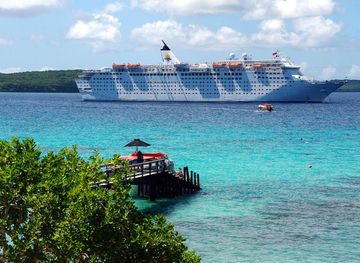


Your all‑in‑one travel companion app
Explore expert travel guides, compare and book tours, experiences, hotels, and more—all from the palm of your hand. Download now for seamless trip planning wherever your wanderlust takes you.


Explore More of New Caledonia
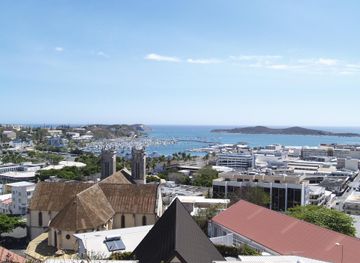
Looking beyond Pouébo? Discover New Caledonia for broader travel guides, local hot-spots, and regional highlights.
Explore New CaledoniaPouébo in Photos
Browse through our photo collection highlighting the charm and character of the destination.


Pouébo: A Hidden Gem in New Caledonia
Pouébo, nestled on the northeast coast of New Caledonia, is a serene village that captivates visitors with its stunning natural beauty and rich cultural heritage. This tranquil destination offers an escape from the hustle and bustle of city life, making it perfect for those seeking relaxation and immersion in nature. The village is surrounded by lush greenery and pristine beaches that are ideal for swimming, snorkeling, and simply soaking up the sun. The nearby mountains provide excellent opportunities for hiking, offering breathtaking views of the coastline and the expansive Pacific Ocean. Pouébo is also home to several traditional Kanak villages, where visitors can learn about the local customs and traditions. A visit to Pouébo wouldn't be complete without exploring its historical sites. The village played a significant role in New Caledonia's colonial history, and remnants of this era can be seen in the architecture and local landmarks. Be sure to visit the old Catholic church, which stands as a testament to the village's storied past.