

Free Hanover Travel Guide & Mobile App
Plan your Hanover trip with Evendo. Get free guides to top attractions, restaurants, hotels, and bars. Web access or download the mobile app.


Hanover, New Hampshire blends Dartmouth College heritage, Connecticut River scenery, museums, independent shops and four-season outdoor adventures.
College Town on the Connecticut
Hanover occupies a graceful bend of the Connecticut River in western New Hampshire, where wooded hills, covered bridges and working Upper Valley communities meet the cultivated setting of Dartmouth College. The town centre is compact and readily walkable, with Main Street, the Dartmouth Green and adjoining college buildings forming a coherent landscape of brick architecture, mature trees and northern New England streetscapes. Dartmouth’s presence gives Hanover an international outlook, yet the town retains the relaxed pace of a small New Hampshire community.Read more about Hanover
Culture, Learning and Outdoor Life
When is the best time to visit Hanover?
Best: June, August–September · 22–27°C| Month | High (°C) | Rainfall (mm) |
|---|---|---|
| January | -1 | 60 |
| February | 1 | 50 |
| March | 7 | 60 |
| April | 14 | 70 |
| May | 21 | 80 |
| June (best) | 25 | 90 |
| July | 28 | 100 |
| August (best) | 27 | 90 |
| September (best) | 22 | 80 |
| October | 15 | 70 |
| November | 8 | 60 |
| December | 1 | 70 |
Getting to and around Hanover
How to get there
Transportation
Best attractions in Hanover
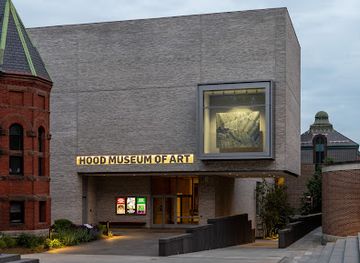
Hanover’s principal attractions cluster around Dartmouth College and the town’s compact centre. The Dartmouth Green provides an open, tree-shaded starting point for exploring the campus, while Baker-Berry Library and the tower of Baker Library give the college landscape its most recognisable vertical feature. The Hood Museum of Art presents collections and exhibitions in a contemporary building beside the historic campus, and the Hopkins Center for the Arts hosts changing programmes of music, theatre, dance and film. Main Street adds independent shops, cafés and everyday town life rather than a conventional tourist quarter. For families and science enthusiasts, the Montshire Museum of Science lies across the Connecticut River in Norwich, Vermont, and should be treated as a separate community attraction. Outdoor visitors can follow local paths and conservation areas, with the river valley and nearby hills providing a setting for walking, cycling, snowshoeing and cross-country skiing.
-
Tourist attraction
Hood Museum of Art
Explore the Hood Museum of Art in Hanover, NH, home to a vast collection of art and artifacts that enrich the cultural landscape of the region.
2 min walk · 0.2 km from city centre
-
Tourist attraction
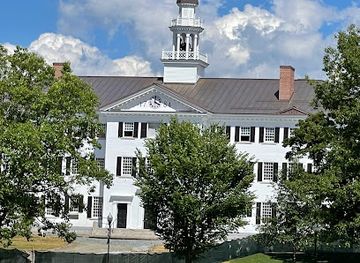
The Dartmouth Green
Explore The Dartmouth Green, a serene park at the heart of Dartmouth College, perfect for relaxation and cultural experiences in Hanover, NH.
1 min walk · 0.1 km from city centre
-
Tourist attraction
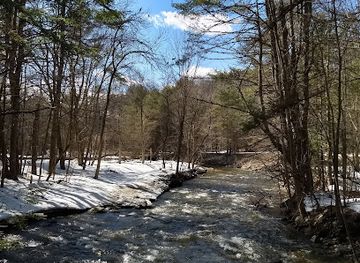
Mink Brook Nature Preserve
Experience the tranquility of Mink Brook Nature Preserve, a nature lover's haven in Hanover, New Hampshire, perfect for hiking and wildlife observation.
15 min walk · 1.2 km from city centre
-
Distillery
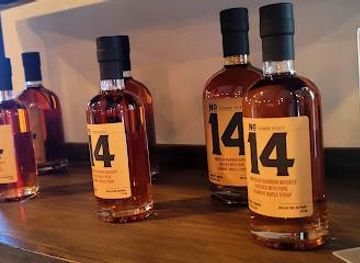
Vermont Spirits Distilling Co
Explore Vermont Spirits Distilling Co in White River Junction for a unique tasting experience of artisanal local spirits and handcrafted liquors.
31 min drive · 11 km from city centre
Best landmarks in Hanover
Dartmouth College supplies Hanover with its most significant group of landmarks. The Dartmouth Green remains the symbolic centre of the town, framed by historic and later college buildings and used as a shared public space. Baker Library is recognised by its tall clock tower and campus prominence, while the adjacent library complex represents the continuing scholarly role of the institution. The Hopkins Center for the Arts is a major modern cultural building, and the Hood Museum of Art combines an important public collection with contemporary architecture on the edge of the historic campus. Hanover’s churches, traditional houses and civic buildings along Main Street and nearby streets complete the New England townscape. Across the Connecticut River, the Ledyard Free Bridge provides a practical and visual link with Norwich, Vermont, though it is a regional landmark rather than a structure within Hanover.
-
Steak
Jesse's Steakhouse
Discover Jesse's Steakhouse in Hanover, NH, where delicious steaks and fresh seafood come together in a warm and inviting atmosphere.
8 min drive · 2.7 km from city centre
-
American
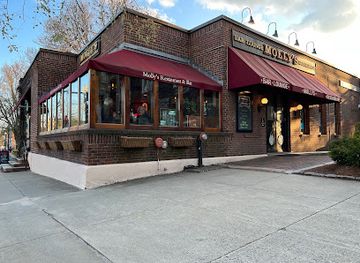
Molly's Restaurant & Bar
Experience the heart of American cuisine at Molly's Restaurant & Bar in Hanover, NH, where local ingredients meet warm hospitality.
2 min walk · 0.2 km from city centre
-
 Hotel
HotelHanover Inn Dartmouth
Discover the charm of New England at Hanover Inn Dartmouth, where history meets modern hospitality in the heart of Hanover, NH.
1 min walk · 0.1 km from city centre
-
Pizza
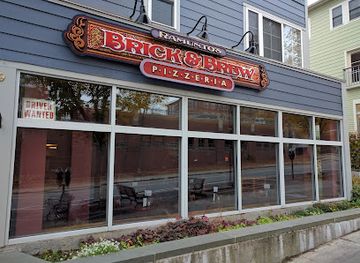
Ramunto's
Indulge in mouthwatering pizzas at Ramunto's, a beloved Hanover eatery offering fresh ingredients and a welcoming atmosphere for all.
4 min walk · 0.3 km from city centre
Explore Hanover on the map
Plan your Hanover trip on one map. See where the top attractions, landmarks, restaurants, bars and hotels are, find what's near where you're staying, and book hotels and experiences in a few clicks.
Best hotels in Hanover
Best restaurants in Hanover
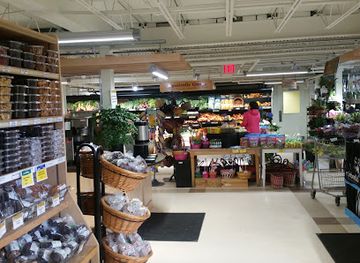
Hanover’s dining scene reflects its university population, New England setting and proximity to Vermont farms. Main Street and the streets around Dartmouth provide cafés, bakeries, casual restaurants and more formal dining, with menus commonly drawing on American comfort food, seasonal produce, sandwiches, salads and international influences. The Hanover Food Co-op offers prepared foods, groceries and regional products, while farmers’ markets and farm stands in the wider Upper Valley bring local vegetables, fruit, maple products, cheeses and baked goods into the seasonal food culture. Nearby Lebanon broadens the choice of everyday restaurants without changing the area’s small-town character. Visitors should expect an early-starting breakfast and lunch culture alongside evening dining, and should remember that United States menus generally list prices before tax and gratuity.
-
Steak
Jesse's Steakhouse
Discover culinary excellence at Jesse's Steakhouse in Hanover - where succulent steaks meet vibrant American flavors.
8 min drive · 2.7 km from city centre
-
American
Four Aces Diner
Experience classic American cuisine at Four Aces Diner in West Lebanon, NH - your go-to spot for delicious breakfasts and warm hospitality.
18 min drive · 6.1 km from city centre
-
American
Molly's Restaurant & Bar
Discover the heart of American cuisine at Molly's Restaurant & Bar in Hanover - where comfort food meets warm hospitality.
2 min walk · 0.2 km from city centre
-
Italian
Lui Lui
Experience authentic Italian cuisine at Lui Lui in West Lebanon – where every meal is a celebration of flavor.
24 min drive · 8.0 km from city centre


Best bars in Hanover
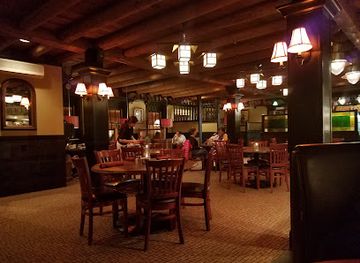
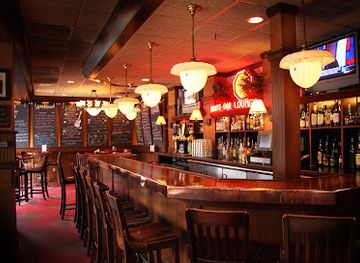
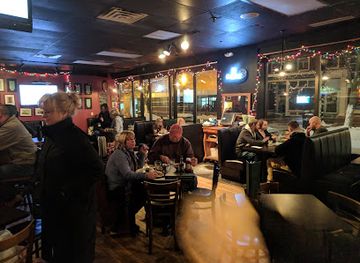
Hanover’s evening life is modest but varied, shaped more by Dartmouth’s cultural calendar and sociable college-town venues than by a large club district. Main Street and the area around the campus offer pubs, bars and restaurants where students, faculty and local residents gather, while the Hopkins Center for the Arts provides theatre, concerts, dance, film and visiting performances that often form the town’s strongest non-dining night-time option. Dartmouth’s academic and athletic events can bring additional activity, although the atmosphere changes markedly between term time and university holidays. Lebanon and White River Junction provide further bars and live entertainment within the Upper Valley, but require transport. Visitors should check individual venues and programme listings, as opening patterns and performances are subject to seasonal and academic schedules.
-
Bar
Jesse's Steakhouse
Discover the culinary delights of Jesse's Steakhouse, where premium steaks and fresh seafood come together in a cozy New Hampshire setting.
8 min drive · 2.7 km from city centre
-
American
Molly's Restaurant & Bar
Discover the essence of American dining at Molly's Restaurant & Bar in Hanover, NH, featuring diverse menus and a lively atmosphere.
2 min walk · 0.2 km from city centre
-
Pub
Salt Hill Pub - Lebanon
Discover the vibrant atmosphere and delicious cuisine at Salt Hill Pub, Lebanon's favorite spot for locals and tourists alike.
22 min drive · 7.3 km from city centre
-
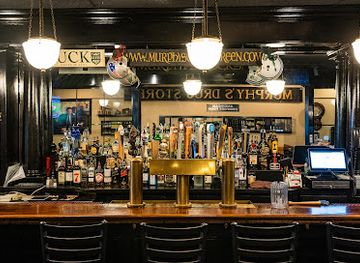
American
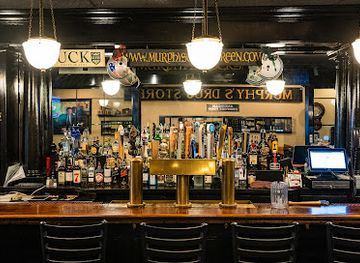
Murphy's On the Green
Experience the best of American cuisine at Murphy's On the Green, a charming restaurant in Hanover, NH, perfect for travelers and locals alike.
1 min walk · 0.1 km from city centre
Best nightclubs in Hanover
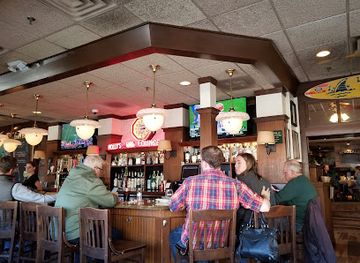
Hanover’s evening life is modest but varied, shaped more by Dartmouth’s cultural calendar and sociable college-town venues than by a large club district. Main Street and the area around the campus offer pubs, bars and restaurants where students, faculty and local residents gather, while the Hopkins Center for the Arts provides theatre, concerts, dance, film and visiting performances that often form the town’s strongest non-dining night-time option. Dartmouth’s academic and athletic events can bring additional activity, although the atmosphere changes markedly between term time and university holidays. Lebanon and White River Junction provide further bars and live entertainment within the Upper Valley, but require transport. Visitors should check individual venues and programme listings, as opening patterns and performances are subject to seasonal and academic schedules.
-
Bar
Jesse's Steakhouse
Experience the best of American cuisine at Jesse's Steakhouse in Hanover, offering delicious steaks, seafood, and a cozy bar atmosphere.
8 min drive · 2.7 km from city centre
-
American
Molly's Restaurant & Bar
Discover the flavors of America at Molly's Restaurant & Bar in Hanover, where delicious cuisine meets a vibrant ambiance for an unforgettable dining experience.
2 min walk · 0.2 km from city centre
-
American
Murphy's On the Green
Discover the heart of American dining at Murphy's On the Green in Hanover, NH, where flavor meets a welcoming atmosphere.
1 min walk · 0.1 km from city centre
-
Movie theater
Nugget Theaters
Experience the magic of movies at Nugget Theaters in Hanover, NH - where indie films and blockbusters come to life in a cozy setting.
3 min walk · 0.2 km from city centre

Best shops in Hanover
Shopping in Hanover is concentrated along Main Street and the adjoining campus streets, where independent bookshops, clothing retailers, cafés, outdoor specialists and Dartmouth-related stores serve both residents and visitors. Dartmouth’s official merchandise and college books are prominent local purchases, while the Hanover Food Co-op and nearby specialist food shops offer New England provisions, prepared foods and seasonal products. The town’s retail character is more independent and community-oriented than that of a major shopping centre, with practical goods sitting alongside gifts, stationery, books and outdoor equipment. Regional crafts, maple products, preserves, baked goods and locally made food items are available through the co-op, farmers’ markets and Upper Valley farm shops, particularly in warmer months. Norwich, Lebanon and White River Junction provide additional retail areas, but each has its own distinct town identity rather than forming one continuous shopping district.
-
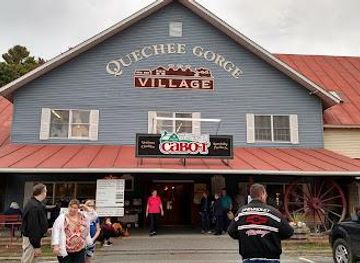
Shopping mall
Quechee Gorge Village
Experience the unique charm and scenic beauty of Quechee Gorge Village, a delightful shopping destination in the heart of Vermont.
31 min drive · 11 km from city centre
-
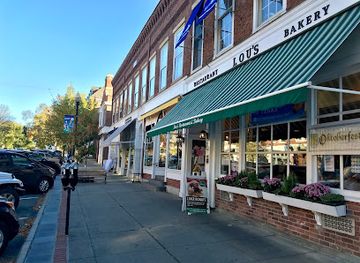
American
Lou's Restaurant & Bakery
Discover the charm of Lou's Restaurant & Bakery in Hanover, where American cuisine meets delightful baked goods in a cozy setting.
2 min walk · 0.1 km from city centre
-
Grocery store
Co-op Food Stores—Hanover
Explore the Co-op Food Stores in Hanover for a unique grocery shopping experience filled with local and organic delights.
11 min walk · 0.8 km from city centre
-
Grocery store
Jake's Quechee Market
Experience Vermont's local flavors at Jake's Quechee Market, your go-to grocery store in White River Junction offering fresh produce and artisanal goods.
33 min drive · 13 km from city centre

Get your free copy of our complete guide to Hanover, delivered straight to you.
Everything on this page, from attractions and restaurants to essentials and local phrases, in one PDF you can read offline, print or share.
Already have an account? Sign in
Your Hanover guide is ready.
We'll send it to · Not you? Sign out

Getting your guide ready…
We are putting together a fresh copy of the Hanover guide. This can take up to a minute.
This can take a few moments. If your browser asks, choose Allow so the download can start. You'll find the guide in your Downloads folder.
Nothing happened? Download it again
Sorry, the guide is taking longer than usual. Please try again in a minute, or get it by email instead.
Hanover essentials
Currency and Payment
Safety
Emergency Situations
Do's and Don'ts
Local Tips
From Eve
Local phrases worth knowing
You don't need to get them perfect. A few words go a long way, and locals appreciate the effort.
Basics
| English | Local | Say it |
|---|---|---|
| Hello | Howdy | [HAW-dee] |
| Goodbye | See ya | [SEE yuh] |
| Yes | Yup | [YUHP] |
| No | Nah | [NAH] |
| Please/You're welcome | Please/You're welcome | [Please/You're welcome] |
| Thank you | Thanks | [THANKS] |
| Excuse me/Sorry | Sorry | [SOR-ee] |
| How are you? | How are you? | [How are you?] |
| Fine. And you? | Fine. And you? | [Fine. And you?] |
| Do you speak English? | Speak English? | [Speak English?] |
| I don't understand | I don't get it | [I don't get it] |
Eating & Drinking
| English | Local | Say it |
|---|---|---|
| I'd like to see the menu, please | Can I see the menu? | [Can I see the menu?] |
| I don't eat meat | I don't eat meat | [I don't eat meat] |
| Cheers! | Cheers! | [Cheers!] |
| I would like to pay, please | Check, please | [Check, please] |
Emergencies
| English | Local | Say it |
|---|---|---|
| Help! | Help! | [Help!] |
| Go away! | Go away! | [Go away!] |
| Call the Police! | Call the cops! | [Call the cops!] |
| Call a doctor! | Call a doctor! | [Call a doctor!] |
| I'm lost | I'm lost | [I'm lost] |
| I'm ill | I'm sick | [I'm sick] |
Shopping
| English | Local | Say it |
|---|---|---|
| I'd like to buy... | I want to buy... | [I want to buy...] |
| I'm just looking | Just looking | [Just looking] |
| How much is it? | How much? | [How much?] |
| That's too expensive | Too pricey | [Too pricey] |
| Can you lower the price? | Can you do better? | [Can you do better?] |
Time & Numbers
| English | Local | Say it |
|---|---|---|
| What time is it? | What time is it? | [What time is it?] |
| It's one o'clock | It's one | [It's one] |
| Half past (10) | Half past ten | [Half past ten] |
| Morning | Morning | [Morning] |
| Afternoon | Afternoon | [Afternoon] |
| Evening | Evening | [Evening] |
| Yesterday | Yesterday | [Yesterday] |
| Today | Today | [Today] |
| Tomorrow | Tomorrow | [Tomorrow] |
| 1 | One | [One] |
| 2 | Two | [Two] |
| 3 | Three | [Three] |
| 4 | Four | [Four] |
| 5 | Five | [Five] |
| 6 | Six | [Six] |
| 7 | Seven | [Seven] |
| 8 | Eight | [Eight] |
| 9 | Nine | [Nine] |
| 10 | Ten | [Ten] |
Transport & Directions
| English | Local | Say it |
|---|---|---|
| Where's a/the...? | Where's the...? | [Where's the...?] |
| What's the address? | What's the address? | [What's the address?] |
| Can you show me (on the map)? | Can you show me (on the map)? | [Can you show me (on the map)?] |
| When's the next (bus)? | When's the next (bus)? | [When's the next (bus)?] |
| A ticket (to ....) | A ticket (to ....) | [A ticket (to ....)] |
History of Hanover
Abenaki Homelands and Colonial Settlement
The Hanover area lies within the traditional homeland of Western Abenaki peoples, whose communities used the Connecticut River valley and its surrounding forests long before European settlement. Colonial settlers established Hanover during the eighteenth century, and the town received its charter from New Hampshire in 1761. Its location beside the river offered fertile land and a route for movement, although the wider frontier remained contested during periods of conflict between European powers and Indigenous nations. Early Hanover developed through farming, timber and small-scale commerce rather than as a large urban centre. The landscape still reflects this rural foundation in its wooded hills, stone walls, narrow roads and scattered historic buildings.
Dartmouth College Takes Root
Dartmouth College was founded in 1769 through the efforts of Eleazar Wheelock, a Congregational minister who established the institution with a stated mission that included educating Native American students. Its early history was complex, and the college’s relationship with Indigenous education did not fulfil all of its original ambitions. Nevertheless, the institution transformed Hanover’s fortunes, bringing scholars, clergy, students and visitors to a previously rural settlement. The Dartmouth Green and the college’s early buildings created the civic and architectural centre around which the town grew. Dartmouth’s presence has remained the defining influence on Hanover’s economy, population and cultural life.
River Commerce and Local Industry
During the nineteenth century, Hanover participated in the economic development of the Connecticut River valley. Farms supplied local communities, while mills and workshops used nearby watercourses and forests. River transport and later rail connections strengthened links with neighbouring towns, including Lebanon and communities across the river in Vermont. Hanover never became a major industrial city, but commerce around the college and the surrounding settlements supported inns, shops and professional services. This period established the pattern that still characterises the town: an academic centre embedded in a wider rural economy, with the river acting as both a landscape feature and an important historic corridor.
Expansion of the College Town
In the late nineteenth and twentieth centuries, Dartmouth expanded its academic programmes, libraries, laboratories and student facilities, while Hanover’s centre acquired more shops, cafés and public services. The town’s built environment developed through a mixture of collegiate Gothic-influenced buildings, traditional New England forms and later modern architecture. The growth of Dartmouth Medical School and Dartmouth-Hitchcock, now Dartmouth Health in nearby Lebanon, further strengthened the Upper Valley’s educational and medical economy. Improved roads and regional transport made Hanover more accessible, although its compact centre and surrounding villages retained a markedly different character from New Hampshire’s larger cities.
A Contemporary Upper Valley Community
Today Hanover is shaped by the continuing interaction between Dartmouth College, local government, independent businesses and the rural landscape of the Upper Valley. Cultural institutions such as the Hood Museum of Art and Hopkins Center have broadened the town’s public life beyond the campus, while conservation areas and river access preserve opportunities for walking, cycling and winter recreation. The community also shares an economic and social region with Lebanon, Norwich and White River Junction. Contemporary Hanover therefore combines an internationally connected university environment with the quieter traditions of western New Hampshire, a relationship visible in its architecture, annual rhythms and mixed population.
Hanover in Photos
Browse through our photo collection highlighting the charm and character of the destination.
Cities near Hanover
The closest cities to Hanover, if you have time for more than one stop.
-

-

-

-

-


Swipe for more cities
Explore more

Explore more of New Hampshire
Discover New Hampshire: Explore the majestic White Mountains, serene lakes, and historic towns in the heart of New England's enchanting landscapes.
Explore New Hampshire