

Free Exeter Travel Guide & Mobile App
Plan your Exeter trip with Evendo. Get free guides to top attractions, restaurants, hotels, and bars. Web access or download the mobile app.


Exeter, New Hampshire pairs Revolutionary history, Phillips Exeter Academy, river walks, museums and Seacoast charm for thoughtful year-round visits.
A Historic New England Town
Exeter stands on the tidal Squamscott River in southeastern New Hampshire, a compact town whose identity is shaped by colonial history, independent shops and the enduring presence of Phillips Exeter Academy. Founded in 1638 by the Reverend John Wheelwright and other settlers, it became an important centre of New Hampshire's revolutionary politics and retains a handsome collection of eighteenth- and nineteenth-century buildings around its walkable centre. Brick commercial blocks, clapboard houses and mature trees give streets such as Water Street and Front Street a settled New England character, while the river provides a natural thread through the town.Read more about Exeter
History, Learning and the River
A Seacoast Base with a Local Rhythm
When is the best time to visit Exeter?
Best: June–August · 25–27°C| Month | High (°C) | Rainfall (mm) |
|---|---|---|
| January | 3 | 70 |
| February | 4 | 60 |
| March | 9 | 80 |
| April | 15 | 90 |
| May | 20 | 90 |
| June (best) | 25 | 100 |
| July (best) | 27 | 100 |
| August (best) | 26 | 100 |
| September | 21 | 90 |
| October | 16 | 90 |
| November | 9 | 80 |
| December | 4 | 70 |
Getting to and around Exeter
How to get there
Transportation
Best attractions in Exeter
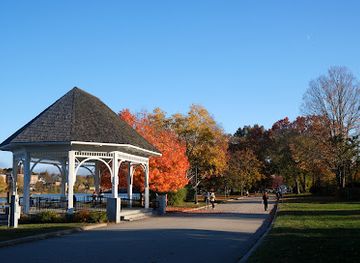
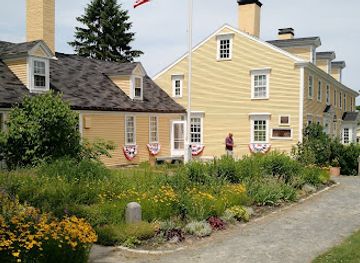
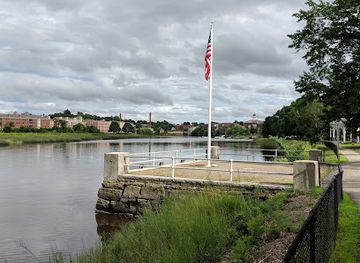
Exeter's attractions are concentrated within a walkable historic centre and along the Squamscott River. The American Independence Museum, based at the Ladd-Gilman House and Folsom Tavern, explores New Hampshire's revolutionary history through documents, objects and period buildings. The Exeter Historical Society provides a more local perspective on the town's people, institutions and changing landscape. Phillips Exeter Academy adds both educational history and notable modern architecture, including Louis Kahn's Class of 1945 Library, though visitors should respect campus access arrangements. Swasey Parkway offers a quiet riverfront walk, while the surrounding streets contain colonial houses, nineteenth-century commercial buildings and independent businesses. Seasonal markets and community events bring residents into the centre, and the town's location makes it a practical starting point for exploring the wider Seacoast, including Portsmouth and nearby coastal landscapes. The appeal lies in the way museums, school architecture, river scenery and everyday New England town life fit into a compact setting.
-
Tourist attraction
Swasey Parkway
Experience the beauty of Swasey Parkway in Exeter, NH—your serene retreat for relaxation, nature walks, and community spirit.
15 min walk · 1.2 km from city centre
-
Tourist attraction
American Independence Museum
Immerse yourself in the American Revolutionary history at the American Independence Museum in Exeter, NH, where the spirit of independence comes alive.
5 min drive · 1.6 km from city centre
-
Tourist attraction
Exeter Historical Society
Explore the vibrant history of Exeter, NH, at the Exeter Historical Society, where stories of the past come alive through engaging exhibits and dedicated preservation.
5 min drive · 1.7 km from city centre
-
Tourist attraction
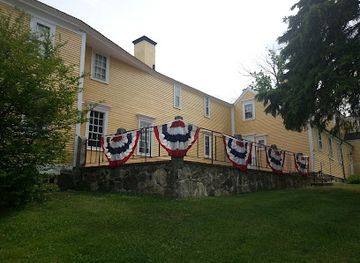
Gilman Garrison House
Discover the rich history of New Hampshire at the Gilman Garrison House, a beautifully preserved museum showcasing colonial life and architecture.
6 min drive · 1.9 km from city centre

Best landmarks in Exeter
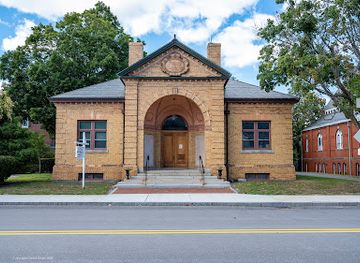
Exeter's most important landmarks express its political, educational and commercial past. The Ladd-Gilman House, now part of the American Independence Museum, is closely associated with New Hampshire's revolutionary government and the preservation of an original Declaration of Independence. Folsom Tavern, another museum property, evokes the social and political life of the colonial period. Phillips Exeter Academy's campus forms a second architectural landmark group: the academy's historic buildings demonstrate its long educational history, while Louis Kahn's Class of 1945 Library is a major example of twentieth-century institutional architecture. The Exeter Town Hall and nearby eighteenth- and nineteenth-century streetscapes reflect the town's civic development, and Swasey Parkway marks the continuing importance of the Squamscott River. Together these sites show how government, education, commerce and waterways shaped Exeter's identity.
-
Park
Swasey Parkway
Discover the serene beauty of Swasey Parkway in Exeter, NH, where nature and community come together for a perfect outdoor experience.
15 min walk · 1.2 km from city centre
-
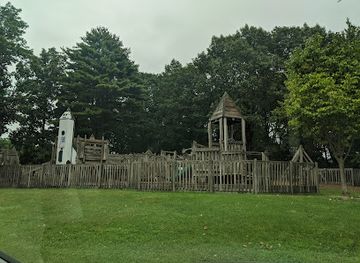
Playground
Planet Playground
Explore the vibrant and inclusive Planet Playground in Exeter, NH, where children of all abilities can play, learn, and create lasting memories together.
13 min drive · 4.2 km from city centre
-
Museum
American Independence Museum
Explore the American Independence Museum in Exeter, NH - a fascinating journey through the nation's revolutionary history with engaging exhibits and artifacts.
5 min drive · 1.6 km from city centre
-
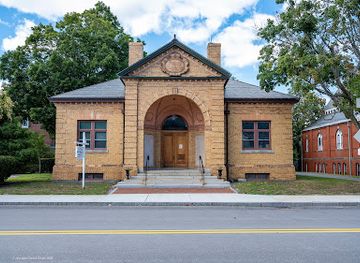
Historical society
Exeter Historical Society
Explore the rich heritage of Exeter at the Exeter Historical Society, where history comes alive through engaging exhibits and educational events.
5 min drive · 1.7 km from city centre
Explore Exeter on the map
Plan your Exeter trip on one map. See where the top attractions, landmarks, restaurants, bars and hotels are, find what's near where you're staying, and book hotels and experiences in a few clicks.
Best hotels in Exeter
Best restaurants in Exeter
Exeter's dining scene reflects its role as a small Seacoast town rather than a major culinary destination, with independent cafés, bakeries, casual restaurants and bars gathered mainly around the centre. Menus commonly draw on New England traditions, including seafood, shellfish, chowders, fried clams and seasonal produce, while contemporary establishments add familiar American, vegetarian and internationally influenced dishes. Breakfast and coffee are part of the town's everyday rhythm, particularly around Water Street and the adjoining commercial blocks. Local farms and the wider New Hampshire agricultural region influence seasonal menus and farmers' market offerings, while nearby coastal communities contribute fresh fish and shellfish. Visitors should expect a relaxed, community-oriented atmosphere rather than a concentration of formal fine dining, with options shaped by the school calendar, local events and the changing seasons.
-
American
110 Grill Stratham
Discover delicious American cuisine at 110 Grill Stratham with exceptional gluten-free options in a cozy setting perfect for all diners.
10 min drive · 3.3 km from city centre
-
Mexican
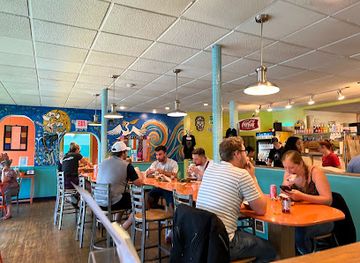
Las Olas Taqueria
Experience authentic Mexican cuisine at Las Olas Taqueria in Exeter—where every bite tells a flavorful story.
6 min drive · 2.1 km from city centre
-
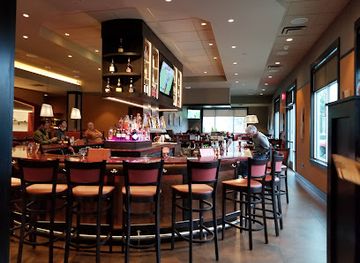
Gastropub
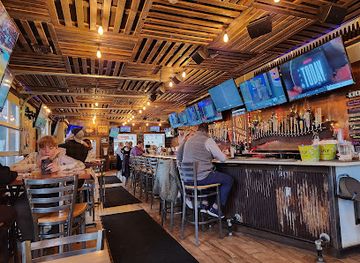
Thirsty Moose Tap House- Exeter
Experience the vibrant flavors of New Hampshire at Thirsty Moose Tap House, where craft beer meets gourmet cuisine in a welcoming gastropub setting.
7 min drive · 2.3 km from city centre
-
Pizza
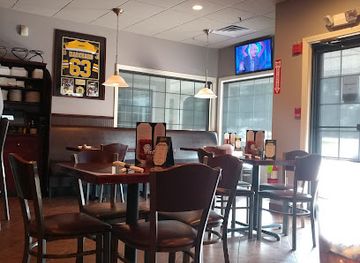
Front Row Pizzeria
Discover the authentic taste of New England at Front Row Pizzeria - where delicious hand-crafted pizzas meet friendly service.
5 min walk · 0.4 km from city centre
Best bars in Exeter
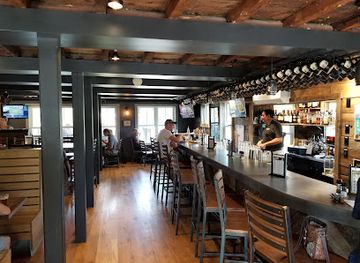
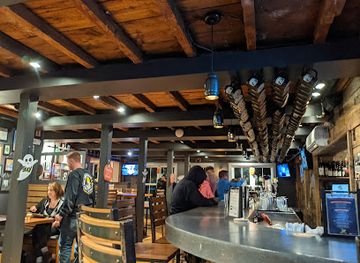
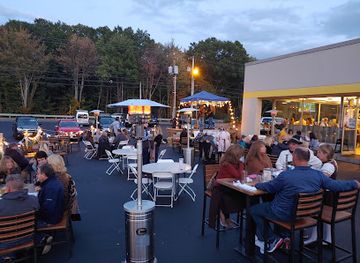
Exeter's evening scene is modest and locally focused, centred on pubs, restaurant bars, cafés and occasional live music rather than large nightclubs. Downtown venues provide space for conversation, dinner and drinks, while community events, performances and talks connected with local cultural organisations can offer alternatives to a conventional bar evening. Phillips Exeter Academy and the town's arts community contribute seasonal lectures, concerts and public programmes, although schedules vary. The atmosphere becomes quieter outside the central streets, and late-night transport should be arranged rather than assumed. Portsmouth, roughly a short regional journey away, has a broader concentration of bars, music venues and nightlife, but Exeter itself is better suited to an unhurried evening around its historic centre than to an intensive clubbing itinerary.
-
Gastropub
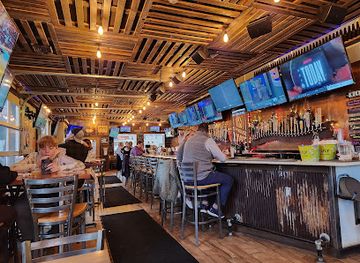
Thirsty Moose Tap House- Exeter
Discover the vibrant flavors of Thirsty Moose Tap House in Exeter, NH, a gastropub with a delightful menu and extensive craft beer selection.
7 min drive · 2.3 km from city centre
-
Restaurant
Sea Dog Brewing Company
Discover the delightful Sea Dog Brewing Company in Exeter, NH, a family-friendly brewpub offering delicious food and craft beer in a warm atmosphere.
6 min drive · 1.9 km from city centre
-
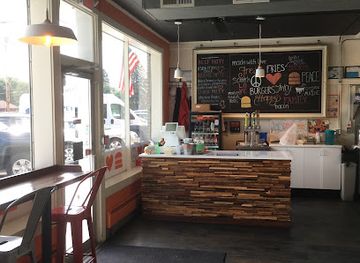
Hamburger
Lexie's Exeter
Discover gourmet burgers at Lexie's Exeter, where unique flavors and a cozy atmosphere await every burger lover in New Hampshire.
13 min walk · 1.1 km from city centre
-
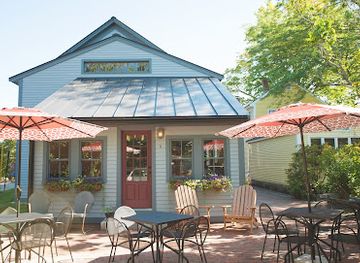
Restaurant
LANEY & LU
Experience the flavors of modern American cuisine at LANEY & LU in Exeter, NH. A top destination for food lovers and travelers.
6 min drive · 1.9 km from city centre
Best nightclubs in Exeter
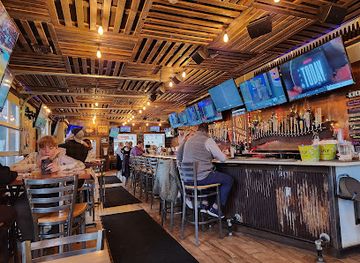
Exeter's evening scene is modest and locally focused, centred on pubs, restaurant bars, cafés and occasional live music rather than large nightclubs. Downtown venues provide space for conversation, dinner and drinks, while community events, performances and talks connected with local cultural organisations can offer alternatives to a conventional bar evening. Phillips Exeter Academy and the town's arts community contribute seasonal lectures, concerts and public programmes, although schedules vary. The atmosphere becomes quieter outside the central streets, and late-night transport should be arranged rather than assumed. Portsmouth, roughly a short regional journey away, has a broader concentration of bars, music venues and nightlife, but Exeter itself is better suited to an unhurried evening around its historic centre than to an intensive clubbing itinerary.
-
Gastropub
Thirsty Moose Tap House- Exeter
Discover the flavors of Exeter at Thirsty Moose Tap House, where gourmet pub fare meets a vibrant atmosphere and local craft brews.
7 min drive · 2.3 km from city centre
-
Restaurant
Sea Dog Brewing Company
Discover a family-friendly brewpub in Exeter, offering delicious cuisine and craft beers in a warm, inviting atmosphere.
6 min drive · 1.9 km from city centre
-
Brewpub
Sawbelly Brewing
Discover the flavors of New Hampshire at Sawbelly Brewing, a delightful brewpub offering craft beers and locally-sourced cuisine in Exeter.
9 min walk · 0.7 km from city centre
-
American
Epoch Gastropub
Explore Epoch Gastropub in Exeter, NH – where American cuisine meets a lively atmosphere for unforgettable dining experiences.
5 min drive · 1.7 km from city centre

Best shops in Exeter
Shopping in Exeter is concentrated around Water Street, Front Street and the adjoining downtown blocks, where independent boutiques, bookshops, galleries, gift shops and locally oriented services occupy historic commercial buildings. The experience is more small-town and specialised than mall-based, with opportunities to browse books, clothing, homewares, crafts and regionally themed gifts. Seasonal farmers' markets bring New Hampshire produce, baked goods and prepared food into the centre, while nearby farms and Seacoast producers contribute preserves, maple products and other edible souvenirs. Visitors interested in antiques and handmade goods may find changing selections among independent retailers, but stock and opening patterns vary. Larger shopping centres are found elsewhere in the Seacoast region, whereas Exeter's appeal lies in leisurely browsing, locally owned businesses and the architectural setting of the old commercial streets.
-
Gift basket store
GourmetGiftBaskets.com
Discover exquisite gourmet treats at GourmetGiftBaskets.com in Exeter, NH—your destination for unique and delicious gift baskets.
5 min drive · 1.8 km from city centre
-
Shopping mall
Exeter Commons
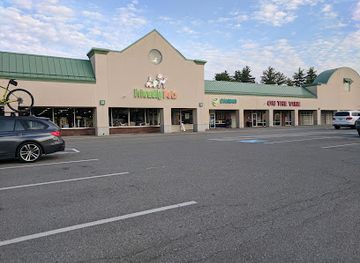
Experience the vibrant shopping and dining scene at Exeter Commons, Exeter's premier shopping destination with diverse retail and culinary offerings.
7 min drive · 2.4 km from city centre
-
Florist
Exeter Flower Shop
Explore the Exeter Flower Shop for exquisite floral arrangements, unique gifts, and a touch of New Hampshire's natural beauty.
7 min drive · 2.4 km from city centre
-
Book store
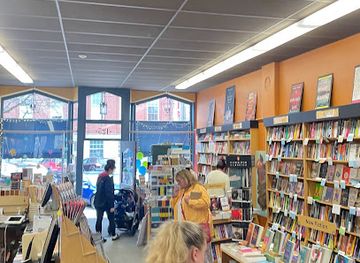
Water Street Bookstore
Explore Water Street Bookstore in Exeter, NH—a cozy literary haven with a delightful selection of books for all ages and a special children's section.
5 min drive · 1.7 km from city centre

Get your free copy of our complete guide to Exeter, delivered straight to you.
Everything on this page, from attractions and restaurants to essentials and local phrases, in one PDF you can read offline, print or share.
Already have an account? Sign in
Your Exeter guide is ready.
We'll send it to · Not you? Sign out

Getting your guide ready…
We are putting together a fresh copy of the Exeter guide. This can take up to a minute.
This can take a few moments. If your browser asks, choose Allow so the download can start. You'll find the guide in your Downloads folder.
Nothing happened? Download it again
Sorry, the guide is taking longer than usual. Please try again in a minute, or get it by email instead.
Exeter essentials
Currency and Payment
Safety
Emergency Situations
Do's and Don'ts
Local Tips
From Eve
Local phrases worth knowing
You don't need to get them perfect. A few words go a long way, and locals appreciate the effort.
Basics
| English | Local | Say it |
|---|---|---|
| Hello | Howdy | [haw-dee] |
| Goodbye | Catch ya later | [catch yah lay-tur] |
| Yes | Yep | [yep] |
| No | Nah | [nah] |
| Please/You're welcome | Please/No problem | [pleez/no prob-lem] |
| Thank you | Thanks a bunch | [thanks uh bunch] |
| Excuse me/Sorry | Pardon me/My bad | [par-dun me/my bad] |
| How are you? | How ya doin'? | [how yah doin'] |
| Fine. And you? | Just swell. How 'bout you? | [just swell. how 'bout yah] |
| Do you speak English? | Ya speak English? | [yah speak ing-glish] |
| I don't understand | I'm lost | [I'm lost] |
Eating & Drinking
| English | Local | Say it |
|---|---|---|
| I'd like to see the menu, please | Can I check out the menu? | [can aye check out the menu] |
| I don't eat meat | I'm a vegetarian | [I'm a veg-eh-tair-ee-an] |
| Cheers! | Bottoms up! | [bottoms up] |
| I would like to pay, please | Can I settle up, please | [can aye set-ul up, please] |
Emergencies
| English | Local | Say it |
|---|---|---|
| Help! | I need a hand! | [I need uh hand] |
| Go away! | Get lost! | [get lost] |
| Call the Police! | Ring up the cops! | [ring up the cops] |
| Call a doctor! | Get me a doc! | [get me uh doc] |
| I'm lost | I'm all turned around | [I'm all turned uh-round] |
| I'm ill | I'm feelin' under the weather | [I'm feel-in' un-der the weath-er] |
Shopping
| English | Local | Say it |
|---|---|---|
| I'd like to buy... | I'm interested in... | [I'm in-ter-es-ted in] |
| I'm just looking | Just browsing | [just brows-ing] |
| How much is it? | What's the damage? | [what's the dam-age] |
| That's too expensive | That's a bit steep | [that's uh bit steep] |
| Can you lower the price? | Can you cut me a deal? | [can yah cut me uh deal] |
Time & Numbers
| English | Local | Say it |
|---|---|---|
| What time is it? | What's the time? | [what's the time] |
| It's one o'clock | It's one | [it's one] |
| Half past (10) | Ten-thirty | [ten-thur-tee] |
| Morning | Mornin' | [mor-nin'] |
| Afternoon | Afternoon | [after-noon] |
| Evening | Evenin' | [even-in'] |
| Yesterday | Yest'day | [yest'day] |
| Today | Today | [today] |
| Tomorrow | Tomorrah | [tom-or-rah] |
| 1 | One | [wun] |
| 2 | Two | [too] |
| 3 | Three | [three] |
| 4 | Four | [four] |
| 5 | Five | [five] |
| 6 | Six | [six] |
| 7 | Seven | [sev-en] |
| 8 | Eight | [ate] |
| 9 | Nine | [nine] |
| 10 | Ten | [ten] |
Transport & Directions
| English | Local | Say it |
|---|---|---|
| Where's a/the...? | Where's the...? | [where's the] |
| What's the address? | What's the street? | [what's the street] |
| Can you show me (on the map)? | Can you point it out? | [can yah point it out] |
| When's the next (bus)? | When's the next (bus) comin'? | [when's the next bus com-in'] |
| A ticket (to ....) | A ticket (to ....) | [uh ticket (to)] |
History of Exeter
Settlement on the Squamscott
Exeter was founded in 1638 by the Reverend John Wheelwright and a group of settlers who established a community beside the Squamscott River. The river connected the settlement to Great Bay and the wider New England coastline, supporting transport, milling and local commerce. Indigenous peoples had long used and inhabited the region before English settlement, and the town's colonial development formed part of a broader process of dispossession and changing control over southern New Hampshire. Exeter's position inland from the coast gave it protection while retaining access to maritime trade. The early town grew around religious, civic and commercial institutions, many of whose later sites helped shape the historic centre visible today.
Colonial Commerce and Civic Growth
During the eighteenth century Exeter developed as a market and trading town serving farms and settlements across the surrounding countryside. Water power along the river supported mills, while merchants and craftsmen established businesses near the landing and principal streets. Buildings such as the Ladd-Gilman House reflect the prosperity of this period and the importance of prominent commercial families. The town's civic life expanded alongside its economy, with meeting houses, schools and public institutions anchoring the community. Exeter's location between the Merrimack Valley and the Seacoast allowed it to participate in regional exchange without becoming a major port, giving the settlement a durable role in New Hampshire's interior commercial network.
Exeter and the American Revolution
Exeter became a significant centre of New Hampshire's revolutionary government after provincial authority broke down in 1775. The Committee of Safety operated from the town, and the Ladd-Gilman House served as a setting for important political activity. The building later became associated with the preservation of the original Declaration of Independence after a copy was discovered there in the nineteenth century; that document is now central to the American Independence Museum. Exeter's role was administrative and political rather than primarily military, but its leaders and institutions contributed to the organisation of the revolutionary state. The town's streets and surviving houses still provide a tangible setting for this period of political transformation.
Education and Industrial Change
The establishment of Phillips Exeter Academy in 1781 added a lasting educational dimension to Exeter's identity. Founded by businessman and statesman John Phillips, the academy became an influential preparatory school and eventually attracted students from across the United States and abroad. During the nineteenth century, Exeter also experienced the wider changes affecting New England towns: improved roads and rail connections expanded trade, while manufacturing and river-based industry altered the local economy. Textile and other mills operated in the region, although Exeter retained its civic and educational functions. Commercial blocks, houses and institutional buildings from this period contributed to the architectural character of the modern town centre.
Preservation and Contemporary Exeter
Twentieth-century Exeter combined institutional growth with increasing appreciation of its colonial and Victorian fabric. Phillips Exeter Academy commissioned important modern buildings, most notably Louis Kahn's 1971 Class of 1945 Library, placing internationally significant modern architecture alongside the town's older streetscapes. Local museums and historical organisations preserved the story of the Revolution, education, commerce and community life, while the riverfront was shaped into public recreational space such as Swasey Parkway. Today Exeter remains a working town rather than a museum settlement: schools, independent businesses, cultural organisations and residential neighbourhoods occupy the same compact landscape formed by centuries of settlement beside the Squamscott.
Exeter in Photos
Browse through our photo collection highlighting the charm and character of the destination.
Cities near Exeter
The closest cities to Exeter, if you have time for more than one stop.
-

-

-

-

-


Swipe for more cities
Explore more

Explore more of New Hampshire
Discover New Hampshire: Explore the majestic White Mountains, serene lakes, and historic towns in the heart of New England's enchanting landscapes.
Explore New Hampshire