

Free Masaya Lowlands Travel Guide & Mobile App
Explore Masaya Lowlands with free travel guides. Discover regional history, expert tips, proposed trips, and audio guides on web or mobile app.


Explore Nicaragua's Masaya Lowlands for active volcanoes, crater-lake scenery, Indigenous traditions, pottery villages and lively local markets.
Read more about Masaya Lowlands
When is the best time to visit Masaya Lowlands?
Best: December–February · 33–35°C| Month | High (°C) | Rainfall (mm) |
|---|---|---|
| January (best) | 34 | 3 |
| February (best) | 35 | 5 |
| March | 35 | 8 |
| April | 36 | 20 |
| May | 36 | 80 |
| June | 34 | 100 |
| July | 34 | 90 |
| August | 34 | 90 |
| September | 33 | 130 |
| October | 33 | 150 |
| November | 33 | 70 |
| December (best) | 33 | 15 |
Getting to and around Masaya Lowlands
How to get there
Transportation
Top city travel guides in Masaya Lowlands
The cities of Masaya Lowlands, and the easiest places to base yourself.
-

-


Swipe for more cities
Destinations in Masaya Lowlands
Resorts, valleys and scenic spots worth a trip of their own.
-

-


Swipe for more destinations
Best attractions in Masaya Lowlands
The Masaya Lowlands offer a concentrated mixture of volcanic scenery, craft heritage and community-based cultural experiences. Masaya Volcano National Park is the central natural attraction, with an active volcanic complex, interpretive areas and viewpoints subject to current safety restrictions. Around Masaya, markets and the Monimbó neighbourhood provide insight into local commerce and Indigenous cultural identity. South of the city, the Pueblos Blancos are known for pottery, woodwork, furniture and other handcrafts, with San Juan de Oriente particularly associated with ceramics and Catarina with elevated views. Laguna de Apoyo brings a very different landscape: a forested crater lake suitable for swimming at designated access points, kayaking and relaxed lakeside visits. The region also contains churches, small museums, garden viewpoints and rural roads through cultivated volcanic terrain. It is better suited to a sequence of short visits and conversations than to a single formal attraction circuit, with the most interesting contrasts appearing between the busy city, quiet workshops and protected volcanic landscapes.
-
Observatory
Mirador de Catarina
Discover breathtaking views of Lake Cocibolca and Mombacho Volcano at Mirador de Catarina, a must-see tourist attraction in Nicaragua.
-
Tourist attraction
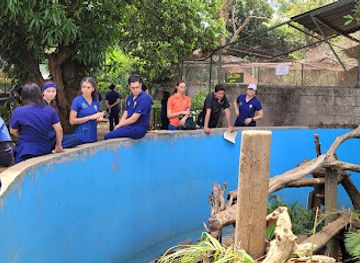
Zoológico Nacional de Nicaragua
Discover diverse wildlife and conservation efforts at Zoológico Nacional de Nicaragua, a premier zoo in the heart of the country.
-
Park
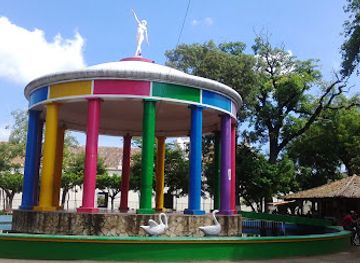
Masaya Central Park
Explore the vibrant Masaya Central Park, a cultural gem in Nicaragua where nature, art, and local cuisine converge in a lively community atmosphere.
-
Market
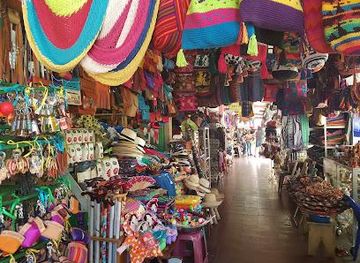
Cultural Center Old Craft Market
Explore Masaya's Cultural Center Old Craft Market, a vibrant hub for local crafts, authentic cuisine, and rich cultural experiences.

Best landmarks in Masaya Lowlands
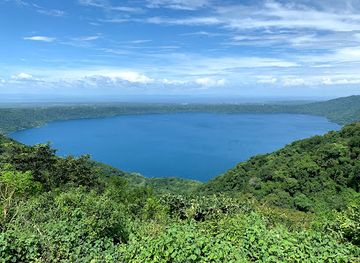
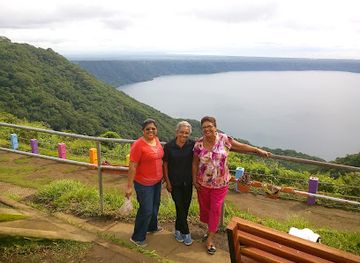
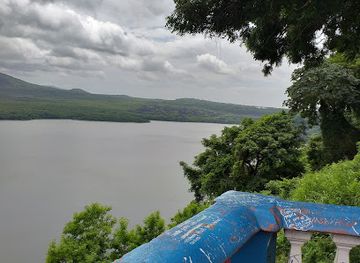
Masaya Volcano is the region's most recognisable natural landmark, an active volcanic complex whose crater landscape and historical eruptions have shaped both local geography and national imagination. In Masaya itself, the churches and dense civic streets of the historic centre provide a visible record of colonial and republican development, while the Monimbó neighbourhood carries particular cultural and political significance. The Pueblos Blancos are marked less by one monumental building than by their distinctive workshop streets, whitewashed or brightly painted homes, pottery studios and hillside views. Catarina's Mirador de Catarina is an important visual landmark because it frames Laguna de Apoyo from the crater rim and, in clear conditions, the wider Pacific lowlands. Laguna de Apoyo itself is a major geographical feature: a deep volcanic basin encircled by wooded slopes and settled at selected points around its shore. These places reveal the region through geology, memory and everyday architecture rather than through grand architecture alone.
-
Observatory
Mirador de Catarina
Discover the breathtaking views and rich cultural heritage at Mirador de Catarina, a must-visit observatory in Nicaragua's stunning landscape.
-
City park
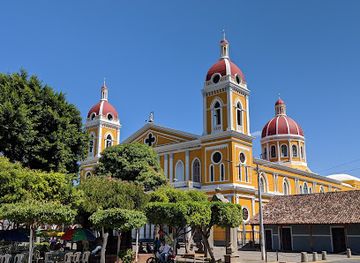
Parque Central de Granada
Experience the vibrant heart of Granada at Parque Central, where history, culture, and nature intertwine in Nicaragua's iconic city park.
-
Zoo
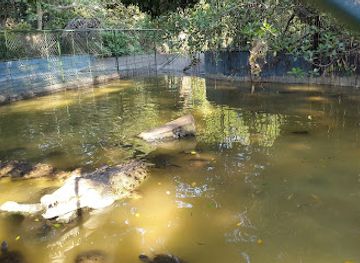
Zoológico Nacional de Nicaragua
Explore the wonders of nature at the Zoológico Nacional de Nicaragua, a vibrant zoo showcasing the country's rich biodiversity and conservation efforts.
-
Park
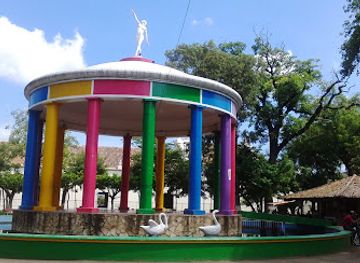
Masaya Central Park
Experience the heart of Masaya at Central Park, where nature and culture intertwine in a vibrant oasis of relaxation and adventure.
Explore Masaya Lowlands on the map
Plan your trip on one map. See where the top cities, national parks and sights are, and book hotels and experiences in a few clicks.
Best hotels in Masaya Lowlands
Best restaurants in Masaya Lowlands
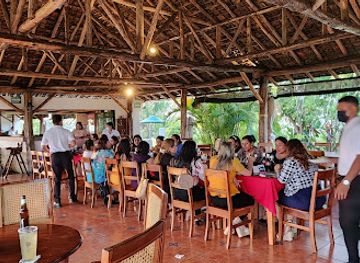
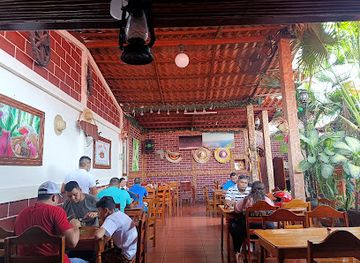
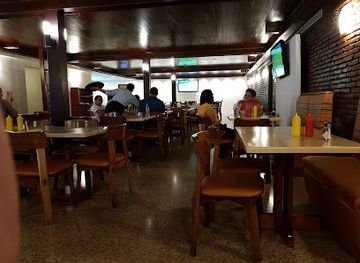
Dining in the Masaya Lowlands is rooted in Nicaraguan home cooking and market food rather than a sharply separate regional cuisine. Expect maize-based dishes, rice and beans, plantains, grilled meats, soups, fresh cheese, tortillas and fruit drinks, with vigorous flavours and filling portions common in family-run eateries. Masaya's markets offer snacks, produce and prepared food, while the Pueblos Blancos have small cafés and comedor-style restaurants alongside craft workshops. Around Laguna de Apoyo, lakeside establishments serve straightforward meals and refreshments, often with views over the water, but choice is more dispersed than in Managua or Granada. Local sweets, baked goods and seasonal fruit make useful purchases for day trips. Visitors interested in regional produce should look for small food stalls and market vendors rather than expecting a formal farm-to-table scene. Drinking water from sealed bottles or a reliable treated supply is advisable for visitors who are not accustomed to local conditions.
-
Restaurant
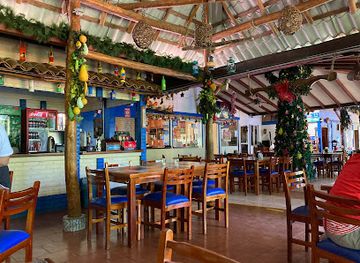
Mi Viejo Ranchito
Experience authentic Nicaraguan flavors at Mi Viejo Ranchito in Catarina - a must-visit restaurant for every traveler.
-
Restaurant
Mirador La Vista del Angel
Discover Mirador La Vista del Angel: where delicious cuisine meets stunning views in Nicaragua's breathtaking landscapes.
-
Nicaraguan
Baho Vilma
Discover the rich flavors of Nicaraguan cuisine at Baho Vilma in Masaya - where tradition meets taste.
-
Steak
Restaurante El Eskimo
Experience exquisite steak and authentic Nicaraguan cuisine at Restaurante El Eskimo in Managua.
Best bars in Masaya Lowlands
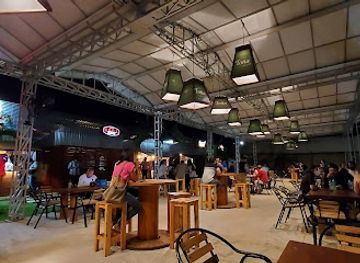
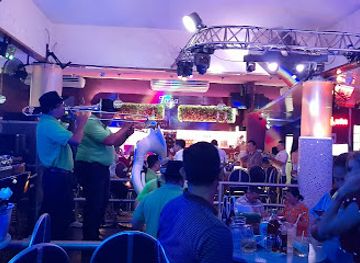
Evening life in the Masaya Lowlands is generally local and social rather than centred on large nightclubs. Masaya has the widest choice of casual bars, restaurants, music venues and traditional establishments, while the Pueblos Blancos become quiet comparatively early, with evenings focused on family life, small eateries and occasional community celebrations. Around Laguna de Apoyo, some visitor-oriented lodgings and restaurants provide relaxed lakeside drinks, but the area is not a continuous nightlife strip and transport back up the crater slopes needs planning. Religious festivals and folk events may bring music, processions and public dancing, although their character and dates vary from year to year. Granada, outside the region, has a larger visitor-oriented evening scene and can be used as a nearby alternative, but it should not be confused with nightlife within the Masaya Lowlands.
-
Nicaraguan
Baho Vilma
Experience the authentic taste of Nicaragua at Baho Vilma, where traditional flavors meet local hospitality in the heart of Masaya.
-
Restaurant
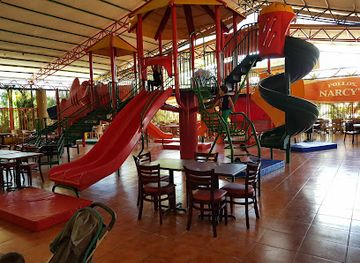
Pollos Narcy's Masaya
Discover the taste of Nicaragua at Pollos Narcy's Masaya, where delicious grilled chicken and local flavors come together in a welcoming atmosphere.
-
Bar
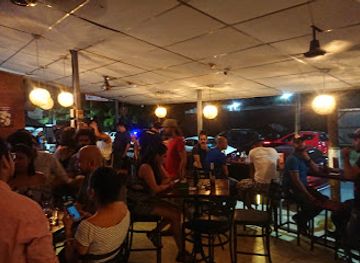
Ron Kon Rolas
Experience the vibrant nightlife at Ron Kon Rolas, Managua's premier bar and concert hall, where music and culture come alive.
-
Restaurant
El Mercado Viejo Craft Market
Discover the heart of Nicaraguan culture at El Mercado Viejo Craft Market, a vibrant hub for artisans, local cuisine, and unforgettable experiences.
Best nightclubs in Masaya Lowlands
Evening life in the Masaya Lowlands is generally local and social rather than centred on large nightclubs. Masaya has the widest choice of casual bars, restaurants, music venues and traditional establishments, while the Pueblos Blancos become quiet comparatively early, with evenings focused on family life, small eateries and occasional community celebrations. Around Laguna de Apoyo, some visitor-oriented lodgings and restaurants provide relaxed lakeside drinks, but the area is not a continuous nightlife strip and transport back up the crater slopes needs planning. Religious festivals and folk events may bring music, processions and public dancing, although their character and dates vary from year to year. Granada, outside the region, has a larger visitor-oriented evening scene and can be used as a nearby alternative, but it should not be confused with nightlife within the Masaya Lowlands.
-
Bar
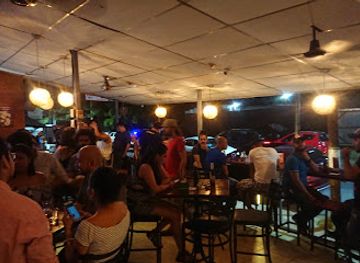
Ron Kon Rolas
Discover the lively atmosphere of Ron Kon Rolas, a bar and concert hall in Managua, offering great drinks and live music for unforgettable nights.
-
Disco club
El Chaman
Experience the electrifying nightlife at El Chaman, Managua's top disco club and bar, where rhythm, dance, and vibrant culture come alive.
-
Bar
Karaoke Music Town KM6
Experience the vibrant nightlife at Karaoke Music Town KM6, where singing, laughter, and fun come together in Managua, Nicaragua.
-
Disco club
Level One
Discover the electrifying nightlife of Level One, Granada's premier disco club, where music, dance, and fun unite in a vibrant atmosphere.

Best shops in Masaya Lowlands
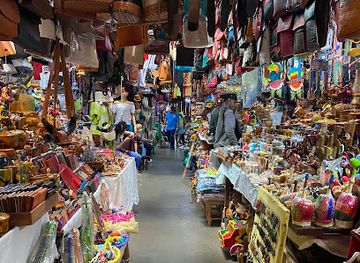
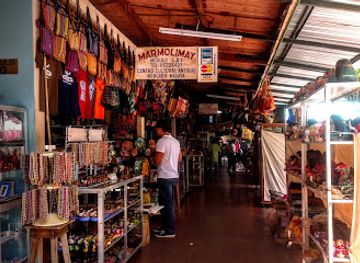
Shopping in the Masaya Lowlands is strongly associated with handmade goods and public markets. Masaya's Mercado de Artesanías and larger market areas offer pottery, hammocks, woven items, carved wood, masks, leather goods, clothing and small household objects, alongside the food and practical merchandise used by local residents. The Pueblos Blancos provide a more direct connection with production: San Juan de Oriente is known for pottery workshops, while neighbouring communities are associated with furniture, woodwork and other crafts. Designs and quality vary, so compare pieces, ask about materials and allow time for careful packing of ceramics. Local food products, sweets, coffee from elsewhere in Nicaragua and small artworks are practical alternatives to fragile souvenirs. Payment is often in cash, especially in workshops and markets. Buying directly from makers, when possible, supports the community more clearly than purchasing anonymous mass-produced goods presented as local craft.
-
Park
Masaya Central Park
Experience the lush beauty and cultural vibrancy of Masaya Central Park, Nicaragua's inviting urban oasis for relaxation and exploration.
-
Market
Main Market
Experience the lively atmosphere of Main Market in Masaya, where local culture, delicious cuisine, and unique crafts come together.
-
Market
Cultural Center Old Craft Market
Discover the Cultural Center Old Craft Market in Masaya, where local artisans showcase their crafts and vibrant Nicaraguan culture comes to life.
-
Park
Malecon
Discover the lively Malecon in Masaya, a beautiful park blending nature, culture, and local charm, perfect for relaxation and exploration.
Get your free copy of our complete guide to Masaya Lowlands, delivered straight to you.
Everything on this page, from attractions and restaurants to essentials and local phrases, in one PDF you can read offline, print or share.
Already have an account? Sign in
Your Masaya Lowlands guide is ready.
We'll send it to · Not you? Sign out

Getting your guide ready…
We are putting together a fresh copy of the Masaya Lowlands guide. This can take up to a minute.
This can take a few moments. If your browser asks, choose Allow so the download can start. You'll find the guide in your Downloads folder.
Nothing happened? Download it again
Sorry, the guide is taking longer than usual. Please try again in a minute, or get it by email instead.
Masaya Lowlands essentials
Currency and Payment
Safety
Emergency Situations
Do's and Don'ts
Local Tips
From Eve
Local phrases worth knowing
You don't need to get them perfect. A few words go a long way, and locals appreciate the effort.
Basics
| English | Local | Say it |
|---|---|---|
| Hello | Hola | [Oh-lah] |
| Goodbye | Adiós | [Ah-dee-ohs] |
| Yes | Sí | [See] |
| No | No | [Noh] |
| Please/You're welcome | Por favor/De nada | [Por fah-vor/Deh nah-dah] |
| Thank you | Gracias | [Gra-see-as] |
| Excuse me/Sorry | Perdón | [Peh-dohn] |
| How are you? | ¿Cómo estás? | [Koh-moh ehs-tahs] |
| Fine. And you? | Bien. ¿Y tú? | [Bee-en. Ee too] |
| Do you speak English? | ¿Hablas inglés? | [Ah-blahs een-glays] |
| I don't understand | No entiendo | [Noh en-tyen-doh] |
Eating & Drinking
| English | Local | Say it |
|---|---|---|
| I'd like to see the menu, please | Me gustaría ver el menú, por favor | [Meh goo-stah-ree-ah vehr el meh-noo, por fah-vor] |
| I don't eat meat | No como carne | [Noh koh-moh kar-neh] |
| Cheers! | ¡Salud! | [Sah-lood] |
| I would like to pay, please | Me gustaría pagar, por favor | [Meh goo-stah-ree-ah pah-gar, por fah-vor] |
Emergencies
| English | Local | Say it |
|---|---|---|
| Help! | ¡Ayuda! | [Ah-yoo-dah] |
| Go away! | ¡Ve lejos! | [Vay leh-hos] |
| Call the Police! | ¡Llama a la policía! | [Yah-mah ah lah poh-lee-see-ah] |
| Call a doctor! | ¡Llama a un médico! | [Yah-mah ah oon meh-dee-koh] |
| I'm lost | Estoy perdido | [Es-toy pehr-dee-doh] |
| I'm ill | Estoy enfermo | [Es-toy en-fehr-moh] |
Shopping
| English | Local | Say it |
|---|---|---|
| I'd like to buy... | Me gustaría comprar... | [Meh goo-stah-ree-ah kohm-prar] |
| I'm just looking | Solo estoy mirando | [Soh-lo es-toy mee-ran-do] |
| How much is it? | ¿Cuánto cuesta? | [Kwan-toh kwes-tah] |
| That's too expensive | Es demasiado caro | [Es deh-mah-see-ah-doh kah-roh] |
| Can you lower the price? | ¿Puedes bajar el precio? | [Pweh-des bah-har el preh-syo] |
Time & Numbers
| English | Local | Say it |
|---|---|---|
| What time is it? | ¿Qué hora es? | [Keh oh-rah es] |
| It's one o'clock | Es la una | [Es lah oo-nah] |
| Half past (10) | Y diez y media | [Ee dyez ee meh-dee-ah] |
| Morning | Mañana | [Mah-nyah-nah] |
| Afternoon | Tarde | [Tar-deh] |
| Evening | Noche | [Noh-cheh] |
| Yesterday | Ayer | [Ah-yer] |
| Today | Hoy | [Oy] |
| Tomorrow | Mañana | [Mah-nyah-nah] |
| 1 | Uno | [Oo-no] |
| 2 | Dos | [Dohs] |
| 3 | Tres | [Trehs] |
| 4 | Cuatro | [Kwah-troh] |
| 5 | Cinco | [Sin-koh] |
| 6 | Seis | [Says] |
| 7 | Siete | [Syeh-teh] |
| 8 | Ocho | [Oh-cho] |
| 9 | Nueve | [Nweh-beh] |
| 10 | Diez | [Dyehs] |
Transport & Directions
| English | Local | Say it |
|---|---|---|
| Where's a/the...? | ¿Dónde está un/los...? | [Dohn-deh ehs-tah oon/lohs] |
| What's the address? | ¿Cuál es la dirección? | [Kwahl es lah dee-rek-syon] |
| Can you show me (on the map)? | ¿Puedes mostrarme (en el mapa)? | [Pweh-des mohs-trar-me (en el mah-pah)] |
| When's the next (bus)? | ¿Cuándo es el próximo (bus)? | [Kwan-doh es el prohk-see-mo (boos)] |
| A ticket (to ....) | Un boleto (a ....) | [Oon boh-leh-toh (ah ....)] |
History of Masaya Lowlands
Chorotega and Nahua settlement before Spanish rule
Before the Spanish conquest, the Masaya area was inhabited by Indigenous communities, particularly Chorotega-speaking peoples, alongside later Nahua influences in parts of western Nicaragua. The volcanic soils, lakes and fertile plains supported agriculture, while settlements developed networks of exchange across the Pacific lowlands. Pottery, carved objects and other archaeological evidence reveal a long-established material culture rather than a landscape first shaped by colonial settlement. Indigenous identity remains especially visible in Masaya's Monimbó neighbourhood and in the craft traditions of the Pueblos Blancos, although modern communities have experienced centuries of social and economic change.
Spanish conquest and colonial reorganisation
Spanish forces entered the Pacific lowlands in the sixteenth century, transforming existing political structures, landholding and religious life. Indigenous communities were incorporated into colonial systems of tribute and labour, while churches and town layouts introduced new institutions and building forms. Masaya developed as an important settlement and trading centre between the principal cities of the Nicaraguan Pacific. Colonial agriculture also took advantage of the area's productive volcanic soils. The resulting landscape combined Indigenous communities and practices with Spanish administration, Catholic observance and new commercial connections.
Colonial craft and agricultural economies
During the colonial and early republican periods, the towns south of Masaya became known for pottery, woodwork, household manufacture and agricultural production. Craft skills were maintained through families and local workshops, while market exchange linked the Pueblos Blancos and Masaya with larger Nicaraguan towns. The products changed with demand, but the combination of hand production and rural commerce endured. Present-day pottery studios, market stalls and small workshops are part of this longer economic history, although contemporary makers also respond to tourism, design trends and changing access to materials.
Independence and the growth of regional commerce
Nicaragua became independent from Spanish rule in 1821, after which Masaya and the surrounding lowlands continued to develop within the political and commercial life of the new republic. The region's position between Managua, Granada and the Pacific corridor supported trade in agricultural products, food and manufactures. Masaya's markets grew in importance, and improved roads and later transport links strengthened its role as a service centre. The town's churches, civic buildings and dense commercial streets reflect successive periods of colonial inheritance, republican expansion and modern urban growth.
Masaya, Monimbó and the 1970s revolution
Masaya became a major centre of opposition to the Somoza dictatorship during the Nicaraguan Revolution. The Indigenous neighbourhood of Monimbó was particularly prominent in the resistance, and confrontations in 1978 and 1979 brought severe violence and destruction to the town. Local memory of those events remains central to Masaya's public identity, commemorations and museums. The revolutionary period also shaped national perceptions of Monimbó as a symbol of popular resistance. Visitors should approach this history with attention to the human cost rather than treating it simply as a colourful political episode.
Modern craft communities and cultural tourism
From the late twentieth century onwards, the Pueblos Blancos and Masaya became increasingly recognised for pottery, textiles, furniture, masks and other handmade products. Cooperative organisation, family workshops and government and private craft initiatives helped connect makers with national and international markets. Tourism has brought income and visibility, but it has also encouraged adaptation in designs, scale and presentation. The strongest way to understand this living tradition is to visit working communities respectfully, ask about the making process and recognise that craft production remains an occupation and cultural practice, not merely a souvenir display.
Masaya Lowlands in Photos
Browse through our photo collection highlighting the charm and character of the destination.
Neighbouring regions of Masaya Lowlands
The closest regions to Masaya Lowlands, if you have time for more than one.
-

-

-

-

-


Swipe for more regions
Explore more
Explore more of Nicaragua
Discover Nicaragua: Explore breathtaking lakes, active volcanoes, colonial cities, and pristine beaches in a country rich with culture and adventure.
Explore Nicaragua