

Free Azawagh Travel Guide & Mobile App
Explore Azawagh with free travel guides. Discover regional history, expert tips, proposed trips, and audio guides on web or mobile app.


Azawagh in Niger is a remote Sahelian basin of Tuareg heritage, pastoral landscapes and ancient routes, visited only with specialist security planning.
Read more about Azawagh
When is the best time to visit Azawagh?
Best: December–February · 24–27°C| Month | High (°C) | Rainfall (mm) |
|---|---|---|
| January (best) | 25 | 1 |
| February (best) | 27 | 1 |
| March | 32 | 2 |
| April | 35 | 3 |
| May | 39 | 4 |
| June | 41 | 5 |
| July | 41 | 6 |
| August | 39 | 7 |
| September | 37 | 4 |
| October | 34 | 2 |
| November | 28 | 1 |
| December (best) | 24 | 1 |
Getting to and around Azawagh
How to get there
Transportation
Best attractions in Azawagh
Azawagh’s attractions are primarily landscapes, living culture and archaeological context rather than formal visitor sites. The broad basin offers views of open Sahelian plains, dry channels, rocky horizons and seasonal grazing country shaped by the movement of cattle, goats, sheep and camels. Around settlements such as Abalak and Tchin-Tabaraden, markets and wells reveal how trade and pastoral life are organised, although they should be visited only with local permission and appropriate security arrangements. The wider region’s traces of prehistoric occupation and funerary monuments are scientifically important, but many are remote, unmarked and vulnerable to looting; they should never be approached or collected from without proper authorisation. Cultural encounters are best understood through locally arranged conversations with Tuareg communities, not staged performances. There are no dependable networks of museums, lodges, marked walking routes or family attractions, and facilities for medical support and rescue are very limited. In practical terms, the Nigerien Azawagh is a specialist field environment whose value lies in its geography, pastoral knowledge, historical routes and changing relationship between mobility and settlement, rather than in a conventional sightseeing circuit.
-
Tourist attraction
Mosquée Cité Caisse
Discover the architectural beauty and cultural significance of Mosquée Cité Caisse, a must-visit landmark in the heart of Niamey, Niger.
-
Farm household tour
FERME YOUYOU
Explore Ferme Youyou in Niamey, where agricultural charm meets delicious Nigerien cuisine in a family-friendly setting.
-
Park
ⵛⵢⵗⵎⵎⵏⴻⵏ
Discover the tranquil beauty of ⵛⵢⵗⵎⵎⵏⴻⵏ Park, an oasis of nature and serenity in Niger.


Best landmarks in Azawagh
Azawagh’s most significant landmarks are geographical and cultural rather than monumental. The basin itself is the defining landmark: a wide, austere expanse whose seasonal grasses, shallow depressions, dry waterways and wells organise movement across the landscape. The settlements of Abalak and Tchin-Tabaraden are important local reference points, linking pastoral hinterlands with markets, administration and services, although neither should be approached as a conventional sightseeing centre. Across the wider Nigerien Azawagh, prehistoric stone structures, burial monuments and other archaeological traces record human activity during earlier climatic periods, but many are remote, unmarked and sensitive sites requiring formal permission. Wells and seasonal grazing corridors also have deep practical and cultural importance, yet they are working places rather than tourist monuments. The region’s strongest visual identity comes from the relationship between open plains, mobile herding, isolated settlements and the distant transition towards rocky desert country associated with the Aïr. All visits to such places require current security assessment, local guidance and respect for community access.
-
Mosque
Mosquée Cité Caisse
Experience the serene beauty of Mosquée Cité Caisse in Niamey, a cultural gem where spirituality meets stunning architecture.
-
Farm household tour
FERME YOUYOU
Experience the authentic charm of Ferme Youyou, where agriculture meets culinary delight in the heart of Niamey.
-
Mosque
Grande Mosquée d'Agadez
Explore the Grande Mosquée d'Agadez, a UNESCO Heritage site, showcasing stunning Sahara architecture and the rich cultural history of Niger.
-
Movie theater
Annuchuwa
Discover the best in cinema at Annuchuwa, Agadez's premier movie theater showcasing local and international films in a vibrant atmosphere.


Explore Azawagh on the map
Plan your trip on one map. See where the top cities, national parks and sights are, and book hotels and experiences in a few clicks.
Best hotels in Azawagh
Best restaurants in Azawagh
Dining in Azawagh is closely connected to pastoral life, local markets and the food supplies that can be transported or stored in a dry environment. Visitors may encounter millet and other grains, rice, beans, meat, milk products, dates and tea, with preparation varying between households, camps and market settlements. Goat and mutton are important in many Sahelian diets, while camel products may be encountered in pastoral contexts, though availability is not consistent. Meals for organised expeditions are normally planned in advance and prepared by the travelling team, rather than obtained from a developed restaurant scene. In towns and market centres, modest cafés and food stalls may serve national Nigerien staples, but hygiene, water and refrigeration standards cannot be assumed. Hospitality and shared tea are culturally significant, yet visitors should accept food and drink courteously while explaining medical or dietary restrictions clearly. There is no established fine-dining circuit, and imported provisions, safe drinking water and dietary alternatives should be arranged before entering remote country.
-
Restaurant
Amandine
Discover Amandine in Niamey: where local flavors meet international cuisine for an unforgettable dining experience.
-
Restaurant
La Cabane
Experience the vibrant flavors of Niger at La Cabane in Niamey - where local meets global cuisine.
-
Restaurant
Rawda
Experience authentic Nigerien flavors and global cuisine at Rawda, Niamey's vibrant dining destination.
-
Restaurant
Côté Jardin
Discover Côté Jardin: Niamey's hidden gem for exquisite dining featuring local and international cuisine amidst serene surroundings.


Best bars in Azawagh
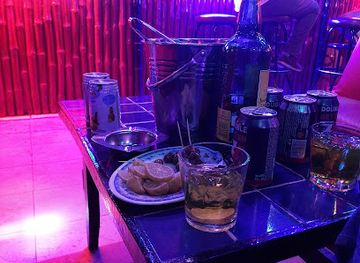
Azawagh has no established bar or nightclub circuit. Evening life in settlements is more likely to centre on family visits, tea, conversation, market activity and occasional community gatherings than on commercial nightlife. Alcohol may be socially inappropriate or unavailable in some communities, and visitors should never assume that drinking is part of local hospitality. In remote camps, darkness, security concerns, cold nights and the need to conserve fuel and communications equipment usually make evenings quiet. Any cultural performance, music gathering or communal event should be approached through a trusted local host rather than treated as an open tourist attraction. In larger southern Nigerien towns outside the core Azawagh landscape, visitors may find more conventional cafés and restaurants, but these should not be confused with a regional nightlife scene and access must still be assessed against current security advice.
-
Restaurant
New York Restaurant and Bar
Discover the vibrant flavors of Niamey at New York Restaurant and Bar, where culinary excellence meets a lively atmosphere.
-
Restaurant
Cap Banga
Discover Cap Banga in Niamey, where local flavors meet vibrant nightlife in a cozy restaurant and bar setting.
-
Bar
Le Patio Club
Discover the vibrant nightlife at Le Patio Club in Niamey, the perfect bar for tourists to enjoy drinks and local culture.
-
Bar
Desperado
Experience the vibrant nightlife of Niamey at Desperado, where culture, drinks, and music converge in a lively bar atmosphere.



Best nightclubs in Azawagh
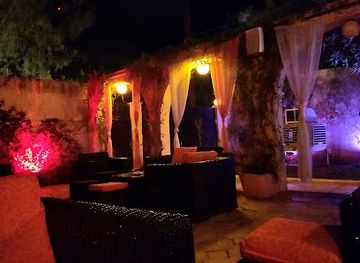
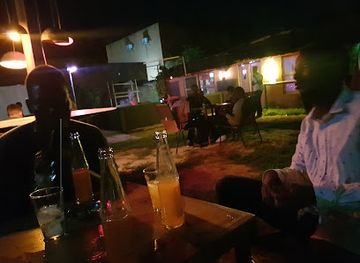
Azawagh has no established bar or nightclub circuit. Evening life in settlements is more likely to centre on family visits, tea, conversation, market activity and occasional community gatherings than on commercial nightlife. Alcohol may be socially inappropriate or unavailable in some communities, and visitors should never assume that drinking is part of local hospitality. In remote camps, darkness, security concerns, cold nights and the need to conserve fuel and communications equipment usually make evenings quiet. Any cultural performance, music gathering or communal event should be approached through a trusted local host rather than treated as an open tourist attraction. In larger southern Nigerien towns outside the core Azawagh landscape, visitors may find more conventional cafés and restaurants, but these should not be confused with a regional nightlife scene and access must still be assessed against current security advice.
-
Lounge
Sky Lounge
Discover the elegance of Sky Lounge in Niamey, where stunning views meet a vibrant atmosphere and delectable drinks.
-
Bar
Club Mooky
Discover the vibrant nightlife at Club Mooky in Niamey, where great drinks meet lively music in an unforgettable atmosphere.
-
Night club
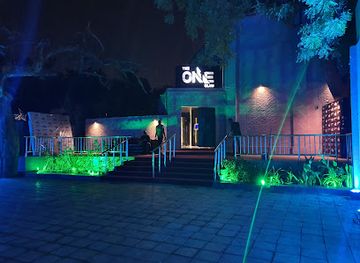
The on1e club
Discover the electrifying nightlife of Niamey at The on1e Club, where music, dance, and culture collide in vibrant harmony.
-
Night club
LEVEL CLUB & LOUNGE
Dive into the vibrant nightlife of Niamey at LEVEL CLUB & LOUNGE, where music, dance, and culture collide in an unforgettable experience.
Best shops in Azawagh
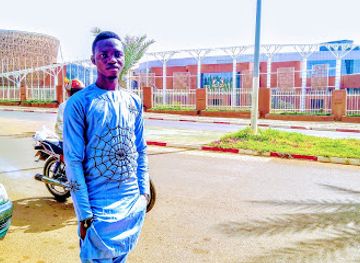
Shopping in Azawagh is concentrated in local markets rather than dedicated tourist districts. Abalak and Tchin-Tabaraden serve as trading points where livestock, grain, dates, tea, clothing, household goods, leather items and practical equipment circulate between settled communities and pastoral camps. Traditional Tuareg metalwork, leatherwork and textiles may be available, but quality, provenance and current availability vary; purchase directly through reputable local contacts and avoid archaeological objects or anything presented as an ancient artefact without clear lawful provenance. Markets are working economic spaces, so ask before taking photographs and do not treat bargaining, animals or private transactions as entertainment. Visitors should obtain most specialist equipment, medicines, fuel and reliable food supplies before entering the region, since retail choice and opening arrangements are limited. Any craft purchases should be made with sensitivity to local livelihoods and without encouraging the removal of culturally important objects.
-
Store
Grand Market Niamey
Immerse yourself in the local culture at Grand Market Niamey, where vibrant goods and warm interactions await every visitor.
-
Grocery store
N'wala store
Explore the vibrant offerings of N'wala Store, a local grocery treasure in Zinder, filled with fresh produce and authentic Nigerien flavors.
-
Supermarket
Supermarché AZAR
Explore the flavors of Niger at Supermarché AZAR, a vibrant supermarket offering local and international products in Niamey.
-
Costume store
Ado Boutique
Discover the vibrant culture of Niger at Ado Boutique, where traditional costumes and local crafts come to life in the heart of Niamey.


Get your free copy of our complete guide to Azawagh, delivered straight to you.
Everything on this page, from attractions and restaurants to essentials and local phrases, in one PDF you can read offline, print or share.
Already have an account? Sign in
Your Azawagh guide is ready.
We'll send it to · Not you? Sign out

Getting your guide ready…
We are putting together a fresh copy of the Azawagh guide. This can take up to a minute.
This can take a few moments. If your browser asks, choose Allow so the download can start. You'll find the guide in your Downloads folder.
Nothing happened? Download it again
Sorry, the guide is taking longer than usual. Please try again in a minute, or get it by email instead.
Azawagh essentials
Currency and Payment
Safety
Emergency Situations
Do's and Don'ts
Local Tips
From Eve
Local phrases worth knowing
You don't need to get them perfect. A few words go a long way, and locals appreciate the effort.
Basics
| English | Local | Say it |
|---|---|---|
| Hello | Ahlan | [Ahlan] |
| Goodbye | Ma'a as-salama | [Ma'a as-salama] |
| Yes | Naam | [Naam] |
| No | La | [La] |
| Please/You're welcome | Afwan | [Afwan] |
| Thank you | Shukran | [Shukran] |
| Excuse me/Sorry | Asif | [Asif] |
| How are you? | Kayfa halak? | [Kayfa halak?] |
| Fine. And you? | Ana bikhair. Wa anta? | [Ana bikhair. Wa anta?] |
| Do you speak English? | Hal tatakallam al-ingliziya? | [Hal tatakallam al-ingliziya?] |
| I don't understand | Ana la afham | [Ana la afham] |
Eating & Drinking
| English | Local | Say it |
|---|---|---|
| I'd like to see the menu, please | Urid an ara al-menu, afwan | [Urid an ara al-menu, afwan] |
| I don't eat meat | Ana la akul lahm | [Ana la akul lahm] |
| Cheers! | Sahha! | [Sahha!] |
| I would like to pay, please | Urid an adfa'a, afwan | [Urid an adfa'a, afwan] |
Emergencies
| English | Local | Say it |
|---|---|---|
| Help! | Al-musa'ada! | [Al-musa'ada!] |
| Go away! | Ihzar! | [Ihzar!] |
| Call the Police! | Ittasil bil-shurta! | [Ittasil bil-shurta!] |
| Call a doctor! | Ittasil bi-tabeeb! | [Ittasil bi-tabeeb!] |
| I'm lost | Ana da'if | [Ana da'if] |
| I'm ill | Ana marid | [Ana marid] |
Shopping
| English | Local | Say it |
|---|---|---|
| I'd like to buy... | Urid an ashtari... | [Urid an ashtari...] |
| I'm just looking | Ana faqat an-nazhar | [Ana faqat an-nazhar] |
| How much is it? | Kam thamanuh? | [Kam thamanuh?] |
| That's too expensive | Thalika ghaly jidan | [Thalika ghaly jidan] |
| Can you lower the price? | Hal yumkinuk khafad al-thaman? | [Hal yumkinuk khafad al-thaman?] |
Time & Numbers
| English | Local | Say it |
|---|---|---|
| What time is it? | Ay sa'a? | [Ay sa'a?] |
| It's one o'clock | Innaha sa'a wahida | [Innaha sa'a wahida] |
| Half past (10) | Nisf min (10) | [Nisf min (10)] |
| Morning | Sabah | [Sabah] |
| Afternoon | Ba'ad al-zuhur | [Ba'ad al-zuhur] |
| Evening | Masa' | [Masa'] |
| Yesterday | Ams | [Ams] |
| Today | Al-yawm | [Al-yawm] |
| Tomorrow | Ghad | [Ghad] |
| 1 | Wahid | [Wahid] |
| 2 | Ithnayn | [Ithnayn] |
| 3 | Thalatha | [Thalatha] |
| 4 | Arba'a | [Arba'a] |
| 5 | Khamsa | [Khamsa] |
| 6 | Sitta | [Sitta] |
| 7 | Sab'a | [Sab'a] |
| 8 | Thamaniya | [Thamaniya] |
| 9 | Tis'a | [Tis'a] |
| 10 | Ashara | [Ashara] |
Transport & Directions
| English | Local | Say it |
|---|---|---|
| Where's a/the...? | Ayna ...? | [Ayna ...?] |
| What's the address? | Ma huwa al-'unwan? | [Ma huwa al-'unwan?] |
| Can you show me (on the map)? | Hal tumkinuni an turini (ala al-kharita)? | [Hal tumkinuni an turini (ala al-kharita)?] |
| When's the next (bus)? | Mata al-hafila al-qadima? | [Mata al-hafila al-qadima?] |
| A ticket (to ....) | Tazkara (ila ...) | [Tazkara (ila ...)] |
History of Azawagh
Ancient settlement and the changing Sahara
The wider Azawagh basin preserves evidence of long human occupation, from periods when the Sahara and Sahel were considerably wetter than today. Ancient communities used seasonal watercourses, lakes and grazing areas, leaving archaeological remains that include settlement traces, stone tools and funerary monuments in parts of the broader region. These remains demonstrate that the area was never simply an empty desert. Climate change, the contraction of water sources and the growth of pastoralism gradually shaped the mobile economies that are characteristic of the region today.
Trans-Saharan exchange and pastoral mobility
For centuries, the Azawagh formed part of a network linking Saharan routes with Sahelian markets. Caravans and pastoral groups moved through a landscape organised around wells, seasonal pasture and trading settlements rather than fixed roads. Livestock, salt, dates, leather goods and grain circulated between ecological zones. Control of water points and commercial routes influenced political authority, while the ability to move animals across a difficult environment remained central to the wealth and resilience of communities.
Tuareg confederations and Islamic scholarship
Tuareg-speaking communities became one of the most influential cultural forces across the central Sahara and Sahel, including the Nigerien Azawagh. Their social organisation was historically connected to confederations, protected routes, pastoral territories and relationships with settled communities. Islam shaped education, law, family life and scholarship, although local practice developed through interaction with older social traditions. Authority was negotiated through lineage, reputation, patronage and access to resources rather than being represented by a single regional capital.
Colonial incorporation into Niger
French colonial expansion brought the Azawagh into a new administrative and military framework during the late nineteenth and early twentieth centuries. Colonial officials attempted to regulate movement, taxation, trade and political authority across a territory that had previously been governed through more flexible local relationships. Borders drawn between French West Africa and neighbouring colonial territories divided established routes and communities. The resulting administrative boundaries continue to sit uneasily alongside pastoral territories and the wider cultural geography of Azawagh.
Drought, sedentarisation and economic change
Severe droughts, especially those affecting the Sahel during the 1970s and 1980s, caused major livestock losses and intensified pressure on pastoral livelihoods. Many families altered migration patterns, sought work or assistance in towns, or combined herding with settled agriculture and trade. Wells, rural services and market centres became increasingly important, while environmental uncertainty made traditional mobility harder to maintain. These changes did not end pastoralism, but they transformed the relationship between seasonal movement, town life and access to land and water.
Rebellion, political marginalisation and insecurity
Northern Niger experienced Tuareg rebellions in the 1990s and again from 2007, reflecting grievances concerning political representation, development, military administration and the distribution of natural-resource benefits. Peace agreements brought periods of reduced conflict but did not remove structural challenges. Since the 2010s, instability in the wider Sahel, armed-group activity and cross-border insecurity have made parts of the Azawagh and surrounding areas highly dangerous. This recent history is essential context for understanding why ordinary tourism infrastructure remains absent.
Azawagh in Photos
Browse through our photo collection highlighting the charm and character of the destination.
Neighbouring regions of Azawagh
The closest regions to Azawagh, if you have time for more than one.
-

-

-

-

-


Swipe for more regions
Explore more

Explore more of Niger
Discover the untamed beauty of Niger – a land of desert wonders, rich traditions, and vibrant cultures, nestled in the heart of West Africa.
Explore Niger