

Free Anson Bay Travel Guide & Mobile App
Explore Anson Bay with free travel guides. Discover regional history, expert tips, proposed trips, and audio guides on web or mobile app.


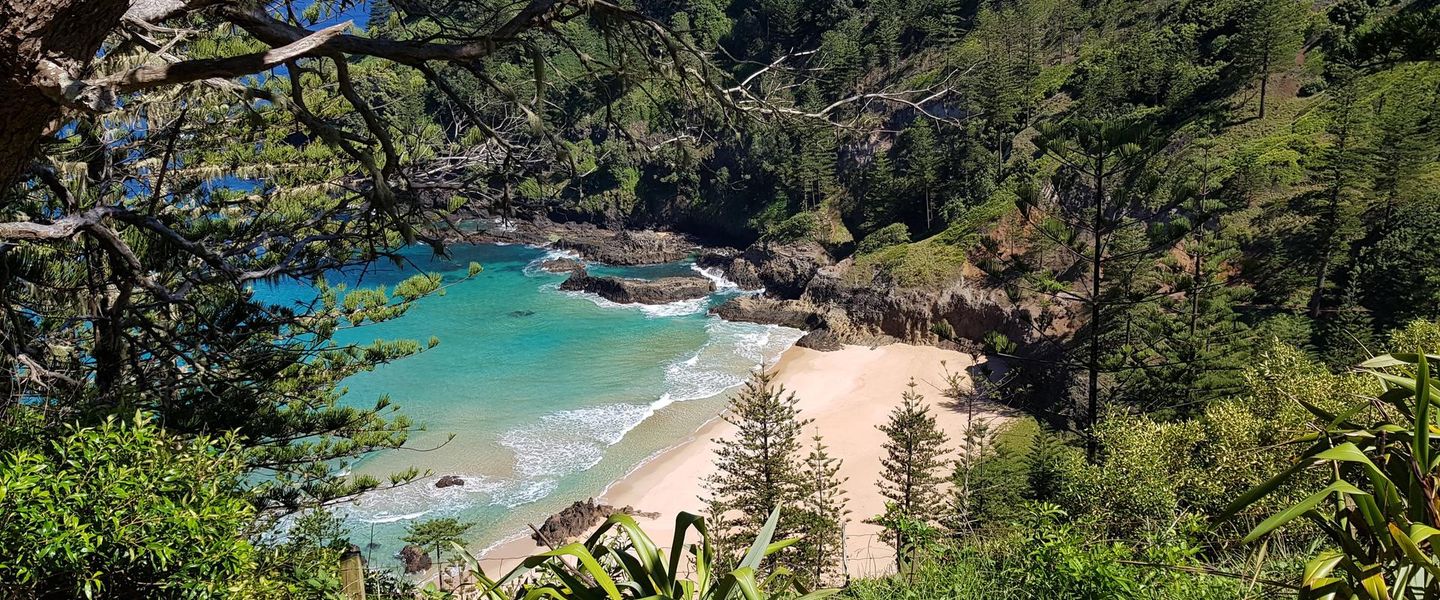


Anson Bay on Norfolk Island offers coastal cliffs, open Pacific views, rural roads and quiet sunset scenery away from the island’s main centres.
Read more about Anson Bay
When is the best time to visit Anson Bay?
Best: December–February · 25–26°C| Month | High (°C) | Rainfall (mm) |
|---|---|---|
| January (best) | 25 | 110 |
| February (best) | 26 | 100 |
| March | 24 | 120 |
| April | 22 | 110 |
| May | 20 | 100 |
| June | 18 | 90 |
| July | 17 | 90 |
| August | 18 | 100 |
| September | 19 | 110 |
| October | 21 | 120 |
| November | 22 | 120 |
| December (best) | 25 | 110 |
Getting to and around Anson Bay
How to get there
Transportation
Best attractions in Anson Bay
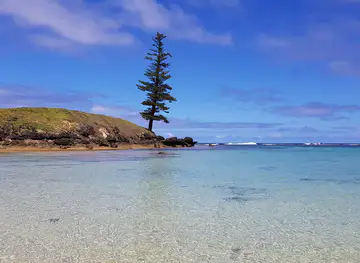
Anson Bay’s principal attraction is its coastal setting rather than a concentration of built visitor sites. Viewpoints along the surrounding roads reveal a broad volcanic amphitheatre of pasture, steep green slopes and dark headlands dropping towards the Pacific. The bay is especially notable for its open horizons and changing weather, with late-day light often bringing out the contours of the cliffs. Rural driving is part of the experience, as the approach passes working land, scattered properties and vegetation shaped by Norfolk Island’s exposed climate. There is limited conventional access to the shore, so visitors should not expect a developed beach, promenade or watersports centre. Wildlife observation is possible from a respectful distance, particularly for seabirds and other species moving along the western coast, but the area lacks the facilities of a formal nature park. Anson Bay works best as a quiet scenic stop within a wider island itinerary, paired with the historic precinct at Kingston or the island’s other approved viewpoints elsewhere, rather than as a destination requiring a full day of organised activities.
-
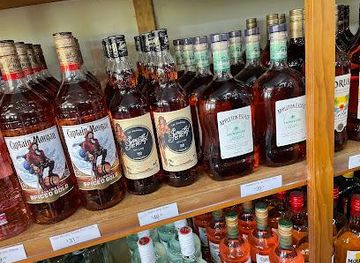
Bottle Shop and Liquor Store
Norfolk Island Liquor Bond Store
Experience the local flavors of Norfolk Island at the Liquor Bond Store, where exceptional spirits and wines await every visitor.
-
Tourist attraction
Каменния плаж
Explore Kamennaya Plazh, a serene beach on Norfolk Island, perfect for relaxation, swimming, and stunning sunsets, all embraced by nature's beauty.

Best landmarks in Anson Bay
Anson Bay itself is the area’s defining geographical landmark, a deep coastal indentation set beneath the western uplands of Norfolk Island. Its steep terrain shows the island’s volcanic structure particularly clearly, with cultivated ground above contrasting with rugged slopes and the open Pacific below. The surrounding cliffs and headlands are more significant as a continuous coastal formation than as individually named monuments, and their visual character changes with weather, cloud and late-afternoon light. Rural roads and pasture boundaries provide a second layer of local identity, reflecting the agricultural use of the island’s interior and the dispersed settlement pattern beyond the historical centre at Kingston. There are no cathedral-scale buildings, forts or formal civic monuments at Anson Bay; its importance is scenic, geological and regional. Visitors should view the coastline from safe public stopping points and avoid treating the cliffs as an access route. The bay’s undeveloped appearance is itself part of its value, preserving a direct relationship between Norfolk Island’s rural landscape and the sea.
-
Vista point
Captain Cook Lookout
Experience the stunning panoramic views at Captain Cook Lookout, a must-visit vista point on Norfolk Island, showcasing nature's beauty and maritime history.
-
National park
Norfolk Island National Park
Discover the stunning landscapes and rich heritage of Norfolk Island National Park, a natural paradise for nature lovers and history enthusiasts alike.
-
Park
Mount Pitt Lookout
Discover the stunning landscapes from Mount Pitt Lookout, a serene park offering breathtaking views and a peaceful escape on Norfolk Island.
-
Vista point
Queen Elizabeth Lookout
Experience the stunning vistas of Kingston and Arthur's Vale at Queen Elizabeth Lookout, Norfolk Island’s top tourist attraction.


Explore Anson Bay on the map
Plan your trip on one map. See where the top cities, national parks and sights are, and book hotels and experiences in a few clicks.
Best hotels in Anson Bay
Best restaurants in Anson Bay
There are no established restaurant facilities at Anson Bay, and dining is not a defining part of the locality. Most meals should be arranged in or near Burnt Pine, outside the area, where Norfolk Island’s cafés, restaurants, takeaways and grocery shops provide the practical base for excursions. Island dining commonly draws on Australian ingredients and home-style cooking, with locally grown produce, seafood, meat, baking and seasonal fruit appearing according to availability. Visitors staying in self-catering accommodation can make useful purchases before travelling west, while a picnic is sensible for a scenic stop, provided all rubbish is removed. Rural properties and food producers may operate separately from normal restaurant hours, so do not assume that a passing farm or roadside building serves food. Norfolk Island’s distinctive food culture is best understood across the island, through local produce and family-run hospitality, rather than through a specific Anson Bay dining scene.
-
Restaurant
The Olive
Discover the flavors of Norfolk Island at The Olive - where local ingredients meet culinary creativity in a cozy setting.
-
Restaurant
Hilli Restaurant & Cafe
Discover Hilli Restaurant & Cafe on Norfolk Island for fresh local cuisine and stunning views in a charming atmosphere.
-
Western
Bounty Bar & Grill
Experience the best of Western cuisine at Bounty Bar & Grill on Norfolk Island – where taste meets island charm.
-
Cafe
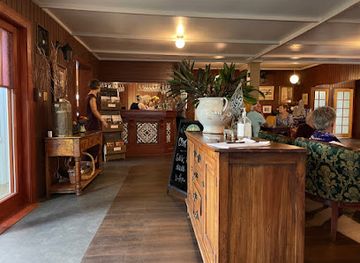
The Golden Orb Cafe
Experience delicious local cuisine in a picturesque setting at The Golden Orb Cafe on Norfolk Island.


Best bars in Anson Bay
Anson Bay has no bar or nightclub district and is generally quiet after dark. Evening entertainment is concentrated around Burnt Pine and other established settlement areas outside the locality, where visitors may find pubs, licensed restaurants and occasional live music or community events, subject to changing schedules. The rural western coast is better suited to watching the sunset, stargazing where conditions allow and enjoying the silence than to organised nightlife. If travelling back from Burnt Pine after dinner, allow for dark, narrow roads, livestock and limited roadside lighting, and arrange a taxi or designated driver rather than relying on an informal lift. Alcohol should not be taken near cliff edges or the water, where wind, uneven ground and poor visibility increase risk. Anson Bay’s evening character is defined by landscape and seasonal weather, not by commercial venues.
-
Restaurant
The Olive
Explore the rich culinary heritage of Norfolk Island at The Olive, a charming restaurant offering delightful dishes and a warm atmosphere.
-
Restaurant
Hilli Restaurant & Cafe
Explore a taste of Norfolk Island at Hilli Restaurant & Cafe, where fresh flavors and stunning views create an unforgettable dining experience.
-
Restaurant
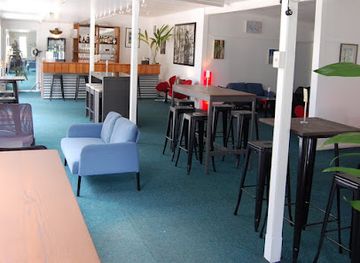
The Bowlo Bistro
Discover the culinary delight of The Bowlo Bistro on Norfolk Island, where local flavors meet exquisite dining in a warm atmosphere.
-
Western
Bounty Bar & Grill
Experience the best of Western cuisine with a local twist at Bounty Bar & Grill on beautiful Norfolk Island, a must-visit for food lovers.


Best nightclubs in Anson Bay
Anson Bay has no bar or nightclub district and is generally quiet after dark. Evening entertainment is concentrated around Burnt Pine and other established settlement areas outside the locality, where visitors may find pubs, licensed restaurants and occasional live music or community events, subject to changing schedules. The rural western coast is better suited to watching the sunset, stargazing where conditions allow and enjoying the silence than to organised nightlife. If travelling back from Burnt Pine after dinner, allow for dark, narrow roads, livestock and limited roadside lighting, and arrange a taxi or designated driver rather than relying on an informal lift. Alcohol should not be taken near cliff edges or the water, where wind, uneven ground and poor visibility increase risk. Anson Bay’s evening character is defined by landscape and seasonal weather, not by commercial venues.
-
Club
Norfolk Island Leagues Club
Experience the lively spirit of Norfolk Island at the Leagues Club, where sports, socializing, and stunning views come together.
-
Bar
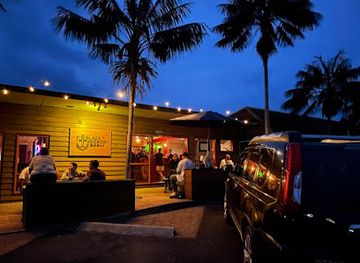
Black Anchor Bar
Experience the lively atmosphere of Black Anchor Bar on Norfolk Island, where great cocktails and friendly locals come together for an unforgettable night.
-
Bar
Wunna Bar & Lounge
Discover the essence of Norfolk Island at Wunna Bar & Lounge, where local flavors meet a vibrant atmosphere for an unforgettable experience.
-
Tourist attraction
Wonderland By Night
Discover the enchanting Wonderland By Night on Norfolk Island, where vibrant illuminations and local culture create a magical evening experience.
Best shops in Anson Bay
Anson Bay has no shops, market street or craft centre, so shopping should be completed in Burnt Pine or another established settlement before travelling west. Norfolk Island’s retail offering is modest and practical, with groceries, locally made foods, small gifts, books, artwork and craft items available according to the season and individual business schedules. Regional products may include preserves, baked goods, produce and souvenirs reflecting Norfolk Island’s natural and cultural heritage, while locally made art and handmade items offer a more meaningful alternative to generic keepsakes. Visitors staying in self-catering accommodation should buy provisions in advance, as there is no reliable opportunity to purchase food or drinks beside the bay. Do not remove stones, plants, shells or other natural material from the coast, and remember that the rural character of Anson Bay means its most valuable feature is its landscape rather than a commercial shopping experience.
-
Supermarket
Foodland Supermarket
Explore the flavors of Norfolk Island at Foodland Supermarket, your one-stop shop for fresh local produce and gourmet treats.
-
Bottle Shop and Liquor Store
Norfolk Island Liquor Bond Store
Explore the finest selection of local wines and spirits at Norfolk Island Liquor Bond Store, where every bottle tells a unique story.
-
General store
Pete's Place
Experience the charm of Norfolk Island at Pete's Place, a beloved general store offering local goods, warm hospitality, and a glimpse into island life.
-
Coffee store
Prinke Eco Store
Explore sustainable living at Prinke Eco Store in Norfolk Island, offering organic coffee, fresh produce, and eco-friendly goods for the conscious traveler.


Get your free copy of our complete guide to Anson Bay, delivered straight to you.
Everything on this page, from attractions and restaurants to essentials and local phrases, in one PDF you can read offline, print or share.
Already have an account? Sign in
Your Anson Bay guide is ready.
We'll send it to · Not you? Sign out

Getting your guide ready…
We are putting together a fresh copy of the Anson Bay guide. This can take up to a minute.
This can take a few moments. If your browser asks, choose Allow so the download can start. You'll find the guide in your Downloads folder.
Nothing happened? Download it again
Sorry, the guide is taking longer than usual. Please try again in a minute, or get it by email instead.
Anson Bay essentials
Currency and Payment
Safety
Emergency Situations
Do's and Don'ts
Local Tips
From Eve
Local phrases worth knowing
You don't need to get them perfect. A few words go a long way, and locals appreciate the effort.
Basics
| English | Local | Say it |
|---|---|---|
| Hello | G'day | [guh-day] |
| Goodbye | Farewell | [fare-well] |
| Yes | Aye | [eye] |
| No | Nay | [nay] |
| Please/You're welcome | Please | [pleez] |
| Thank you | Cheers | [cheers] |
| Excuse me/Sorry | Sorry | [sor-ee] |
| How are you? | How's it going? | [how's it goin'?] |
| Fine. And you? | Good, and you? | [good, an' you?] |
| Do you speak English? | You speak English? | [you speak English?] |
| I don't understand | I don’t get it | [I don't get it] |
Eating & Drinking
| English | Local | Say it |
|---|---|---|
| I'd like to see the menu, please | Can I see the menu? | [can I see the menu?] |
| I don't eat meat | I’m a vegetarian | [I'm a veg-e-ta-rian] |
| Cheers! | Cheers! | [cheers] |
| I would like to pay, please | Can I pay, please? | [can I pay, please?] |
Emergencies
| English | Local | Say it |
|---|---|---|
| Help! | Help! | [help] |
| Go away! | Leave me alone! | [leave me alone] |
| Call the Police! | Call the cops! | [call the cops] |
| Call a doctor! | Get a doctor! | [get a doctor] |
| I'm lost | I’m lost | [I'm lost] |
| I'm ill | I’m unwell | [I'm unwell] |
Shopping
| English | Local | Say it |
|---|---|---|
| I'd like to buy... | I want to buy... | [I want to buy...] |
| I'm just looking | Just browsing | [just browsing] |
| How much is it? | What’s the price? | [what's the price?] |
| That's too expensive | That’s too dear | [that’s too dear] |
| Can you lower the price? | Can you make it cheaper? | [can you make it cheaper?] |
Time & Numbers
| English | Local | Say it |
|---|---|---|
| What time is it? | What’s the time? | [what's the time?] |
| It's one o'clock | It’s one o’clock | [it's one o'clock] |
| Half past (10) | Half past ten | [half past ten] |
| Morning | Morning | [morning] |
| Afternoon | Afternoon | [afternoon] |
| Evening | Evening | [evening] |
| Yesterday | Yesterday | [yesterday] |
| Today | Today | [today] |
| Tomorrow | Tomorrow | [tomorrow] |
| 1 | One | [one] |
| 2 | Two | [two] |
| 3 | Three | [three] |
| 4 | Four | [four] |
| 5 | Five | [five] |
| 6 | Six | [six] |
| 7 | Seven | [seven] |
| 8 | Eight | [eight] |
| 9 | Nine | [nine] |
| 10 | Ten | [ten] |
Transport & Directions
| English | Local | Say it |
|---|---|---|
| Where's a/the...? | Where’s the...? | [where's the...?] |
| What's the address? | What’s the address? | [what's the address?] |
| Can you show me (on the map)? | Can you point it out? | [can you point it out?] |
| When's the next (bus)? | When’s the next bus? | [when's the next bus?] |
| A ticket (to ....) | A ticket to... | [a ticket to...] |
History of Anson Bay
Polynesian Settlement Before European Arrival
Norfolk Island was settled by Polynesian voyagers centuries before European exploration, probably during the late first or early second millennium. Archaeological evidence, including sites at Emily Bay and remnants of settlement, shows that the island formed part of a wider Pacific network rather than being an untouched wilderness. Anson Bay’s cliffs and western coast were part of this same island environment, although the most visible archaeological remains are elsewhere. The Polynesian community eventually disappeared before permanent European settlement, leaving a significant but sometimes overlooked layer in Norfolk Island’s history.
European Exploration and the First British Settlement, 1774–1814
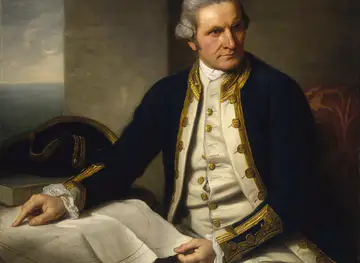
Captain James Cook sighted Norfolk Island in 1774 and reported its valuable stands of Norfolk Island pine, helping encourage later British interest. A penal settlement was established in 1788, initially to exploit the island’s timber and flax as well as to support the wider colonial project in the Pacific. The first settlement was abandoned in 1814, after which Norfolk Island remained without a permanent European population for several years. Roads, cleared land and changing patterns of agriculture eventually extended into areas beyond the original settlement, including the island’s western rural districts.
The Second Penal Settlement, 1825–1855
Norfolk Island became a penal colony again from 1825, this time as a place for convicts considered particularly difficult to manage. The settlement was deliberately harsh, and its administrative and prison buildings were concentrated around Kingston rather than Anson Bay. Even so, the period affected the whole island through land clearance, farming, roads and the movement of officials and labourers. The ruins and surviving structures at Kingston remain the clearest physical expression of this era, while the wider rural landscape reflects the island’s gradual transformation under colonial administration.
Pitcairn Islanders Arrive in 1856
In 1856, the descendants of the Bounty mutineers and their Tahitian companions were moved from Pitcairn Island to Norfolk Island, whose population and resources were better suited to a larger community. Many later returned to Pitcairn, but those who remained established a lasting cultural presence. Their descendants, together with later arrivals, shaped Norfolk Island’s language, churches, family networks, foodways and community traditions. The influence is island-wide, including in rural districts such as Anson Bay, where farming and dispersed settlement form part of the contemporary landscape.
Agriculture, Shipping and the Growth of Rural Norfolk Island
After the penal era, Norfolk Island developed through agriculture, small-scale trade and changing links with mainland Australia and the Pacific. Pastoral land, orchards, vegetable plots and timber once formed important parts of the island economy, while coastal landing places and shipping connected communities to outside markets. Anson Bay’s surrounding countryside reflects this agricultural history more than the island’s principal historic precincts do: open paddocks, rural lanes and scattered properties occupy land shaped by generations of cultivation. The bay itself remains undeveloped, reinforcing the contrast between productive uplands and exposed coast.
Norfolk Island as an Australian External Territory
Norfolk Island became an Australian territory in 1914, after the end of the second settlement and the arrival of the Pitcairn community had already given the island a distinctive social history. Its administration and relationship with Australia changed over time, including major reforms to local government and public services in the twenty-first century. Today the island is administered within Australia while retaining a strong local identity. For visitors, this means Australian currency, emergency arrangements and legal standards alongside a cultural landscape shaped by Polynesian, Pitcairn and colonial influences.
Anson Bay in Photos
Browse through our photo collection highlighting the charm and character of the destination.
Neighbouring regions of Anson Bay
The closest regions to Anson Bay, if you have time for more than one.
-
-

-

-
-


Swipe for more regions
Explore more

Explore more of Norfolk Island
Discover Norfolk Island, a serene and historic gem in the South Pacific, known for its stunning landscapes, rich cultural heritage, and abundant natural beauty.
Explore Norfolk Island