

Uptown (Charlotte) Travel Guide - Free
Explore Uptown in Charlotte with Evendo's free guide. Find the best shops, historic streets, restaurants, and gems on web or mobile.




Uptown Charlotte combines museums, sports, public art, historic Fourth Ward streets, restaurants and skyline views in North Carolina’s urban core.
Charlotte’s Urban Core
Uptown is Charlotte’s central district, a walkable concentration of landmark buildings, cultural institutions, sports venues and public spaces rising above the intersection of Trade and Tryon streets. The name can confuse first-time visitors: in Charlotte, “Uptown” refers to the city centre rather than a northern suburb. Its four historic wards still shape the street plan, with the older grid extending around the central business district and residential Fourth Ward.Read more about Uptown
Culture Among the Towers
Streets, Sport and Public Life
Best attractions in Uptown
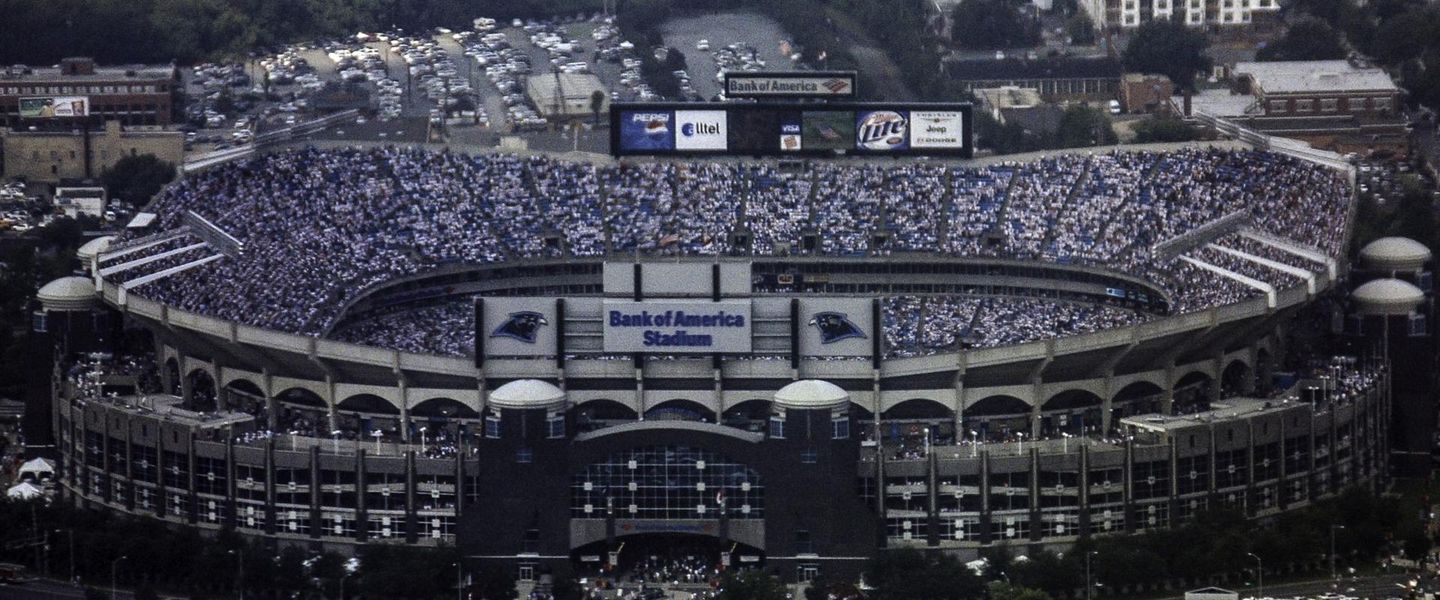
Uptown’s attractions form a compact cultural and entertainment circuit. Discovery Place Science occupies the northern part of the district with interactive exhibitions suited to families and visitors curious about science and technology. Around the Levine Center for the Arts, the Bechtler Museum of Modern Art, the Harvey B. Gantt Center for African-American Arts + Culture and the Mint Museum Uptown offer complementary collections and exhibitions. Romare Bearden Park provides lawns, gardens, public art and views towards the surrounding towers, while Truist Field brings minor-league baseball to Third Ward. The Spectrum Center hosts basketball, concerts and other major events, and Bank of America Stadium lies nearby on the western side of Uptown. Historic Fourth Ward adds a quieter walking experience, with tree-lined streets and surviving residential architecture contrasting with the commercial core.
-
Museum
NASCAR Hall of Fame
Explore the thrilling world of NASCAR at the Hall of Fame in Charlotte, North Carolina, featuring interactive exhibits and iconic memorabilia.
8 min walk · 0.7 km from neighbourhood centre
-
Park
Romare Bearden Park
Experience the artistry and tranquility of Romare Bearden Park, an urban oasis in Uptown Charlotte that celebrates culture, nature, and community.
5 min walk · 0.4 km from neighbourhood centre
-
Science museum
Discovery Place Science
Dive into discovery and adventure at Discovery Place Science, Charlotte's premier science museum featuring interactive exhibits, an aquarium, and a planetarium.
4 min walk · 0.3 km from neighbourhood centre
-
 Park
Marshall Park
Experience the beauty and tranquility of Marshall Park, a lush urban oasis in the heart of Charlotte, perfect for relaxation and exploration.
12 min walk · 1.0 km from neighbourhood centre


Best landmarks in Uptown
The intersection of Trade and Tryon streets remains Uptown’s defining urban reference point, the place from which Charlotte’s central grid developed. The Bank of America Corporate Center and other high-rise towers express the district’s modern financial identity, while the historic Fourth Ward preserves a smaller-scale architectural landscape of Victorian homes and mature streets. St Peter’s Episcopal Church and First Presbyterian Church are important religious landmarks within the central area, and the former Charlotte Observer building contributes to the district’s civic and media history. The Levine Center for the Arts is significant not only as a group of cultural institutions but also as a major contemporary public complex. Romare Bearden Park, named for the Charlotte-born artist, adds a symbolic connection between local cultural heritage, public space and the modern skyline.
-
Art museum
Mint Museum Uptown
Explore the Mint Museum Uptown: A vibrant art museum in Charlotte, showcasing American and contemporary art amidst stunning architecture.
7 min walk · 0.5 km from neighbourhood centre
-
History museum
Levine Museum of the New South
Discover the rich tapestry of Southern history at Levine Museum of the New South, where interactive exhibits and storytelling bring the past to life.
5 min walk · 0.4 km from neighbourhood centre
-
Historical landmark
Trade and Tryon Streets
Discover the vibrant blend of history and culture at Trade and Tryon Streets in downtown Charlotte, where every corner tells a story.
1 min walk · 0.1 km from neighbourhood centre
-
Historical landmark
Queen Charlotte Walks in Her Garden Statue
Explore the Queen Charlotte Walks in Her Garden Statue, a beautiful historical landmark in the heart of Charlotte, North Carolina, and discover its rich cultural heritage.
3 min walk · 0.2 km from neighbourhood centre


Explore Uptown on the map
A handpicked selection of must-see spots in Uptown, mapped for you.
Best hotels in Uptown
Best restaurants in Uptown
Uptown’s dining scene reflects its role as a business, cultural and event district, with restaurants concentrated around Tryon Street, Trade Street, the Levine Avenue of the Arts area and the streets near the Spectrum Center and convention facilities. Visitors will find polished dining rooms, hotel restaurants, casual American cooking, cafés, bars with food and places designed for pre-game or post-performance meals. The area’s food culture is less market-based than that of some Charlotte neighbourhoods, but it offers convenient opportunities to sample regional Southern influences alongside contemporary menus and international options. Downtown workers create a strong weekday trade, while sports fixtures and concerts alter demand around the major venues. Restaurant availability and opening patterns can vary by day and event calendar, so visitors should check current details rather than assuming every venue operates on the same schedule.
-
Restaurant
Aura Rooftop
Discover culinary excellence at Aura Rooftop—where stunning city views meet innovative cuisine in Charlotte's vibrant dining scene.
8 min walk · 0.7 km from neighbourhood centre
-
Breakfast
Midnight Diner
Experience the charm of Midnight Diner in Charlotte - a cozy spot for delicious all-day breakfast and classic American comfort food.
6 min walk · 0.5 km from neighbourhood centre
-
American
Fahrenheit Charlotte
Discover the elegance of Fahrenheit Charlotte - where exquisite American cuisine meets breathtaking skyline views for an unforgettable dining experience.
7 min walk · 0.5 km from neighbourhood centre
-
Seafood
Sea Level NC
Savor the freshest seafood dishes at Sea Level NC in downtown Charlotte - where culinary creativity meets coastal flavors.
2 min walk · 0.2 km from neighbourhood centre


Best bars in Uptown
Uptown’s evening life is shaped by sporting events, concerts, theatre and hotel-based socialising rather than by one continuous club strip. Bars and restaurants around Tryon Street, Trade Street and the Spectrum Center cater to pre-event gatherings, while venues near Truist Field and Bank of America Stadium become busier during baseball, football and concert dates. Hotel lounges and cocktail-oriented bars provide a more measured alternative to the crowds, and cultural institutions sometimes extend their programmes beyond daytime exhibitions. The district can feel quiet on ordinary late evenings, particularly along office streets, while event nights bring substantial pedestrian movement and queues. Visitors should distinguish venue entry rules from street behaviour, use marked crossings and check current programmes, age requirements and transport arrangements before planning a late night.
-
Bar
Ink N Ivy
Experience the lively atmosphere of Ink N Ivy, where delicious American cuisine meets vibrant nightlife in the heart of Charlotte.
4 min walk · 0.3 km from neighbourhood centre
-
Restaurant
The Cellar at Duckworth's
Discover upscale dining at The Cellar at Duckworth's, Charlotte's culinary gem, where exquisite flavors and elegant ambiance create unforgettable experiences.
5 min walk · 0.4 km from neighbourhood centre
-
American
204 North Kitchen and Cocktails
Experience exquisite American cuisine and handcrafted cocktails at 204 North Kitchen and Cocktails in the heart of Charlotte, NC.
2 min walk · 0.2 km from neighbourhood centre
-
Bar
Tilt on Trade
Explore the vibrant nightlife at Tilt on Trade, a premier bar in Charlotte offering great drinks, live music, and an electric atmosphere.
1 min walk · 0.1 km from neighbourhood centre


Best nightclubs in Uptown
Uptown’s evening life is shaped by sporting events, concerts, theatre and hotel-based socialising rather than by one continuous club strip. Bars and restaurants around Tryon Street, Trade Street and the Spectrum Center cater to pre-event gatherings, while venues near Truist Field and Bank of America Stadium become busier during baseball, football and concert dates. Hotel lounges and cocktail-oriented bars provide a more measured alternative to the crowds, and cultural institutions sometimes extend their programmes beyond daytime exhibitions. The district can feel quiet on ordinary late evenings, particularly along office streets, while event nights bring substantial pedestrian movement and queues. Visitors should distinguish venue entry rules from street behaviour, use marked crossings and check current programmes, age requirements and transport arrangements before planning a late night.
-
Night club
QC Social Lounge
Discover the heart of Charlotte's nightlife at QC Social Lounge - a premier dance club and event venue offering unforgettable experiences.
5 min walk · 0.4 km from neighbourhood centre
-
Night club
Imperial
Experience the vibrant nightlife at Imperial, Charlotte's premier night club featuring an eclectic bar, lounge, and hookah bar atmosphere.
5 min walk · 0.4 km from neighbourhood centre
-
Night club
World
Discover the electrifying nightlife at World Nightclub in Charlotte, featuring top DJs, live performances, and unforgettable events in a vibrant atmosphere.
17 min walk · 1.4 km from neighbourhood centre
-
Night club
Trio
Experience the lively nightlife of Charlotte at Trio, a premier night club known for its energetic music and unforgettable atmosphere.
6 min drive · 1.9 km from neighbourhood centre


Best shops in Uptown
Shopping in Uptown is oriented towards convenience, culture and event-going rather than extensive retail streets. Visitors can browse museum shops at institutions such as the Mint Museum Uptown, the Bechtler Museum of Modern Art and the Harvey B. Gantt Center, where the emphasis is on art books, design, gifts and culturally focused merchandise. Small retailers, cafés and service businesses appear through the central blocks, while hotels and office complexes provide additional everyday options. The streets around the Spectrum Center and convention facilities are geared towards visitors attending games, concerts and conferences, but Uptown does not function as Charlotte’s principal destination for vintage or independent fashion shopping. For a wider range of boutiques, visitors generally need to continue into nearby districts such as South End or Elizabeth rather than treating those areas as part of Uptown.
-
Shopping mall
Queen City Quarter
Discover the vibrant Queen City Quarter, Charlotte's premier shopping destination with diverse retail, dining, and entertainment options.
3 min walk · 0.2 km from neighbourhood centre
-
Clothing store
Street Commerce
Explore Street Commerce in Charlotte for a unique blend of men's fashion and consignment treasures in a welcoming boutique atmosphere.
10 min walk · 0.8 km from neighbourhood centre
-
Gift shop
CLT Find
Explore CLT Find in Charlotte for unique local crafts, art, and gifts that capture the essence of North Carolina.
6 min walk · 0.5 km from neighbourhood centre
-
Gift shop
Paper Skyscraper
Explore Paper Skyscraper, Charlotte's unique gift shop offering whimsical treasures and local art that captures the city's spirit.
1 min walk · 0.1 km from neighbourhood centre


Uptown essentials
Getting There
Getting Around
Safety
Emergency Situations
Do's and Don'ts
Local Tips

From Eve
Local phrases worth knowing
You don't need to get them perfect. A few words go a long way, and locals appreciate the effort.
Basics
| English | Local | Say it |
|---|---|---|
| Hello | Hey y'all | [Hey y'all] |
| Goodbye | See ya later | [See ya later] |
| Yes | Yep | [Yep] |
| No | Nah | [Nah] |
| Please/You're welcome | Please and thank ya | [Please and thank ya] |
| Thank you | Thank ya kindly | [Thank ya kindly] |
| Excuse me/Sorry | Pardon me | [Pardon me] |
| How are you? | How y'all doin'? | [How y'all doin'] |
| Fine. And you? | I'm doin' fine. How 'bout you? | [I'm doin' fine. How 'bout you?] |
| Do you speak English? | Ya speak English? | [Ya speak English?] |
| I don't understand | I don't rightly understand | [I don't rightly understand] |
Eating & Drinking
| English | Local | Say it |
|---|---|---|
| I'd like to see the menu, please | Let me see the menu, please | [Let me see the menu, please] |
| I don't eat meat | I don't eat no meat | [I don't eat no meat] |
| Cheers! | Cheers! | [Cheers!] |
| I would like to pay, please | I'll pay now, please | [I'll pay now, please] |
Emergencies
| English | Local | Say it |
|---|---|---|
| Help! | Help! | [Help!] |
| Go away! | Git! | [Git!] |
| Call the Police! | Call the Po-lice! | [Call the Po-lice!] |
| Call a doctor! | Get a doctor! | [Get a doctor!] |
| I'm lost | I done got lost | [I done got lost] |
| I'm ill | I ain't feelin' too good | [I ain't feelin' too good] |
Shopping
| English | Local | Say it |
|---|---|---|
| I'd like to buy... | I'm fixin' to buy... | [I'm fixin' to buy...] |
| I'm just looking | I'm just lookin' | [I'm just lookin'] |
| How much is it? | How much for it? | [How much for it?] |
| That's too expensive | That's too steep | [That's too steep] |
| Can you lower the price? | Can ya do better on the price? | [Can ya do better on the price?] |
Time & Numbers
| English | Local | Say it |
|---|---|---|
| What time is it? | What time is it? | [What time is it?] |
| It's one o'clock | It's one o'clock | [It's one o'clock] |
| Half past (10) | Half past (10) | [Half past (10)] |
| Morning | Mornin' | [Mornin'] |
| Afternoon | Afternoon | [Afternoon] |
| Evening | Evenin' | [Evenin'] |
| Yesterday | Yestiddy | [Yestiddy] |
| Today | Today | [Today] |
| Tomorrow | Tomorra | [Tomorra] |
| 1 | One | [One] |
| 2 | Two | [Two] |
| 3 | Three | [Three] |
| 4 | Four | [Four] |
| 5 | Five | [Five] |
| 6 | Six | [Six] |
| 7 | Seven | [Seven] |
| 8 | Eight | [Eight] |
| 9 | Nine | [Nine] |
| 10 | Ten | [Ten] |
Transport & Directions
| English | Local | Say it |
|---|---|---|
| Where's a/the...? | Where's a/the...? | [Where's a/the...?] |
| What's the address? | What's the address? | [What's the address?] |
| Can you show me (on the map)? | Can you show me (on the map)? | [Can you show me (on the map)?] |
| When's the next (bus)? | When's the next (bus)? | [When's the next (bus)?] |
| A ticket (to ....) | A ticket (to ....) | [A ticket (to ....)] |
History of Uptown
A County Seat Takes Shape
Charlotte was established as the county seat of Mecklenburg County in 1768 and grew around the intersection of Trade and Tryon streets, whose names recall regional trading routes and colonial-era political geography. The settlement’s central crossroads became the basis of the compact street grid now associated with Uptown. Charlotte was named for Queen Charlotte, consort of George III, while the surrounding Piedmont landscape supported farms, small-scale trade and later commercial expansion. The early town was modest, but its position between inland trading routes gave the centre a durable civic and mercantile role.
Railways and Commercial Expansion
Rail connections in the nineteenth century accelerated Charlotte’s growth and strengthened Uptown as the region’s principal commercial centre. Warehouses, banks, shops, hotels and civic buildings gathered around the street grid, while cotton trading and textile-related commerce connected the city to the wider Piedmont economy. The central wards became increasingly mixed in character, combining offices and retail premises with churches, boarding houses and homes. Surviving religious buildings, older commercial façades and the long-established alignment of Tryon and Trade streets offer reminders of this period, even though much of the historic fabric was later replaced.
The Wards and Brooklyn
Uptown’s four wards developed distinct social and architectural identities, with Fourth Ward retaining a particularly visible collection of Victorian-era residences. To the east, Second Ward included Brooklyn, a substantial African-American community with homes, churches, businesses and institutions that formed an important part of Charlotte’s twentieth-century civic life. Mid-century urban renewal, highway construction and redevelopment removed much of Brooklyn’s built fabric and displaced residents, permanently changing the eastern side of the centre. The history of the area is now interpreted through institutions including the Harvey B. Gantt Center and public references to Charlotte’s African-American heritage.
From Decline to Reinvention
As suburban offices, shopping centres and residential development drew activity away from the centre during the mid-twentieth century, Uptown experienced periods of reduced street life and vacant or underused buildings. Investment in banking, corporate offices, cultural institutions, sports facilities, hotels and public spaces later reshaped the district. The opening of venues such as Discovery Place, the Levine Museum of the New South, the Levine Center for the Arts and Romare Bearden Park broadened Uptown’s role beyond commerce. Contemporary redevelopment has brought housing and entertainment back into the central wards, while also keeping questions of displacement, heritage and unequal access central to local discussion.
Uptown in Photos
Browse through our photo collection highlighting the charm and character of the destination.
Neighbourhoods near Uptown
The closest neighbourhoods to Uptown, if you have time for more than one stop.
-

-


Swipe for more neighbourhoods
Explore more

Explore more of Charlotte
Charlotte, North Carolina blends Uptown museums, NASCAR heritage, Southern food, greenways and lively neighbourhoods with easy access to the Carolinas.
Explore Charlotte