

Talimena Scenic Byway Travel Guide - Free Web & App
Your ultimate guide to Talimena Scenic Byway. Discover top landmarks, proposed trips, and local tips. Free on the web or via the Evendo companion app.


Talimena Scenic Byway in Oklahoma crosses the Ouachita Mountains, offering forested ridges, autumn colour, scenic overlooks, hiking and quiet gateways.
A Mountain Road in Southeastern Oklahoma
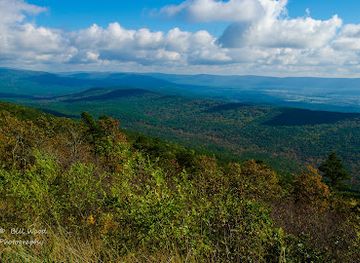
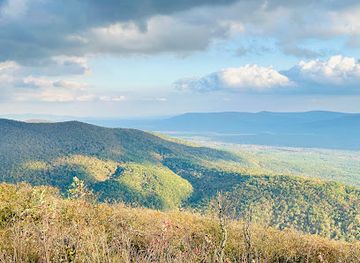
Talimena Scenic Byway follows Oklahoma State Highway 1 from the town of Talihina towards the Arkansas state line, forming the western section of a celebrated 54-mile route that continues along Arkansas Highway 88 to Mena. The drive crosses the Ouachita Mountains, a long, folded range whose forested ridges and narrow valleys create a landscape quite different from the open plains associated with much of Oklahoma. Within Oklahoma, the road climbs through the Winding Stair Mountain area and the Ouachita National Forest, with elevated viewpoints looking across successive ridgelines.Read more about Talimena Scenic Byway
Forests, Viewpoints and Seasonal Colour
Gateway Communities and Cultural Character
When is the best time to visit Talimena Scenic Byway?
Best: April–May, October · 22–27°C| Month | High (°C) | Rainfall (mm) |
|---|---|---|
| January | 10 | 51 |
| February | 12 | 56 |
| March | 17 | 66 |
| April (best) | 22 | 81 |
| May (best) | 27 | 109 |
| June | 31 | 97 |
| July | 33 | 91 |
| August | 32 | 97 |
| September | 29 | 89 |
| October (best) | 22 | 81 |
| November | 16 | 66 |
| December | 11 | 56 |
Getting to and around Talimena Scenic Byway
How to get there
Transportation
Best attractions in Talimena Scenic Byway
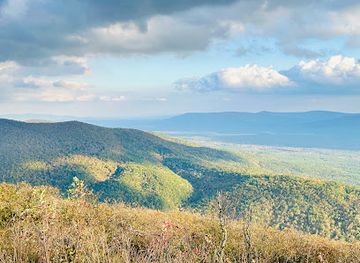
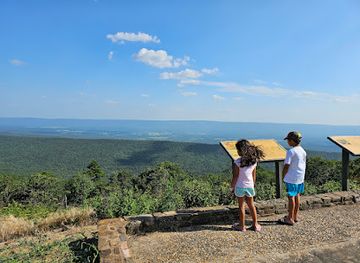
The principal attraction is the mountain road itself, which crosses the Winding Stair Mountain area and the Ouachita National Forest between Talihina and the Arkansas line. A series of scenic pull-offs along the crest opens views over long, parallel ridges, forested valleys and changing skies, with the strongest colour often appearing in autumn hardwoods. Talimena State Park, near the Oklahoma end of the route, provides an accessible introduction to the landscape and a base for exploring the western approach. Hikers can investigate established trails in the surrounding public lands, subject to current conditions and regulations, while motorists can pause at overlooks rather than rushing between gateways. The route continues across Arkansas to Queen Wilhelmina State Park and Mena, which are important parts of the wider Talimena Scenic Drive but lie outside Oklahoma. Talihina itself adds a small-town gateway and an opportunity to learn more about the region's Choctaw cultural setting.
-
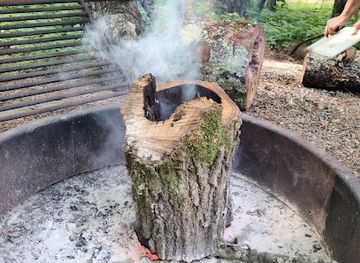
Campground
Winding Stair Campground
Explore Winding Stair Campground: a hidden gem in Oklahoma's Ouachita National Forest, perfect for camping, hiking, and immersing in nature's beauty.
-
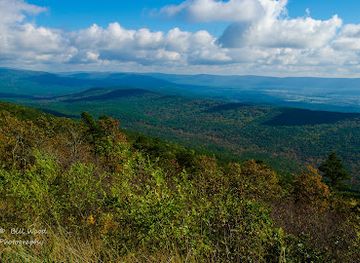
Scenic spot
Talimena Scenic Dr
Experience the breathtaking views and natural beauty of Talimena Scenic Drive, a top scenic route in Oklahoma perfect for adventure and relaxation.
-
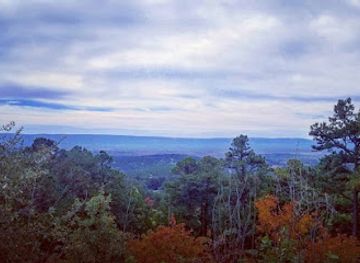
Tourist attraction
Horsethief Springs Picnic Ground
Discover the tranquility of Horsethief Springs Picnic Ground, a scenic retreat in Oklahoma’s Ouachita Mountains, perfect for picnics and outdoor adventures.
-
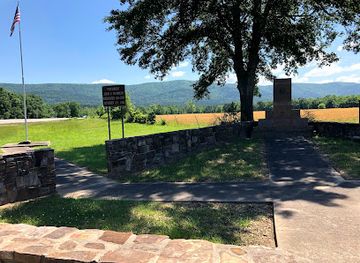
Memorial park
John F. Kennedy Memorial
Visit the tranquil John F. Kennedy Memorial in Hodgen, Oklahoma, and reflect on the legacy of one of America's most revered presidents.
Best landmarks in Talimena Scenic Byway
The defining natural landmark is the Ouachita mountain crest, where the Talimena road follows elevated ridges rather than a single summit and reveals the folded structure of the range in successive wooded horizons. Winding Stair Mountain is the most closely associated Oklahoma highland along the route, while the public lands of the Ouachita National Forest provide the wider ecological and scenic setting. Talimena State Park marks the western approach near Talihina and serves as a recognisable gateway landmark rather than a monumental building. The route's overlooks are significant because they frame the relationship between road, forest and distant ridgelines, especially when autumn colour changes the slopes. Farther east, Rich Mountain and Queen Wilhelmina State Park are notable features of the continuing Arkansas drive, but they are outside the Oklahoma portion addressed here.
-
Scenic spot
Talimena Scenic Dr
Experience the stunning natural beauty of Talimena Scenic Drive in Oklahoma, a breathtaking byway perfect for nature lovers and scenic enthusiasts.
Explore Talimena Scenic Byway on the map
Plan your trip on one map. See where the top attractions, landmarks, restaurants and hotels are, and book hotels and experiences in a few clicks.
Best hotels in Talimena Scenic Byway
Best bars in Talimena Scenic Byway
Talimena Scenic Byway is a quiet rural route, not a nightlife destination, and there are no established clubs or entertainment districts along the mountain crest. Evening activity centres on the small-town hospitality of Talihina and other nearby communities, where locally run restaurants, pubs or gathering places may provide a modest social atmosphere rather than late-night entertainment. Options can be limited and seasonal, so visitors should not plan around specific performances or opening hours without checking locally. The most characteristic evening experience is often a calm stay near the forest, with dark skies and the sounds of a rural landscape, provided that the accommodation permits outdoor use and local fire regulations are followed. Mena, across the state line, has more hospitality infrastructure but belongs to the Arkansas section of the wider route.
-
Scenic spot
Talimena Scenic Dr
Explore Talimena Scenic Drive: A breathtaking journey through Oklahoma's Ouachita Mountains, rich in natural beauty and outdoor adventures.
-
Bar
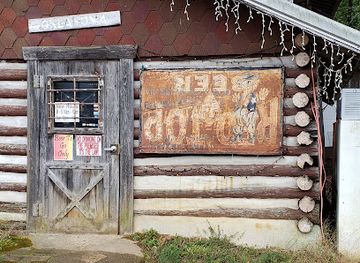
Brandie’s Black Sheep Bar
Discover the vibrant spirit and friendly atmosphere at Brandie’s Black Sheep Bar in Hodgen, Oklahoma – a perfect spot for relaxation and socializing.
-
Campground
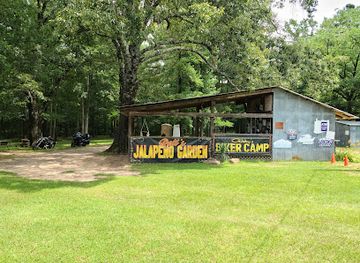
Gibby's Biker Camp
Discover the charm of Gibby's Biker Camp in Oklahoma, where rustic log cabins meet adventure and camaraderie for outdoor enthusiasts.
-
Beer hall
State Line Tavern/ State Line Beer Box
Experience the local charm at State Line Tavern, a cozy beer hall in Mena, AR, perfect for craft beer lovers and social gatherings.

Best shops in Talimena Scenic Byway
Shopping along the Oklahoma section is modest and practical, with most opportunities found in Talihina rather than at roadside overlooks. Visitors may find groceries, fuel, outdoor supplies and locally run businesses useful for preparing for the mountain drive, while regional crafts, artwork and food products may appear through small independent sellers or community events rather than a permanent concentration of specialist shops. The area's cultural identity is closely connected with the Choctaw Nation, so visitors should look for authentic Indigenous-made work through recognised local or tribal channels and treat cultural products with respect. Do not expect a continuous retail strip in the forest. Mena, in Arkansas, has a wider selection of shops and galleries for travellers completing the full byway, but it is outside Oklahoma.
-
Scenic spot
Talimena Scenic Dr
Explore the majestic Talimena Scenic Drive, where nature's beauty unfolds in every turn through the Ouachita Mountains.
-
Beer store
Buckhorn Beer to Go
Explore the rich flavors of Oklahoma at Buckhorn Beer to Go, your go-to beer store for local craft brews and unique finds.
-
Historical landmark
Talimena Scenic Byway marker
Experience the breathtaking beauty and historical significance of the Talimena Scenic Byway, a must-visit destination in Oklahoma's stunning national landscapes.

Get your free copy of our complete guide to Talimena Scenic Byway, delivered straight to you.
Everything on this page, from attractions and restaurants to essentials and local phrases, in one PDF you can read offline, print or share.
Already have an account? Sign in
Your Talimena Scenic Byway guide is ready.
We'll send it to · Not you? Sign out

Getting your guide ready…
We are putting together a fresh copy of the Talimena Scenic Byway guide. This can take up to a minute.
This can take a few moments. If your browser asks, choose Allow so the download can start. You'll find the guide in your Downloads folder.
Nothing happened? Download it again
Sorry, the guide is taking longer than usual. Please try again in a minute, or get it by email instead.
Talimena Scenic Byway essentials
Currency and Payment
Safety
Emergency Situations
Do's and Don'ts
Local Tips
From Eve
Local phrases worth knowing
You don't need to get them perfect. A few words go a long way, and locals appreciate the effort.
Basics
| English | Local | Say it |
|---|---|---|
| Hello | Howdy | [hahw-dee] |
| Goodbye | See ya later | [see yah lay-ter] |
| Yes | Yup | [yuhp] |
| No | Nah | [nah] |
| Please/You're welcome | Please and thank ya | [pleez and thank yah] |
| Thank you | Much obliged | [muhch uh-blahy-jed] |
| Excuse me/Sorry | Pardon me | [par-dn me] |
| How are you? | Howdy | [hahw-dee] |
| Fine. And you? | Fine. And you? | [Fine. And you?] |
| Do you speak English? | Ya speak English? | [yah speak ing-glish?] |
| I don't understand | I ain't catchin' on | [I aint kach-in awn] |
Eating & Drinking
| English | Local | Say it |
|---|---|---|
| I'd like to see the menu, please | Can I take a gander at the grub, please | [kan ai tayk uh gan-der at the gruhb pleez] |
| I don't eat meat | I don't eat meat | [i dohnt eet meet] |
| Cheers! | Cheers! | [cheers] |
| I would like to pay, please | I reckon it's time to settle up | [ai rek-uhn its tahym to set-l up] |
Emergencies
| English | Local | Say it |
|---|---|---|
| Help! | Help! | [help] |
| Go away! | Git! | [git] |
| Call the Police! | Call the Sheriff! | [call the shair-iff] |
| Call a doctor! | Call a doc! | [call a doc] |
| I'm lost | I'm turned around | [aim turnd a-round] |
| I'm ill | I ain't feelin' right | [i aint feel-in ryt] |
Shopping
| English | Local | Say it |
|---|---|---|
| I'd like to buy... | I reckon I'll take... | [ai rek-uhn ayl tayk] |
| I'm just looking | I'm just lookin' | [aim just look-in] |
| How much is it? | How much fer that? | [haw much fur that] |
| That's too expensive | That's too highfalutin | [thats too high-fuh-loo-tin] |
| Can you lower the price? | Can ya do any better on the price? | [kan yah doh en-ee bet-er awn the pryce] |
Time & Numbers
| English | Local | Say it |
|---|---|---|
| What time is it? | What time o' day is it? | [what tahym o' day is it] |
| It's one o'clock | It's one o'clock | [its wun o-klok] |
| Half past (10) | Half past ten | [haf past ten] |
| Morning | Mornin' | [morn-in] |
| Afternoon | Afternoon | [after-noon] |
| Evening | Evenin' | [even-in] |
| Yesterday | Yesterday | [yess-ter-day] |
| Today | Today | [toh-day] |
| Tomorrow | Tomorrow | [toh-mar-ow] |
| 1 | One | [wun] |
| 2 | Two | [too] |
| 3 | Three | [three] |
| 4 | Four | [for] |
| 5 | Five | [fahyv] |
| 6 | Six | [siks] |
| 7 | Seven | [sev-uhn] |
| 8 | Eight | [ayt] |
| 9 | Nine | [nine] |
| 10 | Ten | [ten] |
Transport & Directions
| English | Local | Say it |
|---|---|---|
| Where's a/the...? | Where's a/the...? | [Where's a/the...?] |
| What's the address? | What's the address? | [What's the address?] |
| Can you show me (on the map)? | Can you show me (on the map)? | [Can you show me (on the map)?] |
| When's the next (bus)? | When's the next (bus)? | [When's the next (bus)?] |
| A ticket (to ....) | A ticket (to ....) | [A ticket (to ....)] |
History of Talimena Scenic Byway
The Ouachita Mountains Take Shape
The ridges crossed by the Talimena route belong to the Ouachita Mountains, an ancient folded mountain system extending through western Arkansas and southeastern Oklahoma. Their present appearance reflects long geological change, erosion and the weathering of resistant and softer rock layers. Instead of forming a single high summit, the Ouachitas create parallel ridges and valleys, a structure that explains the byway's repeated climbs, bends and long views across wooded folds. The landscape's geology has influenced drainage, forest growth, settlement patterns and the placement of roads through the region.
Choctaw Homeland and Travel Routes
Southeastern Oklahoma lies within the historic homeland of the Choctaw people and remains closely associated with the Choctaw Nation of Oklahoma. Talihina developed in a region shaped by Indigenous settlement, travel and later federal removal and resettlement policies. The town's name is generally associated with Choctaw language, while the surrounding mountains, streams and forests formed part of a lived landscape rather than an empty wilderness. Any understanding of the byway's history therefore begins with the continuing presence and cultural significance of the Choctaw people.
Forestry and Public Land Management
During the late nineteenth and early twentieth centuries, timber extraction, farming and transport altered the Ouachita landscape, while the federal government increasingly established public systems to manage forests and watersheds. The Ouachita National Forest, created in the early twentieth century, now covers extensive areas of Arkansas and Oklahoma. Forest management has changed over time, balancing timber production, habitat, recreation and watershed protection. The byway passes through this managed mountain landscape, where roads, overlooks and recreation areas coexist with working forest.
The Talimena Road
The scenic road was developed as a connection across the Ouachitas between Talihina in Oklahoma and Mena in Arkansas, with its name combining the two gateway communities. Its purpose gradually became both practical and recreational as motorists were drawn to the ridgeline scenery. The route is now recognised as the Talimena Scenic Drive, with Oklahoma State Highway 1 and Arkansas Highway 88 forming the cross-state route. Its identity depends on the relationship between the road, public forest, mountain viewpoints and the small communities at either end.
Conservation and Scenic Tourism
Modern tourism along the byway is closely linked to the conservation of the Ouachita National Forest and adjoining public recreation lands. Scenic overlooks and roadside facilities made the mountain crest more accessible without turning it into an urbanised resort corridor. The route's appeal remains seasonal and landscape-led: autumn foliage, spring growth, clear long-distance views and quiet forest roads shape the visitor experience. Conservation management continues to influence where people may park, walk, camp or explore, making current local guidance important when conditions or regulations change.
Talimena Scenic Byway in Photos
Browse through our photo collection highlighting the charm and character of the destination.
Neighbouring destination travel guides
The closest destinations to Talimena Scenic Byway, if you have time for more than one.
-

-

-

-

-


Swipe for more destinations
Explore more

Explore more of Ouachita Mountains
Explore Oklahoma’s Ouachita Mountains for forested ridges, Talimena views, Choctaw heritage, hiking, lakes and quiet outdoor escapes.
Explore Ouachita Mountains
Explore more of Oklahoma
Discover Oklahoma: Where the spirit of the Old West meets modern charm, offering a rich mix of history, nature, and vibrant culture in the heart of the United States.
Explore Oklahoma