

Free Tulsa Travel Guide & Mobile App
Plan your Tulsa trip with Evendo. Get free guides to top attractions, restaurants, hotels, and bars. Web access or download the mobile app.


Tulsa, Oklahoma blends Art Deco landmarks, Route 66 heritage, Black Wall Street history, riverfront parks and distinctive cultural experiences.
An Oklahoma City Shaped by the River
Tulsa spreads along the Arkansas River in northeastern Oklahoma, where broad skies, prairie landscapes and a surprisingly layered urban culture meet. Its origins lie in a Creek settlement known as Tulsey Town, while the arrival of the railway and the discovery of oil transformed the community into one of the leading centres of the early twentieth-century petroleum boom. That prosperity left behind a remarkable concentration of Art Deco architecture, particularly in the Deco District and downtown, where geometric façades, ornate towers and historic civic buildings give the city a distinctive visual character.Read more about Tulsa
Culture, Memory and Music
Open Spaces and Route 66
When is the best time to visit Tulsa?
Best: April, September–October · 21–28°C| Month | High (°C) | Rainfall (mm) |
|---|---|---|
| January | 8 | 41 |
| February | 11 | 46 |
| March | 17 | 91 |
| April (best) | 21 | 102 |
| May | 26 | 132 |
| June | 31 | 122 |
| July | 34 | 85 |
| August | 33 | 92 |
| September (best) | 28 | 104 |
| October (best) | 21 | 102 |
| November | 15 | 73 |
| December | 9 | 56 |
Getting to and around Tulsa
How to get there
Transportation
Best attractions in Tulsa
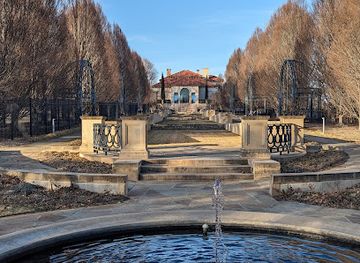
Tulsa's attractions range from major cultural institutions to open-air spaces and roadside history. The Philbrook Museum of Art occupies the former Villa Philbrook, an Italian Renaissance-style mansion surrounded by formal gardens and sculpture, while the nearby Woody Guthrie Center explores the life and work of the Oklahoma-born folk musician. The Bob Dylan Center adds a major archive devoted to the singer-songwriter and his creative legacy. At the Gathering Place, landscaped gardens, play areas, public art and river views create a substantial destination beside the Arkansas River. Downtown brings together the Tulsa Arts District, Guthrie Green and the Tulsa Art Deco skyline, and Greenwood offers museums and memorials that interpret the 1921 Tulsa Race Massacre and the history of Black Wall Street. Route 66 adds a different register, with vintage signs, roadside architecture and independent businesses scattered through Tulsa and its surrounding urban landscape.
-
Park
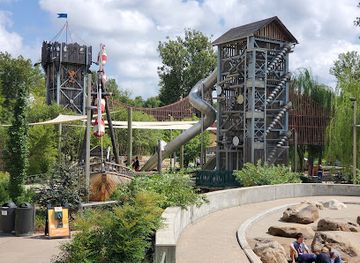
Gathering Place
Discover Gathering Place, Tulsa's premier park for relaxation, recreation, and community events in a stunning natural setting.
10 min drive · 3.3 km from city centre
-
Zoo
Tulsa Zoo
Explore the vibrant world of wildlife at Tulsa Zoo, a family-friendly destination filled with adventure, learning, and conservation efforts.
30 min drive · 10 km from city centre
-
Tourist attraction
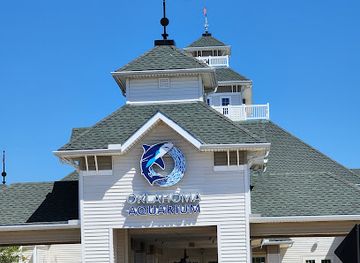
Oklahoma Aquarium
Explore the Oklahoma Aquarium: A captivating journey into the depths of marine life, ideal for families and nature enthusiasts alike.
35 min drive · 15 km from city centre
-
Arena
BOK Center
Discover the excitement at BOK Center, Tulsa's premier venue for concerts, sports, and unforgettable events in the heart of Oklahoma.
4 min walk · 0.4 km from city centre


Best landmarks in Tulsa
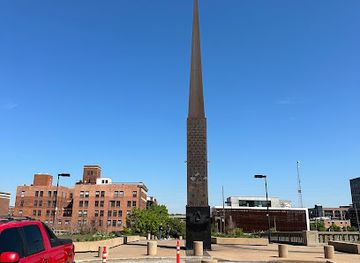
Tulsa's architectural identity is most visible in its Art Deco landmarks, built during the oil boom and concentrated around downtown. The Boston Avenue Methodist Church is distinguished by its richly ornamented vertical design, while the Tulsa Club Building and other Deco District towers express the optimism and commercial power of the 1920s. The Tulsa Performing Arts Center anchors the civic and cultural core, and Cain's Ballroom preserves the structure and associations of a historic dance venue. In Greenwood, the John Hope Franklin Reconciliation Park and Greenwood Cultural Center carry civic and memorial significance, marking the history of Black Wall Street and the 1921 Tulsa Race Massacre. The Cyrus Avery Memorial commemorates the Tulsa businessman associated with the development of Route 66 and stands near the Arkansas River. Together these buildings and memorials show a city shaped by Indigenous history, oil wealth, Black enterprise, music and later efforts at remembrance.
-
Park
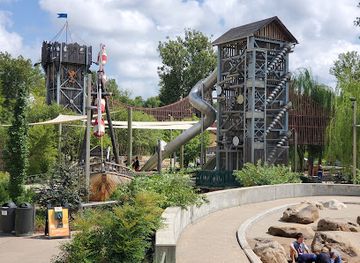
Gathering Place
Explore Gathering Place in Tulsa, OK: A Stunning Park with Lush Landscapes, Play Areas, and Vibrant Community Events.
10 min drive · 3.3 km from city centre
-
Zoo
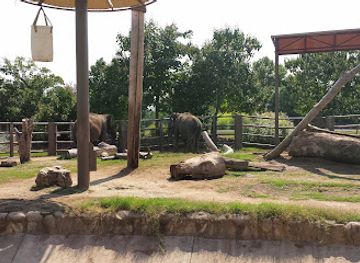
Tulsa Zoo
Experience the thrill of wildlife at Tulsa Zoo, where conservation meets adventure in a fun-filled family destination.
30 min drive · 10 km from city centre
-
Museum
Philbrook Museum of Art
Explore the Philbrook Museum of Art in Tulsa, where exquisite art collections meet breathtaking gardens in a historic Italian villa.
12 min drive · 3.9 km from city centre
-
Tourist attraction
Center of the Universe
Explore the Center of the Universe in Tulsa, Oklahoma, a unique acoustic phenomenon that offers a quirky and memorable experience for all visitors.
4 min walk · 0.3 km from city centre
Explore Tulsa on the map
Plan your Tulsa trip on one map. See where the top attractions, landmarks, restaurants, bars and hotels are, find what's near where you're staying, and book hotels and experiences in a few clicks.
Neighbourhoods in Tulsa
-

-

-

-

-


Swipe for more neighbourhoods
Best hotels in Tulsa
Best restaurants in Tulsa
Tulsa's dining scene reflects Oklahoma's plains setting, Indigenous and regional traditions, twentieth-century migration and a growing cosmopolitan population. Barbecue, chicken-fried steak, catfish and hearty Southern-influenced cooking remain part of the local vocabulary, while contemporary restaurants draw on Mexican, Vietnamese, Middle Eastern and other culinary traditions. Casual dining is well represented in the Kendall Whittier, Pearl District, Cherry Street and downtown areas, where cafés, bakeries, breweries and independent restaurants occupy older commercial buildings. Brookside and Utica Square offer further concentrations of established dining, while the Tulsa Farmers' Market provides seasonal produce and locally made foods when operating. Visitors will also encounter the state's onion-burger tradition and Native-inspired ingredients and cooking, although Tulsa's food culture is broader than any single dish. The most interesting meals often combine Oklahoma comfort food with the city's newer, internationally influenced kitchens.
-
Irish pub
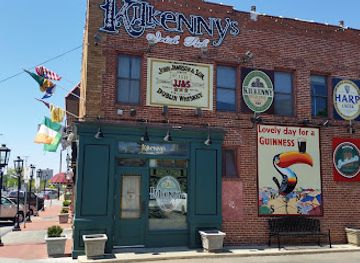
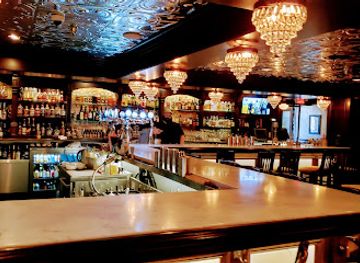
Kilkenny's Irish Pub
Discover Kilkenny's Irish Pub in Tulsa: A lively destination for authentic Irish cuisine and culture amidst friendly faces.
7 min drive · 2.3 km from city centre
-
Cajun
Nola's ...Creole & Cocktails
Experience the vibrant flavors of Cajun cuisine at Nola's Creole & Cocktails in Tulsa’s Cherry Street—where every dish tells a story.
7 min drive · 2.2 km from city centre
-
Restaurant
JINYA Ramen Bar - Tulsa
Discover authentic Japanese ramen at JINYA Ramen Bar in Tulsa's Blue Dome District – where every bowl tells a delicious story.
8 min walk · 0.6 km from city centre
-
American
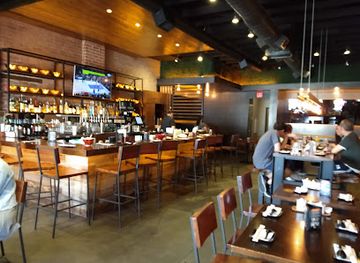
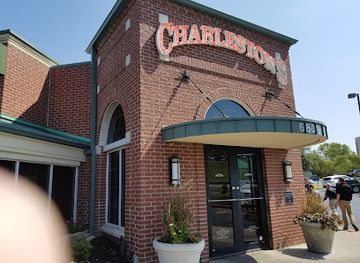
Charleston's Restaurant
Discover delightful American cuisine at Charleston's Restaurant in Tulsa – where comfort food meets exceptional service.
32 min drive · 12 km from city centre
Best bars in Tulsa
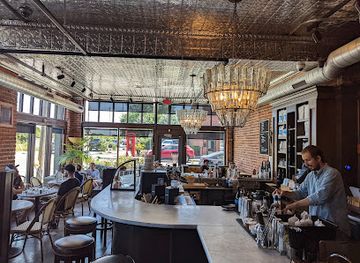
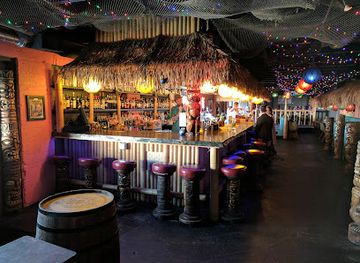
Tulsa's evening life is centred on live music, independent bars, theatres and compact entertainment districts rather than one continuous club strip. Cain's Ballroom, a historic dance hall in the Tulsa Arts District, is the city's best-known music venue and hosts touring and local performances across several genres. The nearby downtown area, including the Blue Dome District and Arts District, has cocktail bars, breweries, casual late-night venues and live entertainment, while the Pearl District and Kendall Whittier offer a more neighbourhood-oriented evening atmosphere. Tulsa's strong links to country, folk, rock and roots music are reflected in its concert calendar, and smaller venues diversify the scene with comedy, theatre and community events. Evening walks should remain within active, well-lit areas, particularly when travelling between districts that are separated by major roads.
-
Pub
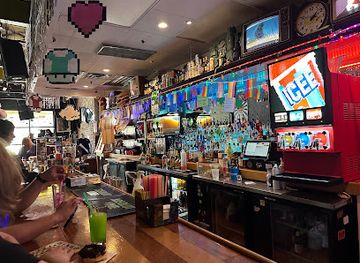
The Max Retropub
Discover The Max Retropub, Tulsa's unique blend of retro gaming, craft drinks, and vibrant atmosphere in the heart of the Blue Dome District.
7 min walk · 0.5 km from city centre
-
Cocktail bar
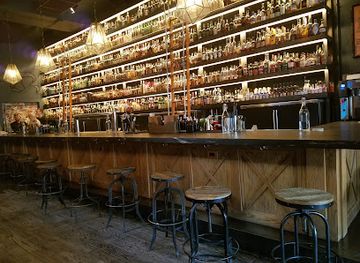
Valkyrie
Discover the art of mixology at Valkyrie, Tulsa's premier cocktail bar in the vibrant Arts District, where every drink is a masterpiece.
6 min walk · 0.5 km from city centre
-
Cocktail bar
Hodges Bend
Discover Hodges Bend, a vibrant cocktail bar in Tulsa, where unique drinks and a cozy atmosphere await every visitor.
14 min walk · 1.1 km from city centre
-
Bar
Saturn Room
Experience the vibrant nightlife at Saturn Room, a bar in Tulsa's Arts District offering creative cocktails and stunning skyline views.
6 min walk · 0.5 km from city centre
Best nightclubs in Tulsa
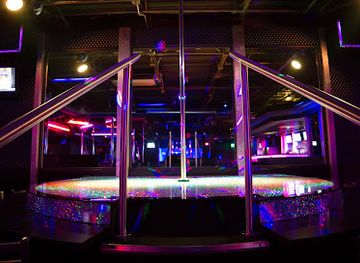
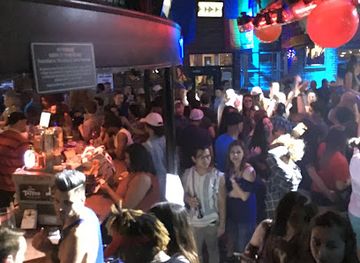
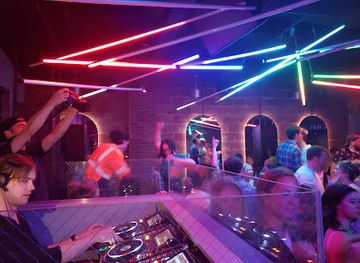
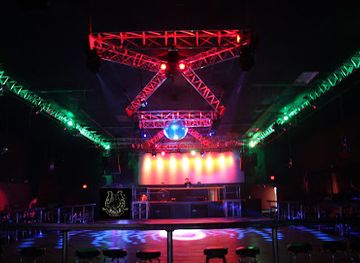
Tulsa's evening life is centred on live music, independent bars, theatres and compact entertainment districts rather than one continuous club strip. Cain's Ballroom, a historic dance hall in the Tulsa Arts District, is the city's best-known music venue and hosts touring and local performances across several genres. The nearby downtown area, including the Blue Dome District and Arts District, has cocktail bars, breweries, casual late-night venues and live entertainment, while the Pearl District and Kendall Whittier offer a more neighbourhood-oriented evening atmosphere. Tulsa's strong links to country, folk, rock and roots music are reflected in its concert calendar, and smaller venues diversify the scene with comedy, theatre and community events. Evening walks should remain within active, well-lit areas, particularly when travelling between districts that are separated by major roads.
-
Night club
Night Trips
Unleash your inner night owl at Night Trips, Tulsa's top destination for vibrant nightlife, electrifying music, and unforgettable experiences.
28 min drive · 9.5 km from city centre
-
Night club
Club Majestic
Discover the vibrant nightlife at Club Majestic, Tulsa’s premier night club offering electrifying music and an unforgettable social experience.
6 min walk · 0.5 km from city centre
-
Night club
St. Vitus
Discover the electrifying nightlife at St. Vitus, Tulsa's premier night club, offering vibrant cocktails and exhilarating dance experiences.
7 min walk · 0.6 km from city centre
-
Night club
Rodeo Nightclub
Discover the vibrant energy of Rodeo Nightclub, Tulsa's top destination for nightlife, dancing, and unforgettable memories.
33 min drive · 13 km from city centre
Best shops in Tulsa
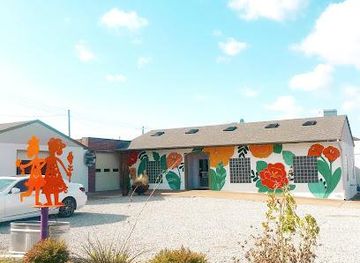
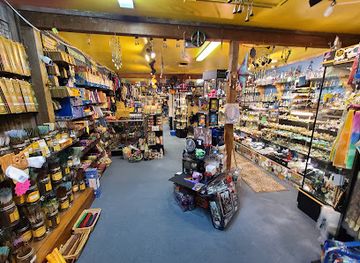
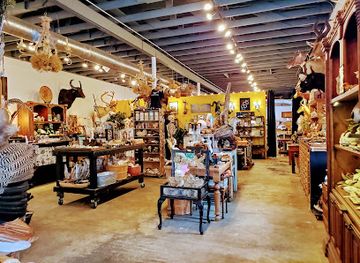
Tulsa's shopping is distributed among historic commercial streets, neighbourhood boutiques, specialist retailers and larger centres rather than concentrated in one traditional market quarter. The Arts District and downtown provide independent shops, galleries, record stores and design-led businesses, while Cherry Street, Brookside and the Pearl District combine local retail with cafés and restaurants. Utica Square offers an established open-air shopping environment with national and independent stores. Route 66-related signs, books, clothing and memorabilia appear in specialist shops and roadside businesses, though stock and opening arrangements differ. Visitors looking for distinctly Oklahoman purchases may consider Native American art and craft, regional food products, Western-inspired goods, locally designed prints and music connected to Tulsa's strong cultural history. The Tulsa Farmers' Market is another source of seasonal produce and handmade products when its market days are running.
-
Gift shop
Garden Deva Sculpture Company | Gift Shops Tulsa
Explore the captivating artistry at Garden Deva Sculpture Company, a must-visit gift shop and art studio in Tulsa's Pearl District.
5 min drive · 1.7 km from city centre
-
Gift shop
Oz (CuriOzity)
Explore CuriOzity in Tulsa, a whimsical gift shop offering unique items from clothing to incense, perfect for every curious traveler.
12 min drive · 3.9 km from city centre
-
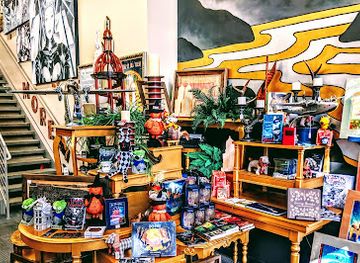
Souvenir store
DECOPOLIS
Discover unique souvenirs and local treasures at Decopolis, Tulsa's premier destination for eclectic gifts and tourist information.
6 min drive · 1.9 km from city centre
-
Gift shop
Black Moth
Discover a treasure trove of unique gifts, collectibles, and educational wonders at Black Moth in Tulsa, a must-visit shop for all ages.
14 min drive · 4.8 km from city centre
Get your free copy of our complete guide to Tulsa, delivered straight to you.
Everything on this page, from attractions and restaurants to essentials and local phrases, in one PDF you can read offline, print or share.
Already have an account? Sign in
Your Tulsa guide is ready.
We'll send it to · Not you? Sign out

Getting your guide ready…
We are putting together a fresh copy of the Tulsa guide. This can take up to a minute.
This can take a few moments. If your browser asks, choose Allow so the download can start. You'll find the guide in your Downloads folder.
Nothing happened? Download it again
Sorry, the guide is taking longer than usual. Please try again in a minute, or get it by email instead.
Tulsa essentials
Currency and Payment
Safety
Emergency Situations
Do's and Don'ts
Local Tips
From Eve
Local phrases worth knowing
You don't need to get them perfect. A few words go a long way, and locals appreciate the effort.
Basics
| English | Local | Say it |
|---|---|---|
| Hello | Howdy | [haw-dee] |
| Goodbye | See ya | [see yuh] |
| Yes | Yup | [yuhp] |
| No | Nah | [nuh] |
| Please/You're welcome | Please/You're welcome | [Please/You're welcome] |
| Thank you | Thanks | [th-anks] |
| Excuse me/Sorry | Pardon me/Sorry | [par-dn me/sor-ee] |
| How are you? | Howdy | [haw-dee] |
| Fine. And you? | Just fine. How 'bout you? | [just fine. how 'bout yuh] |
| Do you speak English? | Ya speak English? | [ya speak Ing-lish] |
| I don't understand | I ain't gettin' ya | [I ain't get-tin' yuh] |
Eating & Drinking
| English | Local | Say it |
|---|---|---|
| I'd like to see the menu, please | Can I take a gander at the menu, please | [kan ah take a gan-der at the men-yoo, please] |
| I don't eat meat | I don't eat meat | [I don't eat meet] |
| Cheers! | Cheers! | [cheers] |
| I would like to pay, please | I reckon I'll settle up, please | [I reckon I'll set-tle up, please] |
Emergencies
| English | Local | Say it |
|---|---|---|
| Help! | Help! | [Help!] |
| Go away! | Get on outta here! | [Get on out-ta here!] |
| Call the Police! | Call the Cops! | [Call the Cops!] |
| Call a doctor! | Call a doc! | [Call a doc!] |
| I'm lost | I'm turned around | [I'm turned around] |
| I'm ill | I'm feelin' poorly | [I'm feelin' poor-ly] |
Shopping
| English | Local | Say it |
|---|---|---|
| I'd like to buy... | I'm fixin' to buy... | [I'm fix-in' to buy...] |
| I'm just looking | I'm just lookin' | [I'm just look-in'] |
| How much is it? | How much is that? | [how much is that?] |
| That's too expensive | That's a bit steep | [That's a bit steep] |
| Can you lower the price? | Can ya knock the price down? | [Can ya knock the price down?] |
Time & Numbers
| English | Local | Say it |
|---|---|---|
| What time is it? | What time is it? | [What time is it?] |
| It's one o'clock | It's one o'clock | [It's one o'clock] |
| Half past (10) | Half past (10) | [Half past (10)] |
| Morning | Mornin' | [Morn-in'] |
| Afternoon | Afternoon | [Afternoon] |
| Evening | Evenin' | [Even-in'] |
| Yesterday | Yesterday | [Yesterday] |
| Today | Today | [Today] |
| Tomorrow | Tomorrow | [Tomorrow] |
| 1 | 1 | [1] |
| 2 | 2 | [2] |
| 3 | 3 | [3] |
| 4 | 4 | [4] |
| 5 | 5 | [5] |
| 6 | 6 | [6] |
| 7 | 7 | [7] |
| 8 | 8 | [8] |
| 9 | 9 | [9] |
| 10 | 10 | [10] |
Transport & Directions
| English | Local | Say it |
|---|---|---|
| Where's a/the...? | Where's a/the...? | [Where's a/the...?] |
| What's the address? | What's the address? | [What's the address?] |
| Can you show me (on the map)? | Can you show me (on the map)? | [Can you show me (on the map)?] |
| When's the next (bus)? | When's the next (bus)? | [When's the next (bus)?] |
| A ticket (to ....) | A ticket (to ....) | [A ticket (to ....)] |
History of Tulsa
Creek Beginnings and Tulsey Town
Tulsa developed in the traditional homelands of the Muscogee (Creek) Nation. Muscogee people established a settlement known as Tulsey Town in the early nineteenth century, naming it after the Creek town of Tulsa in present-day Alabama. The area stood near established Indigenous routes and the Arkansas River, which supported movement and trade across the southern plains. Following the forced removal of southeastern Native nations, the Muscogee Nation retained its presence in Indian Territory, and Tulsa later grew within that political and cultural landscape. The city's name, regional institutions and continuing Native communities reflect this history, even as later development was driven by railways, land allotments and commercial expansion.
Railways and the City's Incorporation
The arrival of the St. Louis–San Francisco Railway in 1882 connected Tulsa with wider markets and encouraged a shift from a small settlement towards a commercial town. Cattle, agricultural goods and regional trade passed through the growing centre, while new businesses and residences appeared around the railway. Tulsa was incorporated in 1898, establishing a municipal framework for expansion. The town remained modest in scale until petroleum changed its prospects. Rail access proved especially important because it allowed equipment, workers and oil to move efficiently between northeastern Oklahoma and national markets.
Oil, Wealth and Art Deco
Petroleum transformed Tulsa after oil was discovered at nearby Red Fork in 1901 and the Glenn Pool field opened south of the city in 1905. Tulsa became a headquarters for oil companies, financiers and entrepreneurs, earning the nickname Oil Capital of the World. Rapid population growth brought new neighbourhoods, roads, schools and civic institutions. During the 1920s and 1930s, oil wealth helped fund an architectural boom, and Art Deco became the prevailing language of many downtown offices, churches and public buildings. The Tulsa Club Building, Tulsa City Hall and Boston Avenue Methodist Church remain visible reminders of that era, although their forms represent different strands of the city's modern development.
Greenwood and the 1921 Tulsa Race Massacre
Greenwood became one of the most prosperous African American commercial districts in the United States, with hotels, shops, professional offices, restaurants and newspapers serving a thriving community. On 31 May and 1 June 1921, white mobs attacked Greenwood, destroying homes and businesses and killing and displacing Black residents; the event is known as the Tulsa Race Massacre. Survivors rebuilt parts of the district, but discriminatory policies, urban renewal and later economic pressures altered its scale and continuity. The Greenwood Cultural Center, John Hope Franklin Reconciliation Park and the Greenwood Rising History Center contribute to the city's continuing effort to document the massacre, honour survivors and explain its national significance.
Route 66 and Mid-Century Change
The designation of US Route 66 in 1926 placed Tulsa on one of the principal roads linking Chicago with Los Angeles. Motels, filling stations, diners and roadside businesses followed, adding a new layer to the city's commercial landscape and connecting it to the mythology of American road travel. Tulsa also expanded through post-war suburban development, while changes in the energy industry periodically reshaped employment and investment. Historic districts and surviving roadside structures now preserve fragments of these transformations. Route 66 is therefore part of both Tulsa's cultural image and its physical history, represented through surviving alignments, signs, businesses and interpretive projects.
Renewal, Preservation and Cultural Memory
Late twentieth- and early twenty-first-century Tulsa saw renewed investment in downtown buildings, arts organisations, public spaces and riverfront landscapes. Historic preservation helped protect Art Deco landmarks and older commercial districts, while institutions such as the Philbrook Museum of Art, Woody Guthrie Center and Bob Dylan Center broadened the city's cultural profile. The Gathering Place, opened in 2018 beside the Arkansas River, created a major public park and civic gathering space. At the same time, renewed attention to Greenwood and the 1921 massacre has made racial history central to Tulsa's public conversation. Contemporary Tulsa is consequently shaped by both preservation and reassessment: its oil-era architecture and Route 66 heritage remain prominent, but so do efforts to address the legacies of dispossession and racial violence.
Tulsa in Photos
Browse through our photo collection highlighting the charm and character of the destination.
Cities near Tulsa
The closest cities to Tulsa, if you have time for more than one stop.
-

-

-

-

-


Swipe for more cities
Explore more
Explore more of Oklahoma
Discover Oklahoma: Where the spirit of the Old West meets modern charm, offering a rich mix of history, nature, and vibrant culture in the heart of the United States.
Explore Oklahoma