

Free Texarkana Travel Guide & Mobile App
Plan your Texarkana trip with Evendo. Get free guides to top attractions, restaurants, hotels, and bars. Web access or download the mobile app.


Texarkana, Arkansas, blends railroad history, state-line landmarks, Southern food and nearby outdoor escapes in a distinctive border-city experience.
A Border-City Identity
Texarkana, Arkansas, occupies one half of an unusual American city: its urban counterpart, Texarkana, Texas, stands directly across State Line Avenue. Together they form a closely connected community shaped by railway commerce, regional trade and the practical rhythms of life on a state boundary. The Arkansas side belongs to Miller County and serves as a gateway to the forests, lakes and small towns of the southwest corner of the state.Read more about Texarkana
Railways, Streets and Civic History
Life in Southwest Arkansas
When is the best time to visit Texarkana?
Best: April–May, October · 23–27°C| Month | High (°C) | Rainfall (mm) |
|---|---|---|
| January | 11 | 80 |
| February | 13 | 70 |
| March | 19 | 100 |
| April (best) | 23 | 100 |
| May (best) | 27 | 110 |
| June | 31 | 90 |
| July | 33 | 80 |
| August | 33 | 80 |
| September | 30 | 90 |
| October (best) | 24 | 100 |
| November | 17 | 100 |
| December | 13 | 90 |
Getting to and around Texarkana
How to get there
Transportation
Best attractions in Texarkana
Texarkana's attractions centre on its unusual geography and regional civic life. Downtown State Line Avenue provides the defining sightseeing experience, with the United States Post Office and Courthouse standing directly across the Arkansas-Texas boundary and nearby streets revealing the area's railway-era commercial character. On the Arkansas side, the Four States Fairgrounds hosts agricultural, equestrian and community events that connect the city with its rural hinterland. Spring Lake Park offers open space, walking areas and water views within the urban area, while Bobby Ferguson Park provides another setting for recreation and local gatherings. Visitors interested in the wider story of the city can explore cultural programmes and exhibitions in the shared downtown district, although individual venues should be checked carefully because many carry a Texas address. Texarkana Regional Airport also reflects the city's role as a transport centre, but its significance is practical rather than a conventional visitor attraction.
-
Park
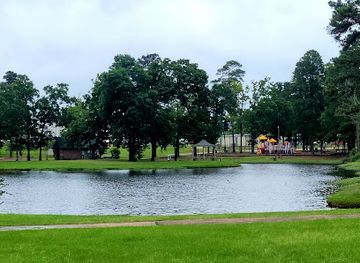
Spring Lake Park
Discover Texarkana's favorite park: a scenic blend of recreation, history, and natural beauty for all ages, nestled in the heart of the city.
13 min drive · 4.3 km from city centre
-
Tourist attraction
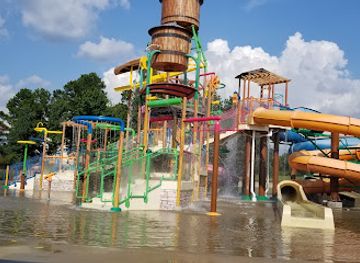
Big Dam Waterpark
Experience thrilling slides, relaxing pools, and family-friendly fun at Texarkana's premier water park – Big Dam Waterpark!
17 min drive · 5.7 km from city centre
-
Park
Pavilion at Bobby Ferguson Park
A versatile Texarkana park with walking trails, playgrounds, and a pavilion for events, perfect for family outings and community gatherings.
20 min drive · 6.7 km from city centre
-
Tourist attraction
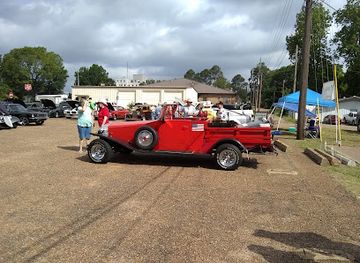
Four States Auto Museum
Explore automotive history at the Four States Auto Museum in Texarkana, Arkansas, featuring vintage cars and fascinating memorabilia.
11 min walk · 0.9 km from city centre

Best landmarks in Texarkana
Texarkana's most distinctive landmark is the United States Post Office and Courthouse, a federal building positioned across the state line and therefore embodying the shared identity of the two municipalities. State Line Avenue itself is also a defining civic feature, with the boundary running through the central urban landscape rather than along an outlying edge. On the Arkansas side, the Miller County Courthouse represents the county's public administration and the city's role as a regional centre, while nearby downtown streets retain the scale and commercial pattern of the railway era. The Four States Fairgrounds is a more functional landmark, associated with the agricultural and equestrian traditions of the surrounding region. Together these places show Texarkana through federal, local and community institutions rather than through a single monumental building.
-
Park
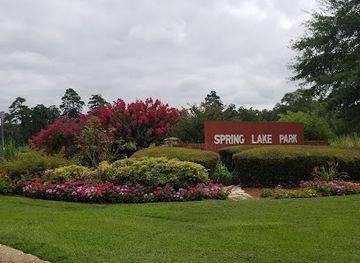
Spring Lake Park
A serene escape in Texarkana, Spring Lake Park offers lush landscapes, recreational activities, and a perfect setting for relaxation and family fun.
13 min drive · 4.3 km from city centre
-
Restaurant
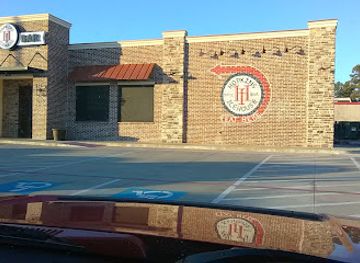
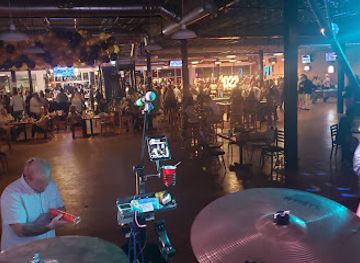
Hopkins Icehouse
Experience Texarkana's history, flavors, and sounds at Hopkins Icehouse, a downtown landmark with live music, delicious food, and local brews.
8 min walk · 0.6 km from city centre
-
Bowling alley
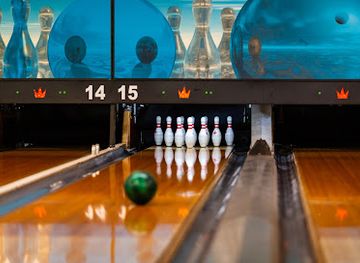
Holiday Entertainment
Experience the thrill of bowling at Holiday Entertainment in Texarkana, where fun meets friendly competition for everyone.
10 min drive · 3.5 km from city centre
-
Tattoo shop
Black Pines Gallery
Experience the artistic fusion of tattoos, art, and fashion at Black Pines Gallery in Texarkana, Texas, a must-visit for creative souls.
8 min drive · 2.6 km from city centre

Explore Texarkana on the map
Plan your Texarkana trip on one map. See where the top attractions, landmarks, restaurants, bars and hotels are, find what's near where you're staying, and book hotels and experiences in a few clicks.
Best hotels in Texarkana
Best restaurants in Texarkana
Texarkana's dining culture reflects the food traditions of the Ark-La-Tex border region, where Arkansas, northeast Texas and nearby Louisiana influences meet. Barbecue, fried catfish, Southern vegetables, biscuits, burgers and generously prepared breakfast plates are familiar choices, while Cajun and Creole flavours appear alongside broader American and Mexican-influenced cooking. Independent cafés, family-run restaurants and casual grills are spread through the shared urban area, with the downtown district offering a useful setting for combining food with an exploration of the state line. Seasonal produce and fairground food add a regional dimension, particularly during community events. Restaurant addresses deserve attention because a meal that appears to be in Texarkana may technically be in Texas, and menus can vary considerably between traditional Southern cooking, contemporary bistros and national chains along the commercial corridors.
-
Steak
Texas Roadhouse
Experience authentic American cuisine at Texas Roadhouse in Texarkana—famous for its hand-cut steaks and lively dining atmosphere.
16 min drive · 5.3 km from city centre
-
Restaurant
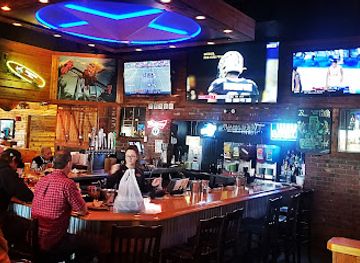
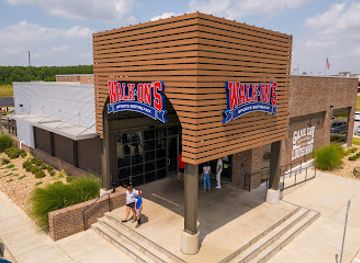
Walk-On's Sports Bistreaux - Texarkana Restaurant
Discover the lively ambiance and delicious menu at Walk-On's Sports Bistreaux in Texarkana—perfect for sports fans and food lovers alike.
19 min drive · 6.3 km from city centre
-
Breakfast
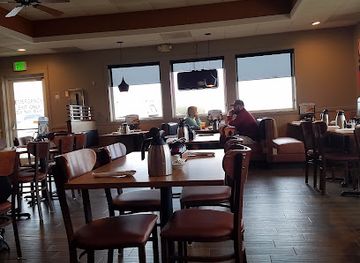
IHOP
Discover the ultimate breakfast experience at IHOP in Texarkana—where deliciousness meets family-friendly dining!
16 min drive · 5.2 km from city centre
-
Barbecue
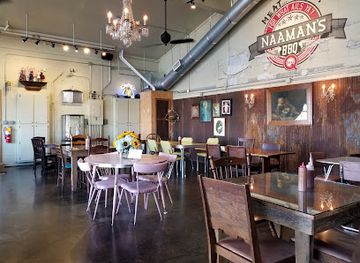
Naaman's BBQ
Experience authentic Southern barbecue at Naaman's BBQ in Texarkana—where every bite tells a story of flavor and tradition.
16 min drive · 5.5 km from city centre
Best bars in Texarkana
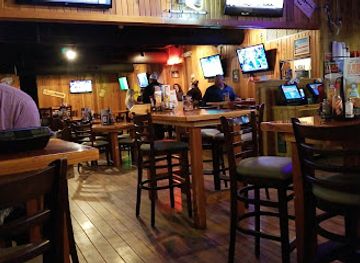
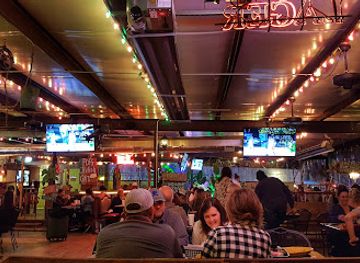
Texarkana's evening scene is modest and regional rather than concentrated in a large entertainment quarter. Downtown and the surrounding commercial areas provide locally oriented bars, casual evening venues and occasional live music, while restaurants and breweries may form part of a relaxed night out. Community concerts, theatre programmes, exhibitions and events at the Four States Fairgrounds broaden the choice beyond drinking and clubbing, particularly during festival periods. The two-state layout matters after dark: venues may operate under different licensing rules and closing requirements depending on whether they are in Arkansas or Texas. Travellers should check current event information rather than expect a dense late-night district, and should arrange a taxi, app-based ride or designated driver when moving between dispersed venues.
-
Restaurant
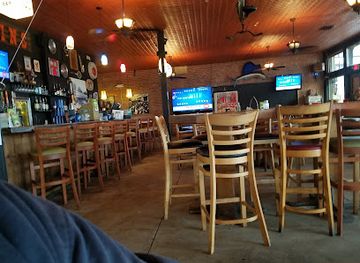
Hopkins Icehouse
Discover the lively ambiance of Hopkins Icehouse in Texarkana, where great food and drinks meet a welcoming atmosphere for all.
8 min walk · 0.6 km from city centre
-
Gastropub
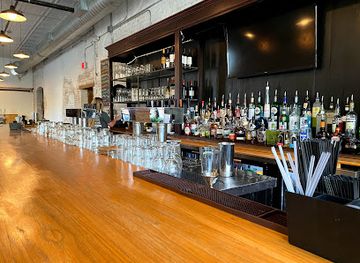
Pecan Point Gastropub & Brewery
Discover Texarkana's vibrant culinary scene at Pecan Point Gastropub & Brewery, where craft beer meets gourmet dining in a charming atmosphere.
6 min walk · 0.5 km from city centre
-
Sports bar
Hooters
Experience American dining at its finest with delicious wings, burgers, and a lively sports atmosphere at Hooters in Texarkana.
14 min drive · 4.8 km from city centre
-
Steak
Pops Place
Discover the best steaks in Texarkana at Pops Place, where flavor meets a warm and inviting atmosphere.
30 min drive · 9.9 km from city centre
Best nightclubs in Texarkana
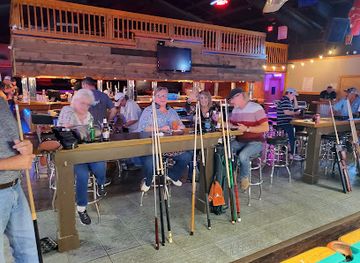
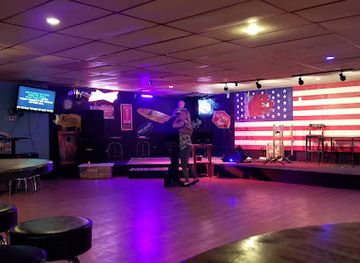
Texarkana's evening scene is modest and regional rather than concentrated in a large entertainment quarter. Downtown and the surrounding commercial areas provide locally oriented bars, casual evening venues and occasional live music, while restaurants and breweries may form part of a relaxed night out. Community concerts, theatre programmes, exhibitions and events at the Four States Fairgrounds broaden the choice beyond drinking and clubbing, particularly during festival periods. The two-state layout matters after dark: venues may operate under different licensing rules and closing requirements depending on whether they are in Arkansas or Texas. Travellers should check current event information rather than expect a dense late-night district, and should arrange a taxi, app-based ride or designated driver when moving between dispersed venues.
-
Night club
Whiskey River Country
Discover the vibrant nightlife at Whiskey River Country, Texarkana's premier night club with live music, dancing, and a welcoming atmosphere.
15 min drive · 4.9 km from city centre
-
Bar
Arrow Bar
Discover lively nights at Arrow Bar in Texarkana, where great drinks, karaoke, and a friendly atmosphere create unforgettable memories.
11 min drive · 3.6 km from city centre
-
Bar
Crazy Horse Saloon
Discover the lively spirit of Crazy Horse Saloon in Texarkana - a must-visit bar for affordable drinks and unforgettable karaoke nights.
8 min drive · 2.5 km from city centre
-
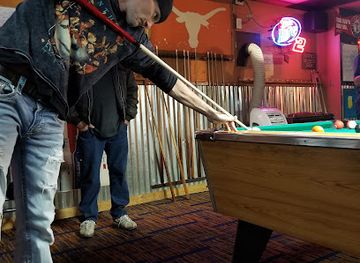
Bar
The Hideout
Discover the vibrant nightlife at The Hideout in Texarkana, a bar filled with art, friendly bartenders, and a lively atmosphere.
9 min walk · 0.7 km from city centre
Best shops in Texarkana
Shopping in Texarkana is shaped by its role as a service centre for southwest Arkansas, northeast Texas and nearby rural communities. The shared downtown area contains independent businesses, small retailers, antique interests and locally oriented services, while larger commercial corridors provide everyday shopping and national brands. Visitors may find regional food products, handmade goods, Arkansas-themed gifts and practical souvenirs at independent shops or seasonal community markets. Events at the Four States Fairgrounds can also bring craft and agricultural vendors into the city. Because the retail area extends well beyond the historic centre, a car is useful for moving between downtown, supermarkets and shopping plazas. Check addresses carefully when following local recommendations: a business associated with Texarkana may stand on either side of State Line Avenue.
-
Grocery store
Save A Lot
Discover affordable groceries and local flavors at Save A Lot, the discount supermarket that brings quality and savings to Texarkana.
5 min drive · 1.8 km from city centre
-
Comic book store
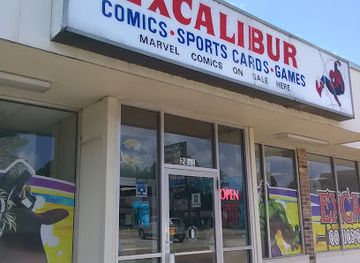
Excalibur Comics Cards & Games
Explore a vibrant selection of comics and games at Excalibur Comics Cards & Games, a must-visit for fans in Texarkana.
6 min drive · 2.1 km from city centre
-
Grocery store
Cash Saver Food Stores repkophs
Explore the local flavors at Cash Saver Food Stores in Texarkana, where quality meets affordability in a welcoming grocery experience.
13 min drive · 4.5 km from city centre
-
Shopping mall
State Line Shopping Center
Experience shopping like never before at State Line Shopping Center in Texarkana, where diverse stores and delicious dining await.
10 min drive · 3.2 km from city centre
Get your free copy of our complete guide to Texarkana, delivered straight to you.
Everything on this page, from attractions and restaurants to essentials and local phrases, in one PDF you can read offline, print or share.
Already have an account? Sign in
Your Texarkana guide is ready.
We'll send it to · Not you? Sign out

Getting your guide ready…
We are putting together a fresh copy of the Texarkana guide. This can take up to a minute.
This can take a few moments. If your browser asks, choose Allow so the download can start. You'll find the guide in your Downloads folder.
Nothing happened? Download it again
Sorry, the guide is taking longer than usual. Please try again in a minute, or get it by email instead.
Texarkana essentials
Currency and Payment
Safety
Emergency Situations
Do's and Don'ts
Local Tips
From Eve
Local phrases worth knowing
You don't need to get them perfect. A few words go a long way, and locals appreciate the effort.
Basics
| English | Local | Say it |
|---|---|---|
| Hello | Howdy | [haw-dee] |
| Goodbye | See ya later | [see ya lay-ter] |
| Yes | Yessir | [yes-sir] |
| No | Nah | [nuh] |
| Please/You're welcome | Please/No problem | [pleez/no prob-lem] |
| Thank you | Thank ya | [thank yuh] |
| Excuse me/Sorry | Pardon me/My bad | [par-dun me/my bad] |
| How are you? | Howdy, y'all doin'? | [haw-dee, yawl doin'] |
| Fine. And you? | Jus' fine. How 'bout you? | [jus fine. how bout yuh] |
| Do you speak English? | Ya speak English? | [yah speak ing-lish] |
| I don't understand | I ain't catchin' on | [eye aint catch-in on] |
Eating & Drinking
| English | Local | Say it |
|---|---|---|
| I'd like to see the menu, please | Can I check out the menu? | [kan eye chek out the men-yoo] |
| I don't eat meat | I don't eat no meat | [eye dont eat no meat] |
| Cheers! | Here's to ya! | [heers to yuh] |
| I would like to pay, please | I need to settle up | [eye need to set-tul up] |
Emergencies
| English | Local | Say it |
|---|---|---|
| Help! | Help me out! | [help me out] |
| Go away! | Git gone! | [git gone] |
| Call the Police! | Call the fuzz! | [call the fuzz] |
| Call a doctor! | Call a doc! | [call a doc] |
| I'm lost | I'm turned around | [eye'm turned around] |
| I'm ill | I'm feelin' poorly | [eye'm feelin poorly] |
Shopping
| English | Local | Say it |
|---|---|---|
| I'd like to buy... | Gimme... | [gim-me] |
| I'm just looking | Jus' browsin' | [jus brows-in] |
| How much is it? | How much fer that? | [how much fur that] |
| That's too expensive | That's highfalutin | [that's high-falutin] |
| Can you lower the price? | Can ya cut me a deal? | [can yuh cut me a deal] |
Time & Numbers
| English | Local | Say it |
|---|---|---|
| What time is it? | What's the time? | [whats the time] |
| It's one o'clock | It's one | [its one] |
| Half past (10) | Ten-thirty | [ten-thur-tee] |
| Morning | Mornin' | [mornin'] |
| Afternoon | Afternoon | [after-noon] |
| Evening | Evenin' | [even-in'] |
| Yesterday | Yest'day | [yes-t-day] |
| Today | Today | [to-day] |
| Tomorrow | Tomorra | [tom-or-ra] |
| 1 | One | [wun] |
| 2 | Two | [too] |
| 3 | Three | [three] |
| 4 | Four | [four] |
| 5 | Five | [five] |
| 6 | Six | [six] |
| 7 | Seven | [sev-un] |
| 8 | Eight | [ate] |
| 9 | Nine | [n-ine] |
| 10 | Ten | [ten] |
Transport & Directions
| English | Local | Say it |
|---|---|---|
| Where's a/the...? | Where's the... at? | [wheres the at] |
| What's the address? | What's the addy? | [whats the addy] |
| Can you show me (on the map)? | Can ya point it out (on the map)? | [can yuh point it out] |
| When's the next (bus)? | When's the next (bus) comin'? | [whens the next bus comin] |
| A ticket (to ....) | A ticket (to ....) | [a ticket (to)] |
History of Texarkana
Railways Create a Border City
Texarkana emerged in the nineteenth century as railway construction transformed southwest Arkansas and northeast Texas. The Cairo and Fulton Railroad, advancing south from Arkansas, and the Texas and Pacific Railway helped establish a junction in the early 1870s. Rail access brought passengers, freight, merchants and land speculation, turning what had been a lightly settled area into a new commercial centre. The name Texarkana reflects the city's position near the meeting point of Texas, Arkansas and Louisiana, although explanations of its exact origin vary. From the beginning, the settlement's identity was shaped by movement across state lines rather than by a single state or county tradition.
Settlement and Civic Development
As railway traffic increased, businesses, homes, churches and public institutions spread on both sides of the boundary. The Arkansas community developed within Miller County, while the Texas community grew under a separate municipal and legal system only a short distance away. This unusual arrangement produced two city governments, two sets of state regulations and a single interconnected trading centre. Warehouses, hotels, retail premises and professional offices served travellers and nearby agricultural districts. The early street plan and the surviving commercial core still reflect the period when railways were the region's principal engines of growth.
Commerce Beyond the Tracks
During the late nineteenth and early twentieth centuries, Texarkana became a regional market town for timber, agricultural goods and retail trade. Rail connections supported the movement of lumber from the surrounding pine forests and linked local producers with much larger Southern markets. The city's prosperity also encouraged schools, religious congregations, banks and civic organisations, giving both sides of the line a more settled urban character. African American residents built businesses, churches and community institutions despite the segregation and discrimination imposed by law and custom. Their contributions form an essential part of Texarkana's social history, even when they are less visible in the grand railway narrative.
The State-Line Post Office
Texarkana's most famous civic symbol is the United States Post Office and Courthouse, whose building occupies the state boundary in the shared downtown area. Completed in the early twentieth century, it represents the practical and symbolic relationship between the two municipalities: federal functions could serve a divided city from one prominent address. The building's location made the state line part of everyday public life and helped give Texarkana an identity unlike that of other railway towns. Its architectural presence, together with the surrounding streets and civic buildings, preserves the period when postal and courthouse facilities were among the most important public landmarks in an American town.
Modernisation and Regional Identity
Texarkana changed after the Second World War as private cars, highways, suburban development and shifting retail patterns reduced the centrality of the railway district. The city nevertheless remained a transport and service centre for a broad rural hinterland. Industrial activity, health services, education, retail and public administration joined the older functions of trade and rail. Downtown preservation and cultural organisations have helped maintain connections with the past, while events such as the Four States Fair and Rodeo continue to express the area's agricultural and regional character. Contemporary Texarkana remains a shared urban community whose history is best read across both sides of the state line.
Texarkana in Photos
Browse through our photo collection highlighting the charm and character of the destination.
Cities near Texarkana
The closest cities to Texarkana, if you have time for more than one stop.
-
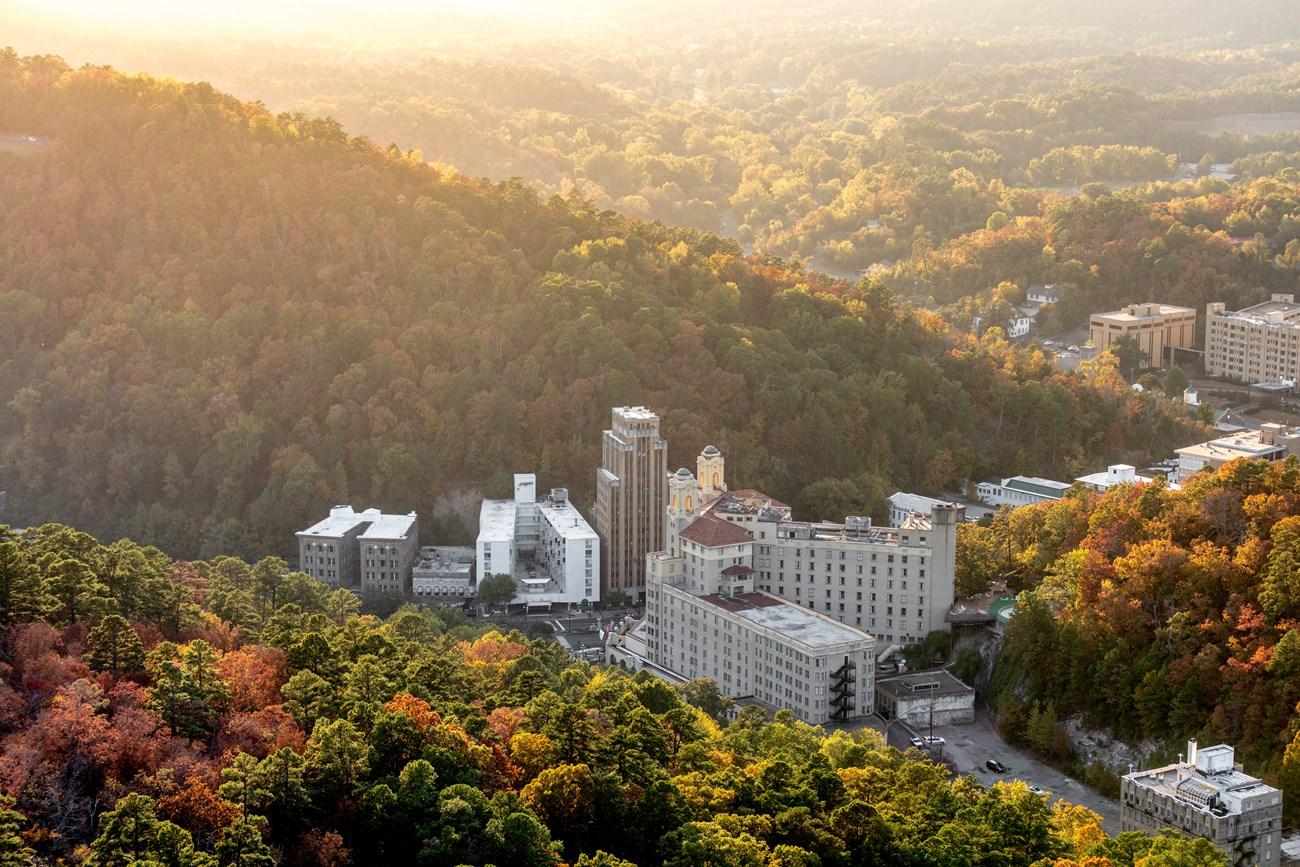 Hot Springs
, Arkansas blends thermal waters, Bathhouse Row, mountain scenery, historic architecture, arts, racing and lively Southern cuisine and arts.
2 h 51 min drive · 151 km from city centre
Hot Springs
Hot Springs, Arkansas blends thermal waters, Bathhouse Row, mountain scenery, historic architecture, arts, racing and lively Southern cuisine and arts.
2 h 51 min drive · 151 km from city centre
-

-

-

-


Swipe for more cities
Explore more

Explore more of Arkansas
Explore Arkansas: The Natural State with its stunning landscapes, rich history, and vibrant cultural experiences. Perfect for adventurers and culture seekers alike.
Explore Arkansas