

Cascade Lakes Scenic Byway Travel Guide - Free Web & App
Your ultimate guide to Cascade Lakes Scenic Byway. Discover top landmarks, proposed trips, and local tips. Free on the web or via the Evendo companion app.


Cascade Lakes Scenic Byway in Oregon links Bend with mountain lakes, lava landscapes and alpine views near Mount Bachelor, with hiking, paddling and wildlife.
Mountain Lakes and Volcanic Landscapes
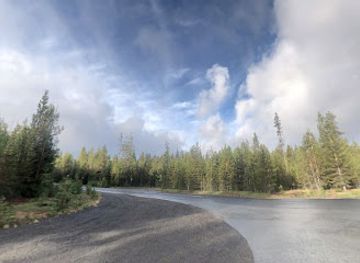
The Cascade Lakes Scenic Byway follows a seasonal mountain road west from Bend into the Deschutes National Forest, crossing the eastern flank of the Central Oregon Cascades. The route extends for roughly 66 miles between Bend and the high country near Mount Bachelor, although its exact accessible length depends on snow clearance and seasonal road conditions. Ponderosa pine forest gives way to open volcanic slopes, subalpine meadows and a chain of lakes formed in the rugged terrain around the Cascade Range. Sparks Lake, Devils Lake, Elk Lake, Hosmer Lake, Cultus Lake and Todd Lake are among the best-known waters along or near the byway, each offering a different setting for walking, paddling, fishing where permitted and quiet landscape observation.Read more about Cascade Lakes Scenic Byway
Gateways and Outdoor Character
When is the best time to visit Cascade Lakes Scenic Byway?
Best: June–August · 19–23°C| Month | High (°C) | Rainfall (mm) |
|---|---|---|
| January | 2 | 150 |
| February | 4 | 120 |
| March | 6 | 110 |
| April | 9 | 80 |
| May | 14 | 50 |
| June (best) | 19 | 40 |
| July (best) | 23 | 20 |
| August (best) | 23 | 20 |
| September | 19 | 40 |
| October | 11 | 70 |
| November | 5 | 110 |
| December | 2 | 150 |
Getting to and around Cascade Lakes Scenic Byway
How to get there
Transportation
Best attractions in Cascade Lakes Scenic Byway
The Cascade Lakes Scenic Byway is a linked series of mountain landscapes rather than one enclosed attraction. Sparks Lake is among the most recognisable stops, with broad water views towards South Sister, Broken Top and Mount Bachelor, while nearby Devils Lake sits in a forested setting beneath volcanic peaks. Elk Lake combines a large open lakeshore with seasonal recreation facilities, and Hosmer Lake is known for its calm water, wetlands and paddling opportunities where conditions and regulations allow. Cultus Lake offers another sizeable high-country water landscape, while Todd Lake provides a shorter, more intimate setting near Mount Bachelor. Pull-ins along the highway reveal lava fields, lodgepole and ponderosa forest, meadows and changing views of the Cascade skyline. Campgrounds and trailheads provide access to walks ranging from easy lakeside outings to more demanding routes into the surrounding mountains, although facilities and access vary by season and location.
-
 Hiking area
Deschutes Bridge
Explore the stunning Deschutes Bridge, a scenic hiking paradise in Oregon, perfect for nature lovers and adventure seekers alike.
-
Tourist attraction
Cascade Lakes National Scenic Byway
Explore the stunning Cascade Lakes National Scenic Byway, where breathtaking landscapes and outdoor adventures await in Oregon's majestic mountains.
-
Tourist attraction
Corral Swamp Trailhead
Discover the breathtaking trails and serene landscapes at Corral Swamp Trailhead in Sunriver, Oregon, perfect for hikers and nature lovers.
-
Hiking area
Crane Praire Resevoir
Discover the breathtaking beauty of Crane Prairie Reservoir, a top hiking area in Oregon perfect for nature lovers and outdoor enthusiasts.
Best landmarks in Cascade Lakes Scenic Byway
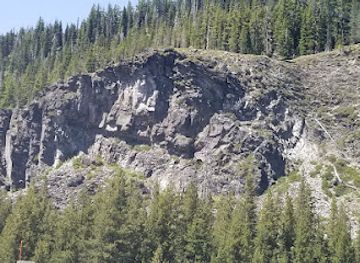
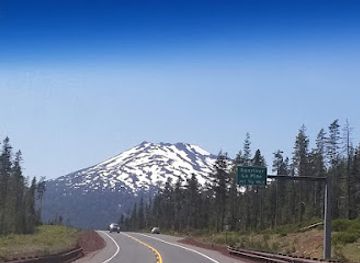
The defining landmarks of the byway are its high Cascade peaks and volcanic lake basins. Sparks Lake is framed by the distinctive profiles of South Sister and Broken Top, while Mount Bachelor dominates views near the southern end of the corridor. Devils Lake, Elk Lake, Hosmer Lake, Cultus Lake and Todd Lake mark successive changes in forest, shoreline and mountain scenery. Lava outcrops and dark volcanic surfaces explain the stark contrast between open rock and conifer woodland along parts of the route. These are primarily natural landmarks, with no concentrated historic townscape or major architectural monument within the scenic corridor itself. The highway, forest roads, campgrounds and seasonal lakeside facilities form a more modest layer of human infrastructure, illustrating how twentieth-century road building and recreation made the high lakes accessible while leaving the mountain setting largely forested.
-
Lake
Cascade Lakes
Experience the natural beauty of Cascade Lakes in Oregon, a stunning destination for outdoor adventures, relaxation, and unforgettable memories.
-
Tourist attraction
Cascade Lakes National Scenic Byway
Explore the Cascade Lakes National Scenic Byway: Oregon's breathtaking route filled with stunning lakes, majestic mountains, and endless outdoor adventures.
Explore Cascade Lakes Scenic Byway on the map
Plan your trip on one map. See where the top attractions, landmarks, restaurants and hotels are, and book hotels and experiences in a few clicks.
Best hotels in Cascade Lakes Scenic Byway
Get your free copy of our complete guide to Cascade Lakes Scenic Byway, delivered straight to you.
Everything on this page, from attractions and restaurants to essentials and local phrases, in one PDF you can read offline, print or share.
Already have an account? Sign in
Your Cascade Lakes Scenic Byway guide is ready.
We'll send it to · Not you? Sign out

Getting your guide ready…
We are putting together a fresh copy of the Cascade Lakes Scenic Byway guide. This can take up to a minute.
This can take a few moments. If your browser asks, choose Allow so the download can start. You'll find the guide in your Downloads folder.
Nothing happened? Download it again
Sorry, the guide is taking longer than usual. Please try again in a minute, or get it by email instead.
Cascade Lakes Scenic Byway essentials
Currency and Payment
Safety
Emergency Situations
Do's and Don'ts
Local Tips
From Eve
Local phrases worth knowing
You don't need to get them perfect. A few words go a long way, and locals appreciate the effort.
Basics
| English | Local | Say it |
|---|---|---|
| Hello | Howdy | [haw-dee] |
| Goodbye | See ya later | [see yuh lay-tur] |
| Yes | Yup | [yuhp] |
| No | Nope | [nohp] |
| Please/You're welcome | Please and thank ya | [pleez and thank yuh] |
| Thank you | Much obliged | [muhch uh-blahyj] |
| Excuse me/Sorry | Pardon me | [pahr-dn mee] |
| How are you? | Howdy do? | [haw-dee doo] |
| Fine. And you? | Jest fine. And yerself? | [jest fyn. And yer-self?] |
| Do you speak English? | Y'all speak English? | [yawl speak ing-glish] |
| I don't understand | I ain't catchin' yer drift | [ahynt kach-in yer drift] |
Eating & Drinking
| English | Local | Say it |
|---|---|---|
| I'd like to see the menu, please | Kin I take a peek at the grub list, please | [kin ahy tayk uh peek at thuh gruhb list, pleez] |
| I don't eat meat | I ain't a meat eater | [ahynt uh meet ee-ter] |
| Cheers! | Bottoms up! | [ba-tuhmz uhp] |
| I would like to pay, please | I reckon I'll settle up, please | [ahy rek-uhn ahy'l set-l uhp, pleez] |
Emergencies
| English | Local | Say it |
|---|---|---|
| Help! | S.O.S! | [ess oh ess] |
| Go away! | Git! | [git] |
| Call the Police! | Ring the Sheriff! | [ring thuh sher-if] |
| Call a doctor! | Fetch the doc! | [fetch thuh dok] |
| I'm lost | I'm plumb lost | [ahym pluhm lost] |
| I'm ill | I'm feelin' poorly | [ahym feel-in poor-lee] |
Shopping
| English | Local | Say it |
|---|---|---|
| I'd like to buy... | I'm fixin' to purchase... | [ahym fiks-in tuh pur-chuhs] |
| I'm just looking | Just browsin' | [just brow-zin] |
| How much is it? | What's the damage? | [whats thuh dam-ij] |
| That's too expensive | That's mighty pricey | [thats my-tee prahy-see] |
| Can you lower the price? | Y'all kin do a better deal? | [yawl kin doh uh bet-er deel] |
Time & Numbers
| English | Local | Say it |
|---|---|---|
| What time is it? | What's the hour, partner? | [whats thuh ou-er, par-tner] |
| It's one o'clock | It's one on the nose | [its wuhn on thuh nohz] |
| Half past (10) | Ten thirty | [ten thur-tee] |
| Morning | Mornin' | [morn-in] |
| Afternoon | Afternoon | [af-ter-noon] |
| Evening | Evenin' | [ee-vuh-nin] |
| Yesterday | Yest'day | [yes-t-dai] |
| Today | Today | [tuh-day] |
| Tomorrow | Morn | [morn] |
| 1 | One | [wuhn] |
| 2 | Two | [too] |
| 3 | Three | [three] |
| 4 | Four | [for] |
| 5 | Five | [fahyv] |
| 6 | Six | [siks] |
| 7 | Seven | [sev-uhn] |
| 8 | Eight | [eyt] |
| 9 | Nine | [nahyn] |
| 10 | Ten | [ten] |
Transport & Directions
| English | Local | Say it |
|---|---|---|
| Where's a/the...? | Where's the...at? | [wheres thuh at] |
| What's the address? | What's the street? | [whats thuh street] |
| Can you show me (on the map)? | Kin ya point it out (on the map)? | [kin yuh point it out on thuh map] |
| When's the next (bus)? | When's the next hauler? | [whens thuh nekst hawl-er] |
| A ticket (to ....) | A pass (to ....) | [uh pass to] |
History of Cascade Lakes Scenic Byway
Volcanic Foundations of the High Cascades
The scenery along the byway is the result of long volcanic activity in the Cascade Range. Mount Bachelor, Broken Top and the Three Sisters belong to a landscape shaped by lava flows, ash, glacial erosion and changing mountain climates. Many of the lakes occupy basins associated with glacial or volcanic processes, while dark lava surfaces and cinder-covered slopes are particularly visible near the route's higher sections. These geological features are not a single historical event but the cumulative foundation of the forest, watersheds and mountain views experienced today.
Indigenous Homelands and Travel Routes
The Central Oregon Cascades lie within the traditional homelands and seasonal travel landscapes of Indigenous peoples, including the Confederated Tribes of Warm Springs and the Confederated Tribes of the Umatilla Indian Reservation, whose cultural connections extend across a much wider region. Long before the modern highway, people moved through the mountains, gathered plant foods and used high-country resources according to seasonal patterns. The lakes, passes and forests should therefore be understood as part of a living cultural landscape rather than as wilderness without human history.
Forest Roads and Early Recreation
Modern access developed gradually through forest roads, timber activity and growing interest in the Cascades as a setting for recreation. The route now known as the Cascade Lakes Scenic Byway follows the historic Cascade Lakes Highway, developed during the early twentieth century as road engineering opened the high country west of Bend. Improved access connected local communities with lakes, fishing areas and mountain landscapes that had previously required more demanding travel. Recreation, rather than large permanent settlement, became the dominant visitor use along the corridor.
A Managed Mountain Corridor
Today the byway passes mainly through Deschutes National Forest lands managed for a combination of recreation, watershed protection, wildlife habitat, forest health and fire resilience. Campgrounds, boat access points and trails are subject to seasonal conditions and local regulations, while winter snow limits road travel for part of the year. The corridor's modern identity reflects this balance between public enjoyment and careful management of fragile volcanic soils, lakeshores and high-elevation ecosystems. Bend's growth has increased visitor pressure, making responsible parking, waste disposal, fire prevention and respect for closures increasingly important.
Cascade Lakes Scenic Byway in Photos
Browse through our photo collection highlighting the charm and character of the destination.
Neighbouring destination travel guides
The closest destinations to Cascade Lakes Scenic Byway, if you have time for more than one.
-

-
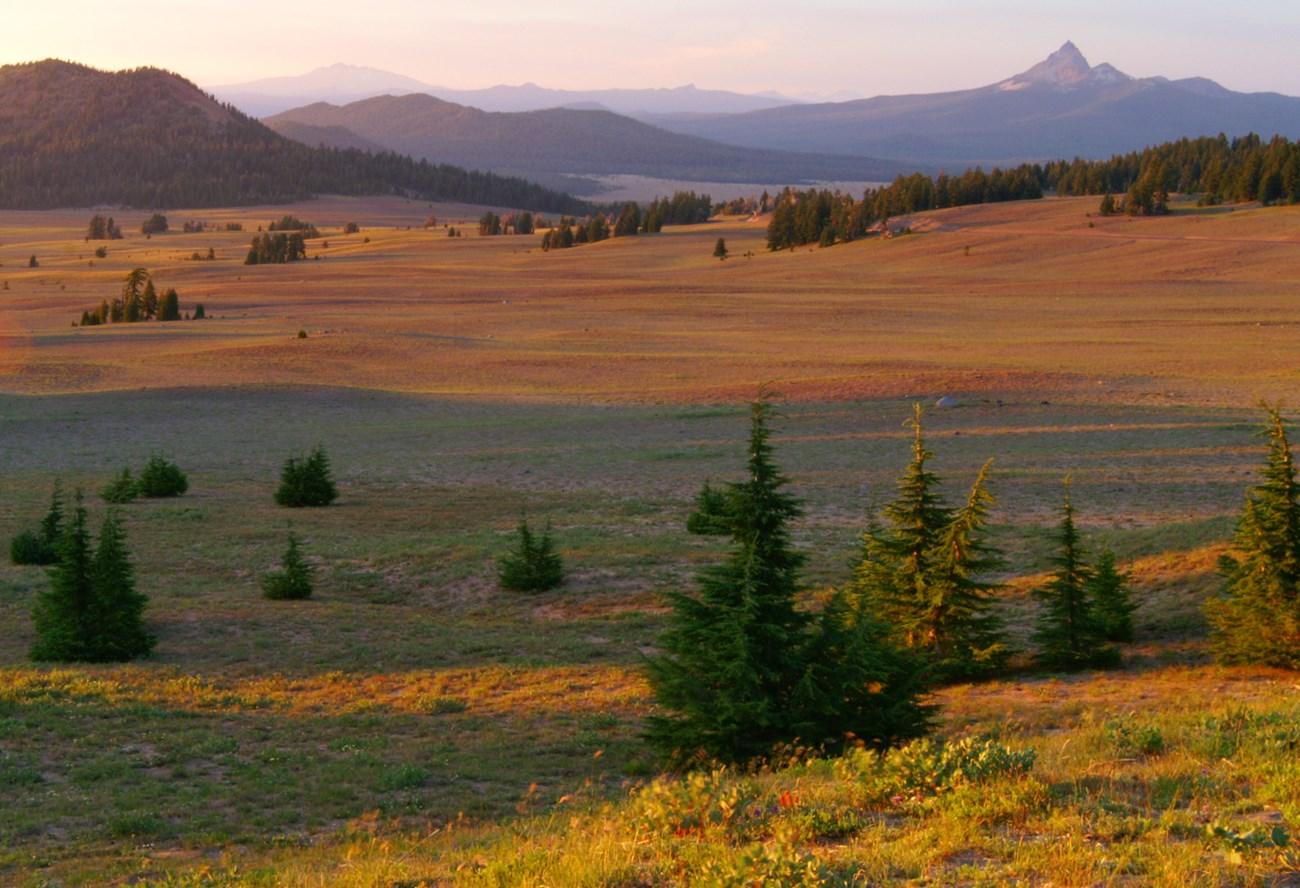 Crater Lake National Park
 in Oregon offers volcanic scenery, Wizard Island views, Rim Drive, winter snow and deep-blue lake landscapes in the Cascades.
Crater Lake National Park
Crater Lake National Park in Oregon offers volcanic scenery, Wizard Island views, Rim Drive, winter snow and deep-blue lake landscapes in the Cascades.
-

-

-


Swipe for more destinations
Explore more
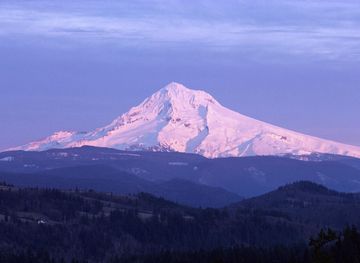
Explore more of Cascade Range
Explore Oregon’s Cascade Range for volcanic peaks, alpine lakes, forest trails, ski slopes and the deep blue caldera of Crater Lake.
Explore Cascade Range
Explore more of Oregon
Discover Oregon's diverse landscapes, vibrant cities, and rich culture. From stunning coastlines to lush forests, this Pacific Northwest gem offers endless adventures.
Explore Oregon