

Smith Rock State Park Travel Guide - Free Web & App
Your ultimate guide to Smith Rock State Park. Discover top landmarks, proposed trips, and local tips. Free on the web or via the Evendo companion app.


Smith Rock State Park in Oregon pairs volcanic cliffs, the Crooked River and world-class climbing with hiking, wildlife and high-desert scenery near Terrebonne.
High-Desert Geology
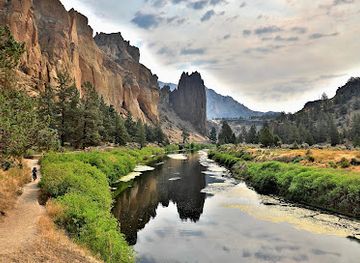
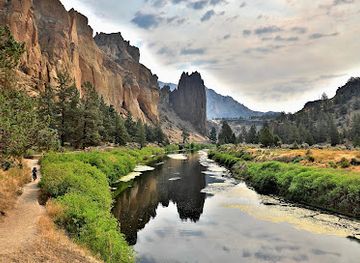
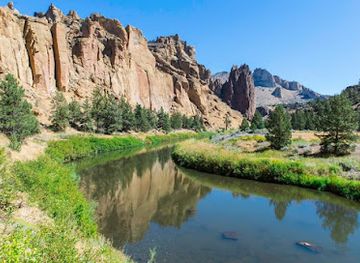
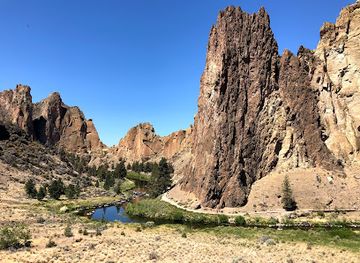
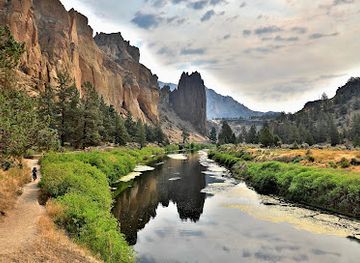
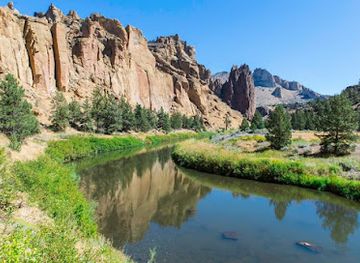
Smith Rock State Park rises from the high desert of central Oregon, where the Crooked River cuts through a dramatic complex of volcanic cliffs, pinnacles and canyon walls near the small community of Terrebonne. The park lies north of Bend and Redmond, within a landscape of sagebrush, juniper and open grassland that contrasts sharply with the dark, sharply sculpted rock. Its most recognisable formation is the tall spire known as Monkey Face, while the river corridor below provides a green thread through the dry terrain.Read more about Smith Rock State Park
Walking, Climbing and Wildlife
A Protected Oregon Landscape
When is the best time to visit Smith Rock State Park?
Best: June, August–September · 25–29°C| Month | High (°C) | Rainfall (mm) |
|---|---|---|
| January | 7 | 30 |
| February | 9 | 25 |
| March | 12 | 31 |
| April | 16 | 26 |
| May | 20 | 23 |
| June (best) | 25 | 15 |
| July | 30 | 6 |
| August (best) | 29 | 8 |
| September (best) | 25 | 14 |
| October | 17 | 24 |
| November | 9 | 33 |
| December | 7 | 34 |
Getting to and around Smith Rock State Park
How to get there
Transportation
Best attractions in Smith Rock State Park
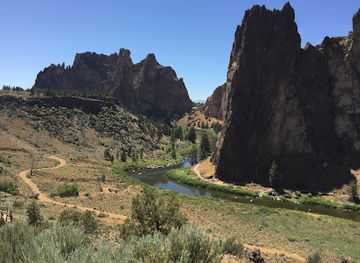
Smith Rock's principal attraction is the Crooked River canyon, where dark volcanic walls rise above a winding river and open high-desert vegetation. The central park includes the distinctive Monkey Face formation, a freestanding rock pillar best appreciated from established viewpoints and climbing routes, while the Smith Rock Group and Morning Glory Wall are familiar names within the climbing landscape. The River Trail offers a lower-level perspective through the canyon, whereas Misery Ridge climbs steeply to broad views over the park and surrounding plains. Hikers can also explore the Canyon Trail and other designated routes, subject to current conditions and closures. Wildlife observation is possible along the river and cliffs, with raptors particularly associated with the rock habitat, although nesting protections may affect access. The Terrebonne area outside the park provides a rural gateway, while Redmond and Bend function as larger service bases rather than attractions contained within Smith Rock itself.
-
Pumpkin patch
Smith Rock Ranch
Explore the captivating Smith Rock Ranch in Oregon for family fun, seasonal activities, and the charm of a working farm.
-
Horseback riding service
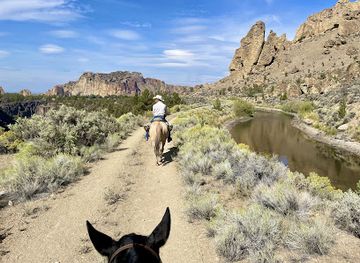
Smith Rock Trail Rides
Discover the breathtaking landscapes of Oregon's Smith Rock State Park through unforgettable horseback riding adventures.
-
Campground
Smith Rock Bivouac Area
Discover the stunning landscapes and outdoor adventures at Smith Rock Bivouac Area, a must-visit campground in Oregon for nature enthusiasts.
-
Rock climbing instructor
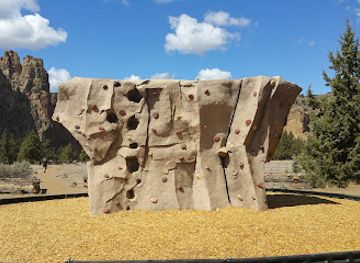
Smith Rock Climbing Guides
Experience the thrill of rock climbing at Smith Rock Climbing Guides, Oregon's premier outdoor adventure destination for all skill levels.
Explore Smith Rock State Park on the map
Plan your trip on one map. See where the top attractions, landmarks, restaurants and hotels are, and book hotels and experiences in a few clicks.
Best hotels in Smith Rock State Park
Best restaurants in Smith Rock State Park
Smith Rock State Park has limited food infrastructure, so most visitors eat before or after their visit in Terrebonne, Redmond or Bend rather than inside the park. Terrebonne provides the closest small-community options, including casual cafés and local establishments, while Redmond has a broader everyday dining choice and Bend offers the region's most developed restaurant scene. Central Oregon's food culture reflects high-desert agriculture, ranching, craft brewing and the wider Pacific Northwest, with menus commonly drawing on seasonal produce, beef, baked goods and locally produced drinks. Climbers and hikers often plan simple packed meals because trails and cliff areas offer no conventional restaurant setting, and food should be carried responsibly without attracting wildlife. Visitors staying in nearby rural accommodation may also find kitchens, farm-related products or informal provisions, but availability varies and should not be assumed inside the park.
-
State park
Smith Rock State Park
Explore Smith Rock State Park: A breathtaking blend of adventure and natural beauty in Oregon's stunning landscapes.
-
Ice Cream
Juniper Junction
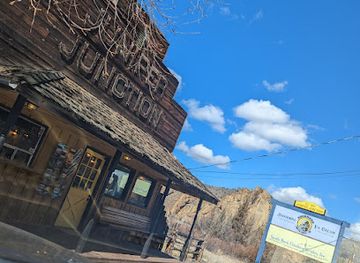
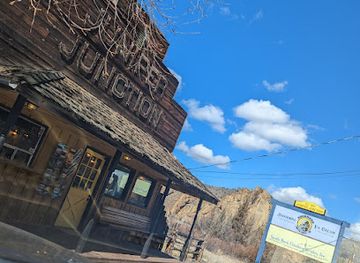
Experience the joy of creamy delights at Juniper Junction - the ultimate ice cream destination in Terrebonne, Oregon.
Best bars in Smith Rock State Park
Evenings around Smith Rock are quiet rather than driven by nightlife. Terrebonne has a small-town atmosphere with limited evening options, while Redmond provides the nearest broader selection of pubs, breweries and casual bars; Bend, farther south, has the region's most established evening scene, including craft-beer venues, restaurants and occasional live entertainment. These communities are outside Smith Rock State Park and require road travel, so visitors planning a late return should arrange transport responsibly and allow for rural conditions. Within the park, sunset viewing and the changing colour of the cliffs provide the characteristic evening experience, but visitors must respect day-use rules, wildlife protections and any restrictions on remaining in particular areas after dark. Seasonal community events may add cultural interest, though programmes and opening arrangements change.
-
State park
Smith Rock State Park
Unleash your adventurous spirit at Smith Rock State Park, Oregon's stunning outdoor playground with breathtaking scenery and thrilling activities.
-
Mountain peak
Smith Rock
Experience the breathtaking beauty and adventure of Smith Rock, a premier destination for rock climbing and hiking in Oregon's stunning landscapes.
-
Parking lot
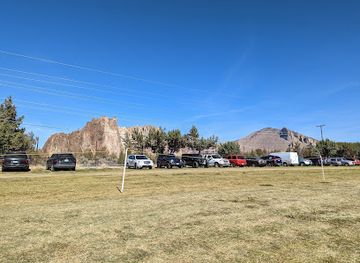
Smith Rock Parking
Discover the breathtaking landscapes and outdoor adventures at Smith Rock Parking in Oregon's stunning Smith Rock State Park.
-
Ice Cream
Juniper Junction
Experience the creamy bliss of Juniper Junction, where delicious ice cream meets stunning Oregon scenery in Terrebonne.
Best shops in Smith Rock State Park
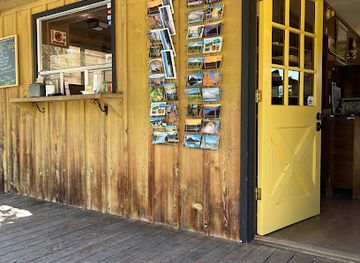
Shopping at Smith Rock itself is limited and centred on practical visitor needs rather than a retail district. Climbers and hikers may find relevant equipment, supplies and outdoor clothing in Redmond or Bend, while Terrebonne offers the nearest small-community services and provisions. The wider central Oregon region is associated with craft brewing, agricultural products, locally made foods, artwork and outdoor-oriented goods, with independent businesses concentrated in the larger gateway towns rather than beside the cliffs. Visitors seeking souvenirs should look for responsibly produced art, regional food or climbing-related goods through established local retailers, rather than removing rocks, plants or other natural material from the park. Outdoor equipment availability, specialist services and opening arrangements vary, so essential technical gear should be obtained before setting out for a remote or demanding route.
-
State park
Smith Rock State Park
Experience adventure and serenity at Smith Rock State Park, Oregon's stunning outdoor gem perfect for hiking, climbing, and nature exploration.
-
Visitor center
Smith Rock State Park Welcome Center
Discover the natural beauty and outdoor adventures at Smith Rock State Park Welcome Center, the gateway to Oregon's iconic landscapes.
-
Mountain peak
Smith Rock
Experience the stunning landscapes and thrilling adventures at Smith Rock, a premier destination for outdoor enthusiasts in Oregon.
-
Ice Cream
Juniper Junction
Experience the joy of creamy delights at Juniper Junction, an ice cream haven in scenic Terrebonne, Oregon, perfect for sweet treats and stunning views.
Get your free copy of our complete guide to Smith Rock State Park, delivered straight to you.
Everything on this page, from attractions and restaurants to essentials and local phrases, in one PDF you can read offline, print or share.
Already have an account? Sign in
Your Smith Rock State Park guide is ready.
We'll send it to · Not you? Sign out

Getting your guide ready…
We are putting together a fresh copy of the Smith Rock State Park guide. This can take up to a minute.
This can take a few moments. If your browser asks, choose Allow so the download can start. You'll find the guide in your Downloads folder.
Nothing happened? Download it again
Sorry, the guide is taking longer than usual. Please try again in a minute, or get it by email instead.
Smith Rock State Park essentials
Currency and Payment
Safety
Emergency Situations
Do's and Don'ts
Local Tips
From Eve
Local phrases worth knowing
You don't need to get them perfect. A few words go a long way, and locals appreciate the effort.
Basics
| English | Local | Say it |
|---|---|---|
| Hello | Howdy | [haw-dee] |
| Goodbye | See ya later | [see yah lay-ter] |
| Yes | Yup | [yuhp] |
| No | Nope | [nohp] |
| Please/You're welcome | Please and thank you | [pleez and thangk yoo] |
| Thank you | Thanks a bunch | [thanks uh bunch] |
| Excuse me/Sorry | Pardon me | [par-dun mee] |
| How are you? | Howdy y'all doin'? | [haw-dee y'all doin'] |
| Fine. And you? | Doin' alright. You? | [doin' uh-right. yoo?] |
| Do you speak English? | Ya speak English? | [yah speak ing-lish?] |
| I don't understand | I ain't catchin' on | [i aint ketch-in' on] |
Eating & Drinking
| English | Local | Say it |
|---|---|---|
| I'd like to see the menu, please | Can I take a look at the grub list, please | [kan i take uh look at the grub list, pleez] |
| I don't eat meat | I don't do critter meat | [i dont do crit-ter meat] |
| Cheers! | Bottoms up! | [bot-ums up] |
| I would like to pay, please | I reckon I'll settle up now, please | [i rek-un i'll set-ul up now, pleez] |
Emergencies
| English | Local | Say it |
|---|---|---|
| Help! | Send help! | [send help] |
| Go away! | Scram! | [skram] |
| Call the Police! | Ring the sheriff! | [ring the sher-iff] |
| Call a doctor! | Fetch a medic! | [fetch uh med-ik] |
| I'm lost | Done gone and lost | [dun gone and lost] |
| I'm ill | Feelin' poorly | [feelin' poor-ly] |
Shopping
| English | Local | Say it |
|---|---|---|
| I'd like to buy... | Fixin' to purchase... | [fix-in' to pur-chase] |
| I'm just looking | Just browsin' | [just brow-zin'] |
| How much is it? | What's the damage? | [whuts the dam-ij] |
| That's too expensive | That's a mite pricey | [thats uh mite prahy-see] |
| Can you lower the price? | Can ya knock a bit off? | [kan yah nok uh bit off] |
Time & Numbers
| English | Local | Say it |
|---|---|---|
| What time is it? | What's the hour? | [whuts the our] |
| It's one o'clock | It's one bell | [its one bell] |
| Half past (10) | Ten-thirty | [ten-thur-tee] |
| Morning | Mornin' | [morn-in'] |
| Afternoon | Afternoon | [af-ter-noon] |
| Evening | Evenin' | [even-in'] |
| Yesterday | Yest'day | [yes-t-day] |
| Today | Today | [to-day] |
| Tomorrow | Tomorrer | [tom-or-rer] |
| 1 | One | [wun] |
| 2 | Two | [too] |
| 3 | Three | [three] |
| 4 | Four | [fore] |
| 5 | Five | [fahyv] |
| 6 | Six | [siks] |
| 7 | Seven | [sev-un] |
| 8 | Eight | [ayt] |
| 9 | Nine | [nine] |
| 10 | Ten | [ten] |
Transport & Directions
| English | Local | Say it |
|---|---|---|
| Where's a/the...? | Where's the... | [wheres the] |
| What's the address? | What's the location? | [whuts the loh-kay-shun] |
| Can you show me (on the map)? | Point it out (on the map)? | [point it out (on the map)] |
| When's the next (bus)? | When's the next (bus) comin'? | [whens the next (bus) com-in'] |
| A ticket (to ....) | A pass (to ....) | [uh pass (to)] |
History of Smith Rock State Park
Volcanic Origins and River Erosion
Smith Rock's cliffs are the result of a long volcanic history in central Oregon, where lava flows, volcanic deposits and later geological change created the resistant formations visible today. The Crooked River subsequently cut a deep canyon through this volcanic terrain, exposing layers of rock and producing the pinnacles and sheer walls that define the park. The landscape is therefore geological rather than architectural in origin: its identity comes from the interaction of volcanic processes, erosion and the river's continuing course through the high desert.
Indigenous Homelands
The area around Smith Rock lies within the wider traditional homelands and travel landscapes of Indigenous peoples of central Oregon, including communities associated with the Confederated Tribes of Warm Springs and Northern Paiute peoples. The river, uplands and plant communities formed part of a broader regional environment used and understood long before the creation of a state park. Visitors should recognise that the absence of obvious built remains does not mean the landscape lacks cultural history, and should avoid disturbing possible archaeological material or treating natural features as souvenirs.
The Name and Early Settlement
Smith Rock takes its name from a nineteenth-century American military association, although accounts differ in the precise circumstances in which the name entered local use. During the period of United States settlement and regional development, central Oregon's rivers and high-desert routes became increasingly important to ranching, transport and communication. The park's steep cliffs were not developed as an urban settlement, and much of its historic character remains tied to the surrounding rural landscape rather than to buildings within the canyon.
From Private Land to State Park
The Oregon state park system acquired the core Smith Rock property in 1960, bringing the prominent canyon and its volcanic formations into public ownership. Over time, trails, visitor facilities and climbing access developed alongside growing appreciation of the site's geological and recreational value. State protection helped keep the central landscape available for public enjoyment while requiring management of erosion, vegetation, wildlife habitat and increasing visitor use.
Climbing and Conservation
Smith Rock became a major centre of modern American rock climbing during the late twentieth century, particularly as climbers developed routes on its steep volcanic walls and helped establish the reputation of sport climbing in the United States. Climbing remains central to the park's identity, but it shares the cliffs with raptors and other wildlife, including birds that may nest on ledges. Contemporary management therefore balances recreation with seasonal protection, trail stewardship and the long-term care of a heavily visited high-desert environment.
Smith Rock State Park in Photos
Browse through our photo collection highlighting the charm and character of the destination.
Neighbouring destination travel guides
The closest destinations to Smith Rock State Park, if you have time for more than one.
-

-

-

-

-


Swipe for more destinations
Explore more
Explore more of Central Oregon
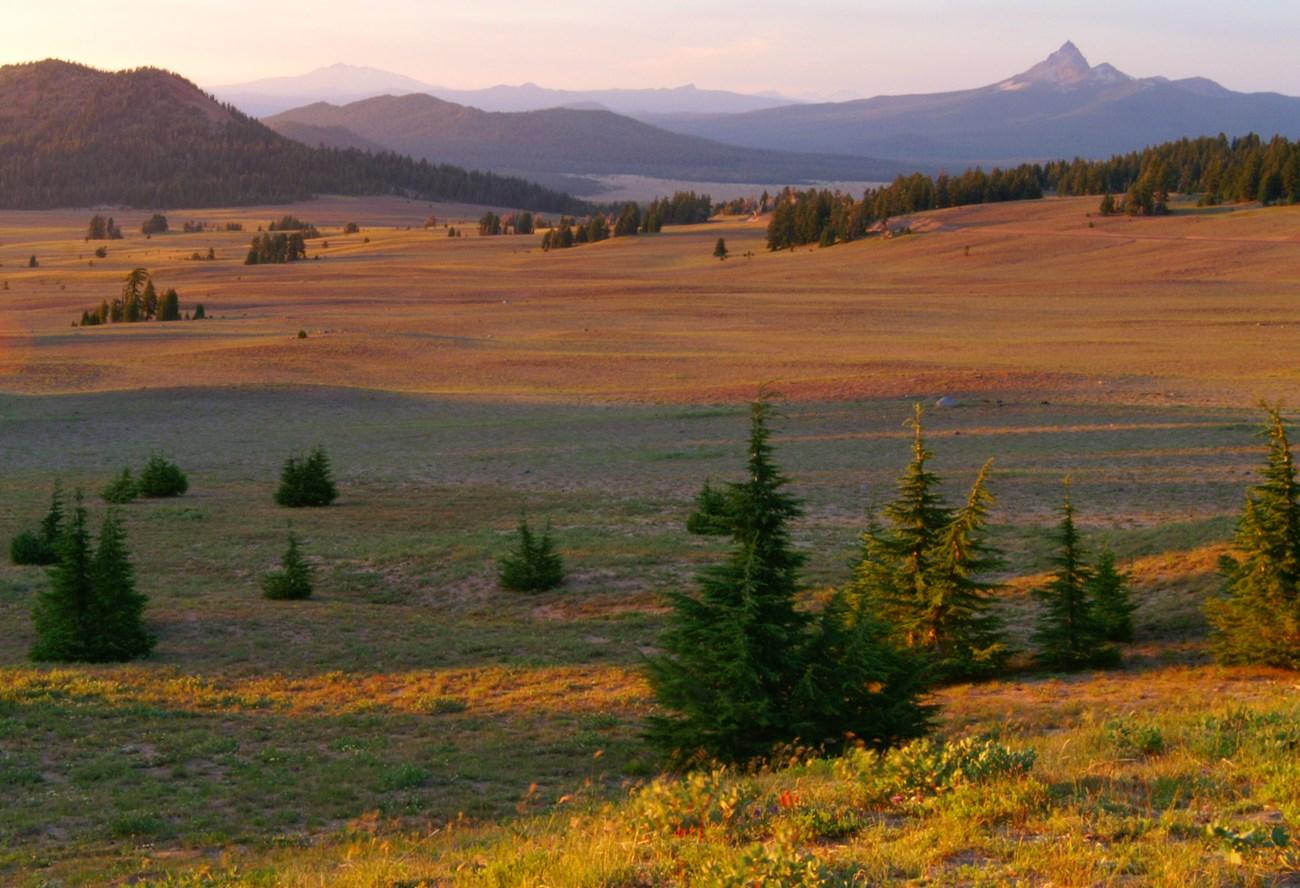
Central Oregon combines Bend, volcanic landscapes, high-desert towns, mountain recreation, clear rivers and Indigenous and ranching heritage.
Explore Central Oregon
Explore more of Oregon
Discover Oregon's diverse landscapes, vibrant cities, and rich culture. From stunning coastlines to lush forests, this Pacific Northwest gem offers endless adventures.
Explore Oregon