

Free Suwalszczyzna Travel Guide & Mobile App
Explore Suwalszczyzna with free travel guides. Discover regional history, expert tips, proposed trips, and audio guides on web or mobile app.


Explore Suwalszczyzna in north-eastern Poland for glacial lakes, forest trails, Lithuanian heritage, kayaking and quiet borderland villages.
Read more about Suwalszczyzna
When is the best time to visit Suwalszczyzna?
Best: June–August · 22–24°C| Month | High (°C) | Rainfall (mm) |
|---|---|---|
| January | -1 | 30 |
| February | 1 | 25 |
| March | 5 | 35 |
| April | 11 | 40 |
| May | 18 | 50 |
| June (best) | 22 | 60 |
| July (best) | 24 | 70 |
| August (best) | 23 | 65 |
| September | 18 | 55 |
| October | 13 | 45 |
| November | 6 | 40 |
| December | 1 | 35 |
Getting to and around Suwalszczyzna
How to get there
Transportation
Top city travel guides in Suwalszczyzna
The cities of Suwalszczyzna, and the easiest places to base yourself.

Swipe for more cities
Destinations in Suwalszczyzna
Resorts, valleys and scenic spots worth a trip of their own.

Swipe for more destinations
Best attractions in Suwalszczyzna
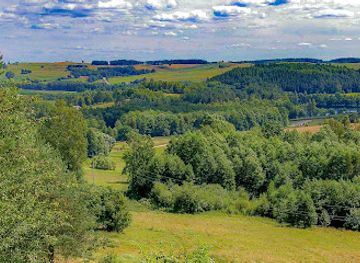
Suwalszczyzna’s attractions are defined by the meeting of water, forest and glacial relief. Wigry National Park offers marked walking and cycling routes, birdwatching, lakeside viewpoints and access to the historic former Camaldolese monastery at Wigry. The Suwałki Landscape Park, north of the town, is the place to explore pronounced hills, narrow valleys and the deep waters of Lake Hańcza, while the Rospuda Valley provides a contrasting wetland landscape of meadows, peatlands and river habitats. Sejny and nearby villages add religious and borderland heritage, including Lithuanian and Old Believer traditions. Summer visitors can choose kayaking, sailing, swimming and angling on permitted lakes; in colder months, forest walks and cross-country skiing become more prominent. The Augustów Forest and Canal, at the region’s southern travel fringe, extend the choice of water-based excursions, though the canal is best treated as a separate day or overnight area. Suwałki itself supplies museums, cultural events and practical urban facilities, while small villages, viewpoints and traditional wooden buildings give rural itineraries their character.
-
Tourist attraction
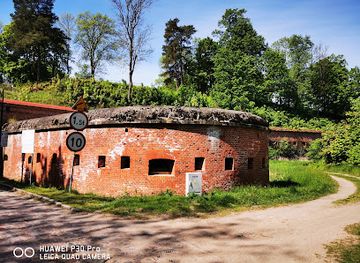
Boyen Fortress
Explore Boyen Fortress in Giżycko, a stunning 19th-century military fortress surrounded by beautiful lakes and rich history.
-
Tourist attraction
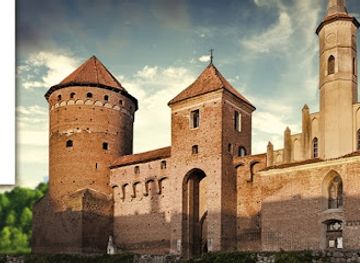
Reszel Castle
Discover Reszel Castle, a medieval marvel in Poland, blending history, art, and culinary delights amidst breathtaking scenery.
-
Tourist attraction
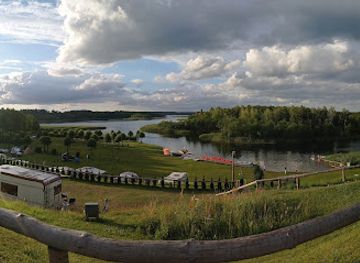
Wigierski Park Narodowy
Discover the breathtaking landscapes and rich biodiversity of Wigierski Park Narodowy, a national park perfect for outdoor adventures and serene getaways in Poland.
-
Tourist attraction
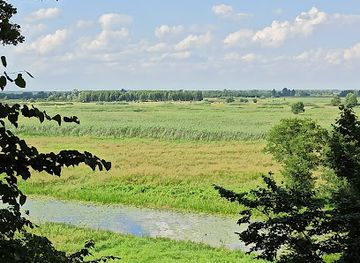
Biebrzański Park Narodowy
Discover the breathtaking beauty of Biebrzański Park Narodowy, Poland's largest national park, perfect for outdoor adventures and wildlife observation.
Best landmarks in Suwalszczyzna
The former Camaldolese monastery at Wigry is Suwalszczyzna’s most important historic ensemble, standing on a peninsula above Lake Wigry with a church, hermitages and monastic buildings that recall the area’s early modern religious and economic importance. Suwałki’s nineteenth-century town centre, including its regular streets and historic civic architecture, reflects the town’s development as an administrative centre during the Russian imperial period. In Sejny, the Basilica of the Visitation of the Blessed Virgin Mary and the former Dominican complex mark the town’s long religious history and continuing importance to Polish-Lithuanian cultural life. Lake Hańcza is the region’s defining natural landmark, both for its exceptional depth and for the steep glacial relief surrounding it. The rolling viewpoints, valleys and lakes of the Suwałki Landscape Park form a broader geological landmark rather than a single monument. Wooden Old Believer buildings around Wodzilki provide an additional architectural symbol of the region’s religious diversity and rural heritage.
-
Plaza
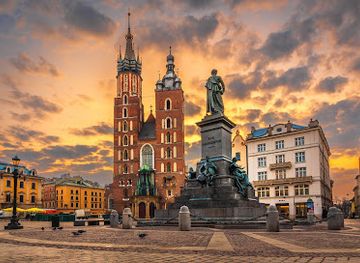
Rynek Główny
Experience the vibrant culture, rich history, and stunning architecture of Rynek Główny, the main square of Kraków, Poland.
-
 Historical place
Wieliczka Salt Mine
Discover the wonders of Wieliczka Salt Mine, a historical marvel showcasing artistic salt sculptures and rich mining history beneath the surface of Poland.
-
Museum
Oskar Schindler's Enamel Factory
Explore the profound history at Oskar Schindler's Enamel Factory in Kraków, where the legacy of courage and resilience during the Holocaust comes alive.
-
Museum
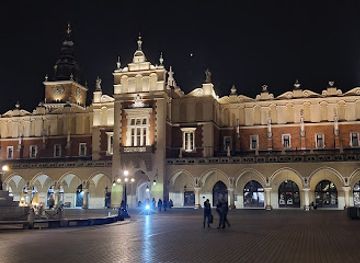
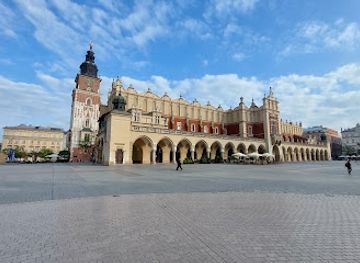
Sukiennice
Explore Sukiennice, Kraków's historic Cloth Hall, where art meets history in a stunning Renaissance setting.
Explore Suwalszczyzna on the map
Plan your trip on one map. See where the top cities, national parks and sights are, and book hotels and experiences in a few clicks.
Best hotels in Suwalszczyzna
Best restaurants in Suwalszczyzna
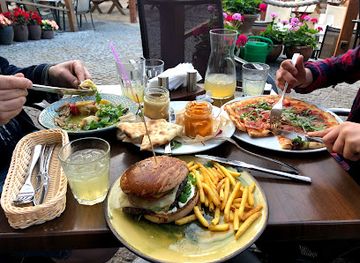
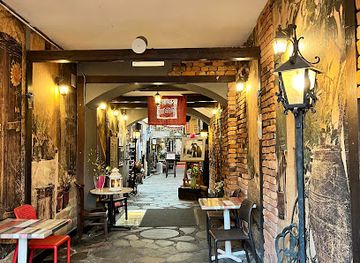
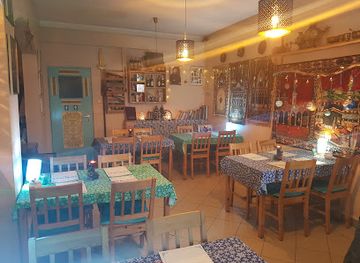
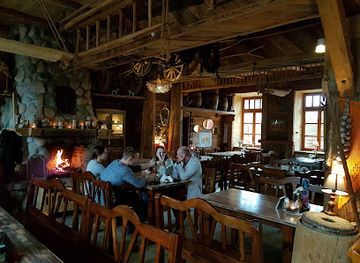
Food in Suwalszczyzna reflects north-eastern Poland’s agricultural and Baltic borderland traditions. Potato dishes are particularly prominent: cepeliny, large filled potato dumplings, and kartacze are common regional specialities, often served with meat, cottage cheese or a savoury sauce. Visitors may also encounter bliny, chłodnik in warm weather, freshwater fish from local lakes and forests, rye breads, farmhouse cheeses and dairy products. Restaurants in Suwałki and Sejny combine Polish cooking with Lithuanian-influenced dishes, while rural inns and guesthouses often serve filling, seasonal meals rather than elaborate menus. Around Wigry and the larger lakes, fish restaurants and summer cafés provide a natural setting for simple freshwater fare. Local markets and farm shops can be useful for honey, berries, mushrooms, bread and preserves, although availability varies by season. Craft beer and Polish spirits are available, but regional dining is just as strongly associated with tea, compote and home-style hospitality.
-
Restaurant
Ogródek Pod Jabłoniami
Experience authentic Polish cuisine surrounded by nature at Ogródek Pod Jabłoniami in Augustów.
-
Restaurant
Rozmarino Przystanek ze Smakiem i Klimatem
Discover the exquisite flavors of Poland at Rozmarino in Suwałki—where culinary tradition meets modern elegance.
-
Restaurant
Kuchnia Tatarska u Alika
Discover authentic Tatar cuisine at Kuchnia Tatarska u Alika in Suwałki - where every dish is a taste of history.
-
Polish
Karczma Polska
Experience authentic Polish cuisine at Karczma Polska in Suwałki – where tradition meets flavor in a cozy setting.
Best bars in Suwalszczyzna
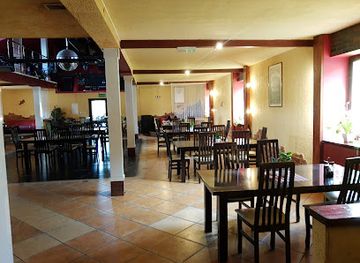
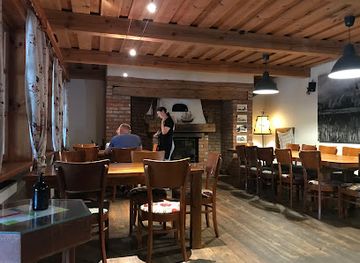
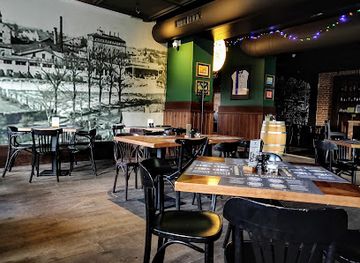
Evening life in Suwalszczyzna is concentrated in Suwałki, with a smaller choice in Sejny and Augustów. Suwałki offers the region’s broadest selection of cafés, pubs, restaurants and occasional live-music or cultural venues, while Sejny has a more intimate atmosphere shaped by its small-town and borderland identity. Around the lakes, nightlife generally means a seasonal bar, a guesthouse terrace, an evening meal or quiet time beside the water rather than a large club scene. Augustów, at the southern edge of the wider tourist area, has a more developed summer evening economy connected with its lakefront and boating visitors. Rural inns and traditional pubs remain useful places for a local drink and conversation, but opening arrangements can be seasonal and late-night transport is limited outside the towns.
-
Bar
Swiss Bar
Discover Swiss Bar in Suwałki: a perfect blend of bar ambiance and culinary delights, ideal for tourists seeking relaxation and local flavor.
-
Restaurant
Gospoda pod Sieją
Experience authentic Polish cuisine in a charming setting at Gospoda pod Sieją, a must-visit restaurant in Stary Folwark.
-
Restaurant
Browar Północny
Discover Browar Północny in Suwałki, where artisanal beers and delicious dishes unite for an unforgettable dining experience.
-
Restaurant
Naleśnikarnia Lemon
Experience the delightful crepes and vibrant atmosphere at Naleśnikarnia Lemon, a must-visit culinary spot in Suwałki.
Best nightclubs in Suwalszczyzna
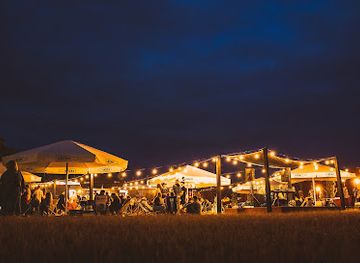
Evening life in Suwalszczyzna is concentrated in Suwałki, with a smaller choice in Sejny and Augustów. Suwałki offers the region’s broadest selection of cafés, pubs, restaurants and occasional live-music or cultural venues, while Sejny has a more intimate atmosphere shaped by its small-town and borderland identity. Around the lakes, nightlife generally means a seasonal bar, a guesthouse terrace, an evening meal or quiet time beside the water rather than a large club scene. Augustów, at the southern edge of the wider tourist area, has a more developed summer evening economy connected with its lakefront and boating visitors. Rural inns and traditional pubs remain useful places for a local drink and conversation, but opening arrangements can be seasonal and late-night transport is limited outside the towns.
-
Lounge
Niedorzeczni
Discover the cozy ambiance of Niedorzeczni, a premier lounge in Suwałki perfect for relaxation and socializing with friends.
-
Bar
Klub Generał
Discover the lively nightlife at Klub Generał, a must-visit bar in Suwałki, Poland, perfect for drinks, entertainment, and socializing.
-
Night club
Winkiel Uniwersytecki PWSZ
Experience the vibrant nightlife of Suwałki at Winkiel Uniwersytecki PWSZ, where music, dance, and unforgettable moments await.
-
Night club
Euforia
Experience the vibrant nightlife of Suwałki at Euforia, the ultimate night club for unforgettable nights filled with music, dance, and fun.
Best shops in Suwalszczyzna
Shopping in Suwalszczyzna is centred on Suwałki’s high streets, supermarkets and independent businesses, with smaller selections in Sejny, Augustów and the region’s market villages. The most characteristic purchases are food products: honey, preserves, rye bread, smoked or dried specialities, dairy products and seasonal berries or mushrooms from reputable sellers. Farm shops and local markets are more useful for regional produce than for a formal souvenir industry, and availability follows the agricultural calendar. Craft shops and galleries may offer wooden objects, ceramics, woven goods, amber jewellery and locally inspired artwork, while museum and park outlets are suitable for maps and books about regional nature and history. Visitors should distinguish genuinely local products from generic Polish souvenirs, particularly at roadside stalls. Rural markets can be modest and infrequent, so plan practical shopping in Suwałki or Sejny before travelling to remote lakes and villages.
-
Shopping mall
Suwalki Plaza
Explore Suwalki Plaza - the ultimate shopping mall experience in Suwałki, blending local charm with modern retail and dining.
-
Tourist attraction
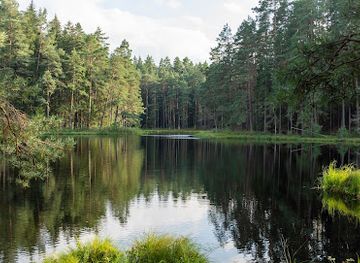
Wigierski Park Narodowy
Discover the enchanting landscapes and rich biodiversity of Wigierski Park Narodowy, a haven for nature lovers and adventure seekers in Poland.
-
Home improvement store
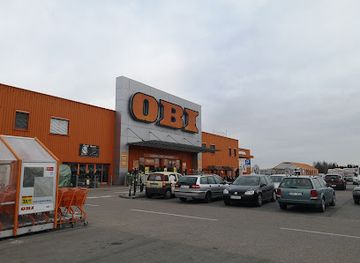
OBI
Explore OBI in Suwałki for all your home improvement needs, from tools to decor, ensuring every project is a success.
-
Tourist attraction
Punkt widokowy "U Pana Tadeusza "
Discover breathtaking vistas at the stunning U Pana Tadeusza viewpoint in Smolniki, a hidden gem for nature lovers and photography enthusiasts.

Get your free copy of our complete guide to Suwalszczyzna, delivered straight to you.
Everything on this page, from attractions and restaurants to essentials and local phrases, in one PDF you can read offline, print or share.
Already have an account? Sign in
Your Suwalszczyzna guide is ready.
We'll send it to · Not you? Sign out

Getting your guide ready…
We are putting together a fresh copy of the Suwalszczyzna guide. This can take up to a minute.
This can take a few moments. If your browser asks, choose Allow so the download can start. You'll find the guide in your Downloads folder.
Nothing happened? Download it again
Sorry, the guide is taking longer than usual. Please try again in a minute, or get it by email instead.
Suwalszczyzna essentials
Currency and Payment
Safety
Emergency Situations
Do's and Don'ts
Local Tips
From Eve
Local phrases worth knowing
You don't need to get them perfect. A few words go a long way, and locals appreciate the effort.
Basics
| English | Local | Say it |
|---|---|---|
| Hello | Cześć | [cheh-shch] |
| Goodbye | Do widzenia | [doh veed-zenia] |
| Yes | Tak | [tahk] |
| No | Nie | [nyeh] |
| Please/You’re welcome | Proszę | [proh-sheh] |
| Thank you | Dziękuję | [jen-koo-yeh] |
| Excuse me/Sorry | Przepraszam | [psheh-prah-sham] |
| How are you? | Jak się masz? | [yahk shay mahsh] |
| Fine. And you? | Dobrze. A ty? | [doh-bzheh. ah tih] |
| Do you speak English? | Czy mówisz po angielsku? | [chih moo-veesh poh an-gyel-skoo] |
| I don't understand | Nie rozumiem | [nyeh roh-zoo-myem] |
Eating & Drinking
| English | Local | Say it |
|---|---|---|
| I’d like to see the menu, please | Chciałbym zobaczyć menu, proszę | [hchah-wbym zo-bah-chih men-oo, proh-sheh] |
| I don’t eat meat | Nie jem mięsa | [nyeh yem myen-sah] |
| Cheers! | Na zdrowie! | [nah zdroh-vyeh] |
| I would like to pay, please | Chciałbym zapłacić, proszę | [hchah-wbym zah-plah-cheeć, proh-sheh] |
Emergencies
| English | Local | Say it |
|---|---|---|
| Help! | Pomocy! | [poh-moh-tsih] |
| Go away! | Idź sobie! | [eech soh-byeh] |
| Call the Police! | Zadzwoń na policję! | [za-dzvoh-ny nah poh-leet-syeh] |
| Call a doctor! | Zadzwoń po doktora! | [za-dzvoh-ny poh dok-toh-rah] |
| I’m lost | Zgubiłem się | [zgoo-bee-wem shay] |
| I’m ill | Jestem chory | [yeh-stem khoh-ree] |
Shopping
| English | Local | Say it |
|---|---|---|
| I’d like to buy... | Chciałbym kupić... | [hchah-wbym koo-pitch] |
| I’m just looking | Tylko się rozglądam | [til-koh shay roh-zglah-dahm] |
| How much is it? | Ile to kosztuje? | [ee-leh toh kosh-too-yeh] |
| That’s too expensive | To jest za drogie | [to yest zah droh-gyeh] |
| Can you lower the price? | Czy możesz obniżyć cenę? | [chih moh-zhehsh ob-nee-zhitch tseh-neh] |
Time & Numbers
| English | Local | Say it |
|---|---|---|
| What time is it? | Która godzina? | [ktoo-rah goh-jee-nah] |
| It’s one o'clock | Jest pierwsza | [yest pyair-shah] |
| Half past (10) | Dziesięć po | [dzhyeh-shen-ch poh] |
| Morning | Poranek | [poh-ra-nek] |
| Afternoon | Popołudnie | [poh-poh-ood-nyeh] |
| Evening | Wieczór | [vyeh-choor] |
| Yesterday | Wczoraj | [fcho-rah-ee] |
| Today | Dziś | [dzhish] |
| Tomorrow | Jutro | [yoo-troh] |
| 1 | 1 | [1] |
| 2 | 2 | [2] |
| 3 | 3 | [3] |
| 4 | 4 | [4] |
| 5 | 5 | [5] |
| 6 | 6 | [6] |
| 7 | 7 | [7] |
| 8 | 8 | [8] |
| 9 | 9 | [9] |
| 10 | 10 | [10] |
Transport & Directions
| English | Local | Say it |
|---|---|---|
| Where's a/the...? | Gdzie jest...? | [g-dye yest] |
| What's the address? | Jaki jest adres? | [yah-kee yest ah-dres] |
| Can you show me (on the map)? | Czy możesz mi pokazać (na mapie)? | [chih moh-zhehsh mee poh-kah-zahch (nah mah-pee)] |
| When's the next (bus)? | Kiedy następny (autobus)? | [kyeh-dih nas-tehp-nee (ow-toh-boos)] |
| A ticket (to ....) | Bilet (do ...) | [bee-let (doh ...)] |
History of Suwalszczyzna
Yotvingians and the Early Borderland
Before the formation of the Polish-Lithuanian political order, much of present-day Suwalszczyzna was associated with the Yotvingians, a Baltic people whose language and culture have disappeared but whose presence survives in archaeological sites, place-name studies and regional historical memory. The territory stood between the Baltic lands, Rus’ and the developing Polish and Lithuanian spheres. Sparse settlement, extensive woodland and difficult wetlands shaped the area’s early history, while later medieval campaigns and colonisation altered its population and political connections.
The Grand Duchy of Lithuania
From the later Middle Ages, the region was incorporated into the political world of the Grand Duchy of Lithuania. Strong links with Lithuanian lands are still apparent around Sejny, in local religious foundations and in the survival of Lithuanian cultural institutions. The Union of Lublin in 1569 brought the Grand Duchy and the Kingdom of Poland into a closer Commonwealth, but local borderland identities remained complex. Medieval and early modern settlement was uneven, with forests, lakes and marshes continuing to limit intensive agriculture.
Monastic Foundations and Early Modern Settlement
Religious institutions played an important role in the organised settlement of the area. The Camaldolese monastery founded at Wigry in the seventeenth century became a major spiritual and economic centre, and its surviving church and monastic buildings remain among the region’s most important historic ensembles. Catholic, Eastern Christian and later Old Believer communities contributed to a varied religious landscape. Agricultural villages, mills and small market settlements expanded gradually around these foundations and along routes linking Poland and Lithuania.
Partitions and the New East Prussian Frontier
The partitions of the Polish-Lithuanian Commonwealth in the late eighteenth century placed Suwalszczyzna under Prussian rule for a short period, after which it became part of the Russian Empire. Administrative changes, military pressures and new borders affected trade and settlement. Under Russian rule, Suwałki developed as an administrative centre, while the countryside retained a strongly agricultural character. The region’s location near imperial boundaries later made it strategically important during the upheavals of the First World War.
The Suwałki Region in the Twentieth Century
The First World War brought military movement and severe disruption, followed by the establishment of the Second Polish Republic. Interwar Suwalszczyzna remained economically less industrialised than many Polish regions, with forestry, farming, trade and small-scale crafts central to local life. The Second World War and German and Soviet occupations brought repression, displacement and the destruction of Jewish communities. The post-war period brought new borders, population changes and socialist administration, while traditional village architecture and religious diversity survived unevenly.
The Augustów Canal and Inland Transport
Although the Augustów Canal lies at the southern edge of the wider Suwalszczyzna travel area, it represents an important nineteenth-century engineering response to the region’s geography. Built in the 1820s and 1830s under the Congress Kingdom of Poland, it was intended to connect the Vistula basin with the Niemen basin while avoiding customs barriers. Locks, canal settlements and forest waterways now form a heritage landscape used chiefly for recreation. The canal also illustrates how rivers and lakes influenced regional trade, engineering and settlement.
National Parks and the Modern Nature Region
During the twentieth century, growing recognition of the region’s forests, wetlands, lakes and glacial landforms led to stronger conservation measures. Wigry National Park was created in 1989, while the Suwałki Landscape Park, established earlier, protects the hill-and-lake country around Hańcza and the Szeszupa valley. Conservation has become central to the region’s modern identity and economy, supporting walking, cycling, paddling and wildlife observation while placing limits on development in sensitive areas.
Suwalszczyzna in Photos
Browse through our photo collection highlighting the charm and character of the destination.
Neighbouring regions of Suwalszczyzna
The closest regions to Suwalszczyzna, if you have time for more than one.
-

-

-

-

-


Swipe for more regions
Explore more

Explore more of Poland
Discover Poland's rich history, vibrant cities, and scenic landscapes, from the medieval streets of Kraków to the serene beauty of the Tatra Mountains and Masurian Lakes.
Explore Poland