

Dark View Falls Travel Guide - Free Web & App
Your ultimate guide to Dark View Falls. Discover top landmarks, proposed trips, and local tips. Free on the web or via the Evendo companion app.


Dark View Falls in Saint Vincent offers rainforest walks, twin cascades, volcanic scenery and a refreshing nature escape on the Leeward Coast.
Waterfalls in a Volcanic Landscape
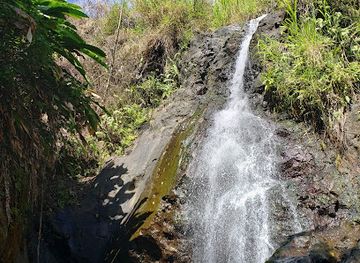
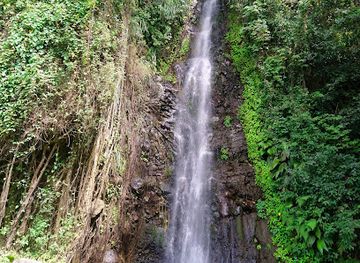
Dark View Falls is one of Saint Vincent’s characteristic inland attractions, where streams descending from the island’s forested volcanic interior gather into two cascades before continuing towards the Leeward Coast. The falls lie in the north-western part of Saint Vincent, reached from the Leeward Highway through a rural landscape of steep green slopes, cultivated land and scattered settlements. The lower cascade is the more readily approached of the two, while the upper fall involves a more demanding walk and conditions can vary after heavy rain.Read more about Dark View Falls
Rainforest, Rivers and Local Character
Exploring the Leeward Side
When is the best time to visit Dark View Falls?
Best: May–July · 30–31°C| Month | High (°C) | Rainfall (mm) |
|---|---|---|
| January | 29 | 162 |
| February | 30 | 147 |
| March | 30 | 125 |
| April | 30 | 114 |
| May (best) | 30 | 97 |
| June (best) | 31 | 87 |
| July (best) | 31 | 91 |
| August | 31 | 97 |
| September | 31 | 114 |
| October | 31 | 125 |
| November | 30 | 147 |
| December | 30 | 162 |
Getting to and around Dark View Falls
How to get there
Transportation
Best attractions in Dark View Falls
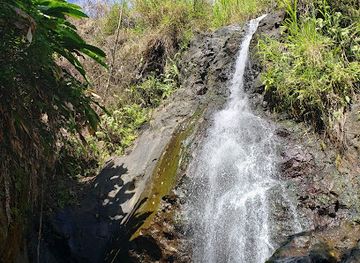
The principal attraction is the pair of cascades known as Dark View Falls, reached by a short approach through lush vegetation on Saint Vincent’s Leeward side. The lower fall is the more accessible focus for many visitors, while the upper cascade lies farther along the route and may require more careful walking. The surrounding valley provides a close view of the island’s humid interior, with stream channels, steep volcanic slopes and tropical plant growth replacing the open coastal scenery. The journey itself introduces the rural character of north-western Saint Vincent, where roads pass through cultivated hillsides and small communities. Dark View Falls is often visited as part of a wider western-island excursion rather than as a standalone urban attraction. Nearby Leeward Coast scenery includes forested mountains, coastal viewpoints and villages, although these are separate from the falls and should be planned as distinct stops.
-
Hostel
Richmond Vale Diving & Hiking Center
Experience the ultimate adventure at Richmond Vale Diving & Hiking Center – a perfect spot for diving, hiking, and immersing in the natural beauty of St. Vincent.
-
Tourist attraction
Falls Of Baleine
Explore the enchanting Falls of Baleine in Wallibou, St. Vincent, a hidden gem with breathtaking cascades and lush landscapes.
-
Beach pavillion
Richmond Beach
Discover the tranquil allure of Richmond Beach, a picturesque coastal haven in Saint Vincent, perfect for relaxation and water adventures.
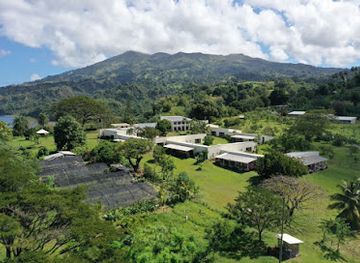
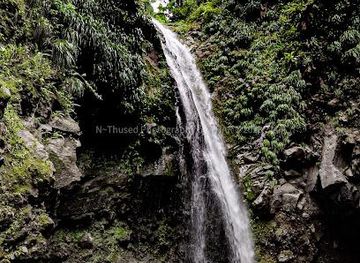
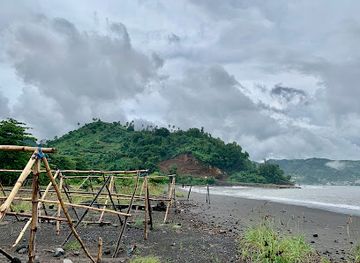
Best landmarks in Dark View Falls
Dark View Falls is the defining natural landmark, with its two freshwater cascades set in a steep, richly vegetated valley on Saint Vincent’s Leeward side. The falls express the island’s volcanic geography: rain from the mountainous interior descends through narrow channels before reaching the lower coastal country. The surrounding forest and stream corridor also belong to the wider natural heritage of Saint Vincent, an island noted for its rugged central highlands and important native wildlife, including the Saint Vincent parrot in suitable forest habitats. The falls have greater significance as a landscape feature than as an architectural monument, and there is no large historic building complex at the site. Their relationship with the Leeward Coast road and nearby rural communities places a secluded freshwater landmark within a broader cultural landscape of cultivated slopes, coastal settlements and mountain valleys.
-
Park
Botanical Gardens
Explore the lush landscapes of the Botanical Gardens in St. Vincent, a serene escape filled with tropical flora and rich history.
-
Island
Saint Vincent
Explore the breathtaking landscapes, vibrant culture, and pristine beaches of Saint Vincent, a Caribbean paradise perfect for all types of travelers.
-
Historical place
Fort Charlotte, Saint Vincent
Discover the historical allure and breathtaking views of Fort Charlotte, Saint Vincent's stunning 18th-century fortress overlooking the Caribbean.
-
Restaurant
Wallilabou Anchorage
Experience the perfect blend of local cuisine and tropical drinks at Wallilabou Anchorage, a must-visit destination in St. Vincent.
Explore Dark View Falls on the map
Plan your trip on one map. See where the top attractions, landmarks, restaurants and hotels are, and book hotels and experiences in a few clicks.
Best hotels in Dark View Falls
Best restaurants in Dark View Falls
There is no substantial dining district at Dark View Falls, so visitors normally eat before or after the visit in settlements along the Leeward Coast or in larger centres such as Barrouallie and Kingstown, depending on their route. Small local eateries, food vendors and informal establishments may offer Caribbean staples such as rice and peas, provisions, stewed meats, fried fish and seasonal fruit, but availability and opening patterns vary. In coastal communities, fish and seafood may feature alongside home-style dishes influenced by Saint Vincent’s agricultural traditions. Visitors joining an organised excursion may have food arranged separately, while independent travellers should carry water and a snack rather than expect refreshments at the falls. For a broader choice of restaurants, cafés and shops, Kingstown remains the island’s principal dining hub.
-
Island
Saint Vincent
Explore Saint Vincent: A Caribbean paradise with stunning landscapes, vibrant culture, and unforgettable adventures await every traveler.
-
Bar
Basil's Bar
Experience vibrant nightlife at Basil's Bar in Lovell—where delicious food meets breathtaking sunset views over the Caribbean Sea.
-
Restaurant
Wallilabou Anchorage
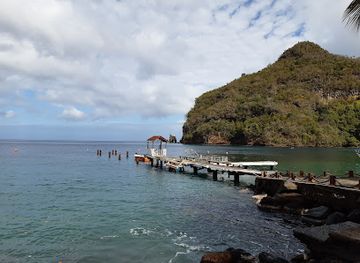
Experience culinary delights and breathtaking views at Wallilabou Anchorage - a must-visit destination in Saint Vincent.
-
Hotel
Beachcombers Hotel
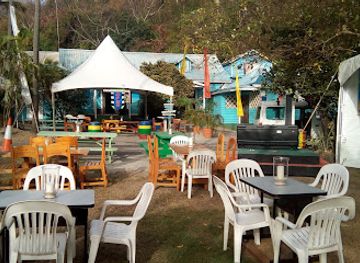
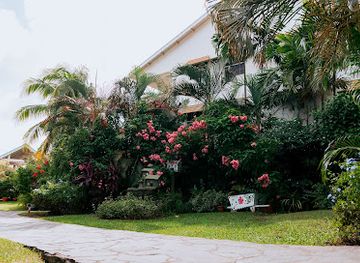
Experience paradise at Beachcombers Hotel - where relaxation meets adventure on Villa Beach.
Best bars in Dark View Falls
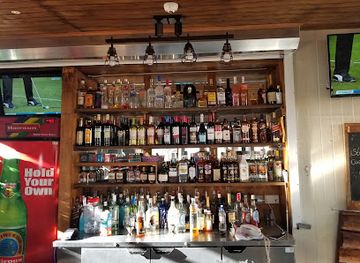
Dark View Falls is a daytime nature attraction with no recognised nightlife scene on site. Evening entertainment is correspondingly quiet, with visitors more likely to return to their accommodation, eat locally or spend time at a village rum shop, small bar or guesthouse in a nearby settlement. The Leeward Coast is suited to informal conversation and local hospitality rather than late-night clubbing. Barrouallie and other western communities may provide occasional evening options, while Kingstown has the island’s broadest concentration of bars, music and nightlife, though it lies well away from the falls. Visitors should arrange transport back before travelling into the rural interior, since regular late-night connections should not be assumed.
-
Bar
Basil's Bar
Discover the vibrant atmosphere and refreshing cocktails at Basil's Bar in Lovell, a perfect escape to unwind and enjoy Caribbean charm.
-
Restaurant
Wallilabou Anchorage
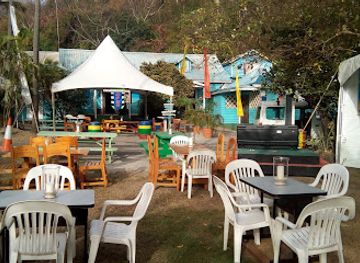
Experience the breathtaking beauty and delicious flavors of Wallilabou Anchorage, a must-visit restaurant and cocktail bar in St. Vincent.
-
Restaurant
Chill Spot Bar and Grill
Experience the vibrant flavors of the Caribbean at Chill Spot Bar and Grill in Arnos Vale, where relaxation meets delicious cuisine.
-
Bar
Tree Bar
Discover the vibrant nightlife at Tree Bar in Arnos Vale, where refreshing cocktails and a lively atmosphere await every visitor.


Best nightclubs in Dark View Falls
Dark View Falls is a daytime nature attraction with no recognised nightlife scene on site. Evening entertainment is correspondingly quiet, with visitors more likely to return to their accommodation, eat locally or spend time at a village rum shop, small bar or guesthouse in a nearby settlement. The Leeward Coast is suited to informal conversation and local hospitality rather than late-night clubbing. Barrouallie and other western communities may provide occasional evening options, while Kingstown has the island’s broadest concentration of bars, music and nightlife, though it lies well away from the falls. Visitors should arrange transport back before travelling into the rural interior, since regular late-night connections should not be assumed.
-
Park
Dark View Falls
Explore the breathtaking beauty of Dark View Falls, a stunning natural park in St. Vincent, perfect for adventure and relaxation in a tropical paradise.
-
Night club
Drop Off Night Club
Dive into the vibrant nightlife of Drop Off Night Club in Friendly, where unforgettable music and dance await every night.
-
Night club
Lick's Disco
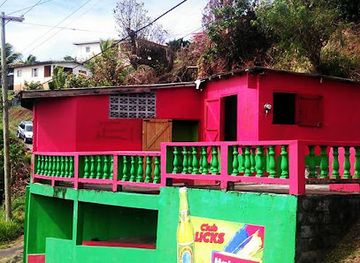
Experience the electrifying nightlife at Lick's Disco in Mesopotamia, where great music, vibrant atmosphere, and friendly vibes await you.
-
Bar
Wafulasun Sports Bar
Experience the vibrant nightlife of Cumberland at Wafulasun Sports Bar, where great drinks, live sports, and local culture come together.

Best shops in Dark View Falls
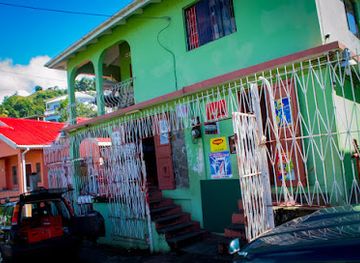
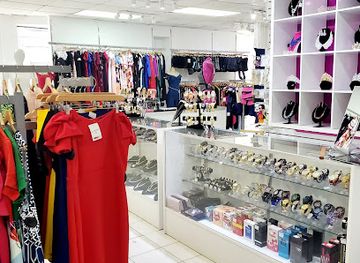
Shopping at Dark View Falls is limited and should not be confused with the commercial facilities of Kingstown. Visitors may encounter small rural shops or informal local vendors on the wider Leeward Coast, but the availability of souvenirs and food products is not consistent. Regional purchases can include locally grown fruit and provisions, rum, spices, handmade crafts and artwork, with the widest selection generally found in Kingstown and established visitor areas rather than at the waterfall. Small businesses and market traders provide a more direct connection with Saint Vincent’s agricultural and creative traditions than mass-produced souvenirs. Carry essential supplies before leaving the main towns, as the waterfall’s rural setting does not offer a dependable shopping stop.
-
Park
Dark View Falls
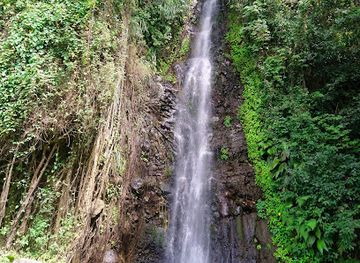
Explore the captivating beauty of Dark View Falls, a serene paradise in St. Vincent with stunning twin waterfalls and lush surroundings.
-
Grocery store
Saint Hill Supermarket
Experience local flavors and vibrant culture at Saint Hill Supermarket in Top Lowmans, your go-to grocery destination.
-
Women's clothing store
#1 Women's Boutique -Miami Girl Boutique
Explore Miami Girl Boutique in Kingstown for unique women's clothing that captures the essence of Caribbean style and culture.
-
Grocery store
La Casa Chikita Foods, Grocery/ Bar
Discover the vibrant local flavors at La Casa Chikita Foods, your go-to grocery store and bar in Chateaubelair for an authentic Caribbean experience.
Get your free copy of our complete guide to Dark View Falls, delivered straight to you.
Everything on this page, from attractions and restaurants to essentials and local phrases, in one PDF you can read offline, print or share.
Already have an account? Sign in
Your Dark View Falls guide is ready.
We'll send it to · Not you? Sign out

Getting your guide ready…
We are putting together a fresh copy of the Dark View Falls guide. This can take up to a minute.
This can take a few moments. If your browser asks, choose Allow so the download can start. You'll find the guide in your Downloads folder.
Nothing happened? Download it again
Sorry, the guide is taking longer than usual. Please try again in a minute, or get it by email instead.
Dark View Falls essentials
Currency and Payment
Safety
Emergency Situations
Do's and Don'ts
Local Tips
From Eve
Local phrases worth knowing
You don't need to get them perfect. A few words go a long way, and locals appreciate the effort.
Basics
| English | Local | Say it |
|---|---|---|
| Hello | Wagwan | [Wag-wan] |
| Goodbye | Later | [Lay-ter] |
| Yes | Yeah man | [Yeh man] |
| No | Nah man | [Nah man] |
| Please/You're welcome | Please/No problem | [Pleez/No prob-lem] |
| Thank you | Tank yuh | [Tank yuh] |
| Excuse me/Sorry | Sarry | [Sar-ry] |
| How are you? | How yuh doin? | [How yuh doin] |
| Fine. And you? | Irie. How yuh doin? | [I-rie. How yuh doin] |
| Do you speak English? | Yuh speak English? | [Yuh speak English] |
| I don't understand | I eh get yuh | [I eh get yuh] |
Eating & Drinking
| English | Local | Say it |
|---|---|---|
| I'd like to see the menu, please | Lemme see de menu nah | [Lem-me see de menu nah] |
| I don't eat meat | I eh eat meat | [I eh eat meat] |
| Cheers! | Cheers! | [Cheers!] |
| I would like to pay, please | Lemme pay nah | [Lem-me pay nah] |
Emergencies
| English | Local | Say it |
|---|---|---|
| Help! | Help! | [Help!] |
| Go away! | Move from here! | [Move from here] |
| Call the Police! | Call de Police! | [Call de Police] |
| Call a doctor! | Call ah doctor! | [Call ah doctor] |
| I'm lost | I eh know where I dey | [I eh know where I dey] |
| I'm ill | I sick | [I sick] |
Shopping
| English | Local | Say it |
|---|---|---|
| I'd like to buy... | I wanna buy... | [I wanna buy] |
| I'm just looking | I jus lookin | [I jus lookin] |
| How much is it? | How much dis cost? | [How much dis cost] |
| That's too expensive | Dat too much man | [Dat too much man] |
| Can you lower the price? | Could yuh reduce de price? | [Could yuh reduce de price] |
Time & Numbers
| English | Local | Say it |
|---|---|---|
| What time is it? | What time it is? | [What time it is] |
| It's one o'clock | It one o'clock | [It one o'clock] |
| Half past (10) | Half pass ten | [Half pass ten] |
| Morning | Mahnin | [Mahnin] |
| Afternoon | Evenin | [Evenin] |
| Evening | Nite | [Nite] |
| Yesterday | Yestadeh | [Yes-ta-deh] |
| Today | Today | [Today] |
| Tomorrow | Tomarruh | [To-mar-ruh] |
| 1 | One | [One] |
| 2 | Two | [Two] |
| 3 | Tree | [Tree] |
| 4 | Fo' | [Fo] |
| 5 | Five | [Five] |
| 6 | Six | [Six] |
| 7 | Seven | [Seven] |
| 8 | Eight | [Eight] |
| 9 | Nine | [Nine] |
| 10 | Ten | [Ten] |
Transport & Directions
| English | Local | Say it |
|---|---|---|
| Where's a/the...? | Weh de...deh? | [Weh de...deh] |
| What's the address? | Weh de address deh? | [Weh de address deh] |
| Can you show me (on the map)? | Could yuh show me (pan de map)? | [Could yuh show me (pan de map)] |
| When's the next (bus)? | When de next (bus) coming? | [When de next (bus) coming] |
| A ticket (to ....) | A ticket (to ....) | [A ticket (to ....)] |
History of Dark View Falls
A Volcanic Island Landscape
Dark View Falls exists within the young, mountainous volcanic landscape of Saint Vincent, an island formed by successive volcanic processes in the Lesser Antilles. Rainfall collected on the central highlands feeds streams that cut through the western slopes, creating cascades and narrow valleys such as the one around the falls. This geological setting remains visible in the steep terrain and deeply incised waterways, although the precise formation of individual rock steps at Dark View Falls is not generally documented as a separate historical event.
Kalinago and Garifuna Heritage
Before European colonisation, Saint Vincent was inhabited by Indigenous communities, including Island Carib and Kalinago peoples. Their interaction with Africans who reached the island contributed to the emergence of the Garifuna, or Black Carib, community. The mountainous and forested interior formed part of a wider landscape of movement, cultivation and resistance. Dark View Falls is not principally an archaeological site, but its remote valley setting belongs to the same rugged western environment that helped communities maintain autonomy away from coastal colonial settlements.
Colonial Agriculture and the Leeward Coast
European control of Saint Vincent developed through conflict and negotiation, followed by plantation agriculture and the expansion of British influence. The Leeward Coast became associated with estates, villages and transport routes linking productive valleys to the sea. Crops, particularly sugar in the colonial period and later crops such as bananas, shaped land use across the island. The countryside around Dark View Falls retains the layered character of this history, where cultivated slopes and rural communities meet forested valleys and streams.
From Rural Waterway to Visitor Attraction
Dark View Falls became known to visitors as access to Saint Vincent’s interior improved and interest grew in the island’s waterfalls, rainforests and volcanic landscapes. Its appeal has remained closely tied to the natural setting rather than to large-scale development. Contemporary visits form part of Saint Vincent’s wider nature-based tourism, alongside rainforest excursions and coastal sightseeing. Protection of vegetation, careful use of paths and respect for changing water conditions are important to keeping the site accessible without losing the character of its rural environment.
Dark View Falls in Photos
Browse through our photo collection highlighting the charm and character of the destination.
Cities in Dark View Falls
The towns and cities of Dark View Falls, and the easiest places to base yourself.
-

-

-

-

-

-


Swipe for more cities
Neighbouring destination travel guides
The closest destinations to Dark View Falls, if you have time for more than one.
-

-

-

-

-


Swipe for more destinations
Explore more

Explore more of Saint David
Explore Saint David in Saint Vincent and the Grenadines for forested valleys, Dark View Falls, Chateaubelair and the historic Wallilabou coast.
Explore Saint David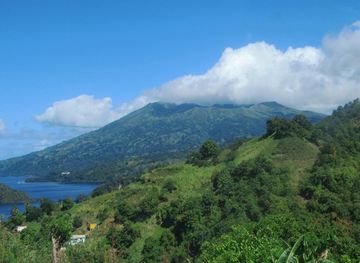
Explore more of Saint Vincent and the Grenadines
Discover the enchanting islands of Saint Vincent and the Grenadines, where lush rainforests, pristine beaches, and vibrant culture create an unforgettable Caribbean experience.
Explore Saint Vincent and the Grenadines