

Free Pagué Travel Guide & Mobile App
Explore Pagué with free travel guides. Discover regional history, expert tips, proposed trips, and audio guides on web or mobile app.


Explore Pagué on Príncipe for rainforest trails, historic roças, quiet beaches, Santo António and richly protected Atlantic island landscapes.
Read more about Pagué
When is the best time to visit Pagué?
Best: July–September · 29°C| Month | High (°C) | Rainfall (mm) |
|---|---|---|
| January | 29 | 210 |
| February | 30 | 180 |
| March | 30 | 190 |
| April | 30 | 220 |
| May | 30 | 260 |
| June | 29 | 130 |
| July (best) | 29 | 80 |
| August (best) | 29 | 70 |
| September (best) | 29 | 90 |
| October | 29 | 160 |
| November | 30 | 250 |
| December | 29 | 270 |
Getting to and around Pagué
How to get there
Transportation
Top city travel guides in Pagué
The cities of Pagué, and the easiest places to base yourself.

Swipe for more cities
Destinations in Pagué
Resorts, valleys and scenic spots worth a trip of their own.
-

-


Swipe for more destinations
Best attractions in Pagué
Pagué’s attractions combine protected nature, plantation history and low-key coastal exploration. In and around Santo António, visitors can see the island’s principal town, its river setting, churches and colonial-era streets before travelling into the countryside. The Obo Natural Park covers much of Príncipe’s forested interior, where guided walks reveal giant trees, palms, orchids, volcanic terrain and birdlife found nowhere else. Trails vary in difficulty and may be muddy after rain. Former roças provide a second defining strand of the visitor experience: Sundy recalls the 1919 eclipse expedition, while Belo Monte and other estates reveal the scale of cocoa cultivation and the social organisation of plantation life. Along the coast, Praia Banana, Praia Grande and smaller coves offer opportunities for swimming when conditions permit, photography, birdwatching and quiet walks. Boat excursions can provide a different perspective on the island’s cliffs, offshore rocks and forested shoreline, although marine conditions are seasonal. Pagué is not built around a dense network of ticketed attractions; its appeal lies in seeing how rainforest, settlements, plantations and the Atlantic remain closely connected.
-
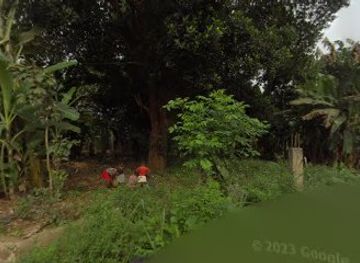
Park
S.Tome e príncipe
Explore the lush landscapes and rich culture of S.Tome e Príncipe, a tropical paradise perfect for relaxation and adventure.
Best landmarks in Pagué
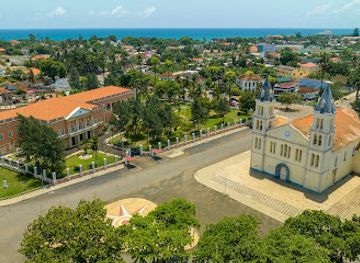
Santo António is Pagué’s principal built landmark, with a compact historic core shaped by its riverfront setting and Portuguese colonial history. The town’s churches and modest façades are more significant as part of a surviving island settlement than as monumental architecture, and their scale reflects Príncipe’s small population. The former roças form the region’s most distinctive historic landscape. Sundy is associated with the 1919 eclipse observations and represents the scientific as well as agricultural history of the island; Belo Monte illustrates the architectural and spatial organisation of a large cocoa estate. Their buildings should be viewed with sensitivity because former plantation sites may now be occupied, working or partly deteriorated. In the natural landscape, the forested volcanic mass of Príncipe, the heavily indented Atlantic coast and prominent beaches such as Praia Banana provide Pagué’s most recognisable visual landmarks. The contrast between dense inland vegetation, old estate clearings and open ocean is central to the island’s identity, while the Obo Natural Park and UNESCO Biosphere Reserve status underline the importance of protecting these places as living environments rather than treating them merely as scenery.
-
Hotel
Pestana São Tomé
Experience luxury and adventure at Pestana São Tomé, where stunning ocean views meet vibrant nightlife and exceptional amenities for the perfect getaway.
-
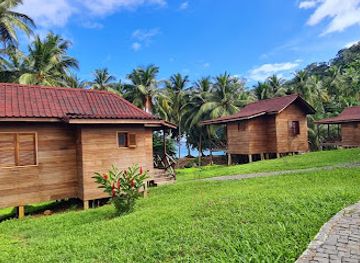
Hotel
Praia Inhame Eco Lodge
Experience the natural beauty and sustainability of Praia Inhame Eco Lodge, a serene beachfront escape in São Tomé and Príncipe.
-
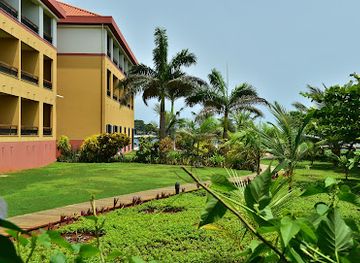
 Resort hotel
Club Santana
Experience luxury and tranquility at Club Santana, a premier resort hotel in the heart of Santana, perfect for relaxation and adventure.
-
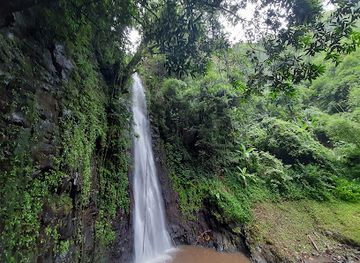
Scenic spot
Saint Nicholas Waterfall
Experience the breathtaking beauty of Saint Nicholas Waterfall in Monte Café, a scenic spot perfect for nature lovers and adventure seekers alike.
Explore Pagué on the map
Plan your trip on one map. See where the top cities, national parks and sights are, and book hotels and experiences in a few clicks.
Best hotels in Pagué
Best restaurants in Pagué
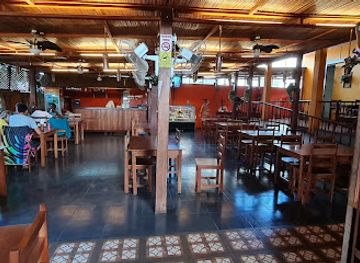
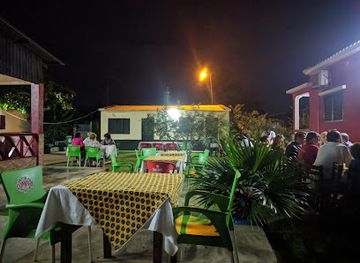
Dining in Pagué is small-scale and closely linked to local households, guesthouses, hotels and modest restaurants, particularly in Santo António. Fresh fish and seafood are important, often served with rice, plantain, breadfruit, cassava or locally grown vegetables, while tropical fruit such as banana, papaya, mango and passion fruit appears in breakfasts, juices and desserts. São Toméan dishes may include fish stews, grilled preparations and calulu, a leafy stew whose ingredients and preparation vary between cooks and islands. Príncipe’s plantation past also contributes cocoa and other cultivated products, although visitors should distinguish local ingredients from dishes that are national or broader West African and Lusophone traditions. Meals may take time, especially outside larger accommodation, and advance notice is sensible for excursions or small guesthouses. Ask hosts about the day’s catch and seasonal produce rather than expecting a long formal menu. Markets and informal sellers offer a more direct taste of island ingredients, while hotel dining provides the most predictable choice for travellers staying in remote parts of Pagué.
-
Restaurant
Pestana São Tomé
Discover luxury and adventure at Pestana São Tomé - your gateway to paradise on this enchanting island.
-
Restaurant
Papa-Figo
Discover authentic São Toméan flavors at Papa-Figo, where culinary excellence meets warm hospitality in the heart of São Tomé.
-
Creole
Dona Teté
Discover the vibrant flavors of São Tomé at Dona Teté – an authentic Creole dining experience that delights every palate.
-
Restaurant
Petisqueira Santola
Experience authentic local cuisine at Petisqueira Santola – where fresh seafood meets warm hospitality in the heart of Neves.


Best bars in Pagué
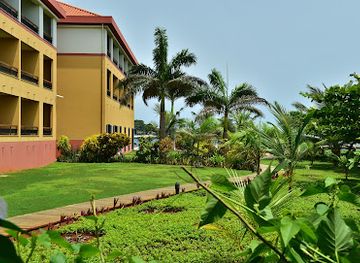
Pagué has a quiet evening culture rather than a developed nightclub circuit. Santo António contains the greatest concentration of informal bars, small restaurants and places to meet locally, while guesthouses and hotels may provide drinks and evening meals for residents. Rum-based drinks, local beer, fruit juices and coffee are more characteristic choices than a specialised cocktail scene, and music or social gatherings may be occasional rather than scheduled nightly entertainment. Outside the town, evenings are generally centred on accommodation, conversation and the sounds of the surrounding forest or coast. Visitors should not expect late public transport or a wide choice of venues in rural areas, so arrange a return journey before going out. During local celebrations or community events, music and dancing can bring a livelier atmosphere, but dates and arrangements vary. The island’s dark skies and natural quiet are themselves part of the evening experience; responsible visitors should keep lighting and noise low near wildlife, homes and protected landscapes.
-
Restaurant
Pestana São Tomé
Experience unparalleled luxury and vibrant culture at Pestana São Tomé, your perfect island getaway for relaxation and adventure.
-
Restaurant
Papa-Figo
Experience the Best of São Tomé's Culinary Scene at Papa-Figo – A Vibrant Restaurant Offering Local Flavors and Stunning Views.
-
Resort hotel
Club Santana
Discover the perfect blend of relaxation and adventure at Club Santana, a premier resort hotel in the heart of beautiful Santana.
-
Hotel
Omali São Tomé
Experience luxury and tranquility at Omali São Tomé, your perfect beachside retreat in the heart of paradise.
Best nightclubs in Pagué
Pagué has a quiet evening culture rather than a developed nightclub circuit. Santo António contains the greatest concentration of informal bars, small restaurants and places to meet locally, while guesthouses and hotels may provide drinks and evening meals for residents. Rum-based drinks, local beer, fruit juices and coffee are more characteristic choices than a specialised cocktail scene, and music or social gatherings may be occasional rather than scheduled nightly entertainment. Outside the town, evenings are generally centred on accommodation, conversation and the sounds of the surrounding forest or coast. Visitors should not expect late public transport or a wide choice of venues in rural areas, so arrange a return journey before going out. During local celebrations or community events, music and dancing can bring a livelier atmosphere, but dates and arrangements vary. The island’s dark skies and natural quiet are themselves part of the evening experience; responsible visitors should keep lighting and noise low near wildlife, homes and protected landscapes.
-
Bar
Pico Mocambo
Discover the vibrant atmosphere and unique local flavors at Pico Mocambo, a must-visit bar in São Tomé for an unforgettable experience.
-
Disco club
Discoteca Beach Club
Discover the ultimate nightlife experience at Discoteca Beach Club in São Tomé, where vibrant music and ocean views come together.
-
Disco club
Discoteca Kizomba
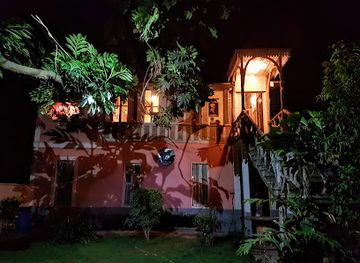
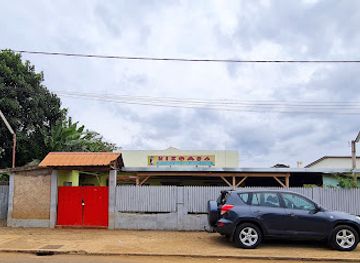
Discover the vibrant nightlife at Discoteca Kizomba, a must-visit disco club in São Tomé, perfect for dancing and enjoying local music.
-
Bar
Kay Shisha
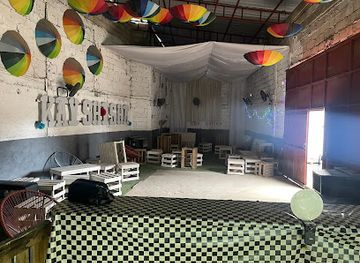
Discover the lively nightlife and local flavors at Kay Shisha, a must-visit bar in São Tomé for an unforgettable experience.

Best shops in Pagué
Shopping in Pagué is modest and practical, with the greatest choice found in Santo António. Small shops and informal sellers provide everyday provisions, drinks, fruit and locally used household goods rather than an extensive retail selection. Visitors can look for cocoa and other island produce, woven or handmade items, locally made food products and small craft souvenirs, although availability varies and not every item is produced on Príncipe. Some hotels, lodges and community initiatives sell crafts or products connected with conservation and local livelihoods. Buying directly from residents or established community enterprises can provide a more useful contribution than bargaining aggressively over small sums. There are no large shopping centres or major designer districts, and rural settlements may have little retail infrastructure, so purchase essentials before travelling into the interior. Ask about ingredient origins and transport restrictions before buying food, shells, plant material or wildlife-related objects; protected natural material should not be collected or exported. The most meaningful souvenirs are usually durable, locally made products or cocoa associated with the island’s plantation history.
-
Hotel
Mucumbli
Experience the serenity of Mucumbli in São Tomé and Príncipe, where comfort meets the beauty of nature and local culture.
-
Resort hotel
Club Santana
Experience the ultimate tropical getaway at Club Santana, a luxurious resort hotel in the heart of São Tomé and Príncipe, where relaxation meets adventure.
-
Scenic spot
Saint Nicholas Waterfall
Experience the breathtaking beauty of Saint Nicholas Waterfall, a serene natural oasis in Monte Café, perfect for nature lovers and adventure seekers alike.
-
Historical landmark
Equator Landmark
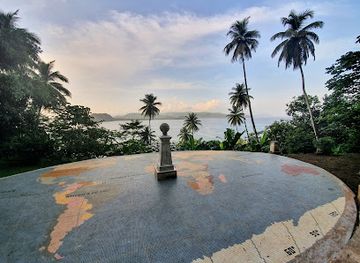
Experience the unique Equator Landmark on Ilhéu das Rolas, a stunning blend of natural beauty and rich cultural history in Porto Alegre.

Get your free copy of our complete guide to Pagué, delivered straight to you.
Everything on this page, from attractions and restaurants to essentials and local phrases, in one PDF you can read offline, print or share.
Already have an account? Sign in
Your Pagué guide is ready.
We'll send it to · Not you? Sign out

Getting your guide ready…
We are putting together a fresh copy of the Pagué guide. This can take up to a minute.
This can take a few moments. If your browser asks, choose Allow so the download can start. You'll find the guide in your Downloads folder.
Nothing happened? Download it again
Sorry, the guide is taking longer than usual. Please try again in a minute, or get it by email instead.
Pagué essentials
Currency and Payment
Safety
Emergency Situations
Do's and Don'ts
Local Tips
From Eve
Local phrases worth knowing
You don't need to get them perfect. A few words go a long way, and locals appreciate the effort.
Basics
| English | Local | Say it |
|---|---|---|
| Hello | Olá | [oh-LAH] |
| Goodbye | Adeus | [ah-DEH-oos] |
| Yes | Sim | [seem] |
| No | Não | [now] |
| Please/You're welcome | Por favor | [pohr fah-VOHR] |
| Thank you | Obrigado | [oh-bree-GAH-doo] |
| Excuse me/Sorry | Desculpe | [deh-SCOOL-peh] |
| How are you? | Como está? | [KOH-moo es-TAH] |
| Fine. And you? | Bem. E você? | [BEM. eh vo-SEH] |
| Do you speak English? | Você fala inglês? | [vo-SEH FAH-lah een-GLEZ] |
| I don't understand | Eu não entendo | [eh-oo NOW en-TEN-doo] |
Eating & Drinking
| English | Local | Say it |
|---|---|---|
| I'd like to see the menu, please | Gostaria de ver o menu, por favor | [gos-tah-REE-ah jeh VEHR oo meh-NOO, pohr fah-VOHR] |
| I don't eat meat | Eu não como carne | [eh-oo NOW KOH-moo KAR-nee] |
| Cheers! | Saúde! | [sah-OO-dee] |
| I would like to pay, please | Gostaria de pagar, por favor | [gos-tah-REE-ah jeh pah-GAHR, pohr fah-VOHR] |
Emergencies
| English | Local | Say it |
|---|---|---|
| Help! | Ajuda! | [ah-ZHOO-dah] |
| Go away! | Vá embora! | [vah em-BOH-rah] |
| Call the Police! | Chame a polícia! | [SHAH-meh ah poh-LEE-see-ah] |
| Call a doctor! | Chame um médico! | [SHAH-meh oom MEH-dee-koh] |
| I'm lost | Estou perdido | [es-TOH pehr-DEE-doo] |
| I'm ill | Estou doente | [es-TOH do-EHN-tay] |
Shopping
| English | Local | Say it |
|---|---|---|
| I'd like to buy... | Gostaria de comprar... | [gos-tah-REE-ah jeh kom-PRAHR] |
| I'm just looking | Estou apenas a olhar | [es-TOH ah-PEH-nas ah oh-LYAR] |
| How much is it? | Quanto custa? | [KWAN-toh KOOS-tah] |
| That's too expensive | É muito caro | [eh MOY-toh KAH-roh] |
| Can you lower the price? | Pode baixar o preço? | [POH-jeh bye-SHAHR oo PREH-soo] |
Time & Numbers
| English | Local | Say it |
|---|---|---|
| What time is it? | Que horas são? | [keh OH-ras sow] |
| It's one o'clock | É uma hora | [eh OO-mah OH-rah] |
| Half past (10) | Dez e meia | [dehz eh MAY-ah] |
| Morning | Manhã | [mahn-YAH] |
| Afternoon | Tarde | [TAR-deh] |
| Evening | Noite | [NOY-teh] |
| Yesterday | Ontem | [ON-tem] |
| Today | Hoje | [OH-zhe] |
| Tomorrow | Amanhã | [ah-mahn-YAH] |
| 1 | Um | [oom] |
| 2 | Dois | [doyz] |
| 3 | Três | [trehz] |
| 4 | Quatro | [KWAH-troh] |
| 5 | Cinco | [SEEN-koh] |
| 6 | Seis | [says] |
| 7 | Sete | [SEH-teh] |
| 8 | Oito | [OY-toh] |
| 9 | Nove | [NOH-veh] |
| 10 | Dez | [dehz] |
Transport & Directions
| English | Local | Say it |
|---|---|---|
| Where's a/the...? | Onde está um/a...? | [ON-deh es-TAH oom/ah] |
| What's the address? | Qual é o endereço? | [kwahl eh oo en-deh-REH-soo] |
| Can you show me (on the map)? | Pode me mostrar (no mapa)? | [POH-jeh meh mohs-TRAR (no MAH-pah)] |
| When's the next (bus)? | Quando é o próximo (autocarro)? | [KWAHN-doh eh oo PROH-see-moo (ow-toh-KAHR-roh)] |
| A ticket (to ....) | Um bilhete (para ....) | [oom bee-LYEH-tay (PAH-rah)] |
History of Pagué
Portuguese Settlement and the Founding of Santo António
Portuguese navigators reached Príncipe in the late fifteenth century, during Portugal’s exploration of the Gulf of Guinea. Permanent settlement developed in the early sixteenth century, and Santo António became the island’s principal town and administrative centre. Its position beside the Palhota River provided a sheltered urban setting, while the surrounding territory was organised for plantation agriculture. The town’s churches, street plan and modest colonial buildings reflect centuries of Portuguese rule, although tropical climate, later alterations and limited resources have changed much of the historic fabric.
Sugar Plantations and Enslaved Labour
During the early colonial period, Príncipe’s economy centred on sugar cultivation and processing. Plantation agriculture depended on enslaved Africans, whose forced labour shaped the island’s population, settlement and cultural life. Sugar production later declined as competition, soil exhaustion and political-economic changes affected the Portuguese Atlantic colonies. The plantation landscape survived in the form of estate roads, processing buildings, accommodation and cultivated clearings. This history should be understood as one of coercion and exploitation, not simply as an architectural or agricultural tradition.
The Rise of Cocoa and the Roça System
From the nineteenth century, cocoa became the dominant commercial crop on Príncipe, as it did elsewhere in São Tomé and Príncipe. Large roças functioned as estate settlements with fields, workshops, administrative buildings, stores and workers’ quarters. Estates including Sundy and Belo Monte formed part of this export economy, which relied on highly unequal labour arrangements after the formal abolition of slavery. The buildings and landscape patterns remaining across Pagué are among the clearest physical reminders of the island’s plantation past and its integration into global commodity markets.
The 1919 Eclipse Expedition at Sundy
In May 1919, a British-led expedition observed a total solar eclipse from Sundy on Príncipe. Measurements of the apparent position of stars near the eclipsed Sun were used, alongside observations made in Brazil, to test Albert Einstein’s prediction that gravity would bend light. The expedition brought international attention to a remote plantation estate and helped make the island part of the history of modern physics. The event remains one of Pagué’s most distinctive historical associations, though the wider social and plantation context of Sundy is equally important.
Late Colonial Rule and the End of the Plantation Order
Príncipe remained under Portuguese colonial administration until the independence of São Tomé and Príncipe in 1975. By then, the plantation economy had weakened, and many estates were declining or abandoned. Independence transformed the legal and political framework of landholding and public administration, but it did not erase the social and economic effects of the roça system. Contemporary communities in Pagué continue to live among former estate buildings and cultivated areas, combining local livelihoods with public services, conservation and carefully managed tourism.
Autonomy, Conservation and the Biosphere Reserve
Príncipe became an autonomous region within São Tomé and Príncipe, with its own regional institutions and a political identity distinct from the national government on São Tomé. Much of the island’s natural environment is protected through the Príncipe component of Obo Natural Park, while UNESCO designated the Island of Príncipe a Biosphere Reserve in 2012. These initiatives recognise forests, coastal ecosystems, endemic species and local communities as interconnected parts of the island. Conservation now forms a central element of Pagué’s development and tourism planning.
Pagué in Photos
Browse through our photo collection highlighting the charm and character of the destination.
Neighbouring regions of Pagué
The closest regions to Pagué, if you have time for more than one.
-

-

-

-

-


Swipe for more regions
Explore more

Explore more of Sao Tome and Principe
Discover the untouched beauty of Sao Tome and Principe, where lush rainforests, pristine beaches, and rich cultural heritage await in this tranquil island paradise.
Explore Sao Tome and Principe