

Free Mé-Zóchi Travel Guide & Mobile App
Explore Mé-Zóchi with free travel guides. Discover regional history, expert tips, proposed trips, and audio guides on web or mobile app.


Explore Mé-Zóchi’s coffee plantations, forest trails, waterfalls and colonial history in the cool, rain-fed uplands of São Tomé island.
Read more about Mé-Zóchi
When is the best time to visit Mé-Zóchi?
Best: December–February · 28°C| Month | High (°C) | Rainfall (mm) |
|---|---|---|
| January (best) | 28 | 75 |
| February (best) | 28 | 80 |
| March | 28 | 85 |
| April | 28 | 90 |
| May | 29 | 95 |
| June | 29 | 100 |
| July | 29 | 105 |
| August | 29 | 110 |
| September | 29 | 105 |
| October | 29 | 100 |
| November | 28 | 85 |
| December (best) | 28 | 80 |
Getting to and around Mé-Zóchi
How to get there
Transportation
Top city travel guides in Mé-Zóchi
The cities of Mé-Zóchi, and the easiest places to base yourself.
-

-
-

-


Swipe for more cities
Destinations in Mé-Zóchi
Resorts, valleys and scenic spots worth a trip of their own.

Swipe for more destinations
Best attractions in Mé-Zóchi
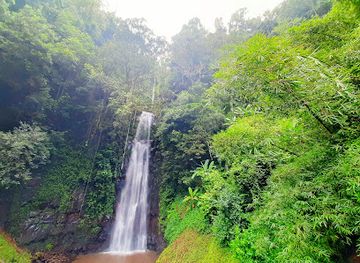
Mé-Zóchi’s attractions centre on the meeting point between São Tomé’s plantation history and its humid volcanic highlands. Monte Café is the district’s principal heritage experience, offering insight into coffee cultivation, colonial estate organisation and the lives of the communities connected with the roça. Around Trindade and Batepá, visitors can explore places associated with the island’s modern history, including the memory of the 1953 massacre. The upper district leads towards Bom Sucesso, where the Botanical Garden provides an introduction to São Tomé’s endemic flora and a starting point for forest excursions. Routes near Lagoa Amélia offer dense vegetation, unusual plant life and a powerful sense of the island’s interior, although access conditions vary. São Nicolau waterfall is another recognised natural attraction, reached through a landscape of steep slopes and rainforest. These experiences are less about a consolidated sightseeing circuit than about arranging individual visits with local guidance. The district also rewards slow travel through plantation roads, market communities and cultivated hillsides, where coffee, fruit and subsistence farming remain part of everyday life.
-
Tourist attraction
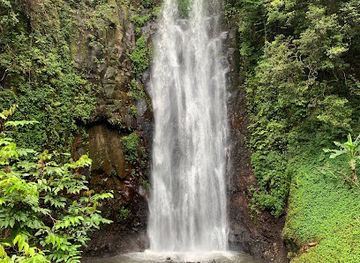
Saint Nicholas Waterfall
Experience the breathtaking beauty of Saint Nicholas Waterfall, a serene escape in Monte Café with stunning views and lush nature.
-
Island
Sao Tome Island
Explore the enchanting Sao Tome Island, where lush rainforests, stunning beaches, and rich culture await every traveler.
-
Museum
Museu Do Cafe
Explore the rich heritage of coffee at Museu Do Cafe in Monte Cafe, where every cup tells a story of tradition and culture.
-
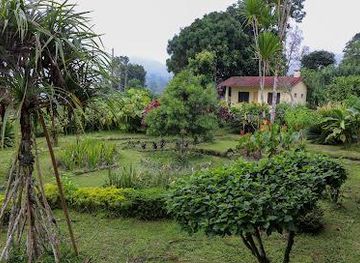
Botanical garden
Jardim Botânico do Bom Sucesso
Immerse yourself in the lush beauty of Jardim Botânico do Bom Sucesso, a peaceful botanical garden in Milagrosa, perfect for nature lovers and photographers.
Best landmarks in Mé-Zóchi
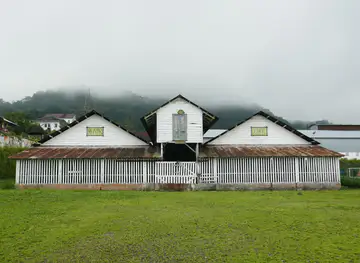
Monte Café is Mé-Zóchi’s most recognisable built landmark, its plantation buildings representing the coffee economy and the hierarchical organisation of the colonial roça. The estate’s importance lies not only in its architecture but also in the labour history embedded in its courtyards, processing spaces and surrounding agricultural landscape. Trindade’s urban fabric provides a contrasting landmark: a highland district capital whose market activity and public buildings anchor the surrounding communities. Near Batepá, memorial places associated with the 1953 massacre carry national historical significance and should be approached as sites of remembrance rather than scenic stops. In the upper district, the Botanical Garden at Bom Sucesso marks the transition from settled plantation country to São Tomé’s cloudier forest environment. Lagoa Amélia is a notable natural feature within this upland landscape, while São Nicolau waterfall provides a more dramatic expression of the district’s steep, rain-fed terrain. Together these landmarks represent Mé-Zóchi’s principal themes: plantation modernisation, political memory, botanical richness and volcanic topography.
-
Scenic spot
Saint Nicholas Waterfall
Explore the serene beauty of Saint Nicholas Waterfall, a natural gem in Monte Café, perfect for relaxation and adventure amidst stunning landscapes.
-
Historical landmark
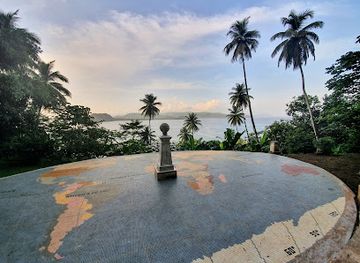
Equator Landmark
Discover the Equator Landmark in Porto Alegre—where adventure meets history at the center of the Earth, surrounded by breathtaking natural beauty.
-
Bar
Pico Mocambo
Experience the vibrant nightlife of São Tomé at Pico Mocambo, a bar that offers a taste of local culture and delicious drinks.
-
Island
Sao Tome Island
Explore the breathtaking beauty and vibrant culture of Sao Tome Island, a hidden gem in the Gulf of Guinea, perfect for adventurous travelers.
Explore Mé-Zóchi on the map
Plan your trip on one map. See where the top cities, national parks and sights are, and book hotels and experiences in a few clicks.
Best hotels in Mé-Zóchi
Best restaurants in Mé-Zóchi
Mé-Zóchi’s food scene is modest and locally focused, with the greatest choice found in Trindade and along the roads connecting the district with São Tomé city. Small restaurants and informal eateries serve familiar São Toméan dishes based on fish, chicken, breadfruit, plantain, banana, cassava, rice and locally grown vegetables. São Toméan cocoa and coffee are important products of the island’s agricultural history, while fruit juices and seasonal produce are common at roadside stalls and markets. Around Monte Café, coffee-related experiences may include tastings or explanations of cultivation, but availability depends on local arrangements rather than a fixed visitor schedule. Rural meals are often simple, fresh and communal in character, and menus may change according to what has been brought in that day. Visitors should not expect a large concentration of international restaurants in the uplands; arranging meals with accommodation or a guide is sensible when travelling beyond Trindade. São Tomé city, outside Mé-Zóchi, offers the widest selection of formal dining and international food.
-
Restaurant
Papa-Figo
Experience authentic São Toméan cuisine at Papa-Figo—where every dish tells a story through its rich flavors and vibrant atmosphere.
-
Restaurant
Casa Museu Almada Negreiros
Experience art and cuisine at Casa Museu Almada Negreiros – where culture meets culinary excellence in São Tomé.
-
Restaurant
O Pirata
Discover authentic flavors at O Pirata, where São Tomé's culinary treasures await every visitor.
-
Creole
Dona Teté
Discover authentic Creole flavors at Dona Teté, a charming restaurant in São Tomé known for its fresh seafood and warm hospitality.
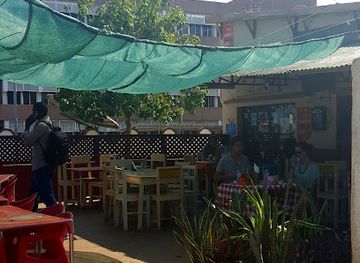
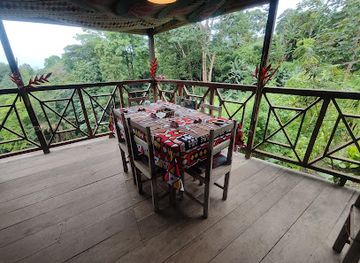
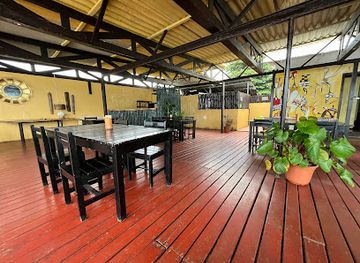
Best bars in Mé-Zóchi
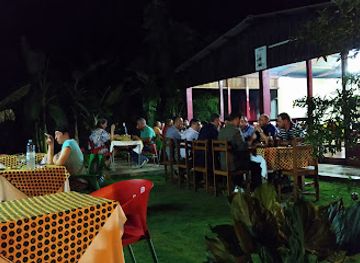
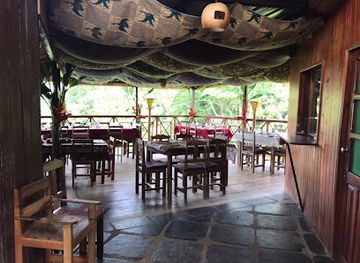
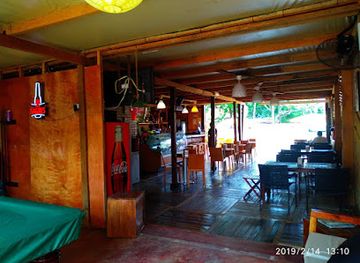
Evening life in Mé-Zóchi is centred on local bars, small cafés, restaurants and social spaces in Trindade rather than on a large club circuit. Informal establishments may serve beer, soft drinks, spirits and music, while evenings in villages are generally shaped by local community life rather than visitor-oriented entertainment. There are few reasons to travel into the highlands expecting late-night venues, and rural accommodation may have limited facilities after dark. Visitors interested in São Toméan music, dance or conversation will usually gain more from asking locally about a suitable community venue than from seeking a formal nightlife district. São Tomé city, outside the district, has the country’s broader selection of bars and occasional live-music venues, making it the more practical place for a later evening. Drink responsibly, arrange transport before leaving rural areas and avoid walking unlit roads at night.
-
Restaurant
Papa-Figo
Experience the vibrant flavors of São Tomé at Papa-Figo, a culinary treasure offering authentic dishes and a warm atmosphere.
-
Restaurant
Casa Museu Almada Negreiros
Explore the vibrant artistry and exquisite flavors at Casa Museu Almada Negreiros in Sao Tome, a cultural gem for every traveler.
-
Bar
Pico Mocambo
Experience the vibrant pulse of São Tomé at Pico Mocambo, where refreshing drinks meet stunning tropical views in a lively atmosphere.
-
Pizza
90 Graus Esplanada Bar
Discover the vibrant flavors of São Tomé at 90 Graus Esplanada Bar, where every pizza is a celebration of taste and culture.

Best nightclubs in Mé-Zóchi
Evening life in Mé-Zóchi is centred on local bars, small cafés, restaurants and social spaces in Trindade rather than on a large club circuit. Informal establishments may serve beer, soft drinks, spirits and music, while evenings in villages are generally shaped by local community life rather than visitor-oriented entertainment. There are few reasons to travel into the highlands expecting late-night venues, and rural accommodation may have limited facilities after dark. Visitors interested in São Toméan music, dance or conversation will usually gain more from asking locally about a suitable community venue than from seeking a formal nightlife district. São Tomé city, outside the district, has the country’s broader selection of bars and occasional live-music venues, making it the more practical place for a later evening. Drink responsibly, arrange transport before leaving rural areas and avoid walking unlit roads at night.
-
Bar
Pico Mocambo
Experience the vibrant nightlife of São Tomé at Pico Mocambo, a bar filled with cool music, delicious drinks, and a lively atmosphere.
-
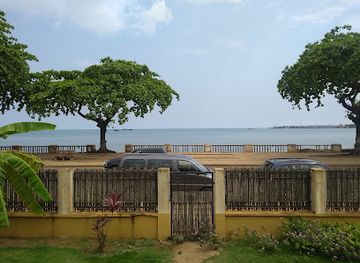
Disco club
Discoteca Beach Club
Discover the vibrant nightlife of São Tomé at Discoteca Beach Club, where music, cocktails, and ocean views create an unforgettable experience.
-
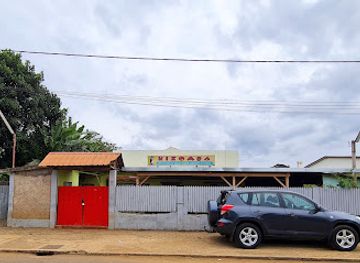
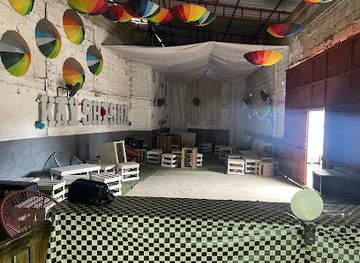
Disco club
Discoteca Kizomba
Dive into São Tomé's vibrant nightlife at Discoteca Kizomba, where music, dance, and cultural celebration come alive.
-
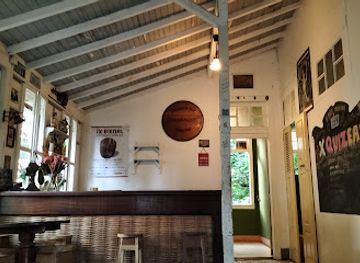
Bar
Kay Shisha
Experience the vibrant nightlife at Kay Shisha, São Tomé's favorite bar for shisha lovers and social butterflies.

Best shops in Mé-Zóchi
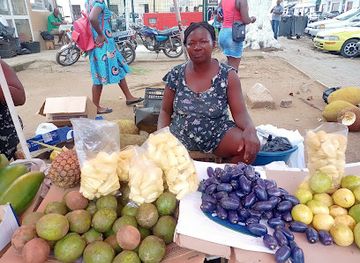
Shopping in Mé-Zóchi is practical and community-based rather than centred on large retail developments. Trindade offers local shops, market stalls and roadside sellers where visitors can find fruit, vegetables, snacks, drinks and everyday goods. In the countryside, small stalls may sell seasonal produce, handmade items or coffee connected with nearby cultivation, although selection and availability vary. Monte Café and other cultural projects may offer locally produced coffee or small craft items when open and appropriately stocked, but visitors should not rely on a particular gift shop. Good regional purchases include São Toméan coffee, cocoa products, spices, dried foods and modest handmade crafts, provided that agricultural and customs regulations are respected when taking goods abroad. For a wider choice of books, higher-value handicrafts, clothing and packaged products, São Tomé city outside the district is the principal shopping centre. Bargaining is not automatically expected in every setting; ask the price politely and accept that fixed prices may apply.
-
Chocolate artisan
Claudio Corallo - Cacao & Caffe São Tomé e Príncipe
Experience the art of chocolate at Claudio Corallo, São Tomé e Príncipe's premier destination for artisanal cacao delights.
-
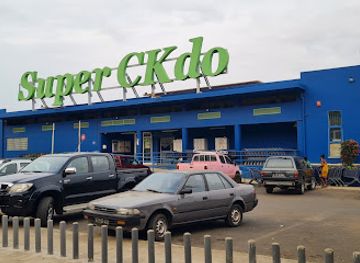
Supermarket
SUPER CKDO
Explore the vibrant flavors of São Tomé at SUPER CKDO, the ultimate supermarket for all your shopping needs.
-
General store
Supermercado Continental
Experience the vibrant local culture at Supermercado Continental, São Tomé's go-to general store for fresh produce and authentic island flavors.
-
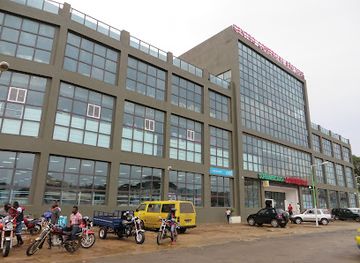
Shopping mall
Intermar
Discover the vibrant shopping experience at Intermar in São Tomé, where local charm meets international flair.
Get your free copy of our complete guide to Mé-Zóchi, delivered straight to you.
Everything on this page, from attractions and restaurants to essentials and local phrases, in one PDF you can read offline, print or share.
Already have an account? Sign in
Your Mé-Zóchi guide is ready.
We'll send it to · Not you? Sign out

Getting your guide ready…
We are putting together a fresh copy of the Mé-Zóchi guide. This can take up to a minute.
This can take a few moments. If your browser asks, choose Allow so the download can start. You'll find the guide in your Downloads folder.
Nothing happened? Download it again
Sorry, the guide is taking longer than usual. Please try again in a minute, or get it by email instead.
Mé-Zóchi essentials
Currency and Payment
Safety
Emergency Situations
Do's and Don'ts
Local Tips
From Eve
Local phrases worth knowing
You don't need to get them perfect. A few words go a long way, and locals appreciate the effort.
Basics
| English | Local | Say it |
|---|---|---|
| Hello | Olá | [oh-lah] |
| Goodbye | Adeus | [ah-deh-oos] |
| Yes | Sim | [seem] |
| No | Não | [nown] |
| Please/You're welcome | Por favor | [poor fah-vor] |
| Thank you | Obrigado | [oh-bree-gah-doo] |
| Excuse me/Sorry | Desculpe | [des-kool-peh] |
| How are you? | Como você está? | [koh-moo voh-seh es-tah] |
| Fine. And you? | Bem. E você? | [beng. eh voh-seh] |
| Do you speak English? | Você fala inglês? | [voh-seh fah-lah een-glays] |
| I don't understand | Eu não entendo | [eh-ooh nown en-ten-doo] |
Eating & Drinking
| English | Local | Say it |
|---|---|---|
| I'd like to see the menu, please | Gostaria de ver o menu, por favor | [goh-stah-ree-ah deh ver o meh-noo, poor fah-vor] |
| I don't eat meat | Eu não como carne | [eh-ooh nown koh-moo kar-nee] |
| Cheers! | Saúde! | [sah-oo-deh] |
| I would like to pay, please | Gostaria de pagar, por favor | [goh-stah-ree-ah deh pah-gar, poor fah-vor] |
Emergencies
| English | Local | Say it |
|---|---|---|
| Help! | Ajuda! | [ah-zhoo-dah] |
| Go away! | Vá embora! | [vah em-boh-rah] |
| Call the Police! | Chame a polícia! | [sha-meh ah poh-lee-syah] |
| Call a doctor! | Chame um médico! | [sha-meh oom meh-jee-koh] |
| I'm lost | Estou perdido | [eh-stoh pehr-dee-doo] |
| I'm ill | Estou doente | [eh-stoh do-ehn-teh] |
Shopping
| English | Local | Say it |
|---|---|---|
| I'd like to buy... | Gostaria de comprar... | [goh-stah-ree-ah deh kom-prahr...] |
| I'm just looking | Estou apenas a olhar | [eh-stoh ah-peh-nahs ah oh-lhar] |
| How much is it? | Quanto custa? | [kwan-toh koos-tah] |
| That's too expensive | Isso é muito caro | [ee-soh eh mooy-toh kah-roh] |
| Can you lower the price? | Você pode baixar o preço? | [voh-seh poh-jee bye-shar o preh-soh] |
Time & Numbers
| English | Local | Say it |
|---|---|---|
| What time is it? | Que horas são? | [keh oh-ras sow] |
| It's one o'clock | É uma hora | [eh oo-mah oh-rah] |
| Half past (10) | Dez e meia | [dehz eh may-ah] |
| Morning | Manhã | [mahn-yah] |
| Afternoon | Tarde | [tahr-deh] |
| Evening | Noite | [noy-teh] |
| Yesterday | Ontem | [on-tem] |
| Today | Hoje | [oh-zheh] |
| Tomorrow | Amanhã | [ah-mahn-yah] |
| 1 | Um | [oom] |
| 2 | Dois | [doyz] |
| 3 | Três | [trehz] |
| 4 | Quatro | [kwah-tro] |
| 5 | Cinco | [seen-koh] |
| 6 | Seis | [sayz] |
| 7 | Sete | [seh-teh] |
| 8 | Oito | [oy-toh] |
| 9 | Nove | [noh-veh] |
| 10 | Dez | [dehz] |
Transport & Directions
| English | Local | Say it |
|---|---|---|
| Where's a/the...? | Onde está um/a...? | [on-deh es-tah oom/ah...?] |
| What's the address? | Qual é o endereço? | [kwahl eh o in-deh-reh-soo] |
| Can you show me (on the map)? | Você pode me mostrar (no mapa)? | [voh-seh poh-jee meh mohs-trar (noh mah-pah)?] |
| When's the next (bus)? | Quando é o próximo (ônibus)? | [kwan-doo eh o proh-see-moo (oh-nee-boos)?] |
| A ticket (to ....) | Um bilhete (para ...) | [oom bee-lyeh-tay (pah-rah ...)] |
History of Mé-Zóchi
Early settlement and the formation of São Tomé’s plantation society
São Tomé was uninhabited before Portuguese settlement in the late fifteenth century, after which the Portuguese developed a plantation economy based first on sugar. Enslaved Africans were brought to the island in large numbers, and the resulting society became one of the earliest European colonial plantation systems in the tropics. The interior landscapes that now form Mé-Zóchi were later incorporated into this wider network of estates, paths and settlements. The island’s Luso-African culture, language varieties and patterns of landholding all retain traces of this formative period.
The transition from sugar to coffee and cocoa
After the decline of São Tomé’s early sugar industry, coffee and cocoa became the dominant export crops during the nineteenth century. Plantation estates, known locally as roças, expanded into the wetter interior, where altitude and rainfall suited cultivation. Monte Café became associated with coffee production in the uplands of present-day Mé-Zóchi, while the wider island developed an export economy controlled largely by Portuguese estate owners. Roads, processing buildings, workers’ quarters and administrative structures transformed the landscape, although the system depended on coercive labour and profound social inequality.
Monte Café and the colonial roça system
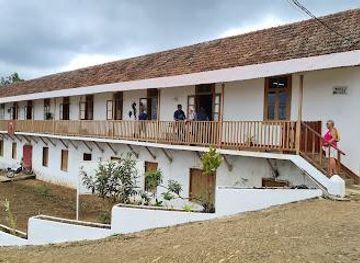
Monte Café illustrates the organisation of a São Toméan plantation estate, combining crop-growing areas with processing facilities, stores, administrative buildings and accommodation for workers and managers. Its history reflects the wider colonial practice of recruiting contract labourers from other African territories after the abolition of slavery, under conditions that were frequently exploitative. The surviving estate environment is therefore both an agricultural heritage site and evidence of colonial power. Coffee production declined in importance over time, but the name and buildings of Monte Café remain closely linked to Mé-Zóchi’s highland identity.
The Batepá massacre of 1953
In February 1953, colonial authorities violently suppressed resistance and fears surrounding labour recruitment in São Tomé. The ensuing killings, remembered as the Batepá massacre, affected communities around Batepá and Trindade and became one of the defining traumas of modern Santomean history. Many local people were killed, imprisoned or displaced. The event later assumed major importance in the national struggle against Portuguese rule, and its memory remains part of the political and cultural landscape of Mé-Zóchi. Visitors should approach memorial places with respect and recognise the human cost behind the plantation economy.
Independence and the transformation of the plantations
São Tomé and Príncipe became independent from Portugal in 1975. After independence, the large Portuguese-owned plantations were nationalised and managed as state enterprises, but many later struggled with investment, infrastructure and changing agricultural conditions. Some estates were divided or occupied by small farmers, while others retained buildings and processing equipment in varying states of repair. In Mé-Zóchi, plantation heritage now coexists with family agriculture, community settlement and efforts to develop cultural and nature-based tourism.
Contemporary conservation and cultural tourism
The highlands around Bom Sucesso and Lagoa Amélia have become important for botanical research, environmental education and access to São Tomé’s endemic species. The Botanical Garden and surrounding forest routes connect the district’s natural history with its plantation past, while Monte Café provides a focus for coffee heritage and local interpretation. These initiatives form part of a broader attempt to diversify the island’s economy and present São Tomé’s history more fully, including the experiences of African workers and communities rather than only the architecture of colonial estates.
Mé-Zóchi in Photos
Browse through our photo collection highlighting the charm and character of the destination.
Neighbouring regions of Mé-Zóchi
The closest regions to Mé-Zóchi, if you have time for more than one.
-

-

-

-

-


Swipe for more regions
Explore more

Explore more of Sao Tome and Principe
Discover the untouched beauty of Sao Tome and Principe, where lush rainforests, pristine beaches, and rich cultural heritage await in this tranquil island paradise.
Explore Sao Tome and Principe