

Free Rasina Travel Guide & Mobile App
Explore Rasina with free travel guides. Discover regional history, expert tips, proposed trips, and audio guides on web or mobile app.


Explore Rasina in central Serbia for Kruševac’s medieval heritage, Župa vineyards, Orthodox monasteries, spa towns and wooded mountain landscapes.
Read more about Rasina
When is the best time to visit Rasina?
Best: June–August · 22–23°C| Month | High (°C) | Rainfall (mm) |
|---|---|---|
| JANUARY | 3 | 50 |
| FEBRUARY | 5 | 45 |
| MARCH | 9 | 50 |
| APRIL | 13 | 55 |
| MAY | 18 | 60 |
| JUNE (best) | 22 | 65 |
| JULY (best) | 23 | 70 |
| AUGUST (best) | 23 | 65 |
| SEPTEMBER | 19 | 60 |
| OCTOBER | 14 | 55 |
| NOVEMBER | 8 | 50 |
| DECEMBER | 4 | 45 |
Getting to and around Rasina
How to get there
Transportation
Top city travel guides in Rasina
The cities of Rasina, and the easiest places to base yourself.
-

-


Swipe for more cities
Best attractions in Rasina
Rasina's attractions range from medieval remains in Kruševac to vineyards, monasteries, spas and mountain recreation. The Lazarica Church and the archaeological area of Lazar's City introduce the district's most important historical chapter, while museums and public spaces in Kruševac provide context for the medieval capital and later Serbian history. Around Aleksandrovac, the Župa wine country offers cellar visits, vineyard landscapes and seasonal harvest culture, although smaller producers generally require prior contact. Religious heritage is particularly strong, with Ljubostinja, Drenča, Naupara and Veluće representing different settings within the Morava architectural tradition. Ribarska Banja combines mineral-water treatment traditions with wooded walking areas, and Jastrebac offers forest recreation closer to the central lowlands. Brus gives access to higher terrain and routes towards the Kopaonik area, with opportunities for walking, winter sports and mountain scenery depending on conditions. Trstenik and the West Morava valley add orchards, rural landscapes and historic settlements, while Stalać provides a more rugged encounter with medieval defensive history. The district suits visitors who prefer to combine several modest experiences across a landscape rather than follow a single concentrated sightseeing circuit.
-
Park
Pioneer Park
Explore the lush landscapes and cultural richness of Pioneer Park in Kruševac, a perfect retreat for nature lovers and cultural enthusiasts alike.
-
Hiking area
Waterfall Jelovarnik
Explore the breathtaking beauty of Waterfall Jelovarnik in Brzeće, Serbia – a must-see for nature lovers and adventure seekers alike.
-
Ski resort
Mali Karaman
Experience the ultimate winter adventure at Mali Karaman, Kopaonik's premier ski resort, where breathtaking slopes and cozy retreats await.


Best landmarks in Rasina
Kruševac Fortress, known locally as Lazar's City, is Rasina's defining historic landmark. Its surviving archaeological remains and the nearby Lazarica Church mark the site of Prince Lazar's late-fourteenth-century capital and give the modern city an unusually direct connection with medieval Serbian statehood. Stalać Fortress, standing near the confluence area of the South and West Morava rivers, represents the strategic importance of the valley routes and retains a more dramatic ruined setting. Ljubostinja Monastery near Trstenik is one of the district's most significant Morava-style monuments, associated with Princess Milica and noted for its stone architecture and religious continuity. Drenča Monastery near Aleksandrovac contributes another important medieval layer to the Župa landscape, while Naupara and Veluće preserve further examples of the region's Orthodox heritage. Outside the built heritage, the wooded slopes of Jastrebac and the higher mountain landscapes around Brus function as geographical landmarks, defining the transition from fertile Morava lowlands to central Serbia's uplands.
-
Fortress
Belgrade Fortress
Discover the historical splendor and breathtaking views of Belgrade Fortress, a must-visit landmark that showcases Serbia's rich cultural heritage.
-
Orthodox church
The Temple of Saint Sava
Discover the grandeur of the Temple of Saint Sava, an architectural masterpiece and spiritual heart of Belgrade, steeped in history and culture.
-
City park
Kalemegdan
Discover the rich history and stunning views at Kalemegdan, Belgrade's iconic park and cultural landmark, where the past meets the present.
-
Monastery
Manasija Monastery
Discover the historical Manasija Monastery in Serbia, a serene blend of spirituality and medieval architecture surrounded by breathtaking landscapes.


Explore Rasina on the map
Plan your trip on one map. See where the top cities, national parks and sights are, and book hotels and experiences in a few clicks.
Best hotels in Rasina
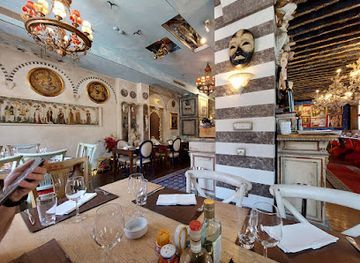
Best restaurants in Rasina
Rasina's dining reflects central Serbian home cooking, agricultural abundance and the wine culture of the Župa valley. Menus commonly include grilled meats, veal or lamb dishes, stuffed vegetables, beans, soups, fresh salads, peppers, kajmak and baked pastry-based foods, alongside seasonal fruit and preserves. Around Aleksandrovac, locally made wine is the defining regional accompaniment, and vineyard areas may offer tastings or rural meals when arranged in advance. Kruševac has the widest range of restaurants, cafés and bakeries, while smaller towns and villages tend towards traditional restaurants, inns and family-run establishments. Trstenik and the West Morava area draw on orchard produce, and market stalls are useful for fruit, vegetables, honey and home-produced specialities. Visitors should distinguish Župa's regional wine identity from Serbia's broader national wine scene, while remembering that menus and cellar experiences vary considerably by season and by producer.
-
Serbian
Tri šešira
Discover authentic Serbian flavors at Tri šešira in Belgrade's historic Skadarlija district—where tradition meets vibrant culture.
-
Serbian
Dva Jelena
Experience authentic Serbian cuisine at Dva Jelena in Belgrade's historic Skadarlija district – where tradition meets flavor.
-
Restaurant
Lorenzo & Kakalamba
Discover the unique culinary experience at Lorenzo & Kakalamba in Belgrade—where tradition meets creativity in every dish.
-
Restaurant
Kalemegdanska terasa
Discover the enchanting flavors of French cuisine at Kalemegdanska terasa while enjoying breathtaking views of Belgrade's rivers.



Best bars in Rasina
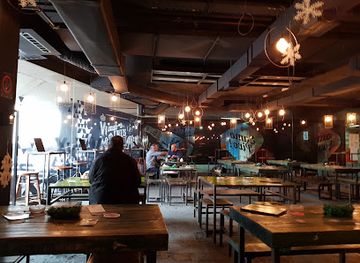
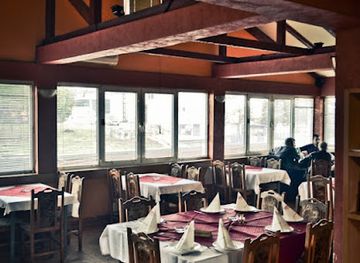
Evening life in Rasina is centred more on cafés, traditional restaurants, pubs and live-music venues than on a large club scene. Kruševac has the broadest choice, with central cafés and bars supporting a sociable evening around the main pedestrian and town-centre areas; younger nightlife may include music venues and late-opening bars, though individual businesses and schedules change. Aleksandrovac's evening character is closely connected with wine culture, especially during local celebrations and harvest events, while Trstenik and Brus offer quieter café and restaurant scenes. In villages and spa areas, evenings usually focus on dining, conversation and outdoor terraces in warmer months rather than late-night entertainment. Visitors should check locally for current opening arrangements and festival programmes instead of assuming that seasonal events or venues operate throughout the year.
-
Pub
Samo Pivo
Discover the vibrant beer culture of Belgrade at Samo Pivo, where craft brews and a lively atmosphere await every visitor.
-
Restaurant
Biblioteka kod Milutina
Experience the rich flavors of Serbia at Biblioteka kod Milutina, a beloved restaurant in Kragujevac serving traditional dishes in a cozy atmosphere.
-
Pub
Gunners Pub
Experience the best of Belgrade’s craft beer scene at Gunners Pub, where vibrant atmosphere and delicious food pair perfectly with local brews.
-
Espresso bar
Đura Cafe Bar
Experience the vibrant atmosphere and exquisite coffee at Đura Cafe Bar, the heart of Belgrade's espresso culture.


Best nightclubs in Rasina
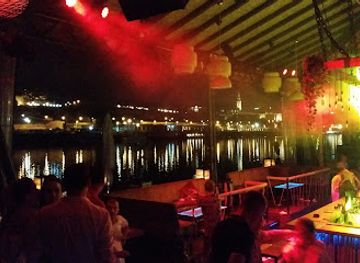
Evening life in Rasina is centred more on cafés, traditional restaurants, pubs and live-music venues than on a large club scene. Kruševac has the broadest choice, with central cafés and bars supporting a sociable evening around the main pedestrian and town-centre areas; younger nightlife may include music venues and late-opening bars, though individual businesses and schedules change. Aleksandrovac's evening character is closely connected with wine culture, especially during local celebrations and harvest events, while Trstenik and Brus offer quieter café and restaurant scenes. In villages and spa areas, evenings usually focus on dining, conversation and outdoor terraces in warmer months rather than late-night entertainment. Visitors should check locally for current opening arrangements and festival programmes instead of assuming that seasonal events or venues operate throughout the year.
-
Night club
Shake'n'Shake
Discover Shake'n'Shake, a vibrant night club in New Belgrade, offering a fusion of Mexican flavors and an electrifying nightlife experience.
-
Night club
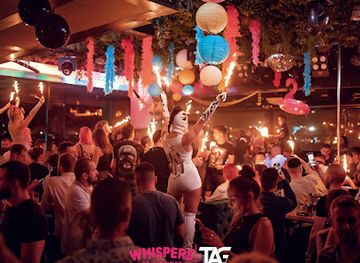
TAG NightClub
Discover the electrifying atmosphere of TAG NightClub in Belgrade, where top DJs, stunning views, and a vibrant crowd create unforgettable nightlife experiences.
-
Night club
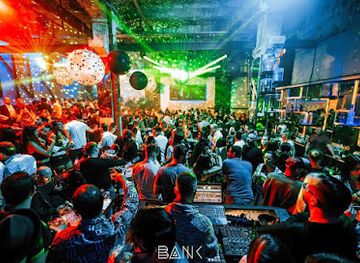
The BANK Club
Discover the pulse of Belgrade's nightlife at The BANK Club, where unforgettable nights blend with great music and vibrant energy.
-
Night club
Hype
Discover the electrifying nightlife at Hype, Belgrade's premier night club offering unforgettable experiences and top DJs.

Best shops in Rasina
Shopping in Rasina is strongest in market towns rather than in large-scale retail destinations. Kruševac has the broadest selection of everyday shops, bakeries, cafés, markets and independent retailers, while Trstenik, Aleksandrovac and Brus serve their surrounding rural communities with smaller high streets and local marketplaces. The most characteristic purchases are regional rather than luxury goods: Župa wines, rakija where legally sold and responsibly consumed, honey, preserves, dried fruit, seasonal produce and other farm products. Wine should be bought from established producers or recognised shops, particularly when carrying it across borders. Local markets are useful for observing everyday food culture and finding fruit from the Morava valley, although market days and stallholders vary. Visitors may also find handmade textiles, pottery, woodwork and religious souvenirs near monasteries, but these are not uniformly available, so it is better to treat them as occasional local crafts rather than guaranteed regional specialities.
-
Shopping mall
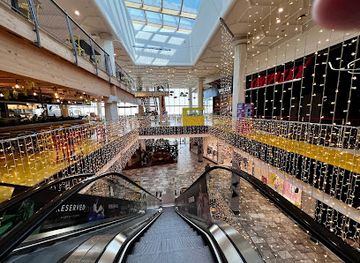
UŠĆE Shopping Center
Discover the ultimate shopping experience at UŠĆE Shopping Center, Belgrade's premier destination for fashion, dining, and entertainment.
-
Shopping mall
Delta City
Explore Delta City, Belgrade's ultimate shopping mall with a variety of stores, dining, and entertainment options for a delightful experience.
-
Shopping mall
BIG FASHION Beograd
Discover BIG FASHION Beograd, the ultimate shopping destination in Belgrade with a mix of local flair and international brands.
-
Shopping mall
Galerija - Beograd
Explore Galerija - Beograd, a vibrant shopping mall in the heart of Belgrade offering fashion, dining, and entertainment for every visitor.



Get your free copy of our complete guide to Rasina, delivered straight to you.
Everything on this page, from attractions and restaurants to essentials and local phrases, in one PDF you can read offline, print or share.
Already have an account? Sign in
Your Rasina guide is ready.
We'll send it to · Not you? Sign out

Getting your guide ready…
We are putting together a fresh copy of the Rasina guide. This can take up to a minute.
This can take a few moments. If your browser asks, choose Allow so the download can start. You'll find the guide in your Downloads folder.
Nothing happened? Download it again
Sorry, the guide is taking longer than usual. Please try again in a minute, or get it by email instead.
Rasina essentials
Currency and Payment
Safety
Emergency Situations
Do's and Don'ts
Local Tips
From Eve
Local phrases worth knowing
You don't need to get them perfect. A few words go a long way, and locals appreciate the effort.
Basics
| English | Local | Say it |
|---|---|---|
| Hello | Zdravo | [Zdra-vo] |
| Goodbye | Doviđenja | [Dovi-đen-ya] |
| Yes | Da | [Da] |
| No | Ne | [Ne] |
| Please/You're welcome | Molim/ Nema na čemu | [Mo-lim/ Ne-ma na che-mu] |
| Thank you | Hvala | [Hva-la] |
| Excuse me/Sorry | Izvinite | [Iz-vi-ni-te] |
| How are you? | Kako si? | [Ka-ko si?] |
| Fine. And you? | Dobro. A ti? | [Do-bro. A ti?] |
| Do you speak English? | Da li govoriš engleski? | [Da li go-vo-rish eng-les-ki?] |
| I don't understand | Ne razumem | [Ne ra-zu-mem] |
Eating & Drinking
| English | Local | Say it |
|---|---|---|
| I'd like to see the menu, please | Želeo bih da vidim meni, molim | [Zhe-le-o bih da vi-dim me-ni, mo-lim] |
| I don't eat meat | Ne jedem meso | [Ne ye-dem me-so] |
| Cheers! | Živeli! | [Zhi-ve-li] |
| I would like to pay, please | Želeo bih da platim, molim | [Zhe-le-o bih da pla-tim, mo-lim] |
Emergencies
| English | Local | Say it |
|---|---|---|
| Help! | Upomoć! | [U-po-moć] |
| Go away! | Ode! | [O-de] |
| Call the Police! | Pozovite policiju! | [Po-zo-vi-te po-li-ci-ju] |
| Call a doctor! | Pozovite doktora! | [Po-zo-vi-te dok-to-ra] |
| I'm lost | Izgubio sam se | [Iz-gu-bi-o sam se] |
| I'm ill | Bolestan sam | [Bo-les-tan sam] |
Shopping
| English | Local | Say it |
|---|---|---|
| I'd like to buy... | Želeo bih da kupim... | [Zhe-le-o bih da ku-pim] |
| I'm just looking | Samo gledam | [Sa-mo gled-am] |
| How much is it? | Koliko košta? | [Ko-li-ko koshta?] |
| That's too expensive | To je preskupo | [To ye pre-sku-po] |
| Can you lower the price? | Možeš li spustiti cenu? | [Mo-zheš li spu-sti-ti tse-nu?] |
Time & Numbers
| English | Local | Say it |
|---|---|---|
| What time is it? | Koliko je sati? | [Ko-li-ko ye sa-ti?] |
| It's one o'clock | Jedan je sat | [Je-dan ye sat] |
| Half past (10) | Polovinu (10) | [Po-lo-vi-nu (10)] |
| Morning | Jutro | [Yu-tro] |
| Afternoon | Posle podne | [Pos-le pod-ne] |
| Evening | Veče | [Ve-che] |
| Yesterday | Juče | [Yu-che] |
| Today | Danas | [Da-nas] |
| Tomorrow | Sutra | [Su-tra] |
| 1 | Jedan | [Je-dan] |
| 2 | Dva | [Dva] |
| 3 | Tri | [Tri] |
| 4 | Četiri | [Che-ti-ri] |
| 5 | Pet | [Pet] |
| 6 | Šest | [Shest] |
| 7 | Sedam | [Se-dam] |
| 8 | Osam | [O-sam] |
| 9 | Devet | [De-vet] |
| 10 | Deset | [De-set] |
Transport & Directions
| English | Local | Say it |
|---|---|---|
| Where's a/the...? | Gde je...? | [Gde ye...?] |
| What's the address? | Koja je adresa? | [Ko-ya ye a-dre-sa?] |
| Can you show me (on the map)? | Možeš li mi pokazati (na mapi)? | [Mo-zheš li mi po-ka-za-ti (na ma-pi)?] |
| When's the next (bus)? | Kada je sledeći (autobus)? | [Ka-da ye sle-de-ći (au-to-bus)?] |
| A ticket (to ....) | Karta (do ....) | [Kar-ta (do ....)] |
History of Rasina
Prehistoric Settlement and the Morava Corridor
The valleys of the West Morava, South Morava and Rasina rivers have long provided routes for settlement, farming and movement through central Serbia. Archaeological evidence from the wider Morava zone records prehistoric agricultural communities, while later populations benefited from fertile soils and access to water. The precise remains visible to visitors vary across the district, but the landscape itself explains Rasina's historical importance: its river valleys connect the interior of the Balkans with routes leading towards the central Serbian uplands. Agriculture, orchard cultivation and settlement patterns continue to reflect this geography.
Roman Roads and Late Antique Influence
Rasina lay within the Roman province of Moesia Superior and later formed part of the networks that linked Roman settlements, military positions and administrative centres across the central Balkans. The principal modern towns do not preserve a single monumental Roman centre comparable with Serbia's most celebrated archaeological sites, yet roads and river corridors through the district were historically significant. Roman and late antique influence introduced new administrative, commercial and religious connections, leaving archaeological traces in the broader Morava region and helping establish movement patterns that remained important in the medieval period.
Kruševac and the State of Prince Lazar
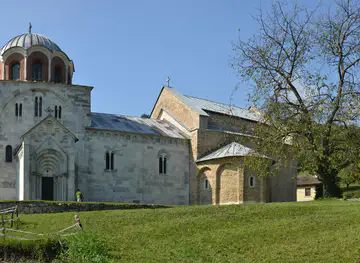
Kruševac was founded in the late fourteenth century by Prince Lazar Hrebeljanović and became the political centre of his principality. The fortified settlement, commonly known as Lazar's City, included the court complex and the Lazarica Church, built as a dynastic and religious foundation. Its location near major river routes made it a practical seat of power in Morava Serbia. The surviving church, archaeological remains and urban memory of the medieval capital form the core of Rasina's historical identity.
The Morava Serbia Tradition and the Battle of Kosovo
The court of Prince Lazar was part of the cultural and political world known as Morava Serbia, noted for the construction of churches and monasteries in the late fourteenth and early fifteenth centuries. Lazar's death at the Battle of Kosovo in 1389 transformed both the political history and the cultural memory of the region. Kruševac lost its role as the principal Serbian capital after the Ottoman advance, but its association with Lazar remained powerful. Nearby monasteries and surviving architectural forms preserve the religious and artistic legacy of this period.
Ottoman Rule and Borderland Change
After the expansion of the Ottoman Empire into central Serbia, Rasina became part of a frontier landscape whose towns, villages and routes were shaped by changing military and administrative conditions. Settlements experienced periods of disruption as well as continuity, while monasteries remained important religious institutions. The Morava valleys continued to carry traffic between larger centres, although political control and population patterns changed repeatedly. Ottoman rule forms an essential part of the district's history, even where later Serbian buildings and modern town plans have obscured earlier layers.
Nineteenth-Century Serbian Renewal
The Serbian uprisings and the gradual restoration of Serbian autonomy in the nineteenth century brought major political and social change to Rasina. Kruševac and surrounding market towns developed new administrative, commercial and civic functions, while roads, schools and public institutions expanded. Trstenik grew as an important local centre in the West Morava valley, and agriculture remained fundamental to household economies. The period also strengthened the cultural importance of Orthodox churches, national historical memory and local trade networks that still influence the district's townscape.
Wine, Orchards and Spa Development
Modern Rasina was shaped not only by political history but also by specialised rural economies. The Župa valley around Aleksandrovac became strongly associated with vineyards and wine production, while fruit-growing developed across the fertile valleys and foothills. Spa development at Ribarska Banja and other mineral-water locations introduced a health and leisure economy, attracting visitors from Serbia and neighbouring regions. In the twentieth century, improved roads, agricultural cooperatives and changing industry altered rural life, but vineyards, orchards and spa traditions remain visible elements of the regional economy.
Rasina in Photos
Browse through our photo collection highlighting the charm and character of the destination.
Neighbouring regions of Rasina
The closest regions to Rasina, if you have time for more than one.
-

-

-

-
-


Swipe for more regions
Explore more

Explore more of Serbia
Discover Serbia: A Balkan treasure with rich history, stunning natural landscapes, and vibrant cities waiting to be explored.
Explore Serbia