

Free Raška Travel Guide & Mobile App
Explore Raška with free travel guides. Discover regional history, expert tips, proposed trips, and audio guides on web or mobile app.


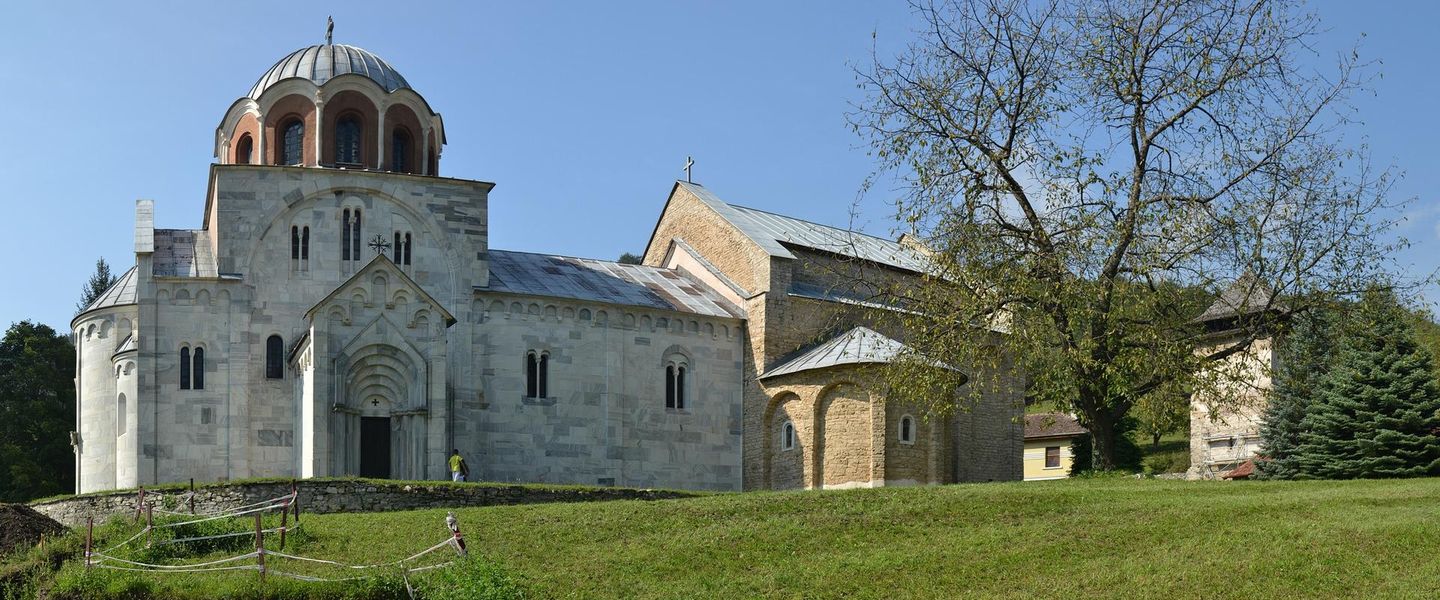


Explore Raška’s medieval monasteries, Novi Pazar’s Ottoman heritage, Ibar Valley landscapes, mountain resorts and Serbian spa traditions.
Read more about Raška
When is the best time to visit Raška?
Best: June–August · 24–27°C| Month | High (°C) | Rainfall (mm) |
|---|---|---|
| January | 4 | 45 |
| February | 6 | 40 |
| March | 11 | 50 |
| April | 16 | 60 |
| May | 21 | 70 |
| June (best) | 24 | 65 |
| July (best) | 27 | 55 |
| August (best) | 26 | 55 |
| September | 22 | 50 |
| October | 16 | 50 |
| November | 11 | 60 |
| December | 6 | 55 |
Getting to and around Raška
How to get there
Transportation
Top city travel guides in Raška
The cities of Raška, and the easiest places to base yourself.

Swipe for more cities
Best attractions in Raška
Raška’s attractions are concentrated in three contrasting landscapes: the Ibar valley, the historic surroundings of Novi Pazar and the mountain and spa districts. The valley contains a remarkable sequence of medieval foundations, including Žiča, Studenica and the fortress of Maglič, while the countryside around Kraljevo offers wooded hills and river scenery. Near Novi Pazar, Stari Ras, Sopoćani and Đurđevi Stupovi reveal the political and artistic importance of the medieval Serbian state, complemented by the city’s Ottoman bazaar, mosques and museums. Kopaonik provides skiing, hiking, cycling and highland scenery from the Raška side, while Vrnjačka Banja and Jošanička Banja focus on thermal waters, parks and wellness traditions. Rural parts of Tutin and the wider uplands are better suited to scenic drives and walking than to dense sightseeing. Visitors should expect a mixture of active religious sites, archaeological remains, mountain recreation and spa tourism rather than a single themed attraction circuit.
-
Zoo
Belgrade Zoo
Discover the enchanting Belgrade Zoo in Kalemegdan Park, where wildlife meets history in the heart of Serbia's vibrant capital.
-
Monastery
Studenica Monastery
Explore the magnificent Studenica Monastery, a UNESCO World Heritage site, where history, art, and spirituality unite in the heart of Serbia.
-
Monastery
Monastery Gradac
Discover the tranquility and historical charm of Monastery Gradac, a serene gem in Serbia's spiritual landscape.
-
Ski resort
Ski Center Kopaonik
Experience the thrill of winter sports at Ski Center Kopaonik, Serbia's premier ski resort with stunning slopes and vibrant après-ski culture.



Best landmarks in Raška
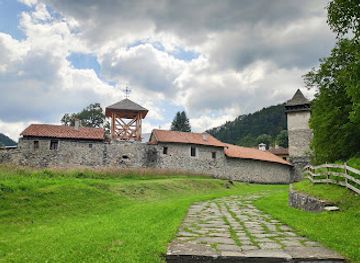
The most important landmarks in Raška are closely tied to medieval state formation and the region’s layered religious history. Studenica Monastery, with its pale marble churches and celebrated medieval frescoes, is among Serbia’s principal monuments and a UNESCO World Heritage Site. Žiča Monastery near Kraljevo is recognisable for its red-painted church and association with royal coronations. High above the Ibar gorge, Maglič Fortress occupies a dramatic defensive position and remains one of the region’s most memorable silhouettes. Around Novi Pazar, the archaeological remains of Stari Ras mark the early political centre that gave Raška its name, while Sopoćani Monastery is distinguished by the quality of its thirteenth-century frescoes. Đurđevi Stupovi, set on a hill above the city, adds a powerful architectural presence to the medieval landscape. In the urban sphere, Novi Pazar’s old bazaar, mosques and traditional commercial streets express the endurance of Ottoman-era town planning and the region’s multi-confessional heritage.
-
National park
Kopaonik National Park
Explore the stunning landscapes and diverse wildlife of Kopaonik National Park, Serbia's premier destination for nature lovers and adventure seekers.
-
Tourist attraction
Resavska Cave
Discover the stunning beauty of Resavska Cave, a natural wonder in Serbia filled with breathtaking formations and rich geological history.
-
Restaurant
Ethno house Cakmara
Explore the cultural essence of Serbia at Ethno House Cakmara, where authentic cuisine meets warm hospitality in Raška.
-
Monastery
Monastery Gradac
Discover the tranquil beauty and historical richness of Monastery Gradac, a medieval gem nestled in the heart of Serbia's picturesque landscapes.


Explore Raška on the map
Plan your trip on one map. See where the top cities, national parks and sights are, and book hotels and experiences in a few clicks.
Best hotels in Raška
Best restaurants in Raška
Dining in Raška reflects the region’s position between central Serbia, the Ottoman-influenced south-west and the mountain interior. Novi Pazar is especially known for ćevapi, grilled meats and mantije, small baked pastries traditionally filled with meat; bakeries and casual grill restaurants are central to the city’s food culture. Across the region, menus commonly include soups, roasted or grilled meat, beans, peppers, kajmak, fresh cheeses, seasonal salads and homemade breads. Mountain districts contribute dairy products, lamb and preserved foods, while fruit-growing areas supply plums, apples, raspberries and traditional preserves. Vrnjačka Banja has cafés, restaurants and hotel dining aimed at spa visitors, whereas village inns and roadside establishments offer simpler regional meals. Farmers’ markets are useful for seasonal produce, honey and dairy goods, though selection varies by town and day. Serbian coffee remains an important part of everyday hospitality, and local wines, fruit brandies and non-alcoholic juices may accompany meals.
-
Restaurant
Ethno house Cakmara
Discover the heart of Serbian cuisine at Ethno House Cakmara—where tradition meets hospitality in Raška.
-
Restaurant
La Toscana
Experience authentic Italian cuisine at La Toscana in Raška – where every dish tells a story.
-
Cafe
Ramona
Discover the charm of Ramona Cafe in Raška - where delicious breakfasts meet cozy vibes for every traveler.
-
Restaurant
Vavilon Caffe & Restaurant
Experience authentic Serbian cuisine at Vavilon Caffe & Restaurant in Raška - a culinary gem offering diverse flavors and delightful ambiance.


Best bars in Raška
Evening life varies sharply across Raška. Novi Pazar has the broadest urban choice, with cafés, pastry shops, restaurants and late-opening social venues concentrated around the centre; its nightlife is shaped more by conversation, food and coffee than by a large club scene. Kraljevo offers an established café and bar culture, while Vrnjačka Banja adds hotel lounges, promenade cafés and seasonal entertainment connected with spa tourism. In Kopaonik, après-ski venues and hotel bars become more active during the winter season, although opening patterns change outside peak periods. Smaller towns and rural districts generally rely on traditional cafés, restaurants and occasional live music rather than dedicated nightclubs. Visitors should be aware that social customs and alcohol consumption differ among communities, and Novi Pazar has a significant Muslim population, so dining and evening culture should not be reduced to a single Serbian stereotype.
-
Restaurant
Ethno house Cakmara
Experience authentic Serbian cuisine and warm hospitality at Ethno House Cakmara, a perfect blend of restaurant and motel in Raška.
-
Restaurant
La Toscana
Discover the exquisite flavors of Serbia at La Toscana, a culinary haven in Raška offering traditional and modern dining experiences.
-
Cafe
Ramona
Explore the cozy charm of Ramona Café in Raška, a perfect spot for breakfast and delightful coffee experiences.
-
Restaurant
Vavilon Caffe & Restaurant
Discover the culinary delights of Vavilon Caffe & Restaurant in Raška, where local flavors meet international cuisine in a warm, inviting atmosphere.


Best nightclubs in Raška
Evening life varies sharply across Raška. Novi Pazar has the broadest urban choice, with cafés, pastry shops, restaurants and late-opening social venues concentrated around the centre; its nightlife is shaped more by conversation, food and coffee than by a large club scene. Kraljevo offers an established café and bar culture, while Vrnjačka Banja adds hotel lounges, promenade cafés and seasonal entertainment connected with spa tourism. In Kopaonik, après-ski venues and hotel bars become more active during the winter season, although opening patterns change outside peak periods. Smaller towns and rural districts generally rely on traditional cafés, restaurants and occasional live music rather than dedicated nightclubs. Visitors should be aware that social customs and alcohol consumption differ among communities, and Novi Pazar has a significant Muslim population, so dining and evening culture should not be reduced to a single Serbian stereotype.
-
Hotel
Hotel Club A
Discover the charm of Kopaonik with a stay at Hotel Club A, where modern comfort meets breathtaking natural beauty.
-
Night club
Diskoteka Arena Raška
Discover the electrifying nightlife and vibrant atmosphere at Diskoteka Arena Raška, the ultimate night club and cafe in Raška.
-
Lounge
HookahPlace Kraljevo
Discover tranquility at HookahPlace Kraljevo, the premier lounge for hookah enthusiasts seeking a cozy and vibrant atmosphere.
-
Bed & breakfast
Rivera club
Discover the charm of Rivera Club, a cozy bed and breakfast in Raška, offering warm hospitality and delicious breakfasts to enhance your travel experience.


Best shops in Raška
Shopping in Raška is strongest in Novi Pazar, a long-established commercial centre known for clothing, footwear, textiles and a busy market-oriented retail culture. The central area combines modern shops with older streets, small food businesses and traditional bakeries. Kraljevo and Vrnjačka Banja provide more conventional high-street shopping, alongside cafés, pharmacies, practical travel supplies and seasonal visitor goods. Spa visitors can look for honey, herbal products, fruit preserves and locally made food items, while rural markets offer cheese, kajmak, honey and seasonal produce when available. Around monasteries and heritage sites, respectful souvenirs may include religious items, books and locally produced food rather than mass-market memorabilia. Kopaonik’s retail offer is geared largely towards outdoor equipment, ski clothing and resort needs. Prices, market days and individual traders vary, so cash in Serbian dinars remains useful, particularly outside the principal town centres.
-
General store
AS Produkt d.o.o
Explore Raška's charm at AS Produkt d.o.o, your go-to general store for local goods and everyday essentials.
-
Supermarket
IDEA Raška
Explore the best of local and international products at IDEA Raška, the supermarket that caters to every traveler's needs in Raška, Serbia.
-
Supermarket
Maxi Raška
Discover the best of Raška at Maxi Raška, your go-to supermarket for local delicacies and everyday essentials in a vibrant shopping atmosphere.
-
 Supermarket
Raffaelo supermarket
Experience the essence of Serbian culture at Raffaelo Supermarket in Supnje, where local flavors and fresh produce await every traveler.


Get your free copy of our complete guide to Raška, delivered straight to you.
Everything on this page, from attractions and restaurants to essentials and local phrases, in one PDF you can read offline, print or share.
Already have an account? Sign in
Your Raška guide is ready.
We'll send it to · Not you? Sign out

Getting your guide ready…
We are putting together a fresh copy of the Raška guide. This can take up to a minute.
This can take a few moments. If your browser asks, choose Allow so the download can start. You'll find the guide in your Downloads folder.
Nothing happened? Download it again
Sorry, the guide is taking longer than usual. Please try again in a minute, or get it by email instead.
Raška essentials
Currency and Payment
Safety
Emergency Situations
Do's and Don'ts
Local Tips
From Eve
Local phrases worth knowing
You don't need to get them perfect. A few words go a long way, and locals appreciate the effort.
Basics
| English | Local | Say it |
|---|---|---|
| Hello | Zdravo | [Zdra-vo] |
| Goodbye | Doviđenja | [Do-vi-đen-ya] |
| Yes | Da | [Da] |
| No | Ne | [Ne] |
| Please/You're welcome | Molim | [Mo-lim] |
| Thank you | Hvala | [Hva-la] |
| Excuse me/Sorry | Izvinite | [Iz-vi-ni-te] |
| How are you? | Kako ste? | [Ka-ko ste] |
| Fine. And you? | Dobro. A vi? | [Do-bro. A vi] |
| Do you speak English? | Govoriš li engleski? | [Go-vo-rish li en-gles-ki] |
| I don't understand | Ne razumem | [Ne ra-zu-mem] |
Eating & Drinking
| English | Local | Say it |
|---|---|---|
| I'd like to see the menu, please | Hteo bih da vidim meni, molim | [H-te-o bih da vi-dim me-ni, mo-lim] |
| I don't eat meat | Ne jedem meso | [Ne ye-dem me-so] |
| Cheers! | Živeli! | [Zhi-ve-li] |
| I would like to pay, please | Hteo bih da platim, molim | [H-te-o bih da pla-tim, mo-lim] |
Emergencies
| English | Local | Say it |
|---|---|---|
| Help! | Pomoć! | [Po-moć] |
| Go away! | Odlazi! | [Od-la-zi] |
| Call the Police! | Pozovite policiju! | [Po-zo-vi-te po-li-ci-ju] |
| Call a doctor! | Pozovite doktora! | [Po-zo-vi-te dok-to-ra] |
| I'm lost | Izgubio sam se | [Iz-gu-bi-o sam se] |
| I'm ill | Bolestan sam | [Bo-les-tan sam] |
Shopping
| English | Local | Say it |
|---|---|---|
| I'd like to buy... | Hteo bih da kupim... | [H-te-o bih da ku-pim] |
| I'm just looking | Samo gledam | [Sa-mo gle-dam] |
| How much is it? | Koliko košta? | [Ko-li-ko koshta] |
| That's too expensive | To je preskupo | [To ye pre-sku-po] |
| Can you lower the price? | Možete li sniziti cenu? | [Mo-zhe-te li sni-zi-ti tse-nu] |
Time & Numbers
| English | Local | Say it |
|---|---|---|
| What time is it? | Koliko je sati? | [Ko-li-ko ye sa-ti] |
| It's one o'clock | Jedan je sat | [Je-dan ye sat] |
| Half past (10) | Pola (10) | [Po-la (10)] |
| Morning | Jutro | [Yu-tro] |
| Afternoon | Popodne | [Po-pod-ne] |
| Evening | Veče | [Ve-che] |
| Yesterday | Juče | [Yu-che] |
| Today | Danas | [Da-nas] |
| Tomorrow | Sutra | [Su-tra] |
| 1 | Jedan | [Je-dan] |
| 2 | Dva | [Dva] |
| 3 | Tri | [Tri] |
| 4 | Četiri | [Che-ti-ri] |
| 5 | Pet | [Pet] |
| 6 | Šest | [Shest] |
| 7 | Sedam | [Se-dam] |
| 8 | Osam | [O-sam] |
| 9 | Devet | [De-vet] |
| 10 | Deset | [De-set] |
Transport & Directions
| English | Local | Say it |
|---|---|---|
| Where's a/the...? | Gde je...? | [Gde ye...] |
| What's the address? | Koja je adresa? | [Ko-ya ye a-dre-sa] |
| Can you show me (on the map)? | Možeš li mi pokazati (na mapi)? | [Mo-zheš li mi po-ka-za-ti (na ma-pi)] |
| When's the next (bus)? | Kada je sledeći (autobus)? | [Ka-da ye sle-de-ći (au-to-bus)] |
| A ticket (to ....) | Jedna karta (do ...) | [Jed-na kar-ta (do ...)] |
History of Raška
Prehistoric and Roman Settlements
The valleys and uplands of modern Raška have been occupied since prehistory, with routes through the Ibar and Raška valleys connecting the interior Balkans. Roman administration brought roads, settlements and military organisation to the wider area, although the most visible monuments today belong to later periods. The region’s geography made it a corridor between central Balkan territories and the Adriatic hinterland, while mineral resources, agriculture and pastoralism supported scattered communities. The survival of old route lines in the valleys helps explain why later medieval capitals, monasteries and trading centres developed in the same broad zone.
Ras and the Rise of Medieval Serbia
The medieval settlement and fortified centre of Ras, near present-day Novi Pazar, gave its name to Raška and became associated with the early Serbian state. During the twelfth and thirteenth centuries, the area around Ras served as a political and ecclesiastical centre under the Nemanjić dynasty. The nearby churches and monasteries express the dynasty’s ambition to establish both an independent political order and a distinctive Serbian Orthodox cultural tradition. The archaeological remains of Stari Ras, together with Sopoćani and Đurđevi Stupovi, form a UNESCO World Heritage ensemble.
Nemanjić Monasteries and Royal Foundations
The thirteenth century was a formative period for Raška. Stefan Nemanja and his successors endowed monasteries that functioned as churches, burial places, centres of learning and statements of dynastic authority. Studenica, founded by Stefan Nemanja in the late twelfth century, became one of the most influential spiritual and artistic centres of medieval Serbia. Žiča, founded in the Ibar area by Stefan the First-Crowned and Saint Sava, was closely connected with royal coronations and the development of the Serbian church. Their frescoes, stone carving and surviving landscapes remain central to the region’s identity.
Ottoman Rule and the Development of Novi Pazar
The Ottoman conquest transformed the political and commercial geography of the region. Novi Pazar developed as an important market town on routes linking Bosnia, Kosovo and the interior of the Balkans, with mosques, inns, workshops and a bazaar shaping its urban character. Ottoman influence remains visible in the city’s street pattern, religious buildings, food traditions and commercial culture. The period also left a layered population history in which Orthodox Christian and Muslim communities lived in connected but distinct neighbourhoods and maintained different religious institutions.
Nineteenth-Century Change and the Serbian State
During the nineteenth century, the area experienced shifting borders, uprisings, diplomatic contests and the gradual expansion of the modern Serbian state. The Congress of Berlin in 1878 recognised Serbia’s independence and altered political control in parts of the wider Raška area, while Novi Pazar and surrounding districts remained within the Ottoman sphere for a further period. New administrative systems, roads and commercial links gradually changed older patterns of travel and trade. The region’s mixed religious and cultural character continued, particularly around Novi Pazar and the Sandžak area.
War, Borders and Twentieth-Century Transformation
The Balkan Wars and the First World War brought military disruption and political reorganisation, followed by the creation of the Kingdom of Serbs, Croats and Slovenes in 1918. During the twentieth century, industrialisation, improved roads and state investment strengthened towns such as Kraljevo and Novi Pazar, while rural communities experienced migration and economic change. The Second World War and the later Yugoslav period left complex memories across the region. After the breakup of Yugoslavia, Novi Pazar and the wider Sandžak area remained important centres of Bosniak cultural and political life within Serbia.
Spa Tourism and Mountain Resorts
Thermal springs have supported settlement and healing traditions in Vrnjačka Banja and Jošanička Banja for generations, but organised spa tourism expanded particularly during the nineteenth and twentieth centuries. Parks, villas, promenades and hotel architecture turned Vrnjačka Banja into one of Serbia’s best-known spa resorts. Later development on Kopaonik created a major winter-sports centre and broadened the region’s tourism economy. Today, heritage monasteries, spa visits and mountain recreation form three complementary strands of Raška’s visitor identity.
Raška in Photos
Browse through our photo collection highlighting the charm and character of the destination.
Neighbouring regions of Raška
The closest regions to Raška, if you have time for more than one.
-

-

-

-

-


Swipe for more regions
Explore more

Explore more of Serbia
Discover Serbia: A Balkan treasure with rich history, stunning natural landscapes, and vibrant cities waiting to be explored.
Explore Serbia