

Cupecoy Beach Travel Guide - Free Web & App
Your ultimate guide to Cupecoy Beach. Discover top landmarks, proposed trips, and local tips. Free on the web or via the Evendo companion app.


Cupecoy Beach in Sint Maarten offers limestone coves, Caribbean sunsets, swimming, coastal walks, nearby dining and access to the island’s Lowlands.
Cliffs, Coves and Caribbean Light
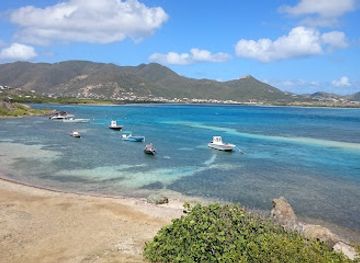
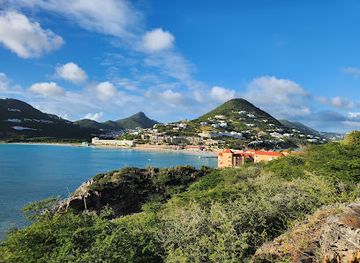
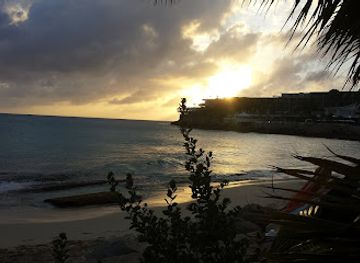
Cupecoy Beach occupies a short, distinctive stretch of Sint Maarten’s southwestern coastline, where pale limestone cliffs frame a series of small sandy coves. Rather than one continuous strand, Cupecoy is a collection of beach pockets shaped by the island’s rugged geology and the movement of the sea. At lower tide, visitors can explore more of the shoreline; at higher tide, some sections may become narrow or inaccessible. The setting is particularly atmospheric in the late afternoon, when the west-facing coast catches the changing light and sunsets over the Caribbean Sea.Read more about Cupecoy Beach
A Coastal Base Near the Lowlands
Swimming, Sunsets and Local Etiquette
When is the best time to visit Cupecoy Beach?
Best: June–August · 31°C| Month | High (°C) | Rainfall (mm) |
|---|---|---|
| January | 29 | 70 |
| February | 29 | 60 |
| March | 30 | 60 |
| April | 30 | 50 |
| May | 31 | 40 |
| June (best) | 31 | 30 |
| July (best) | 31 | 30 |
| August (best) | 31 | 30 |
| September | 31 | 40 |
| October | 31 | 50 |
| November | 31 | 60 |
| December | 30 | 70 |
Getting to and around Cupecoy Beach
How to get there
Transportation
Best attractions in Cupecoy Beach
Cupecoy Beach’s principal attraction is its cluster of small coves beneath pale limestone cliffs, where visitors can sunbathe, photograph the coast and swim when tides and surf permit. The appearance of the shoreline changes noticeably through the day, with lower water revealing more rock shelves and higher water reducing the available sand. The west-facing position makes the beach a popular place for sunset views across the Caribbean Sea. Nearby Porto Cupecoy provides a marina-side setting, restaurants and accommodation, while Maho is known for its airport surroundings and lively visitor atmosphere; both are nearby areas rather than parts of the beach itself. The wider Lowlands also place visitors close to the Dutch-French border and the beaches of the island’s southwestern coast. Cupecoy is most rewarding for its coastal character and location within Sint Maarten’s tourism corridor, not for a large collection of museums, monuments or formal visitor facilities.
-
Caribbean
Da Waterhole
Experience the vibrant flavors of the Caribbean at Da Waterhole, a bar and grill on Mullet Bay Beach known for its lively atmosphere and delicious cuisine.
-
Beach pavillion
Chez Raymond
Experience the tranquil beauty of Sandy Ground at Chez Raymond, a charming beach pavilion offering delicious local cuisine and stunning ocean views.
-
Tourist attraction
Sea Trek Helmet Diving
Experience the vibrant underwater world of Sint Maarten with Sea Trek Helmet Diving, perfect for adventurers of all ages seeking unforgettable marine encounters.
-
Historical place
Historical Site The Old House
Explore The Old House in St. Martin, a historical treasure that showcases the island's rich heritage and stunning architecture.
Best landmarks in Cupecoy Beach
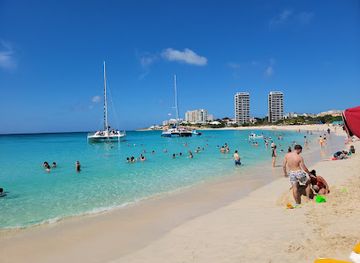
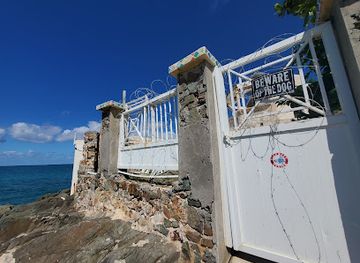
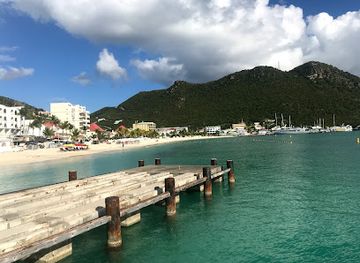
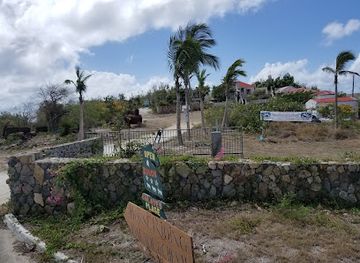
Cupecoy’s defining landmark is its limestone shoreline, where low coastal cliffs and wave-carved coves create a recognisable natural edge on southwestern Sint Maarten. The rock formations are more significant as expressions of the island’s coastal geology than as monumental structures, and their exposed surfaces demonstrate how tides and surf continually reshape the beach. The west-facing coast is also a valued sunset landmark, with open views across the Caribbean Sea. Porto Cupecoy’s marina and waterfront development form the principal built feature immediately nearby, while the Dutch-French border gives the surrounding Lowlands an important cultural and geographical context. Major landmarks elsewhere in Sint Maarten, including Maho Beach and the island’s historic forts, should be treated as separate nearby attractions rather than being described as part of Cupecoy Beach itself.
-
Scenic spot
Rotary Lookout Point
Discover the breathtaking vistas and tranquil atmosphere at Rotary Lookout Point, a scenic gem in the heart of St. Martin.
-
Historical place
Fort Amsterdam
Discover the rich history and stunning views at Fort Amsterdam, a must-visit landmark in Sint Maarten, where the past meets the present.
-
Bar
Dany's at Cupecoy Beach Bar
Experience the vibrant atmosphere and stunning views at Dany's at Cupecoy Beach Bar, a must-visit for travelers in Sint Maarten.
-
Plaza
Cyrus Wathey Square
Experience the vibrant culture of Philipsburg at Cyrus Wathey Square, a lively plaza filled with shops, eateries, and Caribbean charm.

Explore Cupecoy Beach on the map
Plan your trip on one map. See where the top attractions, landmarks, restaurants and hotels are, and book hotels and experiences in a few clicks.
Best hotels in Cupecoy Beach
Best restaurants in Cupecoy Beach
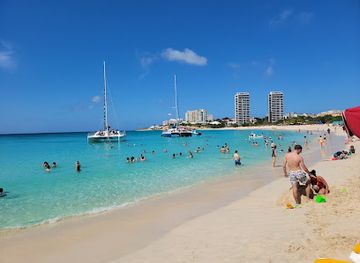
Cupecoy Beach itself has limited on-shore dining infrastructure, so most visitors eat in the surrounding Lowlands, especially at Porto Cupecoy and along the roads towards Maho and Simpson Bay. These nearby areas offer the island’s broad mixture of Caribbean, European and international cooking, reflecting Sint Maarten’s Dutch, French and regional connections. Seafood, grilled dishes, tropical fruit, pastries and Dutch or French-influenced specialities can all be found across the wider island, although menus and availability vary between establishments. Porto Cupecoy is particularly convenient for a meal or drink close to the beach, while Maho and Simpson Bay provide a larger concentration of restaurants for visitors staying nearby. Those spending longer at Cupecoy should bring water and avoid assuming that food, takeaway services or refreshments will be available directly beside every cove.
-
Caribbean
Da Waterhole
Experience authentic Caribbean cuisine at Da Waterhole – where stunning views meet vibrant flavors in Sint Maarten's tropical paradise.
-
Mexican
3 Amigos
Experience authentic Mexican cuisine at 3 Amigos in Sint Maarten – where delicious food meets vibrant nightlife.
-
American
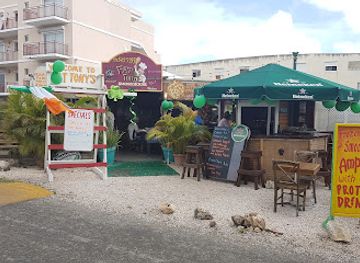
Fat Tony's
Experience the vibrant flavors of America at Fat Tony's in Cupecoy, Sint Maarten – where every meal feels like a celebration.
-
French
Le moulin fou sxm
Experience authentic French cuisine at Le Moulin Fou in Sint Maarten's lively Maho Plaza – a culinary haven blending local flavors with French flair.

Best bars in Cupecoy Beach
Cupecoy Beach is not a nightlife district, and the coves become quiet after dark rather than turning into a dedicated evening entertainment zone. The most convenient nearby evening options are in Porto Cupecoy and the wider Lowlands, where restaurants and hospitality venues provide a more relaxed setting for drinks and dinner. Maho, a short drive away, has a more concentrated tourism and entertainment scene, while Simpson Bay offers further bars, restaurants and evening venues along the developed coast. Visitors should arrange transport carefully after sunset, as informal beach approaches are unsuitable for navigating in darkness and Cupecoy itself has limited late-night infrastructure. Evening atmosphere is therefore shaped more by nearby dining, accommodation and the sunset over the western sea than by clubs directly on the beach.
-
Grill
Buccaneer Beach Bar
Experience the vibrant island life at Buccaneer Beach Bar with delicious grilled cuisine, refreshing drinks, and stunning beach views in Sint Maarten.
-
Caribbean
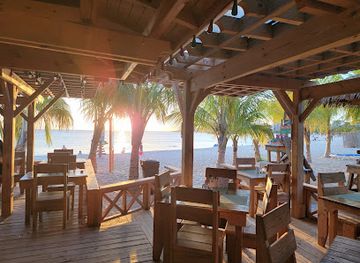
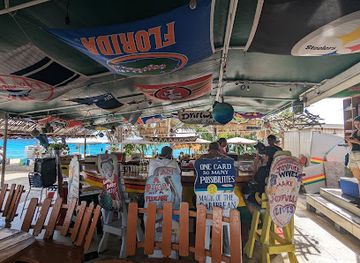
Da Waterhole
Experience the vibrant flavors and stunning sunsets at Da Waterhole, a Caribbean bar and grill on Mullet Bay Beach, Sint Maarten.
-
Bar
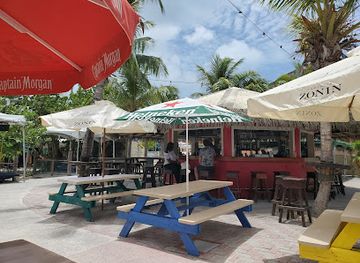
Driftwood Boat Bar
Experience the Caribbean charm at Driftwood Boat Bar in Simpson Bay, where refreshing drinks and stunning ocean views await you.
-
Restaurant
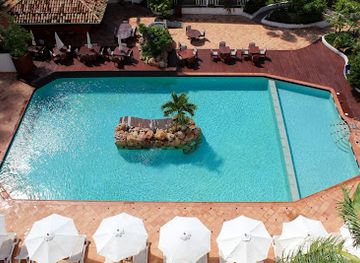
Sapphire Beach Club Resort
Experience the beauty and relaxation of Sapphire Beach Club Resort, a tropical haven in Sint Maarten featuring luxurious amenities and stunning ocean views.
Best nightclubs in Cupecoy Beach
Cupecoy Beach is not a nightlife district, and the coves become quiet after dark rather than turning into a dedicated evening entertainment zone. The most convenient nearby evening options are in Porto Cupecoy and the wider Lowlands, where restaurants and hospitality venues provide a more relaxed setting for drinks and dinner. Maho, a short drive away, has a more concentrated tourism and entertainment scene, while Simpson Bay offers further bars, restaurants and evening venues along the developed coast. Visitors should arrange transport carefully after sunset, as informal beach approaches are unsuitable for navigating in darkness and Cupecoy itself has limited late-night infrastructure. Evening atmosphere is therefore shaped more by nearby dining, accommodation and the sunset over the western sea than by clubs directly on the beach.
-
Bar
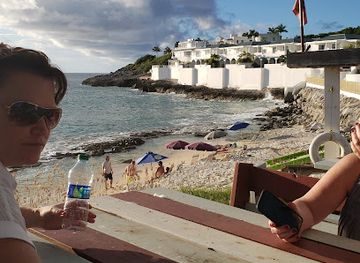
Dany's at Cupecoy Beach Bar
Experience the Caribbean charm at Dany's at Cupecoy Beach Bar, where refreshing drinks and stunning ocean views create unforgettable moments.
-
Bar
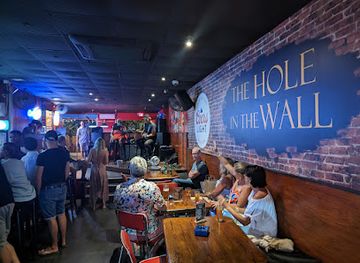
The Hole in the Wall
Discover vibrant nightlife at The Hole in the Wall, a top bar in Sint Maarten offering local drinks, live music, and a welcoming atmosphere.
-
Cocktail bar
Ratafia
Experience the vibrant nightlife of Sint Maarten at Ratafia, where innovative cocktails and stunning views come together for an unforgettable evening.
-
 Lodging
Cupecoy Beach Club
Experience the ultimate beach getaway at Cupecoy Beach Club, where luxury meets the serene beauty of Sint Maarten's coastline.
Best shops in Cupecoy Beach
Cupecoy Beach has no extensive shopping district, and visitors should use nearby Porto Cupecoy, Maho, Simpson Bay or larger island settlements for provisions and retail browsing. Shopping in the surrounding tourism corridor ranges from practical groceries and beach essentials to souvenirs, clothing, jewellery, art and locally produced food, although the exact selection depends on the individual commercial area. Sint Maarten’s position between Dutch, French and Caribbean cultures is reflected in the island’s imported goods, food products and craft-oriented souvenirs. Small beach visits are easier when water, sun protection and other essentials are purchased before arrival, as the coves themselves are not a dependable place to find shops or vendors. For broader retail choice, the island’s established resort and town centres are more suitable than the immediate beach frontage.
-
Jewelry store
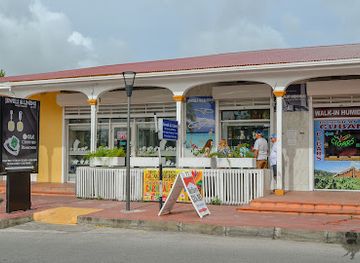
Jewels & Beyond
Explore luxury and local treasures at Jewels & Beyond, your ultimate shopping destination in Sint Maarten, from exquisite jewelry to unique souvenirs.
-
Jewelry store
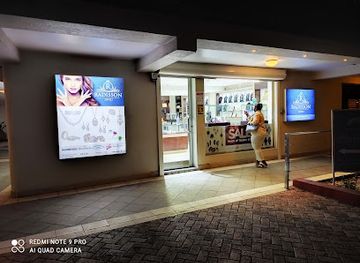
Radisson Jewels
Explore Radisson Jewels in Sint Maarten for exquisite jewelry and luxury watches, perfect for unique gifts and souvenirs.
-
Cigar shop
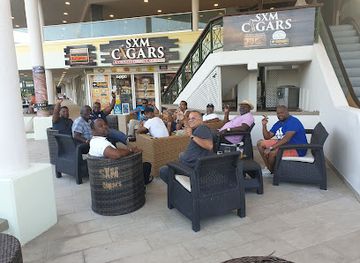
SXM CIGARS
Discover the finest cigars at SXM Cigars in Sint Maarten, where quality meets a welcoming atmosphere for enthusiasts and tourists alike.
-
Craft store
Shop-4-Less Plus
Discover unique crafting supplies, custom t-shirts, and local artistry at Shop-4-Less Plus in Little Bay, Sint Maarten.
Get your free copy of our complete guide to Cupecoy Beach, delivered straight to you.
Everything on this page, from attractions and restaurants to essentials and local phrases, in one PDF you can read offline, print or share.
Already have an account? Sign in
Your Cupecoy Beach guide is ready.
We'll send it to · Not you? Sign out

Getting your guide ready…
We are putting together a fresh copy of the Cupecoy Beach guide. This can take up to a minute.
This can take a few moments. If your browser asks, choose Allow so the download can start. You'll find the guide in your Downloads folder.
Nothing happened? Download it again
Sorry, the guide is taking longer than usual. Please try again in a minute, or get it by email instead.
Cupecoy Beach essentials
Currency and Payment
Safety
Emergency Situations
Do's and Don'ts
Local Tips
From Eve
Local phrases worth knowing
You don't need to get them perfect. A few words go a long way, and locals appreciate the effort.
Basics
| English | Local | Say it |
|---|---|---|
| Hello | Bonjour | [bon-zhoor] |
| Goodbye | Au revoir | [oh re-vwar] |
| Yes | Oui | [wee] |
| No | Non | [nohn] |
| Please/You're welcome | S'il vous plaît/De rien | [see voo pleh/duh ree-ehn] |
| Thank you | Merci | [mehr-see] |
| Excuse me/Sorry | Excusez-moi/Désolé | [ex-kew-zay mwah/dey-zoh-lay] |
| How are you? | Comment ça va? | [koh-mohn sah vah?] |
| Fine. And you? | Bien. Et vous? | [byen. ay voo?] |
| Do you speak English? | Parlez-vous anglais? | [par-lay voo ahn-glay?] |
| I don't understand | Je ne comprends pas | [zhuh nuh kohm-prahnd pah] |
Eating & Drinking
| English | Local | Say it |
|---|---|---|
| I'd like to see the menu, please | Je voudrais voir le menu, s'il vous plaît | [zhuh voo-dray vwar luh meh-nyoo, see voo pleh] |
| I don't eat meat | Je ne mange pas de viande | [zhuh nuh mahnj pah duh vee-and] |
| Cheers! | Santé! | [sahn-tay] |
| I would like to pay, please | Je voudrais payer, s'il vous plaît | [zhuh voo-dray pay-ay, see voo pleh] |
Emergencies
| English | Local | Say it |
|---|---|---|
| Help! | Au secours! | [oh seh-koo] |
| Go away! | Allez-vous-en! | [al-ay voo zahn] |
| Call the Police! | Appelez la police! | [ah-play lah poh-lees] |
| Call a doctor! | Appelez un médecin! | [ah-play uh meh-deh-sahn] |
| I'm lost | Je suis perdu(e) | [zhuh swee pair-doo] |
| I'm ill | Je suis malade | [zhuh swee mah-lahd] |
Shopping
| English | Local | Say it |
|---|---|---|
| I'd like to buy... | Je voudrais acheter... | [zhuh voo-dray ash-tay...] |
| I'm just looking | Je regarde juste | [zhuh ruh-gard zhuhst] |
| How much is it? | Combien ça coûte? | [kohm-byen sah koot?] |
| That's too expensive | C'est trop cher | [say troh shair] |
| Can you lower the price? | Pouvez-vous baisser le prix? | [poo-vay voo bay-say luh pree?] |
Time & Numbers
| English | Local | Say it |
|---|---|---|
| What time is it? | Quelle heure est-il? | [kel uhr ay-teel] |
| It's one o'clock | Il est une heure | [eel ay tun uhr] |
| Half past (10) | Dix heures et demie | [dees uhr ay duh-mee] |
| Morning | Matin | [mah-tan] |
| Afternoon | Après-midi | [ah-pray-mee-dee] |
| Evening | Soir | [swahr] |
| Yesterday | Hier | [ee-air] |
| Today | Aujourd'hui | [oh-zhoor-dwee] |
| Tomorrow | Demain | [duh-mahn] |
| 1 | Un | [uhn] |
| 2 | Deux | [duh] |
| 3 | Trois | [twah] |
| 4 | Quatre | [kah-truh] |
| 5 | Cinq | [sank] |
| 6 | Six | [sees] |
| 7 | Sept | [sept] |
| 8 | Huit | [wheat] |
| 9 | Neuf | [nuf] |
| 10 | Dix | [dees] |
Transport & Directions
| English | Local | Say it |
|---|---|---|
| Where's a/the...? | Où est...? | [oo ay...] |
| What's the address? | Quelle est l'adresse? | [kel ay lah-dress] |
| Can you show me (on the map)? | Pouvez-vous me montrer (sur la carte)? | [poo-vay voo muh mohn-tray (soor lah kart)] |
| When's the next (bus)? | Quand est le prochain (bus)? | [kahn ay luh pro-shang (bus)] |
| A ticket (to ....) | Un billet (pour ...) | [uhn bee-yay (poor ...)] |
History of Cupecoy Beach
A Limestone Coast Shaped by the Sea
Cupecoy’s physical character is rooted in the limestone geology of southwestern Sint Maarten. The coastal rock has been exposed and worn by wave action, producing low cliffs, ledges and small coves rather than the broad, uninterrupted sand found at some of the island’s other beaches. Tides and seasonal sea conditions continue to alter the visible width of the shore. This geological setting explains both Cupecoy’s visual identity and its practical limitations: access can be uneven, some beach pockets are reached only by narrow approaches, and the shoreline is more changeable than a formal resort beach.
Sint Maarten’s Divided Island Heritage
Cupecoy lies on the Dutch side of an island divided between Sint Maarten and the French collectivity of Saint-Martin. The division dates from the Treaty of Concordia, agreed in 1648, and remains one of the defining facts of the island’s political and cultural geography. Although the boundary near Cupecoy is not a dramatic physical frontier, it places the beach within a landscape where Dutch and French administration, place names, commerce and traditions meet. The surrounding Lowlands were historically rural and lightly settled compared with the principal harbour and plantation areas, while the coast supported the wider island economy through land use, fishing and maritime connections.
From Rural Coast to Tourism Corridor
During the twentieth century, Sint Maarten’s economy shifted increasingly towards tourism, air travel, hospitality and property development. The southwestern coast, including the Lowlands around Cupecoy, became part of this transformation as roads, residences, holiday accommodation and visitor services expanded around the beaches. Cupecoy retained a more rugged physical setting than some heavily managed resort shores, but its proximity to Maho, the airport corridor, Simpson Bay and the French side made it attractive as a place to stay and visit. Modern Cupecoy is therefore best understood as a scenic coastal neighbourhood within a developed tourism region, rather than an isolated beach settlement.
Storms, Renewal and Coastal Management
Like the rest of Sint Maarten, Cupecoy is exposed to Atlantic tropical storms and hurricanes, which can reshape beaches, damage buildings and interrupt tourism. Major storms, including Hurricane Luis in 1995 and Hurricane Irma in 2017, left lasting effects across the island and prompted periods of reconstruction and renewal. The beach’s exposed coves remain sensitive to wave action, erosion and changing weather. Visitors should therefore regard the coastline as a dynamic environment and follow current local guidance, especially after severe weather, when access, cliff stability and swimming conditions may differ from normal.
Cupecoy Beach in Photos
Browse through our photo collection highlighting the charm and character of the destination.
Cities in Cupecoy Beach
The towns and cities of Cupecoy Beach, and the easiest places to base yourself.
-

-

-

-


Swipe for more cities
Neighbouring destination travel guides
The closest destinations to Cupecoy Beach, if you have time for more than one.
-

-

-

-

-


Swipe for more destinations
Explore more

Explore more of Sint Maarten
Discover Sint Maarten: A Caribbean paradise with a blend of Dutch and French cultures, stunning beaches, vibrant nightlife, and unforgettable experiences.
Explore Sint Maarten