

Free Eastern Cape Travel Guide & Mobile App
Explore Eastern Cape with free travel guides. Discover regional history, expert tips, proposed trips, and audio guides on web or mobile app.


Explore Eastern Cape for Addo elephants, Wild Coast beaches, Karoo heritage, Xhosa history and varied landscapes between Gqeberha and Mthatha.
Read more about Eastern Cape
When is the best time to visit Eastern Cape?
Best: December–February · 24–25°C| Month | High (°C) | Rainfall (mm) |
|---|---|---|
| January (best) | 25 | 60 |
| February (best) | 25 | 55 |
| March | 24 | 70 |
| April | 21 | 65 |
| May | 18 | 50 |
| June | 15 | 45 |
| July | 15 | 40 |
| August | 16 | 45 |
| September | 19 | 50 |
| October | 21 | 55 |
| November | 22 | 60 |
| December (best) | 24 | 65 |
Getting to and around Eastern Cape
How to get there
Transportation
Top city travel guides in Eastern Cape
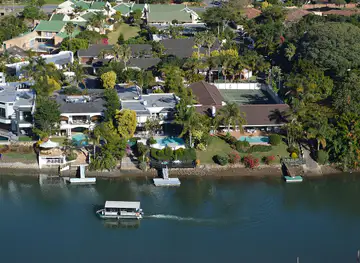
The cities of Eastern Cape, and the easiest places to base yourself.
-
-


Swipe for more cities
Destinations in Eastern Cape
Resorts, valleys and scenic spots worth a trip of their own.
-

-


Swipe for more destinations
Best attractions in Eastern Cape
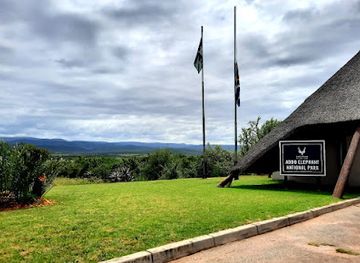
Eastern Cape’s attractions range from wildlife reserves and coastal recreation to museums, historic towns and mountain wilderness. Addo Elephant National Park is the province’s best-known natural destination, offering self-drive and guided wildlife viewing in a varied thicket landscape. Mountain Zebra National Park near Cradock presents a drier highland setting, while Camdeboo National Park frames Graaff-Reinet with the eroded cliffs and open spaces of the Karoo. The Baviaanskloof’s rugged valleys and biodiversity appeal to experienced hikers, drivers and nature enthusiasts. Along the coast, the Wild Coast is known for long beaches, estuaries, coastal grassland and walking routes, with destinations such as Coffee Bay and the Hole in the Wall requiring realistic travel planning. Gqeberha and East London provide museums, beaches and urban heritage, while Makhanda offers galleries, performances and festival-related cultural activity. Inland towns such as Graaff-Reinet, Cradock and Somerset East preserve churches, historic houses and frontier-era buildings. The province also supports fishing, surfing, birdwatching, horse riding and scenic drives, although many rural activities depend on advance arrangements and local guides.
-
National park
Addo Elephant National Park
Discover the wonders of Addo Elephant National Park, a sanctuary for wildlife lovers and a stunning natural haven in South Africa's Eastern Cape.
-
Nature preserve
Kragga Kamma Game Park
Discover the rich biodiversity and stunning landscapes of Kragga Kamma Game Park, a premier wildlife destination in South Africa.
-
Park
Start of Sacramento Trail
Discover the breathtaking Start of Sacramento Trail in Gqeberha, a perfect blend of adventure, nature, and stunning coastal views.
-
Park
Happy Valley
Experience the tranquility of Happy Valley, a beautiful park in Summerstrand, Gqeberha, perfect for relaxation, family fun, and outdoor activities.



Best landmarks in Eastern Cape
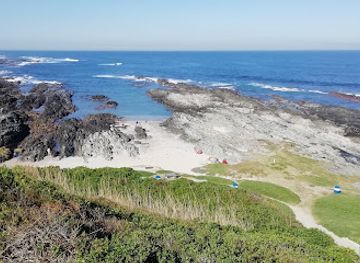
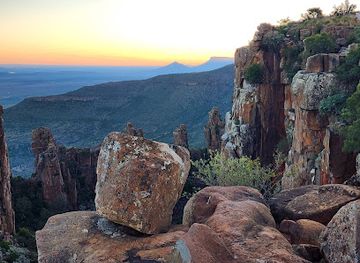
The Eastern Cape’s most recognisable landmarks express its combination of natural drama, frontier history and political memory. The Hole in the Wall, a sea-carved rock formation near Coffee Bay, is one of the Wild Coast’s defining coastal images and is associated with local Xhosa tradition as well as geological erosion. The Valley of Desolation near Graaff-Reinet, within Camdeboo National Park, is marked by towering dolerite columns overlooking the Karoo and is among the province’s most distinctive landscapes. Graaff-Reinet’s historic centre contains Cape Dutch, Georgian and Victorian buildings, with the Dutch Reformed Church serving as a prominent civic and architectural focal point. In Makhanda, the 1820 Settlers Monument overlooks the town and commemorates settler history while remaining part of a more contested regional past. The Donkin Reserve in Gqeberha combines an obelisk, lighthouse, stone pyramid and views across the city’s historic core. Around Mthatha and Qunu, museums and memorial sites associated with Nelson Mandela provide landmarks of national political significance rooted in the Eastern Cape’s own communities and landscape.
-
National park
Addo Elephant National Park
Experience the unparalleled beauty and wildlife of Addo Elephant National Park, a top destination for safari enthusiasts in South Africa.
-
Scenic spot
Valley of Desolation
Explore the Valley of Desolation, a scenic wonder in Graaff-Reinet, featuring breathtaking views, unique rock formations, and unforgettable hiking experiences.
-
Tourist attraction
Hole-in-the-Wall
Experience the breathtaking beauty of Hole-in-the-Wall, a unique natural landmark on South Africa's stunning Wild Coast, perfect for hiking and exploration.
-
Tourist attraction
Seal Point Lighthouse
Experience the breathtaking views and rich history at Seal Point Lighthouse, a stunning coastal attraction in Cape St Francis, South Africa.


Explore Eastern Cape on the map
Plan your trip on one map. See where the top cities, national parks and sights are, and book hotels and experiences in a few clicks.
Best hotels in Eastern Cape
Best restaurants in Eastern Cape
Eastern Cape dining reflects its meeting of coast, Karoo, Xhosa food traditions and South African urban culture. Seafood is prominent in Gqeberha, East London and coastal communities, while inland menus commonly feature Karoo lamb, beef, seasonal vegetables, fresh bread and farm-style cooking. Traditional Xhosa dishes may include maize-based staples, beans, leafy vegetables and meat prepared for family or communal occasions; availability varies by establishment and locality. In cities, restaurants range from casual cafés and grills to contemporary kitchens drawing on local produce. Country inns and guest farms are useful places to encounter regional ingredients in the Karoo and frontier districts, while markets and food stalls offer a more informal view of everyday tastes. Craft beer, South African wine from elsewhere in the country and local fruit-based products are widely available, though the province is better known for varied produce and hospitality than for one single signature cuisine.
-
Restaurant
Something Good Roadhouse
Discover the flavors of Gqeberha at Something Good Roadhouse - where delicious meals meet breathtaking ocean views.
-
Restaurant
Grass Roof
Experience the farm-to-table delight at Grass Roof, where fresh ingredients meet cozy ambiance in Lovemore Park.
-
Restaurant
This Is Eat
Discover a culinary haven at This Is Eat in Gqeberha – where fresh flavors meet warm hospitality in every bite.
-
Restaurant
The Coachman Restaurant
Experience exquisite dining at The Coachman Restaurant in Summerstrand with stunning bay views and delicious local cuisine.


Best bars in Eastern Cape
Evening life is concentrated in Gqeberha, East London, Makhanda and the larger inland towns, rather than spread evenly across the province. Coastal city venues include pubs, restaurants, cocktail bars and live-music spaces, with activity often focused around commercial and waterfront areas. Makhanda has a stronger arts-oriented evening culture during major performance periods, although programmes and venues change. In rural districts and along the Wild Coast, evenings are more likely to centre on lodge dining, community gatherings, small bars, traditional pubs or music at established backpacker and guesthouse settings than on large nightclubs. Gqeberha offers the broadest choice of late venues, while East London has a substantial restaurant and bar scene. Visitors should arrange transport after dark, especially outside city centres, and should not assume that remote coastal settlements have nightlife every night or throughout the year.
-
Grill
BeerShack
Discover BeerShack in Gqeberha - a vibrant grill and pub with stunning sea views, local flavors, and a lively atmosphere perfect for tourists.
-
Bar
Barney's Tavern
Discover the vibrant energy of Barney's Tavern – a beachfront bar and restaurant in Gqeberha, perfect for food, drinks, and sunset views.
-
Bar
Buccaneers
Discover Buccaneers: A lively bar and restaurant in East London, blending delicious food, refreshing drinks, and vibrant nightlife.
-
Grill
Beer Yard
Experience delicious grilled dishes and an extensive beer selection at Beer Yard, Gqeberha's vibrant dining destination.


Best nightclubs in Eastern Cape
Evening life is concentrated in Gqeberha, East London, Makhanda and the larger inland towns, rather than spread evenly across the province. Coastal city venues include pubs, restaurants, cocktail bars and live-music spaces, with activity often focused around commercial and waterfront areas. Makhanda has a stronger arts-oriented evening culture during major performance periods, although programmes and venues change. In rural districts and along the Wild Coast, evenings are more likely to centre on lodge dining, community gatherings, small bars, traditional pubs or music at established backpacker and guesthouse settings than on large nightclubs. Gqeberha offers the broadest choice of late venues, while East London has a substantial restaurant and bar scene. Visitors should arrange transport after dark, especially outside city centres, and should not assume that remote coastal settlements have nightlife every night or throughout the year.
-
Bar
Ekupholeni Cocktail Lounge
Experience the vibrant nightlife at Ekupholeni Cocktail Lounge in Ibhayi, where creative cocktails and a friendly atmosphere await.
-
Bar
Palacio
Discover the vibrant nightlife at Palacio, Gqeberha's premier bar offering great drinks, live music, and an inviting atmosphere.
-
Cocktail bar
Chief Ngqoko'S Place
Unwind at Chief Ngqoko's Place, Gqeberha's vibrant cocktail bar, known for creative drinks and a lively atmosphere that captures the essence of local nightlife.
-
Pub
37onNew
Discover the vibrant nightlife at 37onNew in Makhanda, featuring live music, refreshing drinks, and an energetic atmosphere.


Best shops in Eastern Cape
Shopping in Eastern Cape is strongest in the main cities and historic market towns, with a useful contrast between modern retail and locally produced goods. Gqeberha and East London have conventional shopping centres, department stores, independent boutiques and food retailers, while Makhanda and Graaff-Reinet offer bookshops, galleries, antiques, craft outlets and smaller high-street businesses. Rural and coastal markets may sell woven items, beadwork, woodcraft, clothing, fresh produce and prepared food, but arrangements and trading days vary, so ask locally rather than relying on a fixed schedule. Regional purchases can include Karoo-style textiles, handmade pottery, artwork, locally produced preserves and South African wines or spirits sourced from elsewhere. Buy crafts from reputable sellers and ask about materials when purchasing wildlife-related products. In remote districts, carry cash and do not expect the range of shops available in Gqeberha or East London.
-
Shopping mall
Baywest Mall
Experience the excitement of shopping, dining, and entertainment at Baywest Mall in Gqeberha, your ultimate retail destination.
-
Shopping mall
Greenacres Shopping Centre
Explore Gqeberha's premier shopping destination at Greenacres Shopping Centre, offering a diverse range of stores, dining, and entertainment options.
-
Shopping mall
Walmer Park Shopping Centre
Experience the best of shopping and dining at Walmer Park Shopping Centre, a vibrant destination in Gqeberha, South Africa.
-
Shopping mall
Vincent Park
Discover the vibrant shopping paradise of Vincent Park in East London, where retail therapy meets delightful dining experiences.


Get your free copy of our complete guide to Eastern Cape, delivered straight to you.
Everything on this page, from attractions and restaurants to essentials and local phrases, in one PDF you can read offline, print or share.
Already have an account? Sign in
Your Eastern Cape guide is ready.
We'll send it to · Not you? Sign out

Getting your guide ready…
We are putting together a fresh copy of the Eastern Cape guide. This can take up to a minute.
This can take a few moments. If your browser asks, choose Allow so the download can start. You'll find the guide in your Downloads folder.
Nothing happened? Download it again
Sorry, the guide is taking longer than usual. Please try again in a minute, or get it by email instead.
Eastern Cape essentials
Currency and Payment
Safety
Emergency Situations
Do's and Don'ts
Local Tips
From Eve
Local phrases worth knowing
You don't need to get them perfect. A few words go a long way, and locals appreciate the effort.
Basics
| English | Local | Say it |
|---|---|---|
| Hello | Sanibonani | [sah-nee-boh-nah-nee] |
| Goodbye | Hamba kahle | [huhm-bah kah-leh] |
| Yes | Yebo | [yeh-boh] |
| No | Awe | [ah-weh] |
| Please/You're welcome | Ngiyacela | [ngee-yah-cheh-lah] |
| Thank you | Ngiyabonga | [ngee-yah-bong-gah] |
| Excuse me/Sorry | Uxolo | [oo-ksoh-loh] |
| How are you? | Unjani? | [oon-jah-nee] |
| Fine. And you? | Ngiyaphila. Wena unjani? | [ngee-yah-pee-lah. weh-nah oon-jah-nee] |
| Do you speak English? | UyiNgisi? | [oo-ee-nee-gee-see] |
| I don't understand | Angiqondi | [ahn-gee-kohn-dee] |
Eating & Drinking
| English | Local | Say it |
|---|---|---|
| I'd like to see the menu, please | Ngicela ukubona imenu, ngiyacela | [ngee-cheh-lah oo-koo-boh-nah ee-meh-noo, ngee-yah-cheh-lah] |
| I don't eat meat | Angidli inyama | [ahn-gee-dlee in-yah-mah] |
| Cheers! | Phuza! | [poo-zah] |
| I would like to pay, please | Ngicela ukukhokha, ngiyacela | [ngee-cheh-lah oo-koo-koh-khah, ngee-yah-cheh-lah] |
Emergencies
| English | Local | Say it |
|---|---|---|
| Help! | Siza! | [see-zah] |
| Go away! | Hamba! | [huhm-bah] |
| Call the Police! | Biza amaphoyisa! | [bee-zah ah-mah-poh-yee-sah] |
| Call a doctor! | Biza udokotela! | [bee-zah oo-doh-koh-teh-lah] |
| I'm lost | Ngilahlekile | [ngee-lah-leh-kee-leh] |
| I'm ill | Ngigula | [ngee-goo-lah] |
Shopping
| English | Local | Say it |
|---|---|---|
| I'd like to buy... | Ngifuna ukuthenga... | [ngee-foo-nah oo-koo-teng-ah] |
| I'm just looking | Ngiyabheka nje | [ngee-yah-bhe-kah njeh] |
| How much is it? | Kubiza malini? | [koo-bee-zah mah-lee-nee] |
| That's too expensive | Lokho kubiza kakhulu | [loh-koh koo-bee-zah kah-khoo-loo] |
| Can you lower the price? | Unganciphisa intengo? | [oon-gahn-chee-pee-sah in-ten-goh] |
Time & Numbers
| English | Local | Say it |
|---|---|---|
| What time is it? | Yisiphi isikhathi? | [yee-see-pee ee-see-khah-thi] |
| It's one o'clock | Kuyisikhathi sokuqala | [koo-yee-see-khah-thi soo-koh-khah-lah] |
| Half past (10) | Ihafu kweyishumi | [ee-hah-foo kweh-ee-shoo-mee] |
| Morning | Ekuseni | [eh-koo-seh-nee] |
| Afternoon | Ntambama | [n-tahm-bah-mah] |
| Evening | Ubusuku | [oo-boo-soo-koo] |
| Yesterday | Izolo | [ee-zoh-loh] |
| Today | Namuhla | [nah-moo-hlah] |
| Tomorrow | Mangusasa | [mahn-goo-sah-sah] |
| 1 | Kunye | [koon-yeh] |
| 2 | Kubili | [koo-bee-lee] |
| 3 | Kuthathu | [koo-thah-thoo] |
| 4 | Kune | [koo-neh] |
| 5 | Kuhlanu | [koo-lah-noo] |
| 6 | Kukhulu | [koo-khoo-loo] |
| 7 | Kusixhenxe | [koo-see-khen-kay] |
| 8 | Kuhlangana | [koo-hlahn-gah-nah] |
| 9 | Kuhlangana | [koo-hlahn-gah-nah] |
| 10 | Kukhombisa | [koo-khom-bee-sah] |
Transport & Directions
| English | Local | Say it |
|---|---|---|
| Where's a/the...? | Kuphi i...? | [koo-pee ee] |
| What's the address? | Iyini ikheli? | [ee-yee-nee ee-keh-lee] |
| Can you show me (on the map)? | Ungangikhombisa (emaphepheni)? | [oon-gahn-gee-khom-bee-sah (eh-mah-peh-peh-nee)] |
| When's the next (bus)? | Ngwhenyi elandelayo (ibhasi)? | [ng-weh-nee ee-lahn-dah-lah-yoh (ee-bah-see)] |
| A ticket (to ....) | Ithikithi (uku...) | [ee-thi-kee-thee (oo-koo)] |
History of Eastern Cape
Early San and Khoekhoe Heritage
Long before colonial settlement, the Eastern Cape was inhabited by San hunter-gatherers and Khoekhoe pastoral communities. Rock art, archaeological deposits and place names preserve evidence of their presence, particularly in the mountainous interior and Karoo. Their knowledge of water, plants and seasonal movement was closely adapted to a demanding environment. Later communities and colonial farmers often occupied landscapes already shaped by these earlier societies, although their histories were frequently marginalised in older accounts. Today, rock-art sites and museums help place the province’s human story within a much longer chronology than the colonial frontier.
Xhosa Kingdoms and Settler Expansion
From the eighteenth century, Xhosa-speaking communities established influential chiefdoms and political structures across the eastern districts and coastal hinterland. European farmers and colonial authorities expanded eastwards from the Cape, creating pressure over land, cattle and access to resources. Competition between these societies produced a shifting frontier rather than a simple division between two fixed populations. Mission stations, military posts and settler towns developed alongside African polities, and the consequences of dispossession, treaty-making and armed conflict continued to shape land ownership and regional politics.
The Cape Frontier Wars
A series of conflicts between Xhosa forces and colonial authorities, commonly known as the Cape Frontier Wars, took place from the late eighteenth century into the nineteenth century. Much of the fighting centred on the region between the Fish and Kei rivers, with Fort Beaufort, Grahamstown—now Makhanda—and other frontier settlements becoming strategic centres. The wars involved African power struggles, colonial expansion, military campaigns and contested treaties. Their legacy is visible in forts, mission settlements, cemeteries and museums, but also in the enduring political and social effects of land loss and disrupted communities.
Ports, Railways and Agricultural Development
During the nineteenth and early twentieth centuries, Port Elizabeth and East London grew as ports serving agricultural districts and inland trade. Railways connected the coast with farming towns such as Cradock, Graaff-Reinet and Queenstown, now Komani, allowing wool, hides, mohair, livestock and other products to reach wider markets. Settler agriculture expanded through the Karoo and eastern interior, while urban industries developed around the ports. These transport and commercial networks helped create the province’s modern settlement pattern, linking very different coastal, frontier and interior economies.
Industrialisation and the Motor Industry
The coastal cities became important industrial centres during the twentieth century. East London developed manufacturing and port activity, while the area around Port Elizabeth became strongly associated with vehicle assembly and component production. Industrial employment attracted people from across the Eastern Cape and beyond, accelerating urban growth and strengthening the cities’ connections with national supply chains. The sector has changed repeatedly in response to international markets, but manufacturing remains an important part of the province’s economic identity. Museums, factories and urban neighbourhoods reflect this transition from port commerce to modern industry.
Apartheid, Resistance and the Democratic Transition
The Eastern Cape was central to South Africa’s twentieth-century political history. The former Transkei and Ciskei were established as nominally independent homelands under apartheid, separating communities through a system that controlled movement, land and political rights. The region also produced major figures and movements in the struggle against apartheid, including Nelson Mandela, whose early life is commemorated around Mthatha and Qunu. Student activism, trade union organising, civic resistance and rural opposition challenged state rule. Since 1994, museums and memorials have helped interpret this history while the province continues to address its social and economic consequences.
Eastern Cape in Photos
Browse through our photo collection highlighting the charm and character of the destination.
Neighbouring regions of Eastern Cape
The closest regions to Eastern Cape, if you have time for more than one.
-

-

-
-

-


Swipe for more regions
Explore more

Explore more of South Africa
Discover South Africa: A land of breathtaking landscapes, rich history, and diverse cultures, from bustling cities to world-renowned wildlife reserves.
Explore South Africa