

Free Karoo Travel Guide & Mobile App
Explore Karoo with free travel guides. Discover regional history, expert tips, proposed trips, and audio guides on web or mobile app.


Explore South Africa’s Karoo for fossil heritage, mountain passes, historic towns, wildlife, farm cuisine and exceptionally clear desert skies.
Read more about Karoo
When is the best time to visit Karoo?
Best: April, October–November · 23–25°C| Month | High (°C) | Rainfall (mm) |
|---|---|---|
| January | 30 | 20 |
| February | 31 | 15 |
| March | 27 | 15 |
| April (best) | 23 | 10 |
| May | 19 | 10 |
| June | 16 | 10 |
| July | 16 | 10 |
| August | 17 | 10 |
| September | 20 | 10 |
| October (best) | 23 | 10 |
| November (best) | 25 | 10 |
| December | 28 | 20 |
Getting to and around Karoo
How to get there
Transportation
Top city travel guides in Karoo
The cities of Karoo, and the easiest places to base yourself.
-

-

-

-

-


Swipe for more cities
Destinations in Karoo
Resorts, valleys and scenic spots worth a trip of their own.
-

-

-

-

-

-


Swipe for more destinations
Best attractions in Karoo
The Karoo’s attractions range from deep geological history to wide-open natural landscapes. In the Great Karoo, Karoo National Park near Beaufort West combines arid hills, plains and wildlife viewing, while the town’s museums explain the region’s palaeontological significance. Around Graaff-Reinet, Camdeboo National Park offers views across the Valley of Desolation, wildlife habitats and access to the distinctive scenery of the Sneeuberg foothills. Nieu-Bethesda is known for its literary and artistic associations, including the preserved Owl House, while Sutherland provides access to high-altitude landscapes and some of South Africa’s clearest stargazing conditions. In the eastern Karoo, Mountain Zebra National Park protects grassland and mountain habitats near Cradock. The Little Karoo brings a different set of experiences: the Cango Caves near Oudtshoorn, ostrich-farming heritage, mountain passes, vineyards, farm stalls and routes through Meiringspoort and the Swartberg. Historic churches, small museums, mission settlements and railway towns reward travellers who allow time for detours. Activities are generally low-impact and landscape-led, including hiking, birdwatching, photography, scenic driving, fossil interpretation and astronomy.
-
Tourist attraction
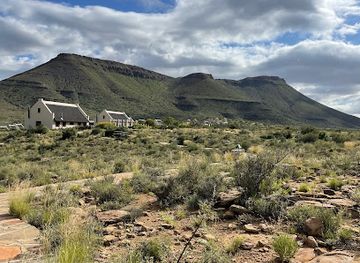
Karoo National Park
Experience the stunning landscapes and diverse wildlife of Karoo National Park, a South African gem for nature enthusiasts and adventure seekers.
-
Museum
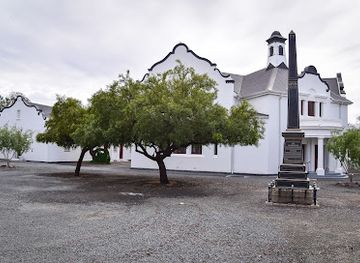
Beaufort West Museum
Explore the vibrant history of Beaufort West at the museum, where captivating exhibits reveal the rich cultural heritage of South Africa.
-
Museum
Fossil Trail (Karoo National Park)
Explore the Fossil Trail at Karoo National Park, where ancient fossils and breathtaking landscapes merge into an extraordinary journey through time.
-
Historical landmark
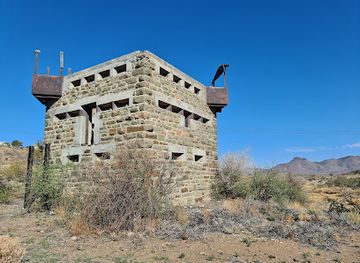
Anglo Boer War Blockhouse Beaufort West
Explore the Anglo Boer War Blockhouse in Beaufort West, a historic site that reflects the resilience and architecture of the Boer War era.

Best landmarks in Karoo
The Valley of Desolation near Graaff-Reinet is one of the Karoo’s defining natural landmarks, where dolerite columns rise above the plains within Camdeboo National Park. The town itself is notable for its well-preserved nineteenth-century streetscapes and Dutch Reformed church, which reflect its importance as an early colonial settlement. In the central Karoo, the Nuweveld escarpment forms a strong geological edge above Beaufort West, while Karoo National Park’s folded hills and isolated plateaux express the region’s characteristic desert topography. The Swartberg Pass, on the southern boundary of the Little Karoo, is a major feat of nineteenth-century road engineering, with dramatic mountain geology along its route. Meiringspoort provides another iconic crossing through the Swartberg range, carrying the road between the Great and Little Karoo through a narrow gorge. Nieu-Bethesda’s Owl House is a more intimate cultural landmark: an unconventional house and garden created by artist Helen Martins and preserved as a museum. Sutherland’s high plateau, although less monumental in appearance, is a nationally important landscape marker because its dry air, elevation and low light pollution support astronomical observation.
-
Tourist attraction
Karoo National Park
Explore the stunning landscapes, diverse wildlife, and rich biodiversity of Karoo National Park, a must-visit destination in South Africa for nature lovers.
-
Nature preserve
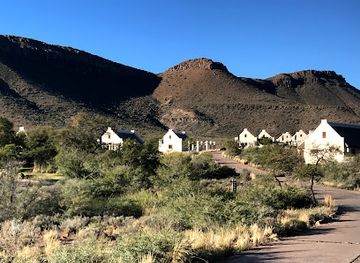
Steenbokkie Private Nature Reserve
Explore the enchanting Steenbokkie Private Nature Reserve, a hidden gem near Beaufort West, where nature and tranquility unite for an unforgettable experience.
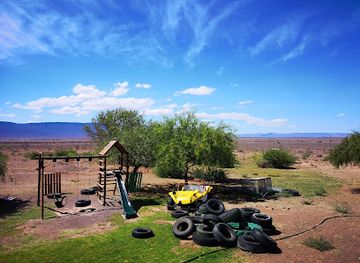
Explore Karoo on the map
Plan your trip on one map. See where the top cities, national parks and sights are, and book hotels and experiences in a few clicks.
Best hotels in Karoo
Best restaurants in Karoo
Karoo dining is closely linked to livestock farming, dryland agriculture and the produce of the surrounding mountains and valleys. Mutton and lamb are prominent regional associations, often served in traditional country restaurants, farm kitchens and rural guesthouses, while biltong, preserves, homemade bread and seasonal vegetables reflect the practical food culture of the interior. In the Little Karoo, Oudtshoorn and the surrounding valleys add ostrich-farming products, fruit, cheeses and wines to the culinary mix; Calitzdorp is particularly associated with fortified wines made from local grapes. Farm stalls along major routes sell dried fruit, preserves, baked goods and other provisions, though individual opening arrangements vary. Historic hotels, cafés and pubs in larger settlements provide convenient meals, while small-town restaurants may operate on limited days or require advance arrangements. Menus differ by district, with Karoo traditions meeting broader Cape and South African cooking rather than forming a single fixed cuisine. Visitors should ask about local produce, seasonal dishes and payment methods before ordering in remote areas.
-
Restaurant
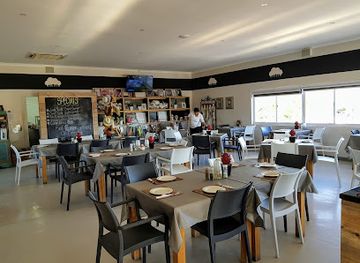
4 Sheep Restaurant Deli and Convenience Store
Experience authentic South African cuisine at 4 Sheep Restaurant Deli & Convenience Store in Beaufort West – where flavor meets hospitality.
-
 Restaurant
Ye Olde Thatch Restaurant
Experience the warmth of South African cuisine at Ye Olde Thatch Restaurant in Beaufort West – where tradition meets taste.
-
Restaurant
Karoo Lodge Restaurant
Experience authentic South African cuisine in a cozy atmosphere at Karoo Lodge Restaurant in Beaufort West.

Best bars in Karoo
Evening life in the Karoo is usually centred on traditional pubs, hotel bars, cafés and restaurants rather than large nightclubs. In towns such as Graaff-Reinet, Beaufort West and Oudtshoorn, visitors can find a modest selection of places for a meal, a local drink or conversation, with occasional live music and cultural performances depending on the season. The Little Karoo’s wine and fortified-wine districts offer tastings and relaxed evening venues, while farm accommodation may provide dinner and drinks by arrangement. Small settlements such as Nieu-Bethesda and Prince Albert tend to become quiet early, and rural guesthouses are more suited to stargazing, reading and socialising than late-night entertainment. Designated drivers are important because distances are long and roadside services are sparse. Nightlife should be planned around the specific town and accommodation rather than assumed to continue late across the region.
-
Restaurant
Diesel & Crème and The Karoo Moon Motel
Discover the rustic charm of Diesel & Crème, a perfect blend of delightful dining and cozy self-catering accommodation in Barrydale, South Africa.
-
Restaurant
4 Sheep Restaurant Deli and Convenience Store
Discover authentic South African cuisine at the 4 Sheep Restaurant Deli and Convenience Store in Beaufort West, where flavors come alive.
-
Bar
Asoka Restaurant, Bar and Lounge
Experience the best of Cape Town nightlife at Asoka Restaurant, Bar and Lounge, where dining meets vibrant entertainment in a stylish setting.
-
Bar
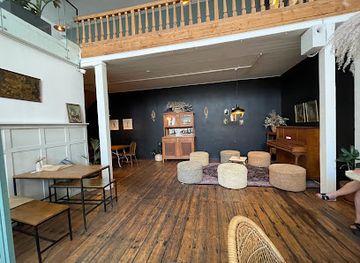
The Gin Bar
Discover the essence of artisanal gin in the heart of Cape Town at The Gin Bar, where every sip promises a delightful experience.

Best nightclubs in Karoo
Evening life in the Karoo is usually centred on traditional pubs, hotel bars, cafés and restaurants rather than large nightclubs. In towns such as Graaff-Reinet, Beaufort West and Oudtshoorn, visitors can find a modest selection of places for a meal, a local drink or conversation, with occasional live music and cultural performances depending on the season. The Little Karoo’s wine and fortified-wine districts offer tastings and relaxed evening venues, while farm accommodation may provide dinner and drinks by arrangement. Small settlements such as Nieu-Bethesda and Prince Albert tend to become quiet early, and rural guesthouses are more suited to stargazing, reading and socialising than late-night entertainment. Designated drivers are important because distances are long and roadside services are sparse. Nightlife should be planned around the specific town and accommodation rather than assumed to continue late across the region.
-
Night club
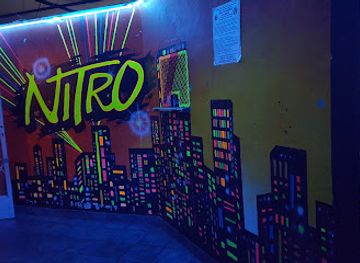
Nitro Lounge
Uncover the lively atmosphere of Nitro Lounge, George's go-to night club for unforgettable nights filled with music and dancing.
Best shops in Karoo
Shopping in the Karoo is concentrated in small town centres, independent galleries, farm stalls and local produce outlets rather than large retail districts. Graaff-Reinet, Oudtshoorn, Prince Albert, Beaufort West and other established settlements offer practical shops alongside antiques, books, artworks, pottery, handmade textiles and locally produced food. Nieu-Bethesda has a particularly strong association with artists, craftspeople and literary culture, while the Little Karoo provides opportunities to buy wine, fortified wine, dried fruit, preserves, cheeses and ostrich-related products. Farm stalls on major routes are useful for provisions and regional gifts, although stock, opening days and card facilities vary. Local markets may be seasonal or irregular, so confirm details with accommodation providers rather than relying on a fixed weekly schedule. Souvenirs made from protected plants, fossils or archaeological material should not be purchased unless their lawful provenance is clear, and visitors should never remove rocks or fossils from reserves or private land.
-
Shopping mall
Cape Karoo Ostrich Emporium
Explore the Cape Karoo Ostrich Emporium in Oudtshoorn for unique shopping, delightful coffee, and a taste of local culture.
-
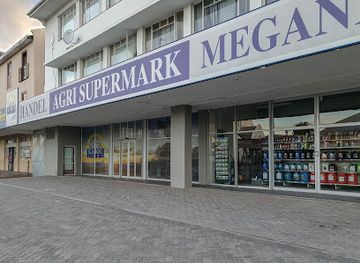
Supermarket
Shoprite Checkers - Beaufort West Mining
Discover the vibrant shopping experience at Shoprite Checkers in Beaufort West, a perfect stop for local flavors and essentials.
-
Hardware store
Klein Karoo (Pty) Ltd Beaufort West
Experience authentic local craftsmanship at Klein Karoo in Beaufort West, where quality hardware meets the heart of South African culture.
-
Shopping mall
Karoo Junction Mall
Discover unique shopping and delightful dining at Karoo Junction Mall in Beaufort West, a gem in the heart of the Karoo.

Get your free copy of our complete guide to Karoo, delivered straight to you.
Everything on this page, from attractions and restaurants to essentials and local phrases, in one PDF you can read offline, print or share.
Already have an account? Sign in
Your Karoo guide is ready.
We'll send it to · Not you? Sign out

Getting your guide ready…
We are putting together a fresh copy of the Karoo guide. This can take up to a minute.
This can take a few moments. If your browser asks, choose Allow so the download can start. You'll find the guide in your Downloads folder.
Nothing happened? Download it again
Sorry, the guide is taking longer than usual. Please try again in a minute, or get it by email instead.
Karoo essentials
Currency and Payment
Safety
Emergency Situations
Do's and Don'ts
Local Tips
From Eve
Local phrases worth knowing
You don't need to get them perfect. A few words go a long way, and locals appreciate the effort.
Basics
| English | Local | Say it |
|---|---|---|
| Hello | Howzit | [Haw-zit] |
| Goodbye | Totsiens | [Tot-seens] |
| Yes | Ja | [Yah] |
| No | Nee | [Nee] |
| Please/You're welcome | Asseblief | [As-se-bleef] |
| Thank you | Dankie | [Dahn-kee] |
| Excuse me/Sorry | Verskoon my | [Fer-skoon my] |
| How are you? | Hoe gaan dit? | [Hoo gahn dit?] |
| Fine. And you? | Goed. En jy? | [Hoot. En yay?] |
| Do you speak English? | Praat jy Engels? | [Praht yay Eng-els?] |
| I don't understand | Ek verstaan nie | [Ek fer-stahn nee] |
Eating & Drinking
| English | Local | Say it |
|---|---|---|
| I'd like to see the menu, please | Ek wil graag die spyskaart sien, asseblief | [Ek vil khraakh dee spys-kart seen, as-se-bleef] |
| I don't eat meat | Ek eet nie vleis nie | [Ek eet nee vlais nee] |
| Cheers! | Gesondheid! | [Geh-sond-hayt!] |
| I would like to pay, please | Ek wil graag betaal, asseblief | [Ek vil khraakh beh-taal, as-se-bleef] |
Emergencies
| English | Local | Say it |
|---|---|---|
| Help! | Help! | [Help!] |
| Go away! | Gaan weg! | [Khan vek!] |
| Call the Police! | Bel die Polisiemag! | [Bell dee Po-lee-see-mag!] |
| Call a doctor! | Bel 'n dokter! | [Bell 'n dok-ter!] |
| I'm lost | Ek is verlore | [Ek is fer-lo-re] |
| I'm ill | Ek is siek | [Ek is seek] |
Shopping
| English | Local | Say it |
|---|---|---|
| I'd like to buy... | Ek wil graag koop... | [Ek vil khraakh koop...] |
| I'm just looking | Ek kyk net | [Ek kye-k net] |
| How much is it? | Hoeveel kos dit? | [Hoo-vayl kos dit?] |
| That's too expensive | Dit is te duur | [Dit is tay dur] |
| Can you lower the price? | Kan jy die prys verlaag? | [Kan yay dee prys fer-lahg?] |
Time & Numbers
| English | Local | Say it |
|---|---|---|
| What time is it? | Hoe laat is dit? | [Hoo laat is dit?] |
| It's one o'clock | Dit is een uur | [Dit is een oor] |
| Half past (10) | Half-past (10) | [Half-past (10)] |
| Morning | Oggend | [O-khent] |
| Afternoon | Middag | [Mid-dahg] |
| Evening | Aand | [Aand] |
| Yesterday | Gister | [Khis-ter] |
| Today | Vandag | [Vahn-dahg] |
| Tomorrow | Môre | [Maw-reh] |
| 1 | Een | [Een] |
| 2 | Twee | [Twee] |
| 3 | Drie | [Dree] |
| 4 | Vier | [Veer] |
| 5 | Vyf | [Fife] |
| 6 | Ses | [Says] |
| 7 | Sewe | [Seh-veh] |
| 8 | Agt | [Acht] |
| 9 | Nege | [Nay-khe] |
| 10 | Tien | [Teen] |
Transport & Directions
| English | Local | Say it |
|---|---|---|
| Where's a/the...? | Waar is 'n die...? | [Vahr is 'n dee...?] |
| What's the address? | Wat is die adres? | [Vaht is dee ah-dress?] |
| Can you show me (on the map)? | Kan jy my wys (op die kaart)? | [Kan yay my vice (op dee kart)?] |
| When's the next (bus)? | Wanneer is die volgende (bus)? | [Van-heer is dee fol-gende (bus)?] |
| A ticket (to ....) | ‘n Kaartjie (na....) | [‘n Kart-kee (na....)] |
History of Karoo
The Ancient Karoo Basin
Much of the Karoo lies over the Karoo Supergroup, a vast sequence of sedimentary rocks deposited during the late Palaeozoic and early Mesozoic eras. These strata preserve an important record of ancient environments and contain abundant fossils of reptiles and mammal-like creatures that lived before the age of dinosaurs. Around towns such as Beaufort West, Graaff-Reinet and Nieu-Bethesda, palaeontology has become a major part of regional identity. Museums, fossil collections and university research help visitors understand how changing climates, rivers and deserts shaped the basin over millions of years.
San Heritage and Rock Art
San communities lived across the Karoo long before colonial settlement, adapting to a dry environment through detailed knowledge of plants, animals and seasonal water sources. Rock engravings and paintings survive in parts of the wider Karoo and adjoining mountain country, although many sites require specialist access and protection. The region’s archaeological record also includes stone tools and other evidence of long human occupation. Visitors should treat these places as cultural heritage rather than curiosities and follow access rules, especially where sites are on private land or vulnerable to damage.
Colonial Expansion and Trekboer Settlement
From the eighteenth century, trekboer pastoralists and colonial authorities expanded into the interior, establishing farms, wagon routes and settlements around springs and reliable grazing. Graaff-Reinet was founded in 1786 and became an important centre of frontier politics, while towns such as Beaufort West and Cradock developed along routes linking the Cape with the interior. This history involved dispossession, conflict and changing land control affecting San and Khoekhoe communities. Historic churches, farmsteads, mission buildings and town grids remain visible reminders of the colonial period.
Sheep Farming and the Commercial Karoo
The nineteenth and twentieth centuries saw wool and livestock farming become central to the Karoo economy. Merino sheep were increasingly suited to the region’s dry grasslands and shrublands, and wool connected remote farms to merchants, ports and international markets. Karoo mutton remains an important regional food association, although production methods and certification vary. Farming supported service towns, stock routes and trading businesses but was always vulnerable to drought, fluctuating prices and the ecological limits of semi-arid land.
Railways, Roads and Interior Connections
Railway construction transformed the Karoo in the late nineteenth and early twentieth centuries by linking Cape ports with the interior and creating new stations, sidings and settlements. Places including Beaufort West, De Aar and Matjiesfontein became associated with long-distance transport, while roads later shifted much passenger and freight traffic onto the national highways. Railway architecture, water towers, hotels and old station precincts still shape several Karoo towns. The transport network also made it easier for agricultural products, people and ideas to move across an otherwise sparsely settled region.
Anglo-Boer War and Imperial Frontier
The Karoo was affected by the Anglo-Boer War from 1899 to 1902, both as a theatre of movement and as a route through which troops and supplies travelled. Railway lines, bridges and strategic crossings were important to British military logistics, while local communities experienced disruption, recruitment, imprisonment and economic strain. Reminders include military structures, memorials and stories preserved in town museums, though the war’s effects varied between districts. Its legacy forms part of the region’s wider and often contested frontier history.
Modern Conservation, Astronomy and Rural Change
In recent decades, conservation, heritage tourism, astronomy and small-scale hospitality have complemented livestock farming as parts of the Karoo economy. National parks such as Karoo National Park, Camdeboo and Mountain Zebra protect representative landscapes and wildlife, while Sutherland’s exceptionally dark skies support major astronomical research at the South African Astronomical Observatory’s facilities on the plateau. At the same time, drought, water scarcity, depopulation and changing agricultural conditions continue to shape rural life. Contemporary Karoo identity therefore combines deep geological time, working landscapes and carefully managed tourism.
Karoo in Photos
Browse through our photo collection highlighting the charm and character of the destination.
Neighbouring regions of Karoo
The closest regions to Karoo, if you have time for more than one.
-

-

-

-
-


Swipe for more regions
Explore more

Explore more of South Africa
Discover South Africa: A land of breathtaking landscapes, rich history, and diverse cultures, from bustling cities to world-renowned wildlife reserves.
Explore South Africa