

Free Little Karoo Travel Guide & Mobile App
Explore Little Karoo with free travel guides. Discover regional history, expert tips, proposed trips, and audio guides on web or mobile app.


Explore South Africa's Little Karoo for mountain passes, ostrich heritage, Cango Caves, farm food, vineyards and wide semi-arid landscapes.
Read more about Little Karoo
When is the best time to visit Little Karoo?
Best: March, October–November · 24–27°C| Month | High (°C) | Rainfall (mm) |
|---|---|---|
| January | 29 | 15 |
| February | 30 | 15 |
| March (best) | 27 | 20 |
| April | 23 | 25 |
| May | 20 | 30 |
| June | 16 | 35 |
| July | 16 | 35 |
| August | 18 | 30 |
| September | 21 | 25 |
| October (best) | 24 | 20 |
| November (best) | 26 | 15 |
| December | 27 | 15 |
Getting to and around Little Karoo
How to get there
Transportation
Destinations in Little Karoo
Resorts, valleys and scenic spots worth a trip of their own.

Swipe for more destinations
Best attractions in Little Karoo
The Little Karoo's attractions are shaped by the meeting of dry plains, folded mountains and a long agricultural history. The Cango Caves near Oudtshoorn provide the region's best-known subterranean experience, with vast limestone chambers and guided routes through a carefully managed cave system. Around the town, ostrich farms explain an industry that created the area's distinctive social and architectural history, while the Cango Valley offers access to mountain scenery and outdoor activities. Gamkaberg Nature Reserve protects rugged terrain and succulent-rich habitats, with hiking and wildlife opportunities subject to access and weather conditions. Scenic drives cross the Swartberg, Rooiberg and Langeberg ranges, though some passes require careful planning. Calitzdorp's vineyards, Ladismith's historic mission communities and De Rust's approach to Meiringspoort add cultural and landscape variety. Farm stalls, small museums, historic buildings, stargazing locations and walking routes round out the offering, with the strongest experiences often depending on advance arrangements rather than a dense concentration of formal attractions.
-
Tourist attraction
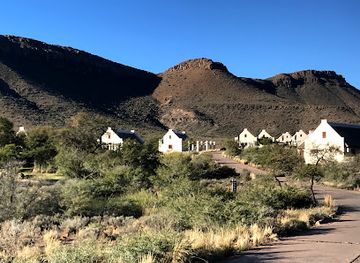
Karoo National Park
Discover the stunning landscapes and diverse wildlife of Karoo National Park, a hidden gem in South Africa's heartland.
-
Nature preserve
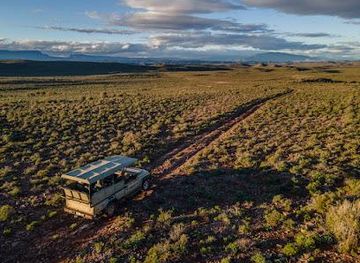
Sanbona Wildlife Reserve
Explore the breathtaking Sanbona Wildlife Reserve, where luxury meets nature and adventure awaits in the heart of South Africa's wilderness.
-
Museum
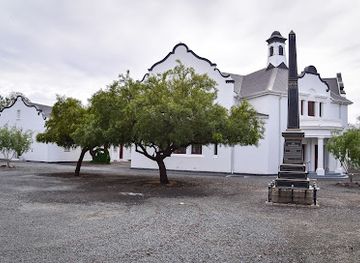
Beaufort West Museum
Explore the diverse history of Beaufort West at the Beaufort West Museum, featuring captivating exhibits and rich cultural heritage.
Best landmarks in Little Karoo
The Cango Caves are the Little Karoo's most recognisable natural landmark, a limestone system whose chambers and formations have made the Cango Valley central to regional tourism. Above Oudtshoorn, the Swartberg Pass is a major engineering and scenic landmark, climbing through rugged mountain country towards the interior; the far side leads beyond the Little Karoo, so it should not be confused with a wholly local circuit. Oudtshoorn's historic sandstone and Art Deco buildings, including substantial houses associated with the ostrich-feather era, provide an architectural record of sudden agricultural wealth. Towerkop, a split summit above Ladismith, is one of the region's most distinctive mountain silhouettes. Zoar and Amalienstein contain important Moravian mission architecture and avenues, while the Gamka River valley and the layered ridges around Calitzdorp express the area's geological character. Meiringspoort, near De Rust, forms a dramatic natural gateway through the mountains and marks the eastern edge of many visitors' Little Karoo journeys.
-
Tourist attraction
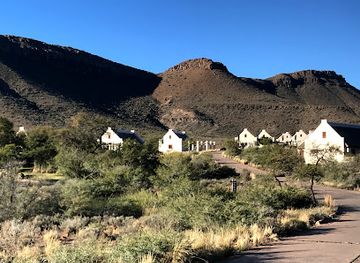
Karoo National Park
Experience the stunning landscapes and diverse wildlife of Karoo National Park, a must-visit destination for nature enthusiasts in South Africa.
-
Nature preserve
De Hoop Nature Reserve
Explore the breathtaking landscapes and diverse wildlife of De Hoop Nature Reserve, a premier destination for nature lovers in South Africa's Overberg District.
-
National park
Bontebok National Park
Immerse yourself in the stunning landscapes and unique wildlife of Bontebok National Park, a must-visit destination for nature lovers in South Africa.
-
Nature preserve
Grootvadersbosch Nature Reserve
Explore Grootvadersbosch Nature Reserve, a breathtaking sanctuary in South Africa's Overberg region, rich in biodiversity and scenic beauty.
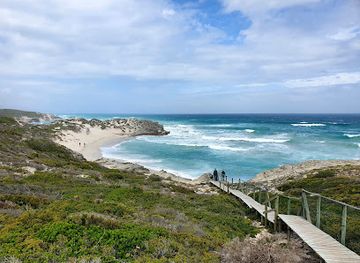
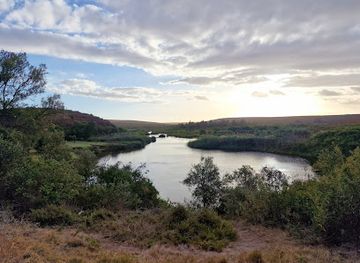
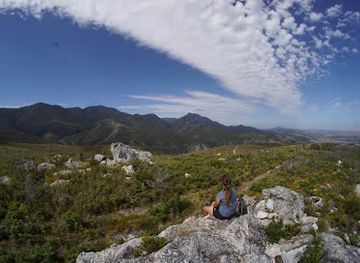
Explore Little Karoo on the map
Plan your trip on one map. See where the top cities, national parks and sights are, and book hotels and experiences in a few clicks.
Best hotels in Little Karoo
Best restaurants in Little Karoo
Little Karoo dining reflects an arid farming region where meat, fruit, dairy and preserved foods have traditionally mattered. Karoo lamb is widely associated with the wider interior and appears alongside grilled meats, farm-style vegetables and locally made bread, while cafés and country restaurants in Oudtshoorn, Calitzdorp, Ladismith and Route 62 settlements draw on regional produce. Ostrich is available in some establishments, although it is best understood as part of the area's modern farming economy rather than an ancient local staple. Calitzdorp is known for fortified wines and other Cape wine styles, and wineries may offer tastings with food when arranged in advance. Farm stalls provide opportunities to buy dried fruit, preserves, cheese, baked goods and seasonal produce. Dining choices range from simple cafés and traditional pubs to rural guesthouse meals and more polished restaurants; outside the larger towns, opening arrangements can be limited, so checking ahead is sensible.
-
Restaurant
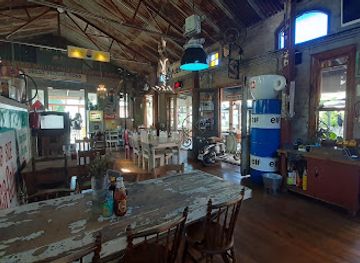
Diesel & Crème and The Karoo Moon Motel
Route 62's vintage diner legend: 21 gourmet milkshakes, juicy burgers, pies & craft brews in Barrydale's retro hotspot with motel stays for epic Karoo road trips.
-
Restaurant
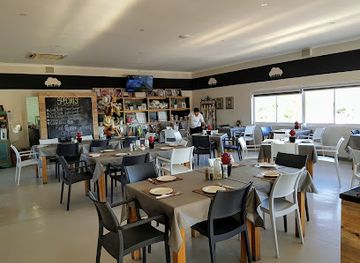
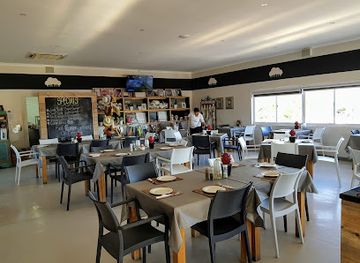
4 Sheep Restaurant Deli and Convenience Store
Experience authentic South African cuisine at 4 Sheep Restaurant Deli in Beaufort West – where tradition meets flavor.
-
Family-friendly
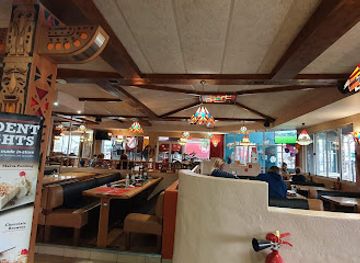
Red Canyon Spur Steak Ranch
Experience family-friendly dining at Red Canyon Spur Steak Ranch in Beaufort West - savor delicious steaks and hearty breakfasts.
-
Restaurant
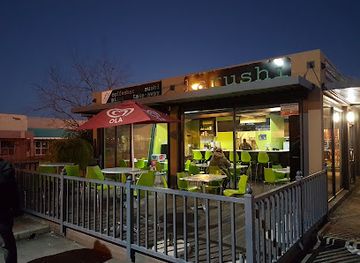
Karushi
Experience authentic South African flavors at Karushi in Beaufort West – where every dish tells a story.
Best bars in Little Karoo
Evening life in the Little Karoo is generally low-key and town-based rather than centred on nightclubs. Oudtshoorn has the broadest choice of pubs, restaurants, hotel bars and occasional live-music settings, while Calitzdorp's wine culture provides a more leisurely alternative through tasting rooms and rural hospitality. In Ladismith, Barrydale and De Rust, evenings typically revolve around local pubs, cafés, restaurants and community venues rather than a large entertainment district. Route 62 establishments may have strongly seasonal schedules, and rural accommodation often offers a quiet night under clear skies instead of late-night activity. Visitors should not expect reliable taxi availability after dark in outlying areas, and responsible drinking is particularly important when driving between dispersed towns and farms.
-
Restaurant
Diesel & Crème and The Karoo Moon Motel
Explore the unique flavors and cozy accommodations at Diesel & Crème and The Karoo Moon Motel in Barrydale, a true Karoo gem.
-
Restaurant
4 Sheep Restaurant Deli and Convenience Store
Discover authentic South African flavors at 4 Sheep Restaurant Deli and Convenience Store in Beaufort West, perfect for travelers and food lovers alike.
-
Restaurant
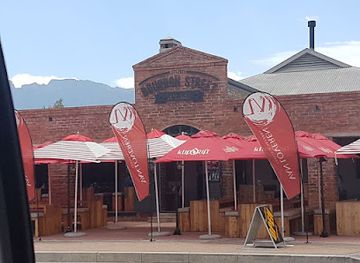
Bourbon Street Robertson
Explore the vibrant flavors of South African cuisine at Bourbon Street Robertson, a culinary gem in the heart of Robertson.
-
Cocktail bar
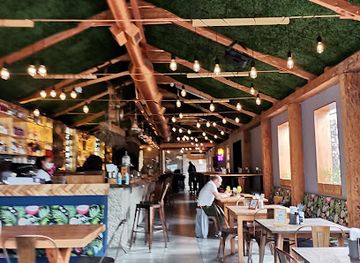
Cause Effect Cocktail Kitchen
Discover the innovative cocktail creations and delicious dishes at Cause Effect Cocktail Kitchen in Cape Town's iconic waterfront.
Best nightclubs in Little Karoo
Evening life in the Little Karoo is generally low-key and town-based rather than centred on nightclubs. Oudtshoorn has the broadest choice of pubs, restaurants, hotel bars and occasional live-music settings, while Calitzdorp's wine culture provides a more leisurely alternative through tasting rooms and rural hospitality. In Ladismith, Barrydale and De Rust, evenings typically revolve around local pubs, cafés, restaurants and community venues rather than a large entertainment district. Route 62 establishments may have strongly seasonal schedules, and rural accommodation often offers a quiet night under clear skies instead of late-night activity. Visitors should not expect reliable taxi availability after dark in outlying areas, and responsible drinking is particularly important when driving between dispersed towns and farms.
-
Desert
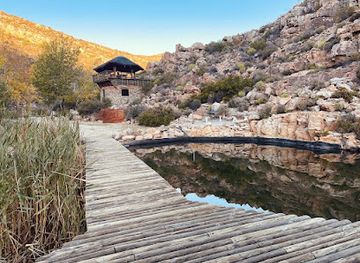
Karoo
Discover the enchanting beauty of the Karoo, where vast deserts meet starry skies and rich cultural heritage awaits every traveler.
Best shops in Little Karoo
Shopping in the Little Karoo is concentrated in the high streets and independent businesses of Oudtshoorn, Calitzdorp, Ladismith, Barrydale and De Rust rather than in large retail complexes. Oudtshoorn offers the widest practical choice of supermarkets, clothing, books, crafts and ostrich-related products, while smaller towns are better suited to browsing galleries, craft outlets, farm stalls and local food shops. Regional purchases may include dried fruit, preserves, cheeses, Karoo meat products, wine, handmade ceramics, leather goods and textiles, but quality and availability vary between producers. Route 62 stops often combine cafés or farm stalls with small retail displays, making them useful for buying provisions and gifts as well as meeting local makers. Farmers' markets and community markets are usually periodic rather than daily, so visitors should check locally before planning a trip around one. Respect conservation rules by avoiding products made from protected plants, shells or archaeological material.
-
Gift shop
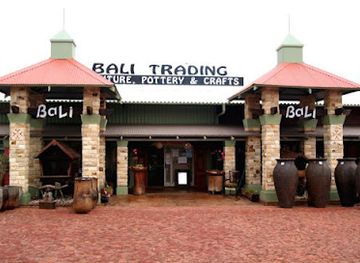
Bali Trading
Discover a unique blend of African goods, antiques, and toys at Bali Trading in Riversdale, a must-visit gift shop for every traveler.
-
Gift shop
Karoo Padstal
Explore the heart of the Karoo at Karoo Padstal, where local gifts, delicious food, and warm hospitality await travelers.
-
General store
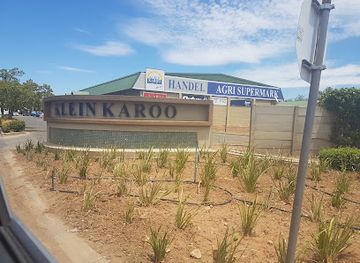
Klein Karoo Agri
Experience the charm of local culture at Klein Karoo Agri, where authentic products and warm hospitality await in Oudtshoorn.
-
Shopping mall
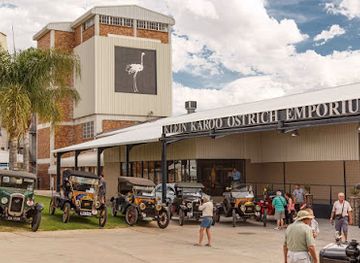
Cape Karoo Ostrich Emporium
Discover the charm of Oudtshoorn at Cape Karoo Ostrich Emporium, a shopping paradise with local crafts, delicious coffee, and unique ostrich-themed products.
Get your free copy of our complete guide to Little Karoo, delivered straight to you.
Everything on this page, from attractions and restaurants to essentials and local phrases, in one PDF you can read offline, print or share.
Already have an account? Sign in
Your Little Karoo guide is ready.
We'll send it to · Not you? Sign out

Getting your guide ready…
We are putting together a fresh copy of the Little Karoo guide. This can take up to a minute.
This can take a few moments. If your browser asks, choose Allow so the download can start. You'll find the guide in your Downloads folder.
Nothing happened? Download it again
Sorry, the guide is taking longer than usual. Please try again in a minute, or get it by email instead.
Little Karoo essentials
Currency and Payment
Safety
Emergency Situations
Do's and Don'ts
Local Tips
From Eve
Local phrases worth knowing
You don't need to get them perfect. A few words go a long way, and locals appreciate the effort.
Basics
| English | Local | Say it |
|---|---|---|
| Hello | Howzit | [Hauzit] |
| Goodbye | Totsiens | [Tot-siens] |
| Yes | Ja | [Yah] |
| No | Nee | [Nee] |
| Please/You're welcome | Asseblief/Niks om | [As-se-bleef/Niks om] |
| Thank you | Dankie | [Dahn-kee] |
| Excuse me/Sorry | Verskoon my/Sorry | [Fer-skoon my/Sor-ree] |
| How are you? | Hoe gaan dit? | [Hoo gahn dit?] |
| Fine. And you? | Goed. En jy? | [Hood. En yay?] |
| Do you speak English? | Praat jy Engels? | [Praht yay Eng-els?] |
| I don't understand | Ek verstaan nie | [Ek fer-stahn nee] |
Eating & Drinking
| English | Local | Say it |
|---|---|---|
| I'd like to see the menu, please | Ek wil die spyskaart sien, asseblief | [Ek vil dee spys-kart seen, as-se-bleef] |
| I don't eat meat | Ek eet nie vleis nie | [Ek eet nee flays nee] |
| Cheers! | Gesondheid! | [Geh-sond-hayt!] |
| I would like to pay, please | Ek wil graag betaal, asseblief | [Ek vil grahkh beh-taal, as-se-bleef] |
Emergencies
| English | Local | Say it |
|---|---|---|
| Help! | Help! | [Help!] |
| Go away! | Gaan weg! | [Kahn vek!] |
| Call the Police! | Bel die polisiemag! | [Bel dee po-lee-see-makh!] |
| Call a doctor! | Bel 'n dokter! | [Bel 'n dok-ter!] |
| I'm lost | Ek is verlore | [Ek is fer-lo-reh] |
| I'm ill | Ek is siek | [Ek is seek] |
Shopping
| English | Local | Say it |
|---|---|---|
| I'd like to buy... | Ek wil graag koop... | [Ek vil grahkh koop...] |
| I'm just looking | Ek kyk net | [Ek kike net] |
| How much is it? | Hoeveel kos dit? | [Hoo-veel kos dit?] |
| That's too expensive | Dit is te duur | [Dit is te dyur] |
| Can you lower the price? | Kan jy die prys verlaag? | [Kan yay dee prys fer-lahkh?] |
Time & Numbers
| English | Local | Say it |
|---|---|---|
| What time is it? | Hoe laat is dit? | [Hoo laat is dit?] |
| It's one o'clock | Dit is eenuur | [Dit is een-oor] |
| Half past (10) | Half tien | [Half teen] |
| Morning | Oggend | [Ogh-end] |
| Afternoon | Namiddag | [Nam-i-dahg] |
| Evening | Aand | [Aand] |
| Yesterday | Gister | [Khister] |
| Today | Vandag | [Van-dahg] |
| Tomorrow | Môre | [Maw-reh] |
| 1 | Een | [Een] |
| 2 | Twee | [Twee] |
| 3 | Drie | [Dree] |
| 4 | Vier | [Veer] |
| 5 | Vyf | [Fife] |
| 6 | Ses | [Says] |
| 7 | Sewe | [Say-vay] |
| 8 | Agt | [Acht] |
| 9 | Nege | [Nay-gah] |
| 10 | Tien | [Teen] |
Transport & Directions
| English | Local | Say it |
|---|---|---|
| Where's a/the...? | Waar is 'n/die...? | [Vaar is 'n/dee...?] |
| What's the address? | Wat is die adres? | [Wat is dee a-dress?] |
| Can you show me (on the map)? | Kan jy my wys (op die kaart)? | [Kan yay my vays (op dee kart)?] |
| When's the next (bus)? | Wanneer is die volgende (bus)? | [Van-neer is dee fol-gende (bus)?] |
| A ticket (to ....) | ‘n Kaartjie (na ....) | [‘n Kar-kee (na ....)] |
History of Little Karoo
San and Khoekhoe Presence
Long before colonial settlement, San communities lived across the valleys and mountain ranges of the Little Karoo, hunting, gathering and recording aspects of their world in rock art. Khoekhoe pastoralists also used the wider interior, moving livestock through a landscape shaped by seasonal water and grazing. Rock shelters, painted sites and the names of rivers and mountains provide reminders of these earlier histories, although archaeological evidence should be interpreted with care rather than reduced to a simple pre-colonial prelude to European settlement.
Colonial Frontier Settlement
From the eighteenth century, trekboers and other colonial settlers moved into the interior beyond the established Cape settlements. Their expansion brought pastoral farming, new routes and conflict with indigenous communities, while the availability of water determined where permanent farms and outposts could develop. The Little Karoo's valleys subsequently became connected to the Cape through wagon roads and mountain passes, laying foundations for settlements such as Oudtshoorn, Ladismith and Calitzdorp.
Mission Communities and Rural Christianity
Mission activity and later church-based settlement had a lasting influence on the region's social and architectural history. Zoar and Amalienstein, near Ladismith, developed as mission communities associated with the Moravian Church and retain churches, avenues and historic buildings that differ from the region's farm settlements. These places also reflect the complex history of land, labour and racial hierarchy in the Cape countryside, rather than an uncomplicated story of religious benevolence.
Oudtshoorn and the Ostrich-Feather Boom
Ostrich farming transformed Oudtshoorn and surrounding districts during the late nineteenth and early twentieth centuries. Demand for ostrich feathers in European fashion brought substantial wealth to successful farmers and produced large houses, elaborate interiors and distinctive agricultural infrastructure. The boom collapsed after changes in fashion and the disruption of international trade, but ostrich farming survived in modified form. The town's historic buildings and present-day farm experiences preserve visible traces of this unusually prosperous and volatile chapter.
Roads, Railways and Regional Markets
Improved roads, passes and railway connections integrated the Little Karoo more closely with Cape Town, the southern coast and the interior. Rail transport helped move agricultural products and livestock, while later roads made Oudtshoorn and Route 62 important touring corridors. Engineering works through mountain barriers, including the approaches to the Swartberg and Meiringspoort, changed travel from arduous wagon journeys into more reliable commercial and passenger routes, although the region has never lost its dependence on geography.
Apartheid and Rural Inequality
Apartheid legislation formalised racial separation and unequal access to land, housing, education and economic opportunity throughout South Africa, including the Little Karoo. Farm labourers and communities classified as Coloured were particularly affected by discriminatory systems governing work and residence, while forced removals and segregation shaped towns and mission settlements. Contemporary regional life still reflects these legacies, alongside ongoing efforts to broaden land access, tourism participation and economic opportunity.
Conservation and Contemporary Tourism
During the twentieth century, scientific interest in the region's caves, mountains and exceptional plant diversity encouraged stronger conservation measures. Protected areas such as Gamkaberg Nature Reserve help safeguard habitats within the Succulent Karoo and Cape Floristic Region, while cave management protects a fragile subterranean environment. Tourism now combines natural heritage, scenic routes, wine, food, adventure and ostrich history, although responsible water use and careful management remain important in this dry landscape.
Little Karoo in Photos
Browse through our photo collection highlighting the charm and character of the destination.
Neighbouring regions of Little Karoo
The closest regions to Little Karoo, if you have time for more than one.
-

-

-

-

-


Swipe for more regions
Explore more

Explore more of South Africa
Discover South Africa: A land of breathtaking landscapes, rich history, and diverse cultures, from bustling cities to world-renowned wildlife reserves.
Explore South Africa