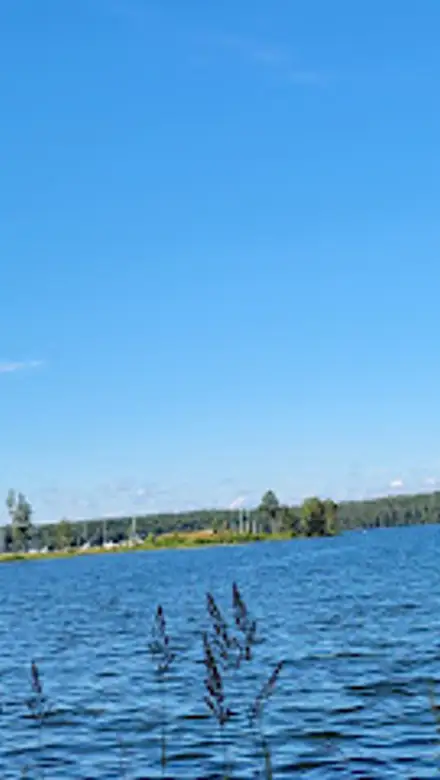
Karlsborgs fästning, Bohuslan Travel Guide
Sweden's colossal 19th-century fortress: a 678m engineering titan born from 1809's crisis, guarding Vättern as reserve capital for king and realm.
Karlsborgs fästning, en monumental 19th-century fortress on Vanäs udde by Lake Vättern, embodies Sweden's central defense strategy post-1809. Planned as the nation's wartime reserve capital, its 678-meter Slutvärn—one of Europe's longest continuous buildings—features bastions, moats, and a nygothic church. Construction spanned 90 years from 1819, blending military might with civil architecture amid Göta kanal proximity.
A brief summary to Karlsborgs fästning
- Fortifikationsgatan 9B, Karlsborg, 546 30, SE
- Click to display
- Duration: 1 to 3 hours
- Budget
-
 Outdoor
- Mobile reception: 4 out of 5

Know before you go
Hi, I'm Eve. Here are a few practical things to know before exploring Karlsborgs fästning.
- Join a guided tour to access restricted areas like casemates and ramparts, revealing hidden defensive ingenuity.
- Visit Garnisonkyrkan for its nygothic splendor and insight into its dual role as garrison chapel and potential parliament hall.
- Explore Götiska valvet entrance at dusk for dramatic lighting on its vaulted arches and royal inscriptions.
Do you manage this location?
Take control to get all the benefits, like improved information, better appearance, and stronger visibility across AI-powered discovery. Learn more about listing your business on Evendo
Activate your presenceOther nearby places you may find interesting
The closest places of the same kind, if this one is not quite what you had in mind.
Explore Karlsborgs fästning on the Map
A handpicked selection of must-see spots near Karlsborgs fästning, mapped for you.
Getting There
-
Bus
Västtrafik regional bus from Skövde Centralstation takes 20-30 minutes, services hourly on weekdays with fewer on weekends, SEK 40-60 one-way.
-
Car
Drive from Skövde via Route 49, 25-35 minutes depending on traffic, free parking available at fortress lots but limited during peak summer.
-
Walking
From Karlsborg village center along Göta kanal path, 25-40 minutes on flat paved terrain suitable for most fitness levels.
-
Bicycle
Cycle from Göta kanal locks in Forsvik, 40-50 minutes on mixed bike paths and quiet roads, bike rentals available locally for SEK 100-200 per day.
For the on-the-go comforts that matter to you
-
 Restrooms
-
 Drink Options
-
 Food Options
-
 Seating Areas
-
 Trash Bins
-
 Information Boards
Discover more about Karlsborgs fästning
Origins in National Crisis
After Sweden's devastating loss of Finland to Russia in 1809, the nation's defense strategy shifted dramatically. Stockholm became perilously exposed on the empire's edge, prompting the birth of the central defense idea. A inland fortress would allow time for mobilization, sheltering the king, government, gold reserves, and parliament in crisis. Baltzar von Platen, architect of Göta kanal, championed Vanäs udde on Vättern's western shore for its strategic isolation and waterway access.King Karl XIV Johan approved the project in 1819, renaming the site Karlsborg during his 1832 visit. What began as a 10-year endeavor ballooned into a 90-year saga, reflecting rapid advances in fortification and weaponry.The Monumental Slutvärn
The fortress's crowning glory is the Slutvärn, a colossal 678-meter barrier slicing the peninsula from shore to shore. Built 1844-1866, it bristles with 263 cannon ports facing the front, designed to house 6,000-8,000 troops. Engineer Johan af Kleen's design drew from German models, incorporating bastions, curtains, caponiers, and deep moats for layered defense.Over a million tons of sand were excavated by hand—soldiers, laborers, and convicts enduring harsh conditions—lowering the udde by 1.5 meters to raise impenetrable earthworks. This engineering marvel remains one of Europe's longest man-made structures.A Self-Sufficient Inland City
Beyond ramparts, a thriving garrison town emerged with barracks, hospital, school, workshops, and bank. Civil grid streets laid in the 1820s persist today. The nygothic Garnisonkyrkan, oversized for potential parliamentary sessions, anchors the heart, its spires piercing the skyline.Post-military completion around 1870, civilian expansions flourished, blending functionality with neoclassical elegance. Göta kanal's proximity facilitated supply, tying the fortress to Sweden's industrial dawn.Decline and Enduring Legacy
By 1909, modern artillery rendered central fortresses obsolete; Karlsborg was declared complete and disarmed in 1928. Focus shifted to coastal defenses like Boden. Yet the site endures as a preserved monument, still hosting military presence via Livregementet Husarer (K 3).Today, its vast interiors echo with history—vaulted gates like Götiska valvet bear royal insignia, while open spaces invite reflection on Sweden's resilient spirit.Strategic Vättern Setting
Perched on the peninsula, the fortress commands Vättern's waters, its three towers silhouetted against the lake. Moats and bastions create a timeless bastion, where stone whispers of 19th-century ambition amid serene natural beauty.












Your all‑in‑one travel companion app
Explore expert travel guides, compare and book tours, experiences, hotels, and more—all from the palm of your hand. Download now for seamless trip planning wherever your wanderlust takes you.


Explore More of Bohuslan

Looking beyond Karlsborgs fästning? Discover Bohuslan for broader travel guides, local hot-spots, and regional highlights.
Explore Bohuslan
Sweden's premier Renaissance castle: Explore Gustav Vasa's fortress-turned-palace on Lake Vättern's edge, with moats, towers, and royal tales in a medieval town.
Sweden's southern wilderness of glacier-hewn boulders, rift valleys, and old-growth forests, laced with 34 km of trails to troll-haunted peaks and serene lakes.