

Donners Plats Travel Guide
Free Guide: A compact, history-soaked square in medieval Visby where merchant houses, cobbles and quiet cafés condense centuries of island life.


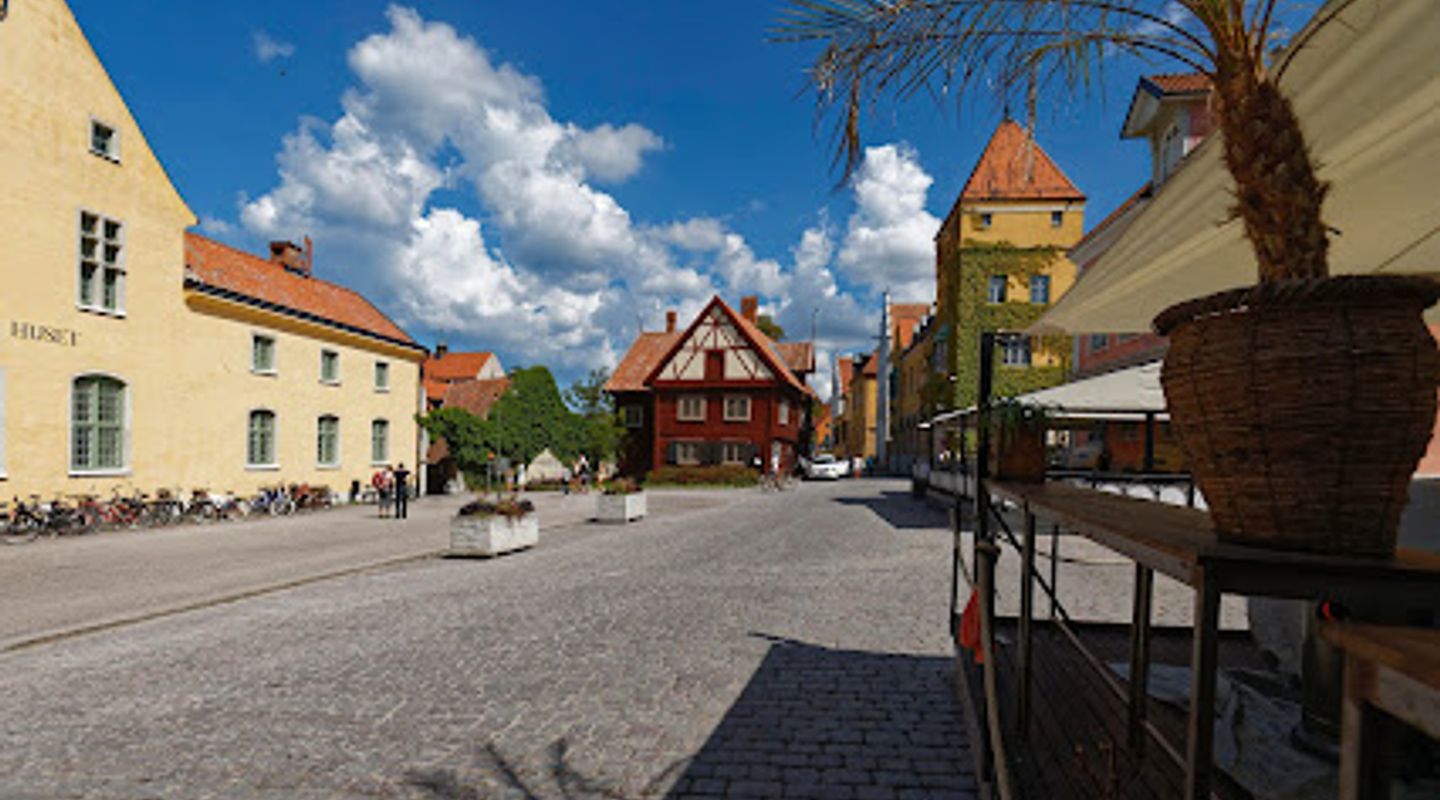
A brief summary of Donners Plats
A compact, history-soaked square in medieval Visby where merchant houses, cobbles and quiet cafés condense centuries of island life.
A compact historic square inside Visby’s medieval ring wall, Donners plats is framed by elegant merchant houses, the Donnerska huset and Burmeisterska huset, small cafés and hotels. Once a water-collection and market site, the square sits near Almedalen and the Stora Strandporten and carries layers of Visby’s trading past and civic life; its cobbles, varied façades and pocket green spaces make it a quiet, architectural pause in the walled town.
On-site amenities
 Restrooms
 Drink options
 Food options
 Seating areas
 Information boards
Opening hours
- Every dayOpen 24 hours
Opening hours as listed on the venue’s Google Business Profile. Hours can change for services and special events, so check with the venue before you go.
- Address
- Donnersgatan, 621 57 Visby
Getting there
From Visby Railway Station or central bus stop (Public bus)
From Visby ferry terminal (Taxi)
On foot from nearby sites (Walking)
Discover more about Donners Plats
From Viking graves to merchant square
Donners plats occupies a shallow hollow in Visby’s inner town whose ground has been used and reused for a millennium. Archaeological finds indicate activity on the site from the late Viking age, and through the medieval period the place served everyday municipal needs, once known as the water-collection square and later as a market hub. Its current name commemorates the Donnerska household and the long association of the Donner family with trade and civic life in Visby.
Architectural neighbours that tell stories
The square is flanked by architecturally layered buildings: the Donnerska huset, a historic merchant house later adapted for offices and hospitality, and the Burmeisterska huset with its richly painted interiors and 17th-century associations. These structures show Visby’s continuous adaptation of older urban fabric—stone and timber façades, period windows and discreet additions that record commerce, municipal functions and later 19th–20th-century civic use.
A living urban room
Rather than a single monumental plaza, Donners plats reads as a compact urban room with cobbles, narrow approaches and a mix of small-scale uses: cafés, a hotel entrance, and occasional market or event fittings during town gatherings. The square’s scale encourages low-key activity—benches, small groups at pavement tables, and the measured movement of residents and visitors against a backdrop of historic masonry.
Civic layers and cultural context
Historically the square’s identity shifted with Visby’s economic rhythms: a practical service place in medieval times, a market street in the early modern period and, from the 18th century onward, a locale associated with prominent merchant families. These civic layers are visible in building plaques, conserved interiors and the way the square connects visually and spatially with the nearby city wall and the gateway toward Almedalen.
Sensory details and daily rhythms
Donners plats is best experienced at a slow pace: the bite of sea air filtered through narrow lanes, the textural contrast of smooth limestone walls and worn cobbles, and the soft hum of conversation from cafés. Light shifts quickly here—morning and late afternoon bring long shadows across façades, while summer evenings lend a warm glow that softens stone colours and draws people outdoors.
Why it matters within Visby
As a small but historically dense square inside Visby’s UNESCO-protected walled town, Donners plats condenses the island’s maritime trading past, domestic architecture and civic memory into a single accessible place. It functions as a connective node: a place to pause when walking between the ring wall, Almedalen and the town’s principal streets, and a compact example of how everyday urban life lives inside a long historic continuum.
Evendo Review Centre
 Google
Guest reviews
Best time to go
Quietest: Jan, Feb & Dec · before 8am or from 9pm
Busy times are Evendo estimates for a typical year, to help you plan. Actual crowds vary with events, school holidays and the weather.
Explore Donners Plats on the map
A handpicked selection of must-see spots near Donners Plats, mapped for you.
Get your free copy of our complete guide to Donners Plats, delivered straight to you.
Everything on this page, from opening hours and how to get there to Eve’s tips and the best time to go, in one PDF you can read offline, print or share.
Already have an account? Sign in
Your Donners Plats guide is ready.
We'll send it to · Not you? Sign out

Getting your guide ready…
We are putting together a fresh copy of the Donners Plats guide. This can take up to a minute.
This can take a few moments. If your browser asks, choose Allow so the download can start. You'll find the guide in your Downloads folder.
Nothing happened? Download it again
Sorry, the guide is taking longer than usual. Please try again in a minute, or get it by email instead.
Unlock the best of Donners Plats
Skip-the-line tickets, guided tours with entry, and walking tours of the area, booked in a few clicks.

Other nearby places you may find interesting
The closest places of the same kind, if this one is not quite what you had in mind.
-
-
-
-
-


Swipe for more places
More to explore near Donners Plats

 Best experiences near Donners Plats
 Best hotels near Donners Plats
 Best landmarks near Donners Plats
 Best attractions near Donners Plats
 Best shops near Donners Plats
 Best restaurants near Donners Plats
 Best bars near Donners Plats
Do you manage this location?
Take control to get all the benefits, like improved information, better appearance, and stronger visibility across AI-powered discovery.
Explore more

Explore more of Gotland
Explore Gotland, Sweden's largest island, known for its medieval charm, stunning natural landscapes, and vibrant cultural scene in the heart of the Baltic Sea.
Explore Gotland
Explore more of Sweden
Discover Sweden's breathtaking landscapes, vibrant cities, and rich cultural heritage. From the Northern Lights to historic castles, experience the essence of Scandinavia.
Explore Sweden
