

Korsbetningen Travel Guide
Free Guide: Stand where 1,800 Gotlanders fell in 1361, beneath Valdemar's solemn cross—a haunting battlefield turned meadow of medieval memory.


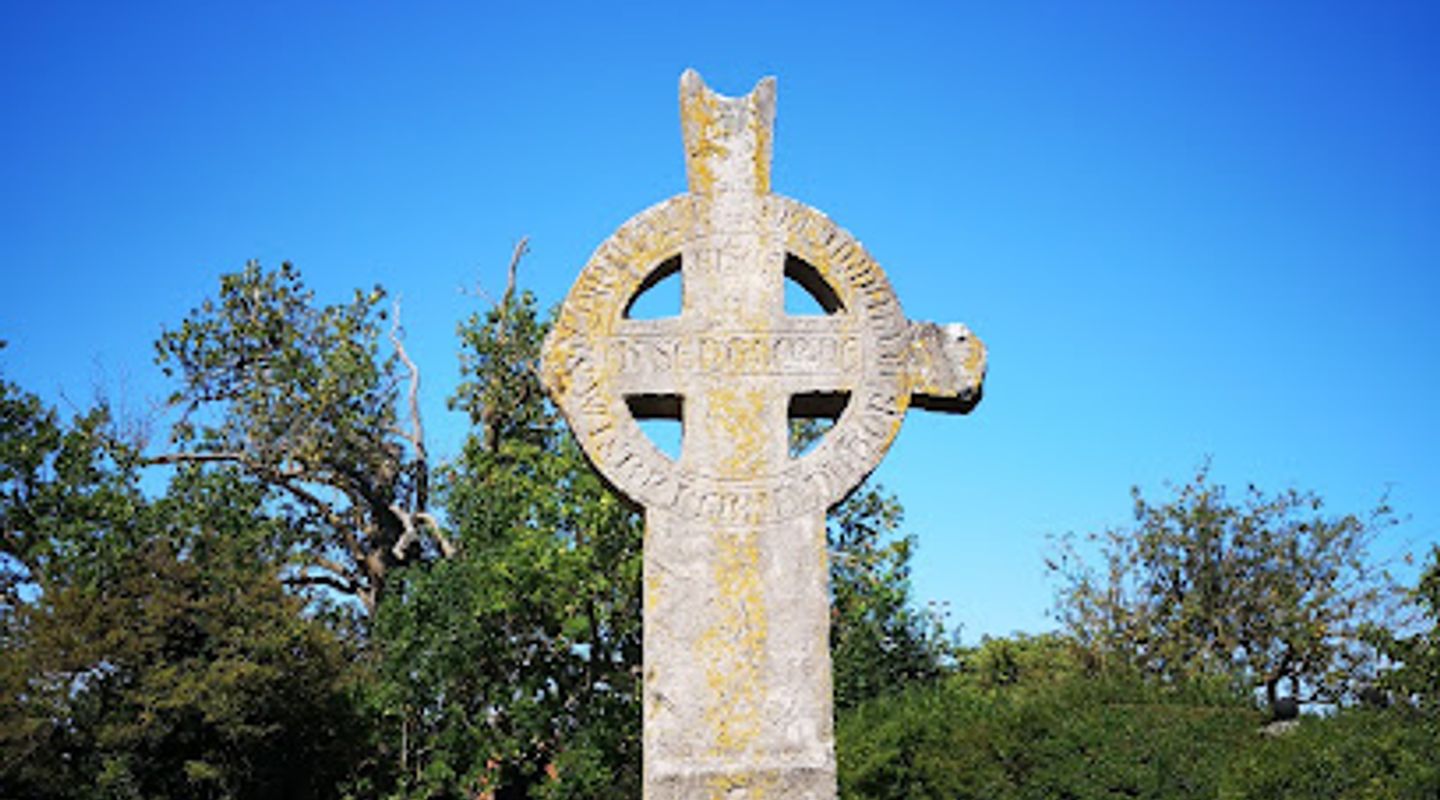
A brief summary of Korsbetningen
Stand where 1,800 Gotlanders fell in 1361, beneath Valdemar's solemn cross—a haunting battlefield turned meadow of medieval memory.
Korsbetningen is a poignant historical site just outside Visby's medieval ring wall, marking the site of the devastating Battle of Visby in 1361. Here, Danish forces under King Valdemar Atterdag crushed a Gotlandic peasant army, leaving mass graves where around 1,800 defenders were buried. A striking stone cross, erected shortly after, commemorates the fallen with a Latin inscription pleading for prayers. Archaeological digs have uncovered armor-clad skeletons bearing brutal wounds from swords, axes, and clubs, offering stark evidence of the slaughter. Amid Visby's UNESCO-listed walls, this open field evokes the raw violence that reshaped Gotland's fate, blending somber history with the island's pastoral charm.
On-site amenities
 Information boards
 Trash bins
Opening hours
- Every dayOpen 24 hours
Opening hours as listed on the venue’s Google Business Profile. Hours can change for services and special events, so check with the venue before you go.
- Address
- Östra Hansegatan 17, 621 45 Visby
Getting there
Walking
Bus
Bicycle
Taxi
Discover more about Korsbetningen
Site of Medieval Carnage
Korsbetningen stands as a grassy meadow adjacent to Visby's imposing ring wall, forever etched in history as the battlefield of 1361. On July 27, Danish invaders led by Valdemar Atterdag clashed with a hastily assembled force of local farmers. The peasants, poorly armed with scythes and pitchforks, faced professional soldiers in chainmail and plate armor. The result was a one-sided rout, with bodies piled high in hasty mass graves dug into the earth still warm from combat.The name 'Korsbetningen' derives from the medieval stone cross at its heart and the pastures where townsfolk grazed livestock. Owned by the nearby Solberga Convent, the land witnessed both everyday rural life and extraordinary tragedy.
Valdemar's Cross and Its Message
Dominating the site is the Valdemarskorset, a classic Gotlandic ring cross raised soon after the battle. Carved with a crucified Christ, its Latin inscription reads: 'Anno Domini MCCCLXI feria III post Jacobi ante portas Visby in manibus Danorum ceciderunt Gutenses, hic sepulti, orate pro eis.' This translates to a stark reminder of the Gotlanders' fall into Danish hands before Visby's gates, urging prayers for the buried souls.Similar to the Grenskorset from the Battle of Mästerby, it symbolizes atonement amid conquest. The cross's weathered stone endures as a silent witness, its form blending pagan ring motifs with Christian iconography typical of Gotland's medieval artistry.
Archaeological Revelations
Excavations began in 1905 after bones surfaced during landscaping, led by archaeologist Oscar Wennersten. Further digs in 1928-1929 unearthed mass graves with skeletons still clad in brynjes—chainmail hoods and shirts—revealing the defenders' desperate fight. Skulls show deep gashes from swords, crushed by maces, and pierced by arrows, indicating multiple assailants per victim.Osteological analysis by Elias Dahr highlighted the battle's ferocity: many died from head blows, while others succumbed to limb hacks. Weapons ranged from arming swords to improvised clubs, underscoring the mismatch. These finds, now studied via DNA and 3D scans, humanize the statistics, portraying young farmers cut down defending their homes.
Context of the Danish Invasion
Valdemar Atterdag's 1361 campaign sought to reclaim Gotland, a prosperous Hanseatic hub, for Denmark amid Scandinavia's power struggles. After victory at Mästerby, his army marched on Visby. The city fathers surrendered without fight, but the battle at Korsbetningen decided the island's fate. Chroniclers from Visby's Franciscan monastery recorded the horror, their accounts preserved in medieval annals.The event prompted ongoing research, including 2025 symposia exploring trauma bioarchaeology, experimental recreations of wounds, and DNA to identify victims—perhaps locals or mercenaries. Solberga Convent's nuns likely oversaw burials, their site now faint ruins nearby.
Lasting Echoes in Gotland's Landscape
Today, Korsbetningen integrates seamlessly into Visby's walled core, a UNESCO World Heritage tapestry of ruins and ramparts. Managed by Gotlands Museum alongside sites like St. Olof and Drotten, it features interpretive boards detailing the battle. The open terrain invites reflection on medieval warfare's brutality, contrasting with Visby's vibrant summer scene.Seasonal access aligns with nearby church ruins, open May to October. The site's tranquility belies its gore-soaked past, where wildflowers now sway over graves, and distant sea breezes carry whispers of 14th-century cries.
Evendo Review Centre
 Google
Guest reviews
Best time to go
Quietest: Jan, Feb & Dec · before 8am or from 10pm
Busy times are Evendo estimates for a typical year, to help you plan. Actual crowds vary with events, school holidays and the weather.
Explore Korsbetningen on the map
A handpicked selection of must-see spots near Korsbetningen, mapped for you.
Get your free copy of our complete guide to Korsbetningen, delivered straight to you.
Everything on this page, from opening hours and how to get there to Eve’s tips and the best time to go, in one PDF you can read offline, print or share.
Already have an account? Sign in
Your Korsbetningen guide is ready.
We'll send it to · Not you? Sign out

Getting your guide ready…
We are putting together a fresh copy of the Korsbetningen guide. This can take up to a minute.
This can take a few moments. If your browser asks, choose Allow so the download can start. You'll find the guide in your Downloads folder.
Nothing happened? Download it again
Sorry, the guide is taking longer than usual. Please try again in a minute, or get it by email instead.
Other nearby places you may find interesting
The closest places of the same kind, if this one is not quite what you had in mind.
-
-
-
-
-


Swipe for more places
More to explore near Korsbetningen

 Best experiences near Korsbetningen
 Best hotels near Korsbetningen
 Best landmarks near Korsbetningen
 Best attractions near Korsbetningen
 Best shops near Korsbetningen
 Best restaurants near Korsbetningen
 Best bars near Korsbetningen
Do you manage this location?
Take control to get all the benefits, like improved information, better appearance, and stronger visibility across AI-powered discovery.
Explore more

Explore more of Gotland
Explore Gotland, Sweden's largest island, known for its medieval charm, stunning natural landscapes, and vibrant cultural scene in the heart of the Baltic Sea.
Explore Gotland
Explore more of Sweden
Discover Sweden's breathtaking landscapes, vibrant cities, and rich cultural heritage. From the Northern Lights to historic castles, experience the essence of Scandinavia.
Explore Sweden
