

Östergötlands runinskrifter 87 Travel Guide
Free Guide: Viking gravestone unearthed from Högby Church, bearing Younger Futhark runes in memory of kin amid Östergötland's ancient landscape.


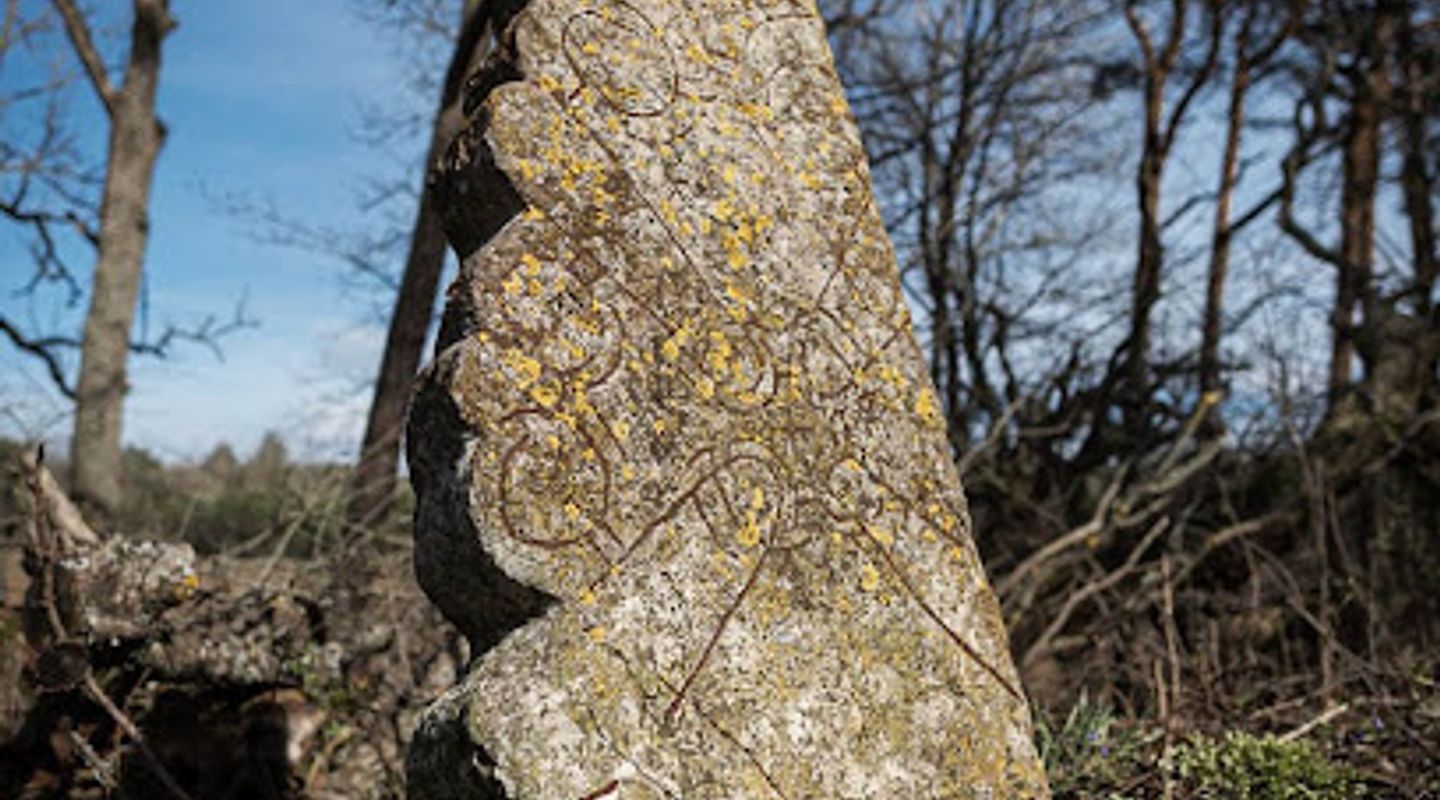
A brief summary of Östergötlands runinskrifter 87
Viking gravestone unearthed from Högby Church, bearing Younger Futhark runes in memory of kin amid Östergötland's ancient landscape.
Östergötlands runinskrift 87 is a Viking Age runestone discovered in the foundations of Högby Church after its demolition in 1870. Originally a gravestone, this ornamental slab bears intricate Younger Futhark runes commemorating a memorial, standing as a testament to early medieval craftsmanship in rural Östergötland near Mjölby.
On-site amenities
 Trash bins
 Information boards
Opening hours
- Every dayOpen 24 hours
Opening hours as listed on the venue’s Google Business Profile. Hours can change for services and special events, so check with the venue before you go.
- Address
- 9463+44, 595 94 Mjölby
- Website
Getting there
Driving
Bus
Cycling
Walking
Discover more about Östergötlands runinskrifter 87
Discovery in Högby Church Foundations
In 1870, when the old Högby Church in Göstrings härad was demolished, workers uncovered several runestones embedded in its walls and foundations, including Östergötlands runinskrift 87. This stone, like others such as Ög 82, 83, and 88, had been repurposed as building material centuries earlier. Its emergence revealed a hidden layer of Viking Age history, preserved unwittingly within the sacred structure of the medieval church.The stone's placement in the church suggests it was moved there during Christianization, when pagan memorials were often integrated into new religious sites. Today, it stands outdoors near the church site, a weathered survivor linking pre-Christian rituals to later ecclesiastical architecture.
Viking Age Memorial Craftsmanship
Carved in the Younger Futhark script typical of 11th-century Scandinavia, the inscription on Ög 87 follows a classic memorial formula. It records how someone raised the stone in memory of a father or kin, with runes arranged in serpentine bands that evoke the era's artistic conventions. The text begins and ends with characteristic loops, as documented in early runological studies.As a gravhäll—a flat gravestone—this artifact differs from upright memorial stones, hinting at its original use over a burial. Its ornamental design, possibly featuring subtle zoomorphic elements, reflects the runecarver's skill in blending text with decoration, a hallmark of Östergötland's runestone tradition.
Historical Context in Östergötland
Östergötland boasts one of Sweden's richest concentrations of runestones, with over 200 documented, many commemorating voyages, deaths, or inheritance. Ög 87 fits into this regional pattern, likely erected around 1000–1050 AD during the late Viking Age transition to Christianity. The area's flat farmlands and proximity to trade routes fostered such memorials among prosperous farmers and chieftains.Discovered alongside sibling stones like Ög 88, it points to a local cluster of commemorative practices. These stones illuminate social structures, where rune commissions served as status symbols, asserting family legacy amid shifting religious landscapes.
Enduring Significance Today
Positioned in the quiet countryside near Mjölby, Ög 87 invites reflection on Sweden's runic heritage. Its relocation from church foundations underscores how Viking artifacts endured through reuse, bridging pagan and Christian eras. Scholars reference it in comprehensive catalogs like Sveriges runinskrifter, preserving its linguistic and artistic value.For history enthusiasts, the stone offers a tangible connection to runologists like Elias Wessén, whose transcriptions decoded its message. Standing alone yet part of a broader narrative, it embodies the understated power of rural Viking memorials.
Evendo Review Centre
 Google
Guest reviews
Best time to go
Quietest: Jan, Feb & Dec · before 7am or from 8pm
Busy times are Evendo estimates for a typical year, to help you plan. Actual crowds vary with events, school holidays and the weather.
Explore Östergötlands runinskrifter 87 on the map
A handpicked selection of must-see spots near Östergötlands runinskrifter 87, mapped for you.
Get your free copy of our complete guide to Östergötlands runinskrifter 87, delivered straight to you.
Everything on this page, from opening hours and how to get there to Eve’s tips and the best time to go, in one PDF you can read offline, print or share.
Already have an account? Sign in
Your Östergötlands runinskrifter 87 guide is ready.
We'll send it to · Not you? Sign out

Getting your guide ready…
We are putting together a fresh copy of the Östergötlands runinskrifter 87 guide. This can take up to a minute.
This can take a few moments. If your browser asks, choose Allow so the download can start. You'll find the guide in your Downloads folder.
Nothing happened? Download it again
Sorry, the guide is taking longer than usual. Please try again in a minute, or get it by email instead.
Other nearby places you may find interesting
The closest places of the same kind, if this one is not quite what you had in mind.
-
-
-
-
-


Swipe for more places
More to explore near Östergötlands runinskrifter 87
-
 Best experiences near Östergötlands runinskrifter 87
-
 Best hotels near Östergötlands runinskrifter 87
-
 Best landmarks near Östergötlands runinskrifter 87
-
 Best attractions near Östergötlands runinskrifter 87
-
 Best shops near Östergötlands runinskrifter 87
-
 Best restaurants near Östergötlands runinskrifter 87
-
 Best bars near Östergötlands runinskrifter 87


Do you manage this location?
Take control to get all the benefits, like improved information, better appearance, and stronger visibility across AI-powered discovery.
Explore more

Explore more of Östergötland
Discover Östergötland: A perfect blend of history, nature, and culture in southern Sweden, offering charming towns, lush landscapes, and a rich cultural heritage.
Explore Östergötland
Explore more of Sweden
Discover Sweden's breathtaking landscapes, vibrant cities, and rich cultural heritage. From the Northern Lights to historic castles, experience the essence of Scandinavia.
Explore Sweden
