
Kungsträdgården, Stockholm Travel Guide
Stockholm's King's Garden: verdant heart of events, history, and urban vitality where seasons unfold in central harmony.
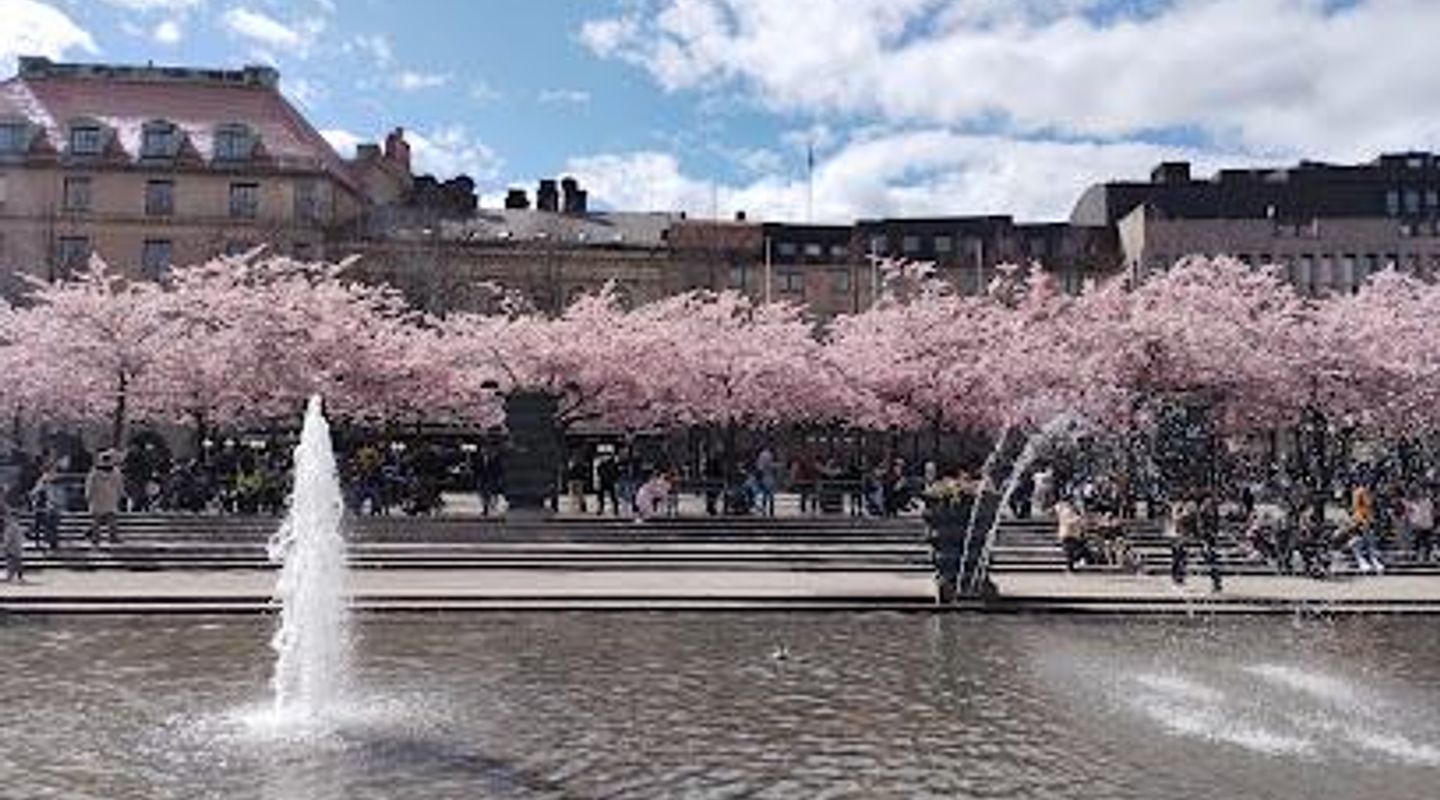
Kungsträdgården, Stockholm's beloved King's Garden, pulses as the city's vibrant heart. This central park blends lush greenery, historic statues, fountains, and event spaces into an urban oasis. Stroll tree-lined promenades, relax by bubbling fountains, or join over 200 annual events from summer concerts to winter ice skating. Cherry blossoms enchant in spring, while surrounding cafés and galleries add cultural flair. Colloquially called Kungsan, it connects the waterfront to shopping districts, offering endless people-watching amid neoclassical landmarks like the statue of Charles XIII guarded by heraldic lions.
A brief summary to Kungsträdgården
- Jussi Björlings allé, Stockholm, 111 47, SE
- Click to display
- Click to display
- Duration: 0.5 to 2 hours
- Free
-
 Outdoor
- Mobile reception: 5 out of 5

Know before you go
Hi, I'm Eve. Here are a few practical things to know before exploring Kungsträdgården.
- Visit in late April for cherry blossoms blanketing the northern paths in pink clouds.
- Winter brings an ice rink at the central fountain—rent skates nearby for a classic Swedish glide.
- Catch free summer concerts on the main stage; arrive early for prime lawn seating.
- People-watch from the tiered steps around Wolodarski Fountain, a perfect perch amid the buzz.
- Explore surrounding galleries like Galleri Doktor Glas for art intertwined with park strolls.
Do you manage this location?
Take control to get all the benefits, like improved information, better appearance, and stronger visibility across AI-powered discovery. Learn more about listing your business on Evendo
Activate your presenceOther nearby places you may find interesting
The closest places of the same kind, if this one is not quite what you had in mind.


Explore Kungsträdgården on the Map
A handpicked selection of must-see spots near Kungsträdgården, mapped for you.
Unlock the Best of Kungsträdgården
Buy tickets
-
No tickets available
Book tours with entry


Getting There
-
Metro
Take the red or blue line to Kungsträdgården station, directly beneath the park; 1-2 minute walk to entrance, frequent services every 3-5 minutes, single ticket 40 SEK.
-
Walking from Central Station
Walk 15-20 minutes from Stockholm Central via Hamngatan; flat, pedestrian-friendly sidewalks amid shops, suitable for all abilities.
-
Bus
Bus 2 or 57 from city center stops at nearby Hamngatan, 5-10 minute ride, every 10 minutes daytime, ticket 40 SEK, drop-off 3-minute walk.
-
Ferry
SL ferry from Djurgården or nearby quays to Nybroviken, 10-15 minutes seasonal summer service, 40 SEK, 5-minute walk along Strömgatan quay.
For the on-the-go comforts that matter to you
-
 Restrooms
-
 Drink Options
-
 Food Options
-
 Seating Areas
-
 Trash Bins
-
 Information Boards
Discover more about Kungsträdgården
From Royal Roots to Public Paradise
Kungsträdgården began as the royal kitchen garden in the 15th century, evolving under French designer Jean Allard in 1562 into a pleasure garden for the elite. By the 19th century, it opened to the public, transforming from private grounds to Stockholm's communal living room. The site once hosted the Makalös Palace, which burned down in 1665, leaving space for the gardens that now define this spot. Today, managed by a subsidiary of the Stockholm Chamber of Commerce, it thrives without public funding, sustained by event revenues and rentals.Distinct Rooms of Green and Stone
Divided into evocative 'rooms,' the park unfolds from south to north. Start at the Square of Charles XII, a formal entrance leading to Molin's Fountain amid parterre plantings. The central Square of Charles XIII features a neoclassical statue by Gustaf Göthe, inaugurated in 1821 and flanked by four lions by Bengt Erland Fogelberg, symbolizing the Swedish-Norwegian Union. Further north, the unnamed Fountain of Wolodarski offers a sunken pool with tiered seating, ideal for contemplation. Grassy lawns, shaded allees, and a performance stage create flexible zones for lounging or gatherings.Seasonal Spectacles and Cultural Pulse
Spring brings cherry blossoms to the northern section, drawing crowds to petal-strewn paths. Summer hosts open-air concerts, festivals, and over 150 stage events on the main tented platform, from music to exhibitions. Autumn quiets into golden foliage, while winter converts the central area into an ice rink—the site of Sweden's first artificial one in 1962. Year-round, more than 200 events animate the space, including Christmas markets and sports, making it a dynamic calendar of urban life.Landmarks Encircling the Oasis
Bordered by architectural gems, the park's east side lines up the Stockholm Synagogue, Jernkontoret, Palmeska huset, and SEB headquarters along Kungsträdgårdsgatan. To the west rise the Royal Swedish Opera, Saint James's Church, Ivar Kreuger's Matchstick Palace, and Sverigehuset. South connects via Strömgatan quay to bridges reaching the Royal Palace and Old Town; north meets Hamngatan's department stores like NK. This perimeter weaves history and modernity into the park's fabric.Innovations and Everyday Charms
Kungsträdgården pioneered Swedish novelties: the first hot dog and espresso in 1953 during city birthday festivities, plus the nation's first outdoor chess sets in the 1970s. Cafés dot the grounds, from historic Opera Bar to kiosks serving refreshments. The 400m by 100m expanse balances park, square, and stage, with turf-upgraded central areas for picnics and play. Statues invite interaction, like perching on lion backs, while promenades lead to waterfront dining.












Your all‑in‑one travel companion app
Explore expert travel guides, compare and book tours, experiences, hotels, and more—all from the palm of your hand. Download now for seamless trip planning wherever your wanderlust takes you.


Explore More of Stockholm
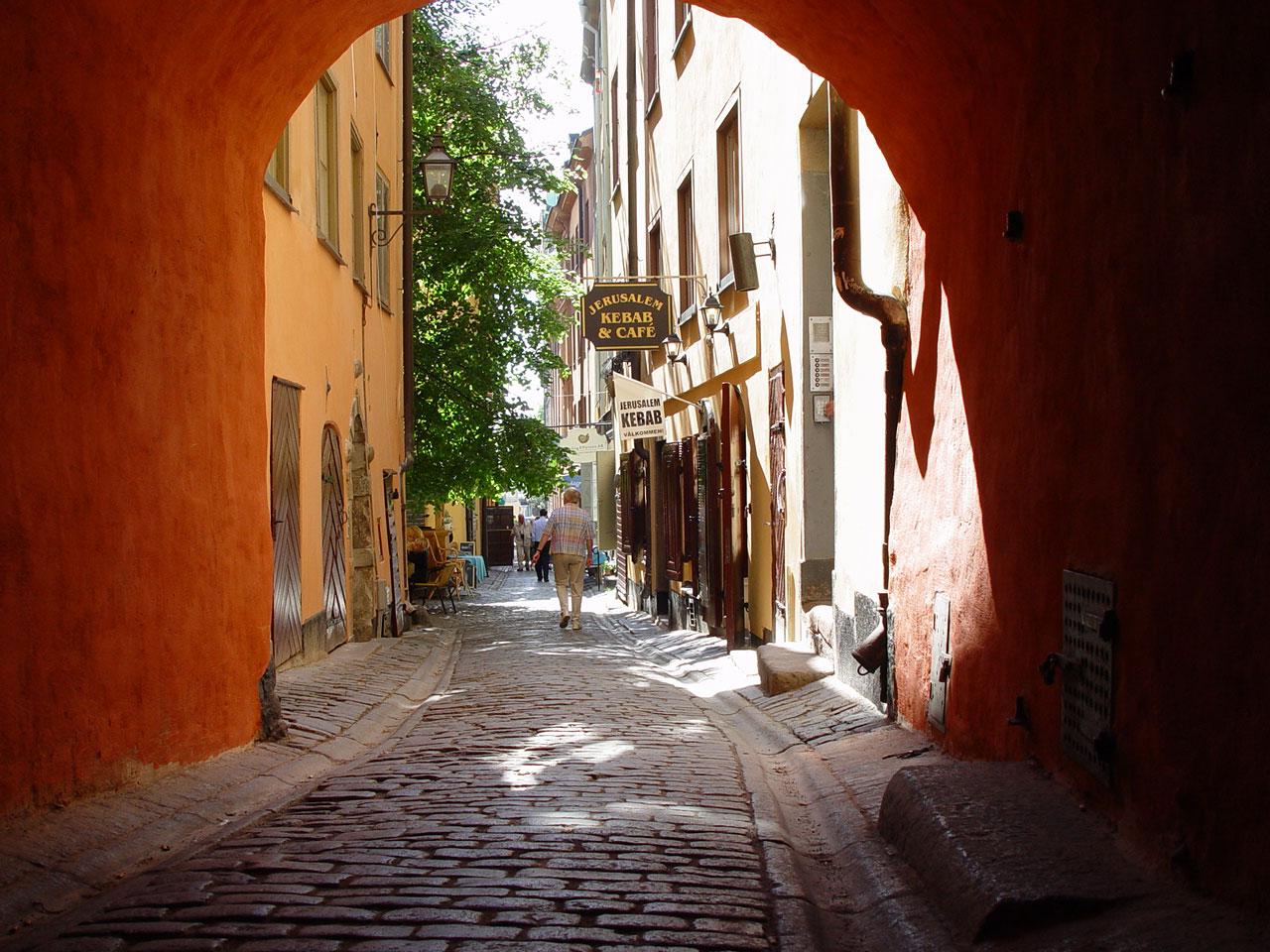
Looking beyond Kungsträdgården? Discover Stockholm for broader travel guides, local hot-spots, and regional highlights.
Explore Stockholm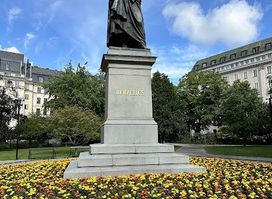
A compact, 19th-century city garden honouring chemist Berzelius — an elegant pocket of calm beside Nybroplan and Stockholm’s waterfront.
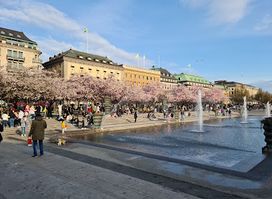
Stockholm's northern jewel: where powerful fountains, cherry blossoms, and seasonal events create an enduring urban heartbeat in Kungsträdgården.
