

Östermalm (Stockholm) Travel Guide - Free
Explore Östermalm in Stockholm with Evendo's free guide. Find the best shops, historic streets, restaurants, and gems on web or mobile.


Östermalm in Stockholm blends grand boulevards, royal-era museums, Humlegården, Östermalms Saluhall, stylish dining and waterfront walks around Strandvägen.
Urban Elegance and Everyday Life
Östermalm occupies the city’s north-eastern inner districts, stretching from the formal avenues around Stureplan towards the waterfront and the island of Djurgården. Its reputation rests on carefully planned boulevards, imposing nineteenth- and early twentieth-century buildings, fashionable shops and a polished restaurant scene, yet the neighbourhood is not simply a showcase of grand architecture. Residents use its parks, food market, cafés, schools and local services throughout the day, giving the area a steady rhythm beyond its most celebrated addresses.Read more about Östermalm
Architecture, Parks and Water
Museums, Food and Cultural Institutions
Best attractions in Östermalm
Östermalm’s attractions are concentrated within a walkable sequence of museums, parks, food spaces and grand urban streets. Östermalms Saluhall on Östermalmstorg is a central stop for its historic market setting and specialist food counters, while the Hallwyl Museum offers an unusually intimate view of an aristocratic Stockholm home. The Swedish History Museum presents Sweden’s past through collections including Viking-era and medieval material, and the Army Museum explores military history in a former arsenal building. Humlegården provides an open, leafy contrast to the stone avenues, with the Royal Library standing at its centre. For architecture and waterfront atmosphere, walk down Strandvägen towards Nybroviken and Nybroplan, where the Royal Dramatic Theatre adds a major cultural institution. Djurgården’s Vasa Museum and other attractions lie across the water or beyond the neighbourhood boundary.
-
Tourist attraction
Fotografiska Museum Stockholm
Experience the allure of contemporary photography at Fotografiska Museum Stockholm, a premier destination for art lovers and cultural enthusiasts.
6 min drive · 2.0 km from neighbourhood centre
-
Tourist attraction
ABBA The Museum
Discover the unforgettable journey of ABBA at ABBA The Museum, an interactive experience celebrating the iconic Swedish pop band and their timeless music.
5 min drive · 1.6 km from neighbourhood centre
-
Tourist attraction
Swedish History Museum
Explore the Swedish History Museum and embark on a captivating journey through Sweden's rich cultural and historical heritage in the heart of Stockholm.
9 min walk · 0.7 km from neighbourhood centre
-
Tourist attraction
Humlegården
Explore Humlegården, Stockholm's beautiful park, filled with lush greenery, art, and a tranquil atmosphere perfect for relaxation and exploration.
6 min walk · 0.5 km from neighbourhood centre


Best landmarks in Östermalm
Östermalm’s landmarks express the district’s development as a planned, affluent and institution-rich part of Stockholm. Strandvägen is its most recognisable urban ensemble, a broad waterfront boulevard lined with ornate late nineteenth-century and early twentieth-century apartment buildings. The Royal Dramatic Theatre on Nybroplan is a major national theatre and a prominent example of the district’s cultural role. Östermalms Saluhall, opened in 1888, remains an important market-hall building and a symbol of the neighbourhood’s commercial life. The Hallwyl Museum preserves the interior world of a wealthy turn-of-the-century household, while Humlegården and the Royal Library give the area a substantial civic and green-space landmark. Karlaplan provides a formal eastern focal point, and the Army Museum’s former military setting recalls the area’s long relationship with national institutions and military land use.
-
 Castle
The Royal Palace
Discover the grandeur of The Royal Palace in Stockholm, a historic castle filled with royal charm, museums, and stunning gardens that showcase Sweden's rich heritage.
14 min walk · 1.1 km from neighbourhood centre
-
History museum
Swedish History Museum
Discover the rich tapestry of Sweden's past at the Swedish History Museum, featuring engaging exhibits from the Stone Age to modern times.
9 min walk · 0.7 km from neighbourhood centre
-
Park
Humlegården
Discover the beauty and tranquility of Humlegården, a premier park in Stockholm filled with art, history, and lush landscapes.
6 min walk · 0.5 km from neighbourhood centre
-
Historical landmark
Olof Palme Memorial Plaque
Explore the Olof Palme Memorial Plaque, a significant historical landmark in Stockholm, honoring the legacy of Sweden's former Prime Minister.
11 min walk · 0.9 km from neighbourhood centre


Explore Östermalm on the map
A handpicked selection of must-see spots in Östermalm, mapped for you.
Best hotels in Östermalm
Best restaurants in Östermalm
Östermalm’s dining scene reflects both its long-standing market culture and its position as one of Stockholm’s most polished central quarters. Östermalms Saluhall is the essential reference point, with established food counters and places to eat built around Swedish ingredients, seafood, meat, cheese and prepared dishes. Around Östermalmstorg, Stureplan, Nybrogatan and Sibyllegatan, visitors find restaurants ranging from contemporary Nordic cooking and serious wine-led dining to cafés, bakeries and international menus. Strandvägen and the streets near Nybroplan add waterfront and theatre-district options, while smaller neighbourhood restaurants serve local residents away from the busiest addresses. Prices and formality vary considerably, so the district rewards checking menus and booking arrangements in advance for sought-after dining rooms. The food culture is best understood as a combination of market tradition, refined restaurants and practical everyday cafés rather than a single regional cuisine.
-
Swedish
Riche
Discover Riche in Stockholm: A premier destination for authentic Swedish cuisine and vibrant nightlife.
4 min walk · 0.3 km from neighbourhood centre
-
Swedish
Restaurang Hantverket
Experience authentic Swedish cuisine at Restaurang Hantverket, where tradition meets innovation in the heart of Stockholm.
8 min walk · 0.6 km from neighbourhood centre
-
Asian Fusion
Miss Voon
Experience culinary excellence at Miss Voon in Stockholm, where Asian fusion meets innovative cocktails in a stylish atmosphere.
4 min walk · 0.3 km from neighbourhood centre
-
Italian
Trattoria Montanari
Savor authentic Italian cuisine at Trattoria Montanari in Stockholm—where every meal feels like a journey through Italy.
5 min walk · 0.4 km from neighbourhood centre


Best bars in Östermalm
After dark, Östermalm’s nightlife is most concentrated around Stureplan, one of Stockholm’s established meeting points for bars, restaurants and late-evening venues. The surrounding streets offer cocktail bars, hotel bars and clubs alongside dining rooms, producing a more dressed-up atmosphere than the quieter eastern residential areas. Nybroplan and the Royal Dramatic Theatre contribute a cultural dimension, with theatre-goers filling nearby restaurants and bars before or after performances. Elsewhere, evenings are calmer: Humlegården and Strandvägen are primarily places for walking and views rather than dense nightlife, and the streets around Karlaplan feel residential once businesses close. Individual venues, door policies and opening arrangements can change, so visitors should check current information rather than rely on old listings. The neighbourhood suits both a formal evening out and a short drink near the central entertainment area.
-
Swedish
Grodan
Experience the finest of Swedish cuisine in a stylish setting at Grodan, Stockholm's premier dining destination.
2 min walk · 0.1 km from neighbourhood centre
-
Pub
Tudor Arms
Discover Tudor Arms, a cozy pub in Stockholm offering a delightful blend of local and international cuisine in a warm atmosphere.
5 min walk · 0.4 km from neighbourhood centre
-
Cocktail bar
A bar called Gemma
Discover A Bar Called Gemma, Stockholm's cocktail bar where innovation and flavor come together to create unforgettable drinking experiences.
2 min walk · 0.1 km from neighbourhood centre
-
Pub
The Londoner
Experience the charm of The Londoner, a cozy pub in Stockholm offering delicious food, a wide drink selection, and a vibrant atmosphere for all.
5 min walk · 0.4 km from neighbourhood centre


Best nightclubs in Östermalm
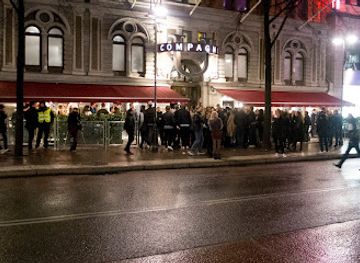
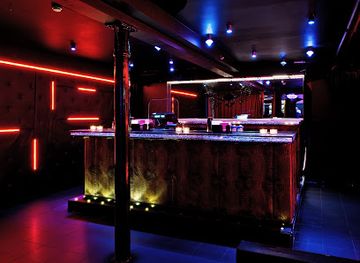
After dark, Östermalm’s nightlife is most concentrated around Stureplan, one of Stockholm’s established meeting points for bars, restaurants and late-evening venues. The surrounding streets offer cocktail bars, hotel bars and clubs alongside dining rooms, producing a more dressed-up atmosphere than the quieter eastern residential areas. Nybroplan and the Royal Dramatic Theatre contribute a cultural dimension, with theatre-goers filling nearby restaurants and bars before or after performances. Elsewhere, evenings are calmer: Humlegården and Strandvägen are primarily places for walking and views rather than dense nightlife, and the streets around Karlaplan feel residential once businesses close. Individual venues, door policies and opening arrangements can change, so visitors should check current information rather than rely on old listings. The neighbourhood suits both a formal evening out and a short drink near the central entertainment area.
-
Night club
Sturecompagniet
Sturecompagniet: Explore Stockholm's vibrant nightlife at this premier night club known for its electrifying atmosphere and exquisite drinks.
3 min walk · 0.3 km from neighbourhood centre
-
Night club
Spy Bar
Dive into Stockholm's nightlife at Spy Bar, a vibrant night club filled with music, dancing, and memorable experiences in the heart of the city.
4 min walk · 0.3 km from neighbourhood centre
-
Night club
End Night Club
Discover the vibrant nightlife at End Night Club in Stockholm, where unforgettable dance, music, and socializing await you until dawn.
10 min walk · 0.8 km from neighbourhood centre
-
Night club
Hell's Kitchen
Discover Hell's Kitchen, Stockholm's ultimate nightlife destination, where electrifying beats and vibrant atmosphere promise unforgettable nights.
3 min walk · 0.3 km from neighbourhood centre


Best shops in Östermalm
Shopping in Östermalm ranges from specialist food retail and independent local services to luxury fashion, beauty and design around Stureplan and Bibliotekstan on the western edge of the neighbourhood. Östermalms Saluhall is the district’s defining shopping experience, with counters devoted to Swedish and international ingredients, prepared food and delicatessen produce. Birger Jarlsgatan, Nybrogatan and the streets near Stureplan contain a concentration of premium retailers, galleries and interior-focused businesses, while smaller shops are scattered through the residential blocks. Visitors interested in Swedish design can browse selected boutiques, though Östermalm is not primarily a craft-market district. Retail character changes quickly between the formal commercial centre, the market hall and quieter streets with everyday services. For a broader high-street selection, nearby Norrmalm is easily reached, but it should not be confused with Östermalm’s more specialised and upmarket local scene.
-
Clothing store
Finest boutique
Explore Finest Boutique in Stockholm for unique used clothing, promoting sustainable fashion and style in a charming atmosphere.
6 min walk · 0.5 km from neighbourhood centre
-
Store
Things
Explore a trendy store in Stockholm for unique fashion and local artistry, capturing the essence of Swedish design.
5 min walk · 0.4 km from neighbourhood centre
-
Clothing store
Filippa K Woman Store Grev Turegatan
Explore the essence of Swedish fashion at Filippa K Woman Store in Stockholm, where modern elegance meets timeless style.
1 min walk · 0.1 km from neighbourhood centre
-
Women's clothing store
Boutique Mimic
Explore Boutique Mimic in Stockholm for an exquisite collection of women's clothing, blending style and sophistication in every piece.
6 min walk · 0.5 km from neighbourhood centre


Östermalm essentials
Getting There
Getting Around
Safety
Emergency Situations
Do's and Don'ts
Local Tips

From Eve
Local phrases worth knowing
You don't need to get them perfect. A few words go a long way, and locals appreciate the effort.
Basics
| English | Local | Say it |
|---|---|---|
| Hello | Hej | [hey] |
| Goodbye | Hej då | [hey doh] |
| Yes | Ja | [yah] |
| No | Nej | [nay] |
| Please/You're welcome | Snälla | [snella] |
| Thank you | Tack | [tahck] |
| Excuse me/Sorry | Ursäkta mig | [ursakta may] |
| How are you? | Hur mår du? | [hoor mor doo] |
| Fine. And you? | Bra. Och du? | [bra ohk doo] |
| Do you speak English? | Talar du engelska? | [tahlar doo engelska] |
| I don't understand | Jag förstår inte | [yahg forstohr inteh] |
Eating & Drinking
| English | Local | Say it |
|---|---|---|
| I'd like to see the menu, please | Jag skulle vilja se menyn, tack | [yahg skool-leh vil-yah seh men-een, tahck] |
| I don't eat meat | Jag äter inte kött | [yahg eh-ter inteh chut] |
| Cheers! | Skål! | [skawl] |
| I would like to pay, please | Jag skulle vilja betala, tack | [yahg skool-leh vil-yah beh-tah-lah, tahck] |
Emergencies
| English | Local | Say it |
|---|---|---|
| Help! | Hjälp! | [yelp] |
| Go away! | Gå iväg! | [goh ee-vehg] |
| Call the Police! | Ring polisen! | [ring poh-lee-sen] |
| Call a doctor! | Ring en läkare! | [ring ehn leh-kah-reh] |
| I'm lost | Jag är vilse | [yahg ehr veels-eh] |
| I'm ill | Jag är sjuk | [yahg ehr shyook] |
Shopping
| English | Local | Say it |
|---|---|---|
| I'd like to buy... | Jag skulle vilja köpa... | [yahg skool-leh vil-yah chup-ah] |
| I'm just looking | Jag tittar bara | [yahg tit-tar bah-ra] |
| How much is it? | Hur mycket kostar det? | [hoor mer-ket koh-star deht] |
| That's too expensive | Det är för dyrt | [deht ehr for deert] |
| Can you lower the price? | Kan du sänka priset? | [kahn doo sahn-ka preeset] |
Time & Numbers
| English | Local | Say it |
|---|---|---|
| What time is it? | Vad är klockan? | [vahd ehr kloh-kan] |
| It's one o'clock | Klockan är ett | [kloh-kan ehr ett] |
| Half past (10) | Halv tio | [halv tee-o] |
| Morning | Morgon | [mohrg-ohn] |
| Afternoon | Eftermiddag | [ef-ter-meed-ag] |
| Evening | Kväll | [kvell] |
| Yesterday | Igår | [ee-gohr] |
| Today | Idag | [ee-dahg] |
| Tomorrow | Imorgon | [ee-mohrg-ohn] |
| 1 | Ett | [ett] |
| 2 | Två | [tvoh] |
| 3 | Tre | [treh] |
| 4 | Fyra | [fy-rah] |
| 5 | Fem | [fem] |
| 6 | Sex | [sehx] |
| 7 | Sju | [sju] |
| 8 | Åtta | [ot-tah] |
| 9 | Nio | [nee-oh] |
| 10 | Tio | [tee-oh] |
Transport & Directions
| English | Local | Say it |
|---|---|---|
| Where's a/the...? | Var finns en/den...? | [vahr fins ehn/dehn] |
| What's the address? | Vad är adressen? | [vahd ehr ahd-ress-en] |
| Can you show me (on the map)? | Kan du visa mig (på kartan)? | [kahn doo vee-sah may (poh kart-an)] |
| When's the next (bus)? | När går nästa (buss)? | [nair gor neh-stah (booss)] |
| A ticket (to ....) | En biljett (till ...) | [ehn beel-yett (teel ...)] |
History of Östermalm
From Ladugårdslandet to Östermalm
The area now known as Östermalm was long associated with Ladugårdslandet, a name connected with royal agricultural and livestock lands outside the older city. For centuries it remained less densely built than Stockholm’s historic core, with military uses, gardens and scattered settlement shaping the landscape. In the nineteenth century, the city increasingly described the eastern district as Östermalm, reflecting its position east of the centre and its transformation from peripheral land into an urban quarter. The change was not merely linguistic: expanding Stockholm required new residential areas, and the district became a major setting for planned development.
Boulevards and Stone City Expansion
During the late nineteenth century, Stockholm’s expansion brought systematic street planning and substantial stone construction to Östermalm. Broad avenues, regular blocks and apartment buildings replaced much of the earlier low-density landscape, creating the urban framework visible around Karlavägen, Narvavägen, Valhallavägen and Östermalmstorg. Wealthier households, professional groups and commercial businesses moved into the new quarter, while public institutions and military establishments reinforced its importance. The architecture varied from restrained classical façades to more ornate historicist designs, giving Östermalm much of the formal character associated with it today.
Market, Theatre and Civic Institutions
The district’s cultural identity strengthened in the late nineteenth and early twentieth centuries through institutions serving both residents and the wider city. Östermalms Saluhall opened in 1888, bringing a permanent market hall for meat, fish and other provisions to Östermalmstorg. The Royal Dramatic Theatre, inaugurated on Nybroplan in 1908, established a major national stage within the neighbourhood. Museums and libraries added further civic and educational functions, while the growing network of streets and public transport connected the district more closely with central Stockholm. These institutions helped turn Östermalm from a fashionable residential extension into a recognisable cultural quarter.
Preservation and Contemporary Change
Twentieth-century Östermalm retained much of its stone-city fabric, although commercial pressures, changing household patterns and transport infrastructure altered parts of the neighbourhood. Restoration has been particularly important at Östermalms Saluhall and in the maintenance of historic façades along the district’s principal streets. Stureplan developed into a prominent centre for retail, restaurants and nightlife, while other parts remained primarily residential and institutional. Today, the neighbourhood combines protected and carefully preserved urban character with contemporary dining, luxury retail, office activity and cultural programming, creating a district where historic prestige and daily city life overlap.
Östermalm in Photos
Browse through our photo collection highlighting the charm and character of the destination.
Neighbourhoods near Östermalm
The closest neighbourhoods to Östermalm, if you have time for more than one stop.
-

-

-

-


Swipe for more neighbourhoods
Explore more

Explore more of Stockholm
Stockholm blends medieval Gamla Stan, island-dotted waterways, royal palaces, acclaimed museums and Nordic design with easy urban exploration.
Explore Stockholm