

Falu Mine Travel Guide
Free Guide: A vast red pit and living museum that traces a thousand years of copper, technology and Dalarna’s iconic Falu Red.


A brief summary of Falu Mine
A vast red pit and living museum that traces a thousand years of copper, technology and Dalarna’s iconic Falu Red.
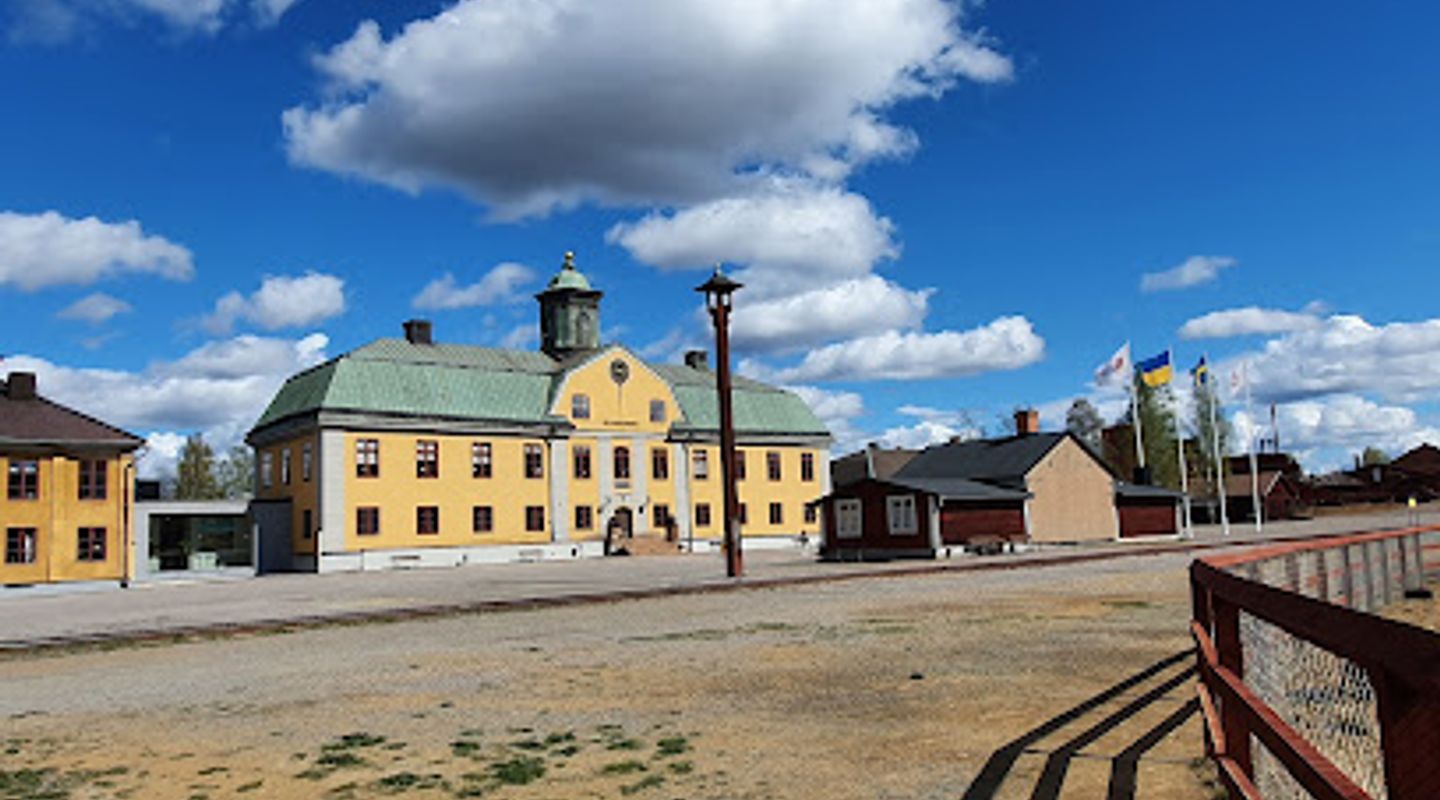
Falu Mine (Falu Gruva) is the dramatic open pit and museum complex at the heart of the Mining Area of the Great Copper Mountain, a UNESCO World Heritage Site that documents a millennium of copper extraction, technology and community life in Falun, Sweden. The enormous red gorge known as the Great Pit, surviving headframes, wheelhouses and miners’ cottages create a layered industrial landscape while underground tours and interactive exhibits bring centuries of mining craft, legend and the origins of ‘Falu Red’ paint vividly to life.
On-site amenities
 Restrooms
 Drink options
 Food options
 Seating areas
 Information boards
Opening hours
- MonClosed
- Tue10 am–4 pm
- Wed10 am–4 pm
- Thu10 am–4 pm
- Fri10 am–4 pm
- Sat10 am–4 pm
- Sun10 am–4 pm
Opening hours as listed on the venue’s Google Business Profile. Hours can change for services and special events, so check with the venue before you go.
- Address
- Gruvgatan 1, 791 61 Falun
- Phone
- Website
Getting there
Regional bus
Train + short bus
Car
Discover more about Falu Mine
The scar on the landscape and what it means
The Great Pit at Falu Gruva is an instantly recognisable red gorge carved into the earth by centuries of excavation and one catastrophic collapse in 1687; its sheer slopes, exposed galleries and stacked layers of slag and rock make the site read like a cross-section through industrial history. Around the pit stand a compact cluster of mining structures — headframes, wheelhouses and winch buildings — that once powered the relentless work of hauling ore, timber and men from the depths. Those structures, together with the slag heaps and adjacent timber-built miner cottages, form a continuous cultural landscape in which production, settlement and technology are legible at a glance.
The long arc of production and innovation
Mining at Falun began in antiquity and reached its zenith in the 17th century, when copper from the mine financed large parts of the Swedish state and spread Falun metal across Europe. Over the centuries the site absorbed new techniques — drainage systems, hoisting technology and increasingly mechanised smelting — leaving physical traces from medieval shafts to 19th-century industrial buildings. The sequence of interventions preserved on the surface and belowground makes the site a rare, almost textbook example of how a single resource can shape technology, economy and settlement over many generations.
Underground: chambered history and human scale
Descending into the visits’ galleries compresses that long history into a human-scaled experience: low tunnels and lofty caverns, timber props and worked faces show how miners literally stepped metre by metre through rock over centuries. The subterranean environment preserves the textures of work — soot, tool marks, occasional miner inscriptions — and evokes the physical conditions that drove innovations in lighting, ventilation and water management. A single shaft may expose centuries of activity, with layers of timber and ironwork telling the story of repeated repair, adaptation and the constant struggle with water, gas and collapse.
Products and legacies: paint, metal and myths
Beyond ore the mine left enduring cultural products. Pigments derived from the mine’s iron-rich residues gave rise to Falu Red paint, the deep barn-red pigment that now defines much of Sweden’s vernacular architecture. Precious metals, small gold finds and extensive copper exports linked the site to royal treasuries and European roofs; the mine’s output and the wealth it generated influenced social hierarchies, spawned manor houses and shaped the surrounding countryside. Folklore and striking stories — from tales of mummified miners preserved underground to the miners’ superstitions and rituals — have become part of the site’s layered identity.
The museum and interpretive fabric
Today the site functions as a museum complex that balances surface interpretation with hands-on learning and preserved industrial fabric. Exhibitions present technical processes, social history and environmental consequences; a signposted Mine Walk frames the Great Pit with viewpoints and information panels, and preserved buildings around the pit illustrate administration, hoisting and smelting practices. The juxtaposition of interactive displays and surviving industrial structures allows visitors to connect machinery and daily life, while the landscape itself remains a primary artefact.
A place of contrasts: industry in a lake-and-forest region
Set within the gentle lakes and forests of Dalarna, the mine’s raw red wound forms a dramatic contrast with the pastoral surroundings. The visual tension between the industrial crater and the wooded contours emphasises how extractive economies reworked natural settings, and why the area is preserved as a cultural landscape. On clear days the pit’s colours and the silhouettes of old structures read clearly against the skyline; in low light the same forms take on a heavier, almost monumental aspect that recalls both the site’s technical achievements and the human labour that underpinned them.
Evendo Review Centre
 Google
Guest reviews
Best time to go
Quietest: Jan, Feb & Dec · before 8am or from 8pm
Busy times are Evendo estimates for a typical year, to help you plan. Actual crowds vary with events, school holidays and the weather.
Explore Falu Mine on the map
A handpicked selection of must-see spots near Falu Mine, mapped for you.
Get your free copy of our complete guide to Falu Mine, delivered straight to you.
Everything on this page, from opening hours and how to get there to Eve’s tips and the best time to go, in one PDF you can read offline, print or share.
Already have an account? Sign in
Your Falu Mine guide is ready.
We'll send it to · Not you? Sign out

Getting your guide ready…
We are putting together a fresh copy of the Falu Mine guide. This can take up to a minute.
This can take a few moments. If your browser asks, choose Allow so the download can start. You'll find the guide in your Downloads folder.
Nothing happened? Download it again
Sorry, the guide is taking longer than usual. Please try again in a minute, or get it by email instead.
Other nearby places you may find interesting
The closest places of the same kind, if this one is not quite what you had in mind.
-
-
-
-
-


Swipe for more places
More to explore near Falu Mine

 Best experiences near Falu Mine
 Best hotels near Falu Mine
 Best landmarks near Falu Mine
 Best attractions near Falu Mine
 Best shops near Falu Mine
 Best restaurants near Falu Mine
 Best bars near Falu Mine
Do you manage this location?
Take control to get all the benefits, like improved information, better appearance, and stronger visibility across AI-powered discovery.
Explore more

Explore more of Svealand
Experience the essence of Sweden in Svealand: a region of historic cities, stunning archipelagos, and rich cultural heritage perfect for every traveler.
Explore Svealand
Explore more of Sweden
Discover Sweden's breathtaking landscapes, vibrant cities, and rich cultural heritage. From the Northern Lights to historic castles, experience the essence of Scandinavia.
Explore Sweden
