Karls kyrkoruin, Uppland Travel Guide
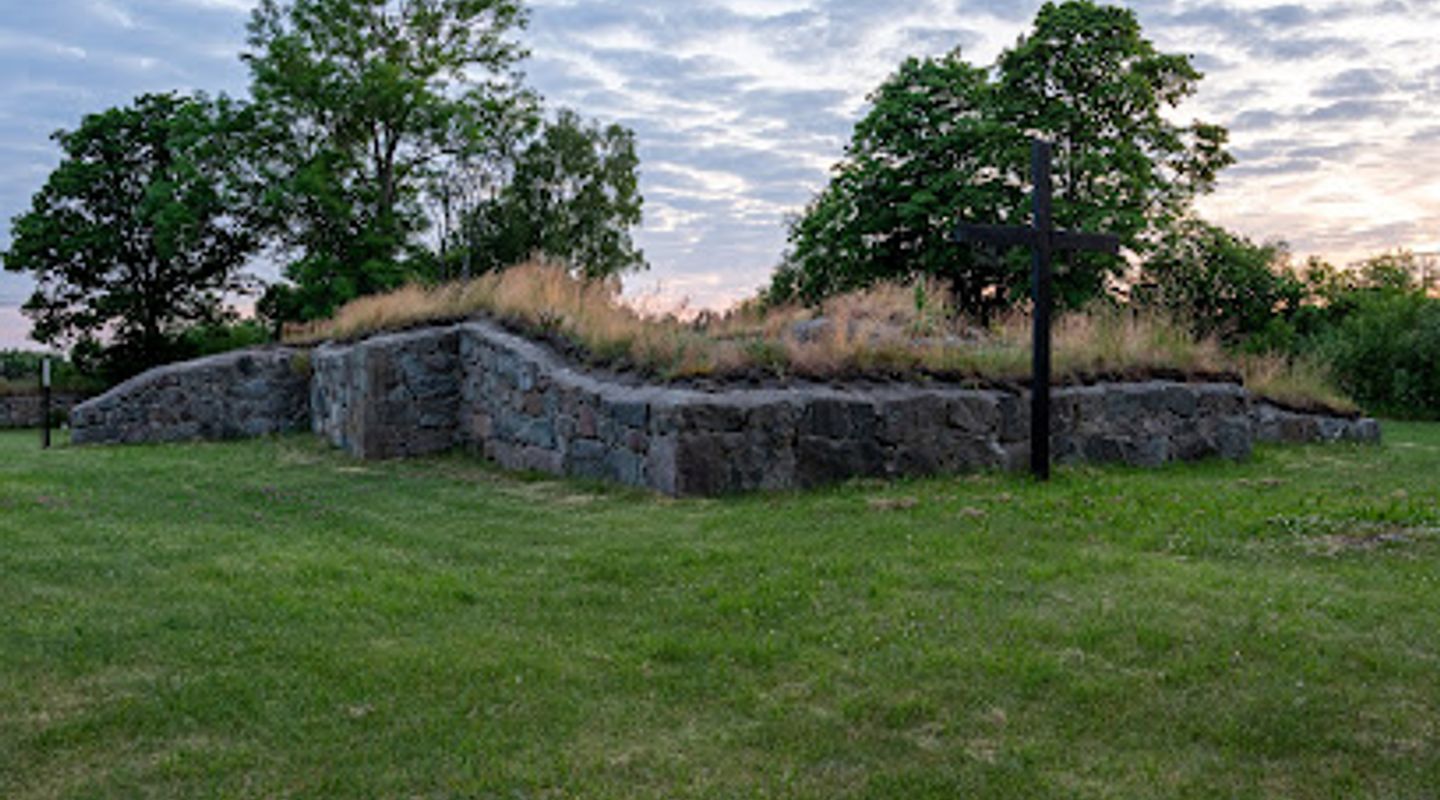
A weathered medieval church ruin in Söderby‑Karl—stone walls, quiet churchyard and a palpable sense of centuries past near Norrtälje.
Karls kyrkoruin are the moss‑edged stone remains of a medieval parish church in Söderby‑Karl, near Norrtälje; built in the 13th–14th century, abandoned in the late 18th century and partially cleared and consolidated in the 1930s. The ruin sits within a small, walled churchyard where visible footing, window and wall fragments hint at Romanesque origins and later medieval alterations; the site carries quiet, rural atmosphere and a sense of deep local history.
A brief summary to Karls kyrkoruin
- 76 Riksväg, Norrtälje, SE
- Duration: 0.5 to 1.5 hours
- Free
-
 Outdoor
- Mobile reception: 3 out of 5

Know before you go
Hi, I'm Eve. Here are a few practical things to know before exploring Karls kyrkoruin.
- Wear sturdy shoes: paths inside the churchyard can be uneven and grassy, especially after rain.
- Respect the site: do not climb on fragile walls or remove stones; treat gravestones and memorials with care.
- Bring a camera with a moderate zoom to capture masonry details and window openings without stepping off paths.
Do you manage this location?
Take control to get all the benefits, like improved information, better appearance, and stronger visibility across AI-powered discovery. Learn more about listing your business on Evendo
Activate your presenceOther nearby places you may find interesting
The closest places of the same kind, if this one is not quite what you had in mind.

Explore Karls kyrkoruin on the Map
A handpicked selection of must-see spots near Karls kyrkoruin, mapped for you.
Getting There
-
Car
Drive from central Norrtälje by regional roads; typical travel time 20–30 minutes depending on traffic; small roadside parking or laybys serve the church area but parking spaces are limited and informal, so expect an unpaved surface and exercise caution when the ground is wet; no tolls but local signage may be minimal.
-
Local bus + walk
Take a regional bus toward Söderby or nearby villages from Norrtälje bus stop; combined travel time typically 30–50 minutes including service waits; bus frequency is limited outside peak hours and services may be reduced on weekends and public holidays; expect a short walk across rural lanes of 5–20 minutes over grassy verges to reach the churchyard.
-
Cycle
Cycle along quiet country roads from Norrtälje in roughly 30–50 minutes depending on pace; surfaces are mainly paved minor roads but may include short gravel sections; bike parking is informal—bring a lock and be prepared for uneven ground at the site.
For the on-the-go comforts that matter to you
-
 Seating Areas
-
 Information Boards
Discover more about Karls kyrkoruin
Stones that keep time
Karls kyrkoruin is the skeletal footprint of a medieval parish church whose core fabric dates to the later Middle Ages; surviving masonry, short wall stretches and a discernible apse show a building that began with Romanesque proportions and was altered in succeeding centuries. The ruin and its surrounding graveyard preserve traces of foundations, a vanished tower and the outline of the nave and choir, so that the plan of the original church remains legible even as nature reclaims the site.Layers of use and abandonment
Originally the parish centre for Söderby‑Karl, the church functioned for centuries before the parish merged with a neighbouring congregation in the 1790s and the building was gradually abandoned. Structural collapse and deliberate demolition removed much of the nave and tower during the 19th century; later 20th‑century conservation work cleared vegetation, stabilised sections of wall and revealed archaeological evidence such as the torngrund (tower base) and floor layout.Architecture in fragments
Exposed masonry reveals dressed stones and larger fieldstones set in lime mortar; the surviving wall heights vary, exposing arch‑shaped window openings, buttress remnants and darker mortar lines that mark successive building phases. A small sacristy and a vestibule are discernible in plan, while the choir and nave configuration—rectangular nave with a straight‑ended choir—reflect typical Uppland parish architecture of the period.Relics, rituals and local story
The church has been associated in local tradition with relics once kept on the site and with the medieval cult of a local saint; antiquarian accounts from earlier centuries mention reliquaries and the church’s role as a rural spiritual centre. The churchyard, enclosed on several sides by a later repaired wall, holds gravestones that continue the narrative of a community that gathered here for baptisms, funerals and high days of the liturgical year.Landscape and atmosphere
Set close to agricultural land and quiet roads outside Norrtälje, the ruin is embraced by meadow grasses and low scrub; birds and the smell of damp stone create a reflective, slightly melancholic atmosphere. The modest scale of the remains invites slow, careful exploration rather than grand gestures—this is a place to read carved stone edges, notice lichen patterns and imagine the silhouette of a roof and tower now gone.Conservation and visiting note
Consolidation work in the early 20th century cleared the site of much overgrowth and repaired sections of the churchyard wall; visible repairs and conservation traces remind visitors that the ruin is both fragile and curated. Interpretation is generally modest: information panels or local heritage publications provide historical outlines while the stones themselves remain the primary storytellers.












Your all‑in‑one travel companion app
Explore expert travel guides, compare and book tours, experiences, hotels, and more—all from the palm of your hand. Download now for seamless trip planning wherever your wanderlust takes you.


Explore More of Uppland
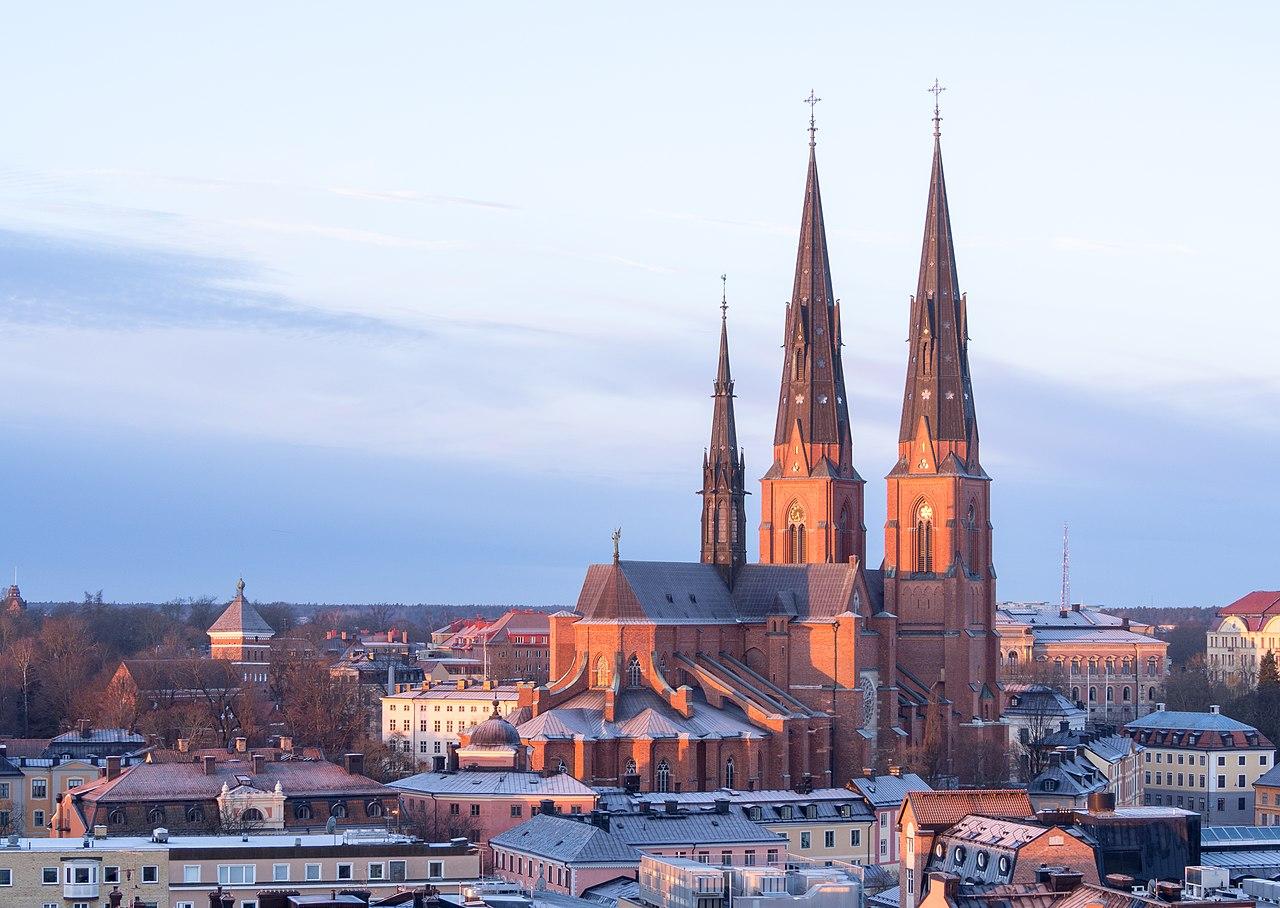
Looking beyond Karls kyrkoruin? Discover Uppland for broader travel guides, local hot-spots, and regional highlights.
Explore Uppland