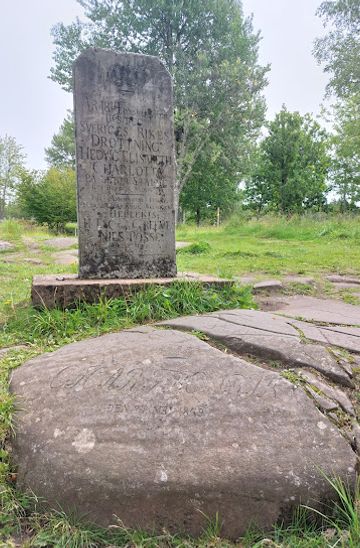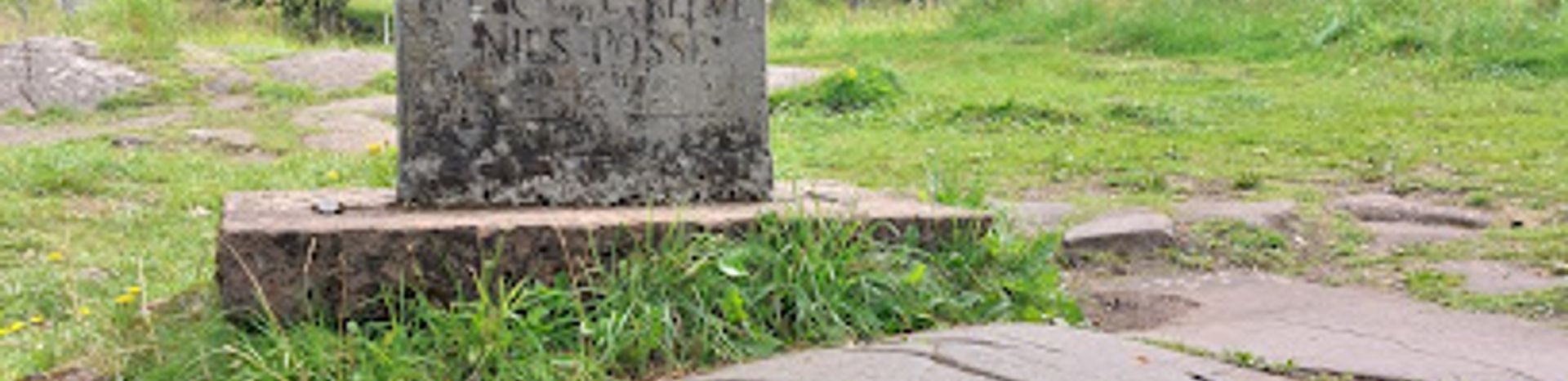
Kungastenarna (King Stones), Kinnekulle
Weathered sandstone boulders on Kinnekulle’s summit, carrying carved names and quiet, centuries-old human traces in an open, airy setting.
A compact cluster of weathered sandstone boulders on the Kinnekulle plateau, Kungastenarna bears shallow historic name-carvings and small memorial inscriptions dating back centuries; it sits near the plateau’s lookout and feels like a quiet open-air shrine where geological time and human gestures meet. The site is outdoor, easy to visit on short walks across low, grazed grassland with broad views over the surrounding Vänern plain.
A brief summary to Kungastenarna
- Götene, SE
- Free
-
 Outdoor
- Mobile reception: 4 out of 5

Know before you go
Hi, I'm Eve. Here are a few practical things to know before exploring Kungastenarna.
- Wear sturdy shoes—ground is grassy and can be uneven or wet after rain.
- Bring a magnifying lens or phone close-up mode to read faint carved names and dates.
- Visit in early morning or late afternoon for softer light that brings out carved letters and stone textures.
Do you manage this location?
Take control to get all the benefits, like improved information, better appearance, and stronger visibility across AI-powered discovery. Learn more
Activate your presenceOther nearby places you may find interesting
Getting There
-
By car
Drive from central Götene by regional roads; typical travel time 20–35 minutes depending on start point and traffic; parking is available at the Kinnekulle lookout/tower area but spaces are limited at peak times; no paid tolls but expect narrow rural lanes and occasional farm traffic.
-
Local bus + walk
Take a regional bus service that serves Kinnekulle (service frequency varies by season); travel time from nearby towns typically 25–50 minutes including a short uphill walk on uneven stone-and-grass paths; services may be less frequent on weekends and public holidays—verify schedules in advance and bring suitable footwear.
-
Cycle
Cycle along country lanes and farm tracks from nearby villages; typical ride time 30–80 minutes depending on start point and fitness; the final approach is across gently undulating terrain and may include short stretches of gravel or grassy track—road bikes with skinny tyres are less suitable than hybrid or gravel bikes.
For the on-the-go comforts that matter to you
-
 Seating Areas
-
 Information Boards
-
 Trash Bins
Discover more about Kungastenarna
Where rock and ritual meet
Kungastenarna is a small group of prominent sandstone boulders set on the flat summit of the Kinnekulle plateau, their rounded forms sculpted by ice-age frost and millennia of weathering. The stones rise from short grass and scattered heather, their pale, lichen-flecked faces contrasting with the darker, oak-and-birch fringe that marks the plateau edge. From close up you can see banding in the sandstone and small hollows where water has pooled; from a few paces back the stones form a low, informal circle that reads like a deliberate marker in the landscape.Traces of time and names on stone
People have left marks here for centuries: carved initials, dates and royal names appear faintly on several faces, a catalog of visits and dedications that link everyday travelers to notable historic guests. The inscriptions vary from neat, chiselled letters to casual initials scratched in with metal—each one a small human gesture against the stones’ geological patience. The largest rock carries the oldest formal dedications and is often pointed out as the main feature; even when letters are worn they remain legible in sheltered grooves.A quiet place beside a lookout
Kungastenarna sits only a short distance from Kinnekulle’s lookout area and the plateau tower complex, so its atmosphere mixes solitude with the occasional hum of visitors at the viewpoint. The immediate setting is open and breezy; on clear days you can sense the wide sweep of the surrounding Östra Västergötland plain and the distant shimmer of Vänern. The site’s compact footprint means it feels intimate—an outdoor room where wind, birdcalls and the close, tactile presence of stone dominate the senses.Stories written in landscape and memory
Local tradition links the stones with visits by historical figures and folk tales—stories told and retold about kings, processions and votive gestures that tie human history to this little outcrop. Whether the tales are legend or literal history, they give the site a mild ceremonial flavour: people treat the stones with respect, combing their faces for names and pausing to read or run a hand over the worn lettering. On misty mornings the stones take on a more mysterious aspect; in strong sunlight the pale sandstone glows warm and the carvings stand out in crisp shadow.Practical character and seasonal moods
The stones occupy a naturally drained, grassy patch that stays freely accessible for most of the year; in spring and early summer the immediate turf is often green and soft, while late summer dries to a honeyed brown under sun. The surrounding plateau can be wind-swept and cooler than lowland villages, and light shifts fast in autumn when cloud shadows move across the plain. The site’s modest size and simple ground make it suitable for short visits and photo studies, and it rewards slow observation rather than long exploration.Why to pause and listen
At Kungastenarna the appeal is subtle: tactile surfaces to inspect, human marks that bridge centuries, and an unobtrusive sense of continuity between the plateau’s deep geological past and recent visits. It’s a place that invites quiet attention—reading names worn into stone, feeling the texture under your palm and taking a moment to let the open light and broad horizon slow you down.Explore the best of what Kungastenarna has to offer













More about Vastergotland
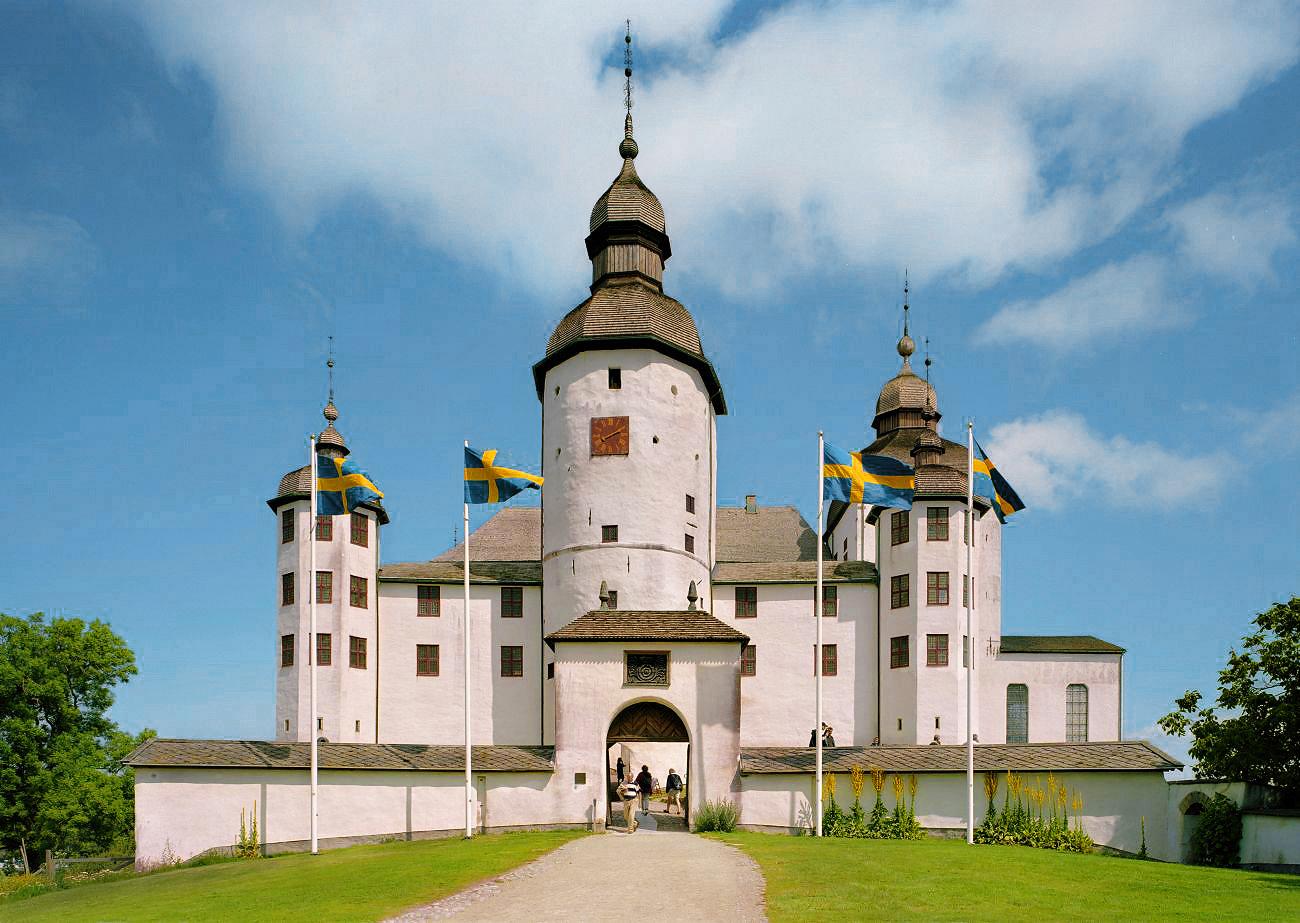
Discover Västergötland: A blend of historical treasures, natural beauty, and cultural richness in the heart of Sweden.
Tell me more about Vastergotland
A vast, multi-period burial field near Broddetorp where passage graves, cairns and standing stones record over four millennia of funerary practice.
A small memorial stone by Husaby Church marking the site tied to King Olof Skötkonung and the baptismal spring that shaped early Swedish Christianity.