

Free French Broad River Valley Travel Guide & Mobile App
Explore French Broad River Valley with free travel guides. Discover regional history, expert tips, proposed trips, and audio guides on web or mobile app.


Explore Tennessee’s French Broad River Valley for river recreation, Douglas Lake, historic Dandridge, rural scenery and Appalachian foothill roads.
Read more about French Broad River Valley
Getting to and around French Broad River Valley
How to get there
Transportation
Best attractions in French Broad River Valley
The French Broad River Valley’s attractions centre on water, rural scenery and small-town heritage rather than a dense collection of ticketed sights. The Tennessee river corridor around Newport offers opportunities for fishing, paddling, wildlife observation and scenic driving, with the wooded foothills providing a natural backdrop. Douglas Lake is the valley’s principal recreational landscape: its broad inlets and long shoreline support boating, angling, birdwatching and lakeside stays, although conditions vary with seasonal water levels. Historic Dandridge provides a contrasting cultural stop, with an old county-town setting, civic buildings and access to the reservoir. The lower river also connects naturally with East Tennessee’s wider outdoor network, including routes towards the Great Smoky Mountains, though the national park lies outside the valley. Farm roads, churches, covered rural landscapes and working communities reward slower exploration, while nearby Knoxville offers museums, music and urban attractions at the western edge rather than within the rural core. Visitors should allow for separate outings, since access points and communities are spread along a substantial river and reservoir corridor.
-
Museum
Bush's Visitor Center
Explore the rich heritage of Bush's Beans at Bush's Visitor Center in Dandridge, TN, featuring a museum, café, and unique gift shop.
-
Raft trip outfitter
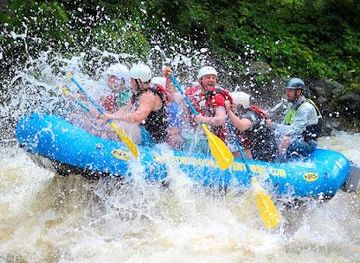
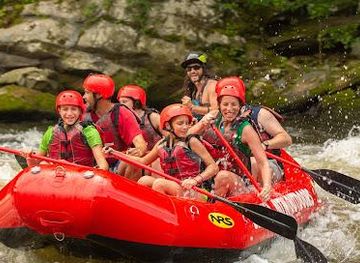
Raft Outdoor Adventures
Experience exhilarating rafting adventures in the heart of Tennessee's Smoky Mountains with Raft Outdoor Adventures.
-
Rafting
Smoky Mountain Outdoors (SMO) Rafting
Experience the thrill of rafting in the stunning Smoky Mountains at Smoky Mountain Outdoors, where adventure and nature come together.
-
American restaurant
Bush's Family Cafe
Experience the heart of American cuisine at Bush's Family Cafe in Dandridge, TN, where every meal feels like home.

Best landmarks in French Broad River Valley
The French Broad River itself is the valley’s defining natural landmark, entering Tennessee through wooded Appalachian country before widening into the reservoir known as Douglas Lake. Douglas Dam, completed by the Tennessee Valley Authority in 1943, is the most consequential modern structure in the lower valley: it represents wartime public works, electric power development and the dramatic reshaping of the river landscape. Historic Dandridge is the principal built landmark, retaining the character of an old Jefferson County seat beside the lake and reflecting the town’s long civic history. Newport’s town centre and river setting express a different aspect of the corridor, linking county government, commerce and transport with the surrounding agricultural basin. Farther west, the meeting of the French Broad and Holston rivers near Knoxville is geographically important because it marks the beginning of the Tennessee River, although the confluence and urban setting lie at the valley’s edge rather than in its rural heart. Forested ridges, open farmland and changing reservoir shorelines complete the valley’s visual identity.
-
Tourist attraction
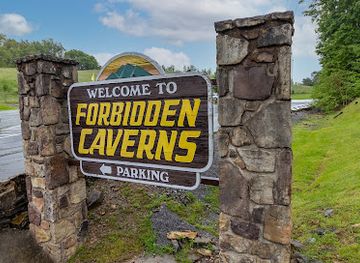
Forbidden Caverns
Discover the hidden wonders of Forbidden Caverns in Sevierville, TN, where nature's beauty and geological history converge in a breathtaking underground adventure.
-
Historical landmark
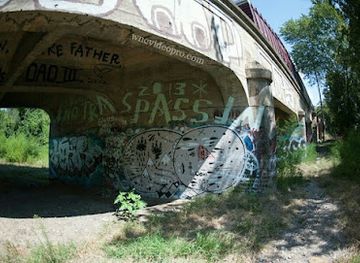
French Broad River Greenway Railroad Bridge
Explore Asheville's historical gem, the French Broad River Greenway Railroad Bridge, where nature and heritage beautifully intertwine.
Explore French Broad River Valley on the map
Plan your trip on one map. See where the top cities, national parks and sights are, and book hotels and experiences in a few clicks.
Best hotels in French Broad River Valley
Best restaurants in French Broad River Valley
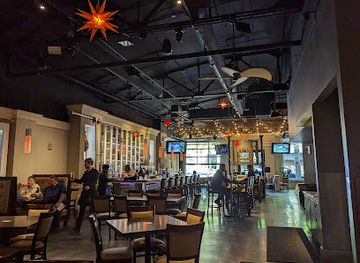
Dining in the valley is primarily local and practical, with family restaurants, cafés, grills, country-style cooking and waterfront establishments concentrated around Newport, Dandridge and the communities serving Douglas Lake. Menus commonly draw on wider East Tennessee traditions such as biscuits, sausage, fried chicken, barbecue, burgers, trout, catfish, seasonal vegetables and fruit desserts, alongside familiar American diner fare. The reservoir brings opportunities for casual meals after boating or fishing, while farm stands and small markets may offer produce, preserves and baked goods at different times of year. Craft beer and contemporary dining are more developed in nearby Knoxville, outside the rural valley, but local towns provide a useful introduction to the region’s food culture. Tipping is expected in table-service restaurants, and opening days can be limited at smaller independent businesses, so do not assume every rural dining option operates late or every day.
-
Latin American
Mayan Kitchen
Discover the authentic tastes of Guatemala at Mayan Kitchen in Chattanooga - where vibrant flavors meet warm hospitality.
-
Breakfast
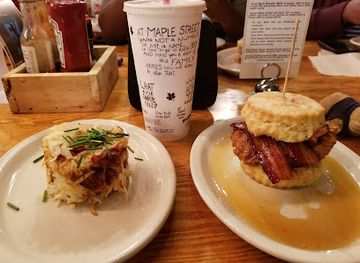
Maple Street Biscuit Company
Experience the charm of Southern breakfast at Maple Street Biscuit Company - where every biscuit tells a story.
-
Restaurant
Pizza Bros Southside
Discover artisanal pizzas paired with exquisite cocktails at Pizza Bros Southside in Chattanooga's lively Southside Historic District.
-
American restaurant
Bush's Family Cafe
Hearty Southern comfort at Bush's Family Cafe: tender pulled pork, creamy mashed potatoes, famous baked beans, and pie in a cozy diner tied to Tennessee bean legacy—generous portions, friendly vibes, unbeatable value.

Best bars in French Broad River Valley
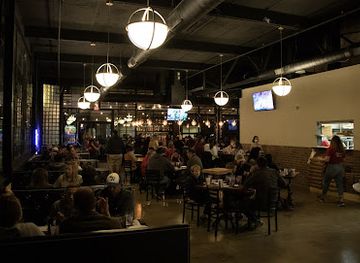
Evening life in the French Broad River Valley is low-key and community-based. Newport and Dandridge have the greatest concentration of casual restaurants, bars and local gathering places, while lake communities may become busier during the boating season. Traditional pubs, grills, sports bars and live music sometimes provide the main evening options rather than dedicated nightclubs, and rural areas can become quiet soon after dinner. Visitors staying around Douglas Lake often spend evenings at their accommodation, beside a permitted campfire or at a lakeside restaurant, subject to local rules and weather. Knoxville, outside the valley at its western end, offers the nearest broader choice of breweries, cocktail bars, music venues and late-night entertainment. Check current arrangements locally, particularly outside summer, and plan a sober driver when travelling between dispersed communities.
-
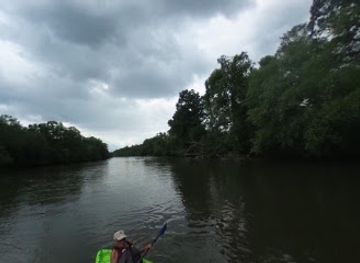
River
French Broad River
Discover the serene beauty and thrilling adventures at the historic French Broad River, a must-visit for nature lovers and outdoor enthusiasts.
Best nightclubs in French Broad River Valley
Evening life in the French Broad River Valley is low-key and community-based. Newport and Dandridge have the greatest concentration of casual restaurants, bars and local gathering places, while lake communities may become busier during the boating season. Traditional pubs, grills, sports bars and live music sometimes provide the main evening options rather than dedicated nightclubs, and rural areas can become quiet soon after dinner. Visitors staying around Douglas Lake often spend evenings at their accommodation, beside a permitted campfire or at a lakeside restaurant, subject to local rules and weather. Knoxville, outside the valley at its western end, offers the nearest broader choice of breweries, cocktail bars, music venues and late-night entertainment. Check current arrangements locally, particularly outside summer, and plan a sober driver when travelling between dispersed communities.
-
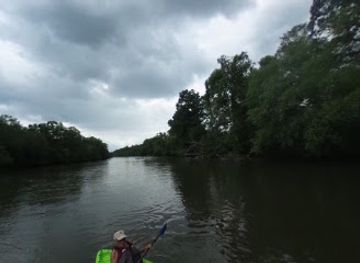
River
French Broad River
Explore the French Broad River: A Scenic Retreat for Adventure and Relaxation in the Heart of the Appalachians.
Best shops in French Broad River Valley
Shopping is centred on practical town services, independent businesses, antiques, local food and small-scale craft rather than large retail districts. Newport is the main commercial centre for the upper Tennessee valley, while Dandridge serves visitors and residents around Douglas Lake with everyday shops, antiques, gifts and dining-related businesses. Seasonal farm stands and community markets may offer produce, jams, baked goods and other regional provisions, with availability varying through the year. Visitors looking for Appalachian craft traditions may find handmade woodwork, pottery, textiles or locally produced gifts in small galleries and specialist shops, but selection is dispersed rather than concentrated in one market street. Larger retail centres are found in the Knoxville area, outside the rural French Broad corridor. For a useful regional souvenir, consider locally made food products, a craft item or a guide to the valley’s waterways rather than mass-produced merchandise.
-
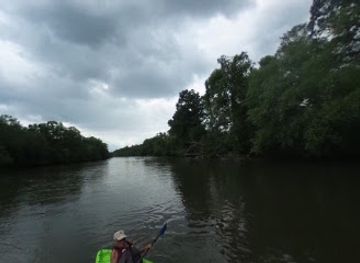
River
French Broad River
Experience the serene beauty and adventurous spirit of the French Broad River, perfect for outdoor activities and unforgettable memories.
-
General store
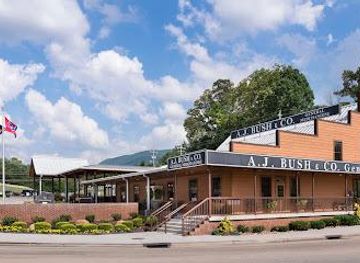
A.J. Bush & Co.
Experience the authentic charm of A.J. Bush & Co., a treasured general store in Dandridge, TN, offering local goods and Southern hospitality.
Get your free copy of our complete guide to French Broad River Valley, delivered straight to you.
Everything on this page, from attractions and restaurants to essentials and local phrases, in one PDF you can read offline, print or share.
Already have an account? Sign in
Your French Broad River Valley guide is ready.
We'll send it to · Not you? Sign out

Getting your guide ready…
We are putting together a fresh copy of the French Broad River Valley guide. This can take up to a minute.
This can take a few moments. If your browser asks, choose Allow so the download can start. You'll find the guide in your Downloads folder.
Nothing happened? Download it again
Sorry, the guide is taking longer than usual. Please try again in a minute, or get it by email instead.
French Broad River Valley essentials
Currency and Payment
Safety
Emergency Situations
Do's and Don'ts
Local Tips
From Eve
Local phrases worth knowing
You don't need to get them perfect. A few words go a long way, and locals appreciate the effort.
Basics
| English | Local | Say it |
|---|---|---|
| Hello | Howdy | [Ha-dee] |
| Goodbye | See y’all later | [See y'all lay-ter] |
| Yes | Yep | [Yep] |
| No | Nope | [Nope] |
| Please/You’re welcome | Please/No trouble at all | [Please/No troo-ble at awl] |
| Thank you | Thank ya | [Thank ya] |
| Excuse me/Sorry | Excuse me/Sorry 'bout that | [Ex-cuze me/Sorry 'bout that] |
| How are you? | How ya doin’? | [How ya doin'?] |
| Fine. And you? | I’m good. And you? | [I'm good. An' you?] |
| Do you speak English? | Do ya speak English? | [Doo ya speak English?] |
| I don't understand | I ain't followin’ | [I ain't followin'] |
Eating & Drinking
| English | Local | Say it |
|---|---|---|
| I’d like to see the menu, please | Can I see the menu, please? | [Can I see the menu, please?] |
| I don’t eat meat | I don’t eat no meat | [I don’t eat no meat] |
| Cheers! | Cheers! | [Cheers!] |
| I would like to pay, please | I’d like to settle up, please | [I'd like to settle up, please] |
Emergencies
| English | Local | Say it |
|---|---|---|
| Help! | Help! | [Help!] |
| Go away! | Get away from here! | [Get away from here!] |
| Call the Police! | Call the law! | [Call the law!] |
| Call a doctor! | Get a doctor over here! | [Get a doctor over here!] |
| I’m lost | I’m turned around | [I'm turned around] |
| I’m ill | I ain't feelin' well | [I ain't feelin' well] |
Shopping
| English | Local | Say it |
|---|---|---|
| I’d like to buy... | I wanna buy... | [I wanna buy...] |
| I’m just looking | I’m just browsin’ | [I'm just browsin'] |
| How much is it? | How much is that? | [How much is that?] |
| That’s too expensive | That’s too high priced | [That’s too high priced] |
| Can you lower the price? | Can ya bring down the price? | [Can ya bring down the price?] |
Time & Numbers
| English | Local | Say it |
|---|---|---|
| What time is it? | What time is it? | [What time is it?] |
| It’s one o’clock | It's one o'clock | [It's one o'clock] |
| Half past (10) | Half past ten | [Half past ten] |
| Morning | Mornin’ | [Mornin'] |
| Afternoon | Afternoon | [Afternoon] |
| Evening | Evenin’ | [Evenin'] |
| Yesterday | Yesterday | [Yesterday] |
| Today | Today | [Today] |
| Tomorrow | Tomorrow | [Tomorrow] |
| 1 | One | [One] |
| 2 | Two | [Two] |
| 3 | Three | [Three] |
| 4 | Four | [Four] |
| 5 | Five | [Five] |
| 6 | Six | [Six] |
| 7 | Seven | [Seven] |
| 8 | Eight | [Eight] |
| 9 | Nine | [Nine] |
| 10 | Ten | [Ten] |
Transport & Directions
| English | Local | Say it |
|---|---|---|
| Where's a/the...? | Where's a/the...? | [Where's a/the...?] |
| What’s the address? | What’s the address? | [What’s the address?] |
| Can you show me (on the map)? | Can ya show me on the map? | [Can ya show me on the map?] |
| When’s the next (bus)? | When’s the next bus? | [When’s the next bus?] |
| A ticket (to ....) | A ticket to... | [A ticket to...] |
History of French Broad River Valley
Indigenous Homelands and River Routes
The French Broad River Valley lies within the wider homeland and historical sphere of the Cherokee, whose towns, trails and trading routes connected the Appalachian valleys. Rivers were practical corridors through difficult terrain, linking the interior mountains with the Tennessee Valley. European-American place names and settlement patterns later obscured much of this earlier geography, but the region’s roads and communities still follow routes shaped by the river landscape. The French Broad’s name reflects colonial-era French associations with the wider watershed rather than a separate French settlement in Tennessee.
Frontier Settlement in the Tennessee Valley
From the late eighteenth century, European-American settlers established farms and communities along the fertile bottomlands and transport routes of East Tennessee. The river offered water, productive soils and a natural means of movement, although flooding and difficult crossings remained persistent challenges. Newport developed as an important Cocke County community, while Dandridge grew as a courthouse and commercial centre near the lower river. Churches, farms, roads and town squares formed the durable settlement pattern that still characterises parts of the valley.
Dandridge and the Early County Towns
Dandridge was founded in the late eighteenth century and became the seat of Jefferson County, taking its name from Martha Washington’s family. Its position near the French Broad made it a local centre for government, trade and agriculture. The town’s historic identity is closely tied to the surrounding river and valley, although the construction of Douglas Dam later altered its waterfront and submerged parts of the old landscape. Surviving buildings and the town plan provide a tangible connection with the civic and commercial life of early East Tennessee.
Civil War on the French Broad Corridor
East Tennessee was politically divided during the American Civil War, and the French Broad corridor was affected by military movement, local conflict and the strategic importance of roads and river crossings. The region’s railways and transport routes connected Union-held and Confederate-held areas, making bridges and passes significant. The Battle of Newport, fought in October 1864, formed part of the military struggle for control of East Tennessee. The war left a complex local memory, with loyalties differing between communities and families.
Railways, Timber and Agricultural Change
During the late nineteenth and early twentieth centuries, rail connections and improved roads integrated the valley more closely with Knoxville and the wider Appalachian region. Timber extraction, agriculture, small-scale manufacturing and trade shaped the local economy, while Newport grew as a service and transport centre. The river remained important, but rail and road transport gradually reduced its role as a commercial route. Rural land use persisted, with farms and wooded hills continuing to define the landscape beyond the towns.
Douglas Dam and the Remaking of the Lower Valley
Douglas Dam was constructed by the Tennessee Valley Authority during the Second World War and completed in 1943. The dam created Douglas Lake on the French Broad and supported electricity generation, flood control and regional economic development. Its construction also displaced residents, altered farmland and submerged roads, buildings and parts of established communities. The reservoir transformed the lower valley into a major setting for fishing, boating and lakeside recreation, while its changing shoreline remains a visible reminder that modern infrastructure reshaped the historic river corridor.
The Contemporary River and Recreation Economy
In recent decades, the Tennessee French Broad corridor has increasingly been experienced through outdoor recreation, heritage tourism and its proximity to the Great Smoky Mountains and Knoxville. Fishing, boating, paddling, wildlife observation and scenic driving complement established agricultural and service economies. Newport, Dandridge and the communities around Douglas Lake retain distinct local identities rather than forming one continuous urban destination. The valley’s contemporary character therefore combines working landscapes and small-town institutions with recreational use of the river and reservoir.
French Broad River Valley in Photos
Browse through our photo collection highlighting the charm and character of the destination.
Neighbouring regions of French Broad River Valley
The closest regions to French Broad River Valley, if you have time for more than one.
-

-

-

-
-


Swipe for more regions
Explore more

Explore more of Tennessee
Discover Tennessee: A melting pot of music, history, and natural beauty, offering visitors an authentic taste of Southern hospitality and unforgettable experiences.
Explore Tennessee