

Edith Falls Travel Guide - Free Web & App
Your ultimate guide to Edith Falls. Discover top landmarks, proposed trips, and local tips. Free on the web or via the Evendo companion app.


Edith Falls in Trinidad and Tobago offers a forest hike, seasonal waterfall and Chaguaramas scenery near Port of Spain, with practical trail advice.
A Waterfall in Western Trinidad
Edith Falls is a small natural attraction in the Chaguaramas area of western Trinidad, reached by a forest walk rather than a roadside viewpoint. The falls lie within the hilly, green landscape of the Chaguaramas Peninsula, where dry forest, wooded valleys and steep slopes meet the Gulf of Paria. The waterfall is most rewarding after rain, while its flow can be reduced during drier periods, making seasonal conditions an important part of the experience.Read more about Edith Falls
The Chaguaramas Setting
Walking and Local Character
When is the best time to visit Edith Falls?
Best: January–March · 32°C| Month | High (°C) | Rainfall (mm) |
|---|---|---|
| January (best) | 32 | 75 |
| February (best) | 32 | 71 |
| March (best) | 32 | 73 |
| April | 32 | 78 |
| May | 33 | 82 |
| June | 33 | 87 |
| July | 33 | 91 |
| August | 33 | 95 |
| September | 33 | 100 |
| October | 33 | 104 |
| November | 33 | 109 |
| December | 33 | 113 |
Getting to and around Edith Falls
How to get there
Transportation
Best attractions in Edith Falls
The principal attraction is the walk through the wooded hills of Chaguaramas to Edith Falls, a seasonal cascade whose character depends strongly on recent rainfall. The route provides a close view of the peninsula’s tropical vegetation and ravine landscape rather than a broad, engineered scenic overlook. Edith Falls can be combined with the wider Chaguaramas area, where visitors find coastal roads, marinas, beaches and other outdoor recreation sites, although these are separate attractions rather than part of the waterfall itself. The peninsula’s varied setting allows a day to move between forest and Gulf of Paria scenery, while nearby developed areas provide food and practical services unavailable at the falls. Visitors interested in the region’s past can also explore Chaguaramas’s maritime and military associations through its surviving infrastructure and historic landscape, taking care to distinguish established public sites from restricted or privately managed areas.
-
Water park
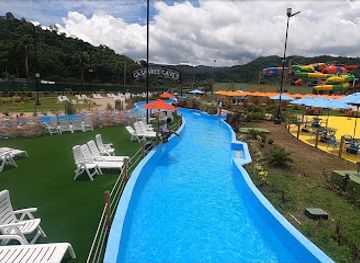
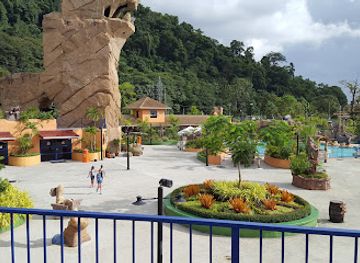
Five Islands Water & Amusement Park
Discover the ultimate water adventure at Five Islands Water & Amusement Park, where thrilling slides and family fun await in a tropical paradise.
-
Tourist attraction
Skallywag Bay
Discover the excitement of Skallywag Bay, an exhilarating amusement park in Chaguramas, offering fun rides and attractions for the whole family.
-
Hiking area
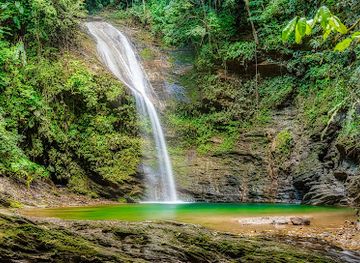
Blue Basin Falls
Explore the stunning Blue Basin Falls in Diego Martin, a breathtaking hiking area perfect for nature lovers and adventurers seeking tranquility.
-
Tourist attraction
Archbishop’s House
Explore the Archbishop's House in Port of Spain, a historic landmark showcasing Victorian architecture and rich cultural heritage.

Best landmarks in Edith Falls
Edith Falls is the defining natural landmark of this compact destination: a seasonal waterfall set within the forested, ridged terrain of the Chaguaramas Peninsula. Its significance lies less in height or engineered infrastructure than in the contrast between moving water, tropical woodland and the developed coastal landscape nearby. The wider Chaguaramas landscape forms an important geographical frame, with hills and ravines descending towards the Gulf of Paria and the peninsula’s maritime facilities. Nearby beaches, bays and waterfront infrastructure belong to the broader Chaguaramas area rather than to Edith Falls itself. The peninsula also contains reminders of its strategic military and maritime past, but these should be visited only where public access is clearly established. Together, the natural cascade and the wider peninsula’s coastal and historic features illustrate the close relationship between recreation, transport, defence and landscape in western Trinidad.
-
Park
San Fernando Hill
Discover the breathtaking views and tranquil ambiance of San Fernando Hill, a premier park and tourist attraction in Trinidad.
-
Park
Chaguaramas Boardwalk
Experience the beauty of Trinidad at Chaguaramas Boardwalk, where stunning views and leisurely strolls meet vibrant local culture.
-
Island
Trinidad
Experience the vibrant culture, stunning landscapes, and culinary delights of Trinidad, the Caribbean's hidden gem.
-
Tourist attraction
Pitch Lake
Explore Pitch Lake, the world's largest natural asphalt deposit in Trinidad, a geological marvel with rich history and stunning scenery.


Explore Edith Falls on the map
Plan your trip on one map. See where the top attractions, landmarks, restaurants and hotels are, and book hotels and experiences in a few clicks.
Best hotels in Edith Falls
Best restaurants in Edith Falls
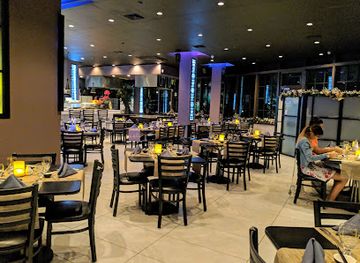
There is no restaurant or café at Edith Falls, so visitors should arrange food and water before beginning the walk. Dining is concentrated in the wider Chaguaramas area and nearby western Trinidad, where waterfront establishments, casual eateries and local food vendors serve Trinidadian favourites influenced by African, Indian, European, Creole and Caribbean traditions. Look for dishes such as roti, doubles, pelau, bake and shark where offered, alongside grilled foods, seafood and everyday Creole cooking; the exact choice varies by venue and opening arrangements. Chaguaramas is more useful for a meal after an outdoor outing than the trailhead itself, while Diego Martin and Port of Spain provide a broader range of restaurants. Visitors should not rely on finding refreshments beside the waterfall, particularly outside busy periods.
-
Restaurant
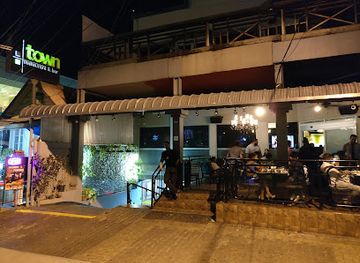
Town Restaurant & Bar
Discover exquisite dining at Town Restaurant & Bar in Port of Spain - where Caribbean flavors meet global cuisine in a vibrant setting.
-
Italian
Buzo Osteria Italiana
Discover the essence of Italy at Buzo Osteria Italiana in Port of Spain—where traditional flavors meet modern flair.
-
Seafood
Richard's Bake & Shark
Experience the iconic bake and shark at Richard's Bake & Shark in Maracas Bay—where fresh seafood meets stunning coastal views.
-
Japanese
Samurai Restaurant
Experience the best of Japanese cuisine with exquisite sushi and teppanyaki at Samurai Restaurant in Port of Spain.


Best bars in Edith Falls
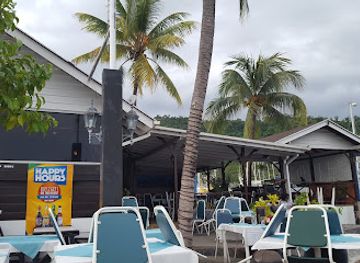
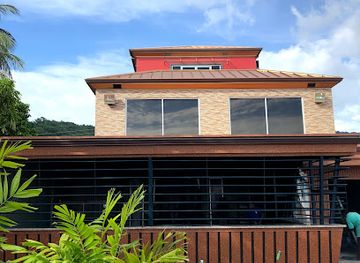
Edith Falls has no nightlife infrastructure and is not an evening entertainment venue. After dark, the surrounding Chaguaramas area is generally associated with restaurants, waterfront relaxation and casual socialising rather than a concentrated nightclub district, while Port of Spain offers Trinidad’s widest range of bars, live music and cultural entertainment. Evening activity can vary by venue, season and event programme, so visitors should check locally rather than assume that a particular performance or opening arrangement will be available. The waterfall and its forest approach should be treated as daytime destinations, with visitors departing before darkness unless they are taking part in a properly organised activity with suitable local knowledge.
-
Bar
Sails Restaurant & Pub
Experience the perfect blend of exquisite cuisine and breathtaking marina views at Sails Restaurant & Pub in Chaguaramas, Trinidad.
-
Bar
Bacchanal Sports Bar & Lounge
Discover Bacchanal Sports Bar & Lounge, the ultimate destination for sports lovers and nightlife enthusiasts in Saint George, Trinidad.
-
 Bar
BarTwins Bar
Experience the vibrant nightlife at Twins Bar in Port of Spain, Trinidad, where great drinks meet lively entertainment in a welcoming atmosphere.
-
Grill
Rockback Bar & Grill
Experience the best of local flavors at Rockback Bar & Grill in Chaguaramas, Trinidad – your go-to spot for grilled delights and stunning views.

Best nightclubs in Edith Falls
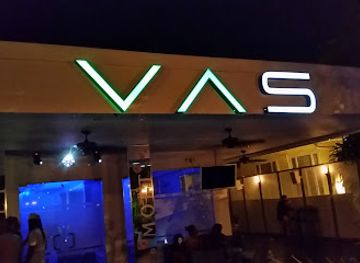
Edith Falls has no nightlife infrastructure and is not an evening entertainment venue. After dark, the surrounding Chaguaramas area is generally associated with restaurants, waterfront relaxation and casual socialising rather than a concentrated nightclub district, while Port of Spain offers Trinidad’s widest range of bars, live music and cultural entertainment. Evening activity can vary by venue, season and event programme, so visitors should check locally rather than assume that a particular performance or opening arrangement will be available. The waterfall and its forest approach should be treated as daytime destinations, with visitors departing before darkness unless they are taking part in a properly organised activity with suitable local knowledge.
-
Night club
VAS Lounge
Discover the heart of Trinidad's nightlife at VAS Lounge, where vibrant music and cocktails create an unforgettable experience.
-
Bar
Bacchanal Sports Bar & Lounge
Experience the vibrant nightlife at Bacchanal Sports Bar & Lounge in Saint George, where sports, music, and great food come together.
-
Grill
Rockback Bar & Grill
Discover Rockback Bar & Grill in Chaguaramas: a perfect blend of delicious grilled dishes and a vibrant atmosphere for a memorable dining experience.
-
Bar
Green Face Bar
Discover the lively atmosphere and vibrant nightlife at Green Face Bar in Diego Martin, where locals and tourists gather for unforgettable experiences.
Best shops in Edith Falls
Shopping is not available at Edith Falls, and the trail should be approached as a self-sufficient nature outing. Practical purchases such as water, snacks, insect repellent and outdoor supplies are more likely to be found in the developed parts of Chaguaramas, Diego Martin or Port of Spain. Visitors seeking Trinidadian products can look in established shops and markets in the wider urban area for spices, sauces, cocoa, crafts, clothing and locally made food products, although these opportunities are outside the waterfall site. Chaguaramas may offer casual retail connected with recreation and boating, but it should not be treated as a large shopping district. Carrying out all rubbish and avoiding informal selling or collecting within the forest helps protect the character of the site.
-
Shopping mall
Trincity Mall
Discover Trincity Mall, the largest shopping center in Trinidad and Tobago, offering endless retail, dining, and entertainment experiences for all visitors.
-
Shopping mall
The Falls at Westmall
Experience the vibrant shopping and dining scene at The Falls at Westmall—where local culture meets international brands in the heart of Port of Spain.
-
Shopping mall
Valpark Shopping Plaza
Explore Valpark Shopping Plaza - Trinidad's premier shopping destination with diverse stores, delicious dining, and vibrant local culture.
-
Shopping mall
Ellerslie Plaza
Explore the vibrant Ellerslie Plaza in Port of Spain for a unique shopping experience filled with local and international brands, dining, and culture.


Get your free copy of our complete guide to Edith Falls, delivered straight to you.
Everything on this page, from attractions and restaurants to essentials and local phrases, in one PDF you can read offline, print or share.
Already have an account? Sign in
Your Edith Falls guide is ready.
We'll send it to · Not you? Sign out

Getting your guide ready…
We are putting together a fresh copy of the Edith Falls guide. This can take up to a minute.
This can take a few moments. If your browser asks, choose Allow so the download can start. You'll find the guide in your Downloads folder.
Nothing happened? Download it again
Sorry, the guide is taking longer than usual. Please try again in a minute, or get it by email instead.
Edith Falls essentials
Currency and Payment
Safety
Emergency Situations
Do's and Don'ts
Local Tips
From Eve
Local phrases worth knowing
You don't need to get them perfect. A few words go a long way, and locals appreciate the effort.
Basics
| English | Local | Say it |
|---|---|---|
| Hello | Hail up | [hayl up] |
| Goodbye | Later | [lay-ter] |
| Yes | Yes | [yes] |
| No | Nah | [nah] |
| Please/You're welcome | Please/No problem | [pleez/no prob-lem] |
| Thank you | Tank yuh | [tank yuh] |
| Excuse me/Sorry | Sarry | [sah-ree] |
| How are you? | How yuh doin? | [how yuh doh-in] |
| Fine. And you? | Ah arite. Yuhself? | [ah ah-ryt. yuh-self] |
| Do you speak English? | Yuh speak English? | [yuh speak ing-glish] |
| I don't understand | Ah doh get yuh | [ah doh get yuh] |
Eating & Drinking
| English | Local | Say it |
|---|---|---|
| I'd like to see the menu, please | Lemme see de menu, please | [lem-mee see deh menu, please] |
| I don't eat meat | Ah ehat no meat | [ah eh-eat noh meat] |
| Cheers! | Cheers! | [cheers] |
| I would like to pay, please | Lemme pay, please | [lem-mee pay, please] |
Emergencies
| English | Local | Say it |
|---|---|---|
| Help! | Hep! | [hep] |
| Go away! | Move from here! | [move from here] |
| Call the Police! | Call de Police! | [call deh po-lees] |
| Call a doctor! | Call ah doctor! | [call ah doc-tor] |
| I'm lost | Ah lost | [ah lost] |
| I'm ill | Ah feel sick | [ah feel sik] |
Shopping
| English | Local | Say it |
|---|---|---|
| I'd like to buy... | Ah want to buy... | [ah want toh buy] |
| I'm just looking | Ah just browsing | [ah just brows-ing] |
| How much is it? | How much it cost? | [how much it cost] |
| That's too expensive | Dat too pricey | [dat tooh pry-see] |
| Can you lower the price? | Yuh could drop de price? | [yuh could drop deh price] |
Time & Numbers
| English | Local | Say it |
|---|---|---|
| What time is it? | What time it is? | [what time it is] |
| It's one o'clock | Is one o'clock | [is one o'clock] |
| Half past (10) | Half past ten | [half past ten] |
| Morning | Mornin | [morn-in] |
| Afternoon | Afternoon | [after-noon] |
| Evening | Evenin | [ev-en-in] |
| Yesterday | Yesterday | [yes-ter-day] |
| Today | Today | [to-day] |
| Tomorrow | Tomorrow | [to-mor-row] |
| 1 | One | [one] |
| 2 | Two | [two] |
| 3 | Three | [three] |
| 4 | Four | [four] |
| 5 | Five | [five] |
| 6 | Six | [six] |
| 7 | Seven | [seven] |
| 8 | Eight | [eight] |
| 9 | Nine | [nine] |
| 10 | Ten | [ten] |
Transport & Directions
| English | Local | Say it |
|---|---|---|
| Where's a/the...? | Where de...? | [where deh] |
| What's the address? | What de address? | [what deh address] |
| Can you show me (on the map)? | Yuh could show me (on de map)? | [yuh could show me (on deh map)] |
| When's the next (bus)? | When de next (bus)? | [when deh next (bus)] |
| A ticket (to ....) | A ticket (to ....) | [a ticket (to ....)] |
History of Edith Falls
Geology and Forest Landscape
Edith Falls is part of the hilly Chaguaramas landscape on Trinidad’s north-western peninsula. The peninsula’s ridges, ravines and seasonal streams reflect the island’s complex geological history and tropical climate, in which rainfall is channelled through narrow valleys before reaching the sea. The waterfall is therefore a landscape feature shaped by both rock and runoff rather than a large permanent river system. Its appearance changes through the year, with wetter periods generally producing a stronger cascade and drier weather reducing the flow.
The Chaguaramas Peninsula Before Modern Recreation
Western Trinidad has a long human history, beginning with Indigenous peoples who travelled through and used the island’s forests and coastal areas before European colonisation. Under Spanish rule, the Chaguaramas area became associated with agricultural and forest use, while the peninsula’s sheltered position gave it continuing maritime importance. The landscape around Edith Falls retains the character of a wooded interior, but it is part of a peninsula that has long connected inland routes, coastal movement and access to the Gulf of Paria.
Military and Maritime Chaguaramas
Chaguaramas became particularly significant during the twentieth century because of its strategic position at the western entrance to the Gulf of Paria. Military and naval uses altered parts of the peninsula, and the area later became associated with maritime facilities, roads and recreation. These layers remain visible in the wider Chaguaramas landscape through its waterfront infrastructure, former military sites and developed recreational areas, even though Edith Falls itself is primarily experienced as a natural feature reached on foot.
Recreation and Conservation
As Chaguaramas developed into an important recreational hinterland for Port of Spain and western Trinidad, its woodland trails, beaches and valleys became destinations for walking and outdoor leisure. Management of the wider Chaguaramas area has involved balancing recreation, development, maritime activity and the protection of remaining natural landscapes. Edith Falls belongs to this broader tradition of local nature outings: its appeal depends on the forest setting and seasonal stream, while responsible access helps limit erosion, litter and damage to the surrounding habitat.
Edith Falls in Photos
Browse through our photo collection highlighting the charm and character of the destination.
Cities in Edith Falls
The towns and cities of Edith Falls, and the easiest places to base yourself.
-

-

-
-
-
-


Swipe for more cities
Neighbouring destination travel guides
The closest destinations to Edith Falls, if you have time for more than one.
-

-

-

-

-


Swipe for more destinations
Explore more

Explore more of Diego Martin
Explore Diego Martin’s green valleys, coastal Carenage, Chaguaramas recreation areas, local food and Northern Range scenery in western Trinidad.
Explore Diego Martin
Explore more of Trinidad and Tobago
Discover Trinidad and Tobago: A Caribbean paradise where vibrant culture meets stunning natural beauty, offering unique experiences from lively festivals to serene beaches.
Explore Trinidad and Tobago