

Kemer Travel Guide - Free Web & App
Your ultimate guide to Kemer. Discover top landmarks, proposed trips, and local tips. Free on the web or via the Evendo companion app.


Kemer, Türkiye pairs Mediterranean beaches with Phaselis, Olympos, Tahtalı Mountain and Lycian heritage, offering hiking, sailing and coastal escapes.
A Forested Mediterranean Coast
Kemer lies on the Mediterranean coast of Antalya Province, where the western Taurus Mountains descend towards a deeply indented shoreline. The district combines a purpose-built seaside resort with smaller coastal settlements, pine-covered slopes, quiet bays and ancient ruins. Kemer town is the principal visitor hub, with a marina, beaches, hotels, restaurants and excursion boats, while Beldibi, Göynük, Çamyuva, Tekirova and Çıralı provide distinct bases along the coast. The landscape belongs in part to the dramatic setting of Beydağları Coastal National Park, where mountain ridges rise behind the sea and narrow valleys lead inland.Read more about Kemer
Ancient Sites and Mountain Horizons
Resort Life and Outdoor Discovery
When is the best time to visit Kemer?
Best: May, September–October · 25–31°C| Month | High (°C) | Rainfall (mm) |
|---|---|---|
| January | 15 | 183 |
| February | 15 | 153 |
| March | 18 | 122 |
| April | 22 | 73 |
| May (best) | 28 | 38 |
| June | 34 | 13 |
| July | 37 | 6 |
| August | 36 | 5 |
| September (best) | 31 | 11 |
| October (best) | 25 | 70 |
| November | 21 | 121 |
| December | 17 | 156 |
Getting to and around Kemer
How to get there
Transportation
Best attractions in Kemer
Kemer's attractions extend from resort beaches to mountain valleys and ancient coastal cities. Kemer town provides a marina, seafront promenades and access to boat excursions, while Beldibi and Göynük introduce a more varied mix of beaches, pine-clad slopes and canyon scenery. Göynük Canyon leads into a dramatic gorge landscape where access and activities depend on local arrangements and conditions. South of Kemer, Phaselis combines forest, beaches, harbours and substantial ancient ruins, making it one of the district's defining visits. Tekirova lies beneath the slopes of Tahtalı Dağı, whose cable-car route reaches high mountain scenery when operating. Olympos, near Çıralı, is an atmospheric archaeological site spread through a wooded valley beside the coast, and the nearby Chimaera offers a very different natural spectacle with persistent flames emerging from the rocky hillside. The district's beaches, coves and national-park landscapes provide opportunities for swimming, walking, sailing and nature observation without making the developed resort synonymous with the whole area.
-
Water park
Dolusu Park Kemer
Experience endless fun and adventure at Dolusu Park Kemer, one of Turkey's premier water parks, perfect for families and thrill-seekers alike.
-
Olimpos Beach
Discover the pristine beauty of Olimpos Beach in Antalya, where history meets adventure in a stunning coastal paradise.
-
Tourist attraction
Babel Palace SPA & WELLNESS
Discover tranquility at Babel Palace SPA & WELLNESS, where luxury meets relaxation in the heart of Kemer, Antalya.
-
Public beach
Halk Plajı 4
Discover Halk Plajı, a stunning public beach in Kemer, Antalya, where sun, sand, and sea create the perfect Mediterranean escape.


Best landmarks in Kemer
Tahtalı Dağı is Kemer's most prominent mountain landmark, rising sharply behind the southern coast and forming a powerful backdrop to the resort settlements. The forested slopes and shoreline of Beydağları Coastal National Park provide the wider geographical setting, linking high mountain terrain with rocky bays and Mediterranean beaches. Phaselis is both an archaeological and landscape landmark: its ancient streets, harbour structures and ruins occupy a peninsula surrounded by pine woodland and sea. Olympos, in a wooded valley near Çıralı, preserves remains from several historical periods and is closely associated with the Chimaera, where natural flames emerge from the mountainside. Göynük Canyon adds a geological and recreational landmark of narrow rock walls and flowing water, while Kemer's modern marina represents the district's transformation into a contemporary coastal resort rather than an ancient monument.
-
Community garden
Kemer Saat Kulesi
Discover the charm of Kemer Saat Kulesi, a historical landmark and community garden that embodies Kemer's rich culture and natural beauty.
-
Park
Yoruk Park
Discover the natural beauty and cultural heritage of Yoruk Park in Kemer, a peaceful retreat that showcases the essence of Turkey's nomadic traditions.
-
Park
Moon Light park
Explore the serene beauty of Moon Light Park in Kemer, Antalya, where lush landscapes meet breathtaking Mediterranean views for a perfect day outdoors.
-
Park
Olympos-Bey Mountains Shore National Park
Explore the natural wonders of Olympos-Bey Mountains Shore National Park, a captivating destination where mountains meet the sea in Antalya.


Explore Kemer on the map
Plan your trip on one map. See where the top attractions, landmarks, restaurants and hotels are, and book hotels and experiences in a few clicks.
Best hotels in Kemer
Best restaurants in Kemer
Kemer has the district's broadest dining choice, ranging from Turkish restaurants and cafés to hotel dining rooms, fish restaurants and international menus aimed at its substantial holiday population. Local meals commonly draw on Mediterranean produce, grilled meats, meze, pide, gözleme, yoghurt, herbs and seasonal fruit, while coastal restaurants may serve fish and other seafood according to supply rather than a single defining speciality. Smaller settlements such as Göynük, Çamyuva, Tekirova and Çıralı have restaurants, village cafés and family-run eateries, though options are more limited outside the main resort areas. Çıralı and Olympos are particularly associated with a relaxed, low-rise atmosphere and simple meals near the coast. Markets and food shops are useful for picnics when visiting Phaselis, mountain areas or archaeological sites, where dining facilities should not be assumed.
-
Kebab shop
Pasa Kebap Salonu
Discover the authentic taste of Turkey at Pasa Kebap Salonu in Kemer – where delicious kebabs meet warm hospitality.
-
Restaurant
Captain Pirate Restaurant Bar
Experience delicious seafood and vibrant ambiance at Captain Pirate Restaurant Bar in Kemer - A must-visit culinary adventure!
-
Italian
CASA LA LUNA
Experience authentic Italian cuisine at Casa La Luna in Kemer, where every dish tells a story of flavor and tradition amidst stunning Antalya scenery.
-
Restaurant
Monte Kemer Restaurant
Experience authentic Turkish flavors at Monte Kemer Restaurant in Kemer - where culinary excellence meets warm hospitality.


Best bars in Kemer
Kemer town has the district's most developed evening scene, with hotel bars, promenade venues, cafés and seasonal music-oriented entertainment serving a large resort audience. The atmosphere varies considerably by season and by establishment, and visitors should check locally for current opening arrangements rather than assume that every venue operates year-round. Göynük, Çamyuva and Tekirova offer a quieter selection concentrated around hotels and village centres, while Çıralı and Olympos are better suited to low-key evenings, outdoor dining and relaxed drinks than to intensive nightlife. Away from the resort settlements, the national park, archaeological areas and mountain landscapes have no meaningful night-time entertainment infrastructure; excursions and walking should be planned in daylight, particularly where roads, paths and mobile coverage are limited.
-
Restaurant
Dakapo Beach Club Kemer
Experience the vibrant atmosphere of Dakapo Beach Club Kemer, where delicious seafood, live music, and fun water park adventures await you.
-
Bar
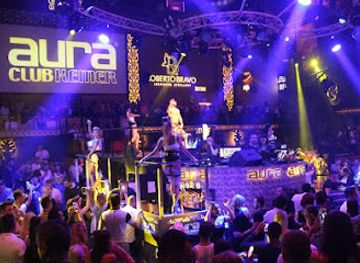
AURA CLUB KEMER
Experience the vibrant nightlife at AURA CLUB KEMER, where music, dance, and entertainment come together for an unforgettable night out in Kemer.
-
Hookah bar
BABYLON LOUNGE
Discover the vibrant nightlife of Kemer at Babylon Lounge, where delicious food, refreshing drinks, and aromatic hookahs await.
-
Seafood
GRACE Rooftop Kemer
Discover the culinary delight of Grace Rooftop Kemer, where stunning sea views meet exquisite seafood, Italian, steak, and sushi dishes.


Best nightclubs in Kemer
Kemer town has the district's most developed evening scene, with hotel bars, promenade venues, cafés and seasonal music-oriented entertainment serving a large resort audience. The atmosphere varies considerably by season and by establishment, and visitors should check locally for current opening arrangements rather than assume that every venue operates year-round. Göynük, Çamyuva and Tekirova offer a quieter selection concentrated around hotels and village centres, while Çıralı and Olympos are better suited to low-key evenings, outdoor dining and relaxed drinks than to intensive nightlife. Away from the resort settlements, the national park, archaeological areas and mountain landscapes have no meaningful night-time entertainment infrastructure; excursions and walking should be planned in daylight, particularly where roads, paths and mobile coverage are limited.
-
Night club
AURA CLUB KEMER
Discover the exhilarating nightlife at AURA CLUB KEMER, where unforgettable music, dancing, and entertainment await you in the heart of Kemer.
-
Night club
Club Inferno Mania Kemer
Discover the electrifying nightlife at Club Inferno Mania Kemer, where music, dance, and unforgettable moments unite in a vibrant atmosphere.
-
Night club
Niks Club Kemer
Discover the electrifying nightlife of Kemer at Niks Club, where music, dancing, and entertainment unite for an unforgettable night out.
-
Night club
Kristall Club Kemer
Discover the electric nightlife of Kemer at Kristall Club, the ultimate destination for unforgettable parties and vibrant entertainment in Antalya.


Best shops in Kemer
Shopping in Kemer is concentrated in the resort town, where visitors will find supermarkets, pharmacies, clothing and leather retailers, jewellery shops, beach goods, souvenirs and everyday supplies. The choice becomes more modest in Göynük, Çamyuva, Tekirova and Çıralı, where small shops and local markets serve residents and holidaymakers rather than offering a major specialist retail scene. Weekly markets in the wider district can provide fruit, vegetables, spices, clothing and household goods, but their location and operating day should be confirmed locally. Regional foods such as olive products, dried fruit, herbs and honey may be available through markets or village businesses, while handmade textiles and simple crafts are common souvenir categories. Visitors buying archaeological objects should use legitimate retailers and never remove material from ancient sites or natural areas.
-
Clothing store
LC Waikiki
Discover affordable fashion at LC Waikiki in Kemer, Antalya, where style meets affordability in a vibrant shopping experience.
-
General store
KEMER OLD BAZAAR
Explore Kemer Old Bazaar - a vibrant marketplace where local culture and unique shopping experiences come together in the heart of Antalya.
-
Shopping mall
Kemer Shopping Center
Experience the vibrant Kemer Shopping Center, your ultimate destination for shopping, dining, and entertainment in beautiful Antalya.
-
Shopping mall
KEMER SHOPPİNG CENTER
Explore Kemer Shopping Center: A vibrant destination for shopping and dining in the heart of Kemer, Antalya.


Get your free copy of our complete guide to Kemer, delivered straight to you.
Everything on this page, from attractions and restaurants to essentials and local phrases, in one PDF you can read offline, print or share.
Already have an account? Sign in
Your Kemer guide is ready.
We'll send it to · Not you? Sign out

Getting your guide ready…
We are putting together a fresh copy of the Kemer guide. This can take up to a minute.
This can take a few moments. If your browser asks, choose Allow so the download can start. You'll find the guide in your Downloads folder.
Nothing happened? Download it again
Sorry, the guide is taking longer than usual. Please try again in a minute, or get it by email instead.
Kemer essentials
Currency and Payment
Safety
Emergency Situations
Do's and Don'ts
Local Tips
From Eve
Local phrases worth knowing
You don't need to get them perfect. A few words go a long way, and locals appreciate the effort.
Basics
| English | Local | Say it |
|---|---|---|
| Hello | Merhaba | [Mer-ha-ba] |
| Goodbye | Hoşça kal | [Hosh-cha kal] |
| Yes | Evet | [Eh-vet] |
| No | Hayır | [Ha-yuhr] |
| Please/You're welcome | Lütfen | [Loot-fen] |
| Thank you | Teşekkür ederim | [Te-shek-kur ede-rim] |
| Excuse me/Sorry | Özür dilerim | [O-zur dee-le-rim] |
| How are you? | Nasılsınız? | [Na-sul-suh-nuz] |
| Fine. And you? | İyiyim. Siz? | [Ee-yee-yim. Siz?] |
| Do you speak English? | İngilizce konuşuyor musunuz? | [Ing-ee-leez-je ko-noo-shu-yor mu-soo-nooz] |
| I don't understand | Anlamıyorum | [An-la-muh-yor-um] |
Eating & Drinking
| English | Local | Say it |
|---|---|---|
| I'd like to see the menu, please | Menüyü görmek istiyorum, lütfen | [Me-new-yu ger-mek is-tee-yo-rum, loot-fen] |
| I don't eat meat | Et yemem | [Et ye-mem] |
| Cheers! | Şerefe! | [She-re-fe] |
| I would like to pay, please | Ödemek istiyorum, lütfen | [O-de-mek is-tee-yo-rum, loot-fen] |
Emergencies
| English | Local | Say it |
|---|---|---|
| Help! | Yardım! | [Yar-duhm] |
| Go away! | Uzaklaş! | [Oo-zak-lash] |
| Call the Police! | Polisi arayın! | [Po-lee-see a-ry-n] |
| Call a doctor! | Doktor çağırın! | [Dok-tor cha-yuh-run] |
| I'm lost | Kayboldum | [Kay-bol-dum] |
| I'm ill | Hastayım | [Has-ta-yum] |
Shopping
| English | Local | Say it |
|---|---|---|
| I'd like to buy... | Satın almak istiyorum... | [Sat-un al-mak is-tee-yo-rum] |
| I'm just looking | Sadece bakıyorum | [Sa-de-je ba-ku-yo-rum] |
| How much is it? | Bu ne kadar? | [Boo ne ka-dar] |
| That's too expensive | Bu çok pahalı | [Boo chok pa-ha-luh] |
| Can you lower the price? | Fiyatı indirebilir misiniz? | [Fee-yat-uh in-de-re-bee-leer mee-sin-iz] |
Time & Numbers
| English | Local | Say it |
|---|---|---|
| What time is it? | Saat kaç? | [Sa-at kach] |
| It's one o'clock | Saat bir | [Sa-at beer] |
| Half past (10) | On buçuk | [On boo-chuk] |
| Morning | Sabah | [Sa-bah] |
| Afternoon | Öğleden sonra | [O-le-den af-te-rna] |
| Evening | Akşam | [Ak-sham] |
| Yesterday | Dün | [Doon] |
| Today | Bugün | [Boo-goon] |
| Tomorrow | Yarın | [Ya-run] |
| 1 | Bir | [Beer] |
| 2 | İki | [Ee-kee] |
| 3 | Üç | [Ooch] |
| 4 | Dört | [Durt] |
| 5 | Beş | [Besh] |
| 6 | Altı | [Al-tuh] |
| 7 | Yedi | [Ye-dee] |
| 8 | Sekiz | [Se-keez] |
| 9 | Dokuz | [Do-kooz] |
| 10 | On | [On] |
Transport & Directions
| English | Local | Say it |
|---|---|---|
| Where's a/the...? | Bir/the... nerede? | [Beer/the... ne-re-deh] |
| What's the address? | Adres ne? | [Ad-res neh] |
| Can you show me (on the map)? | Bana (haritada) gösterebilir misiniz? | [Ba-na (ha-ri-ta-da) ger-ste-re-bee-leer mee-see-niz] |
| When's the next (bus)? | Sonraki (otobüs) ne zaman? | [Son-ra-kee (o-to-bus) neh za-man] |
| A ticket (to ....) | Bir bilet (....'a) | [Beer bee-let (....'a)] |
History of Kemer
The Taurus Mountains and Coastal Setting
Kemer's physical character was shaped by the rise of the western Taurus Mountains and the formation of a rugged Mediterranean coastline, processes that created steep slopes, narrow valleys and sheltered bays. The mountain-to-sea geography later influenced settlement, agriculture, transport and defence. Much of the district lies within or beside Beydağları Coastal National Park, a designation that reflects the importance of conserving the forested mountain landscape and its coastal habitats while allowing carefully managed recreation.
Lycian Harbours and Communities
The Kemer coast formed part of ancient Lycia, a region known for independent city-states, maritime trade and distinctive funerary monuments. Phaselis, founded in antiquity on a peninsula south of modern Kemer, prospered through its three natural harbours and links between the coast and inland routes. Olympos, farther south, developed in a wooded valley near the sea and became associated with the Lycian League before passing through later Hellenistic, Roman and Byzantine phases. Their surviving ruins demonstrate how harbour access and mountain terrain shaped local urban life.
Roman and Byzantine Landscapes
Under Roman rule, Phaselis and Olympos acquired public buildings, roads, baths, temples and other urban features, although the sites retained their close relationship with surrounding woodland and watercourses. Olympos was also connected with the cult of Hephaestus through the nearby natural flames of the Chimaera, known in antiquity as the eternal fires. In the Byzantine period, Christian communities continued to inhabit parts of the region, while changing trade patterns, coastal insecurity and the difficult terrain contributed to the gradual contraction of these ancient settlements.
Turkish Settlement and Coastal Change
Following the long transition from Byzantine to Turkish rule in Anatolia, the coast became part of the historical landscapes of the Seljuk and later Ottoman worlds. For centuries, settlement remained dispersed and the area depended largely on agriculture, forestry, fishing and small-scale coastal connections. Modern Kemer was transformed in the second half of the twentieth century as road improvements and the growth of Antalya's tourism economy opened the coast to large-scale resort development. Hotels, marinas and holiday infrastructure altered the shoreline while older rural settlements retained links with farming and local life.
Conservation and Contemporary Tourism
The establishment of Beydağları Coastal National Park helped place the district's forests, mountains, archaeological sites and shoreline within a conservation framework. Tourism now operates across a varied landscape: Kemer town is a developed resort, while Phaselis, Olympos, Çıralı, Göynük Canyon and the high slopes of Tahtalı Dağı attract visitors for different reasons. The continuing challenge is to accommodate coastal recreation and archaeological access without damaging fragile ruins, Mediterranean habitats, watercourses or the character of smaller settlements.
Kemer in Photos
Browse through our photo collection highlighting the charm and character of the destination.
Neighbouring destination travel guides
The closest destinations to Kemer, if you have time for more than one.
-

-

-
-

-


Swipe for more destinations
Explore more
Explore more of Pamphylia
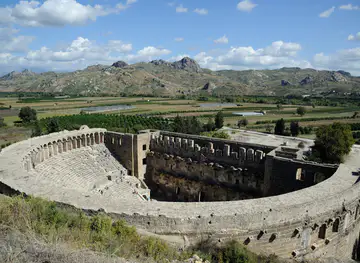
Discover Pamphylia in Turkiye: A Perfect Blend of Ancient Ruins, Stunning Landscapes, and Vibrant Local Culture on the Mediterranean Coast.
Explore Pamphylia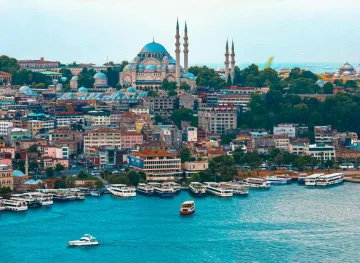
Explore more of Turkiye
Discover Turkiye: Where ancient history, stunning landscapes, and vibrant culture come together to create an unforgettable travel experience.
Explore Turkiye