

Synevyr National Park Travel Guide - Free Web & App
Your ultimate guide to Synevyr National Park. Discover top landmarks, proposed trips, and local tips. Free on the web or via the Evendo companion app.


Synevyr National Park in Ukraine pairs Lake Synevyr, Carpathian forests, wildlife, mountain villages and Kolochava’s living heritage for nature trips.
Highland Landscapes and Lake Synevyr
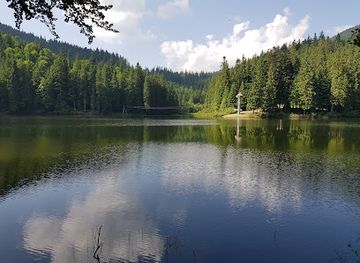
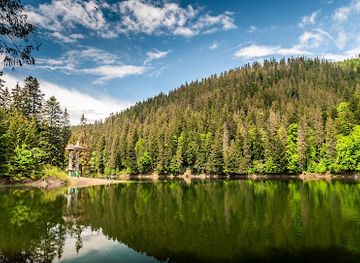
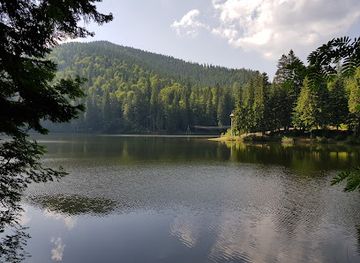
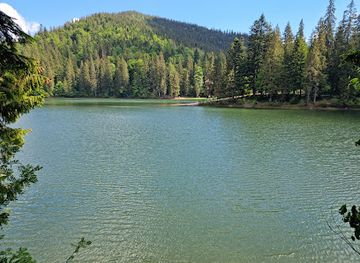
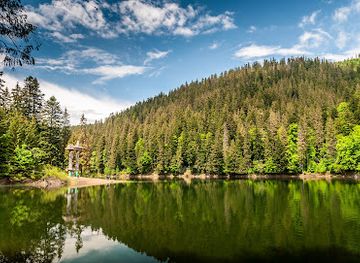
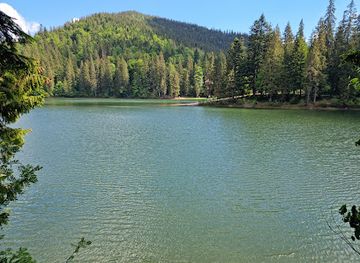
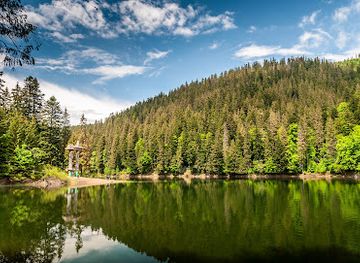
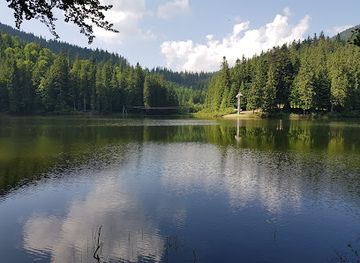
Synevyr National Park occupies a broad section of the Ukrainian Carpathians in Zakarpattia, where forested mountain slopes, upland meadows, river valleys and traditional villages form a landscape shaped by both nature and rural life. Its best-known feature is Lake Synevyr, Ukraine’s largest mountain lake, lying at roughly 989 metres above sea level and surrounded by spruce-covered slopes. Often called the Sea Eye of the Carpathians, the lake has a small wooded island near its centre and is protected as part of the national park’s natural heritage.Read more about Synevyr National Park
Forests, Wildlife and Mountain Villages
Culture and Outdoor Exploration
When is the best time to visit Synevyr National Park?
Best: June–August · 18–22°C| Month | High (°C) | Rainfall (mm) |
|---|---|---|
| January | 0 | 41 |
| February | 1 | 32 |
| March | 4 | 34 |
| April | 8 | 36 |
| May | 15 | 42 |
| June (best) | 18 | 47 |
| July (best) | 22 | 52 |
| August (best) | 21 | 49 |
| September | 15 | 45 |
| October | 10 | 43 |
| November | 4 | 38 |
| December | 0 | 41 |
Getting to and around Synevyr National Park
How to get there
Transportation
Best attractions in Synevyr National Park
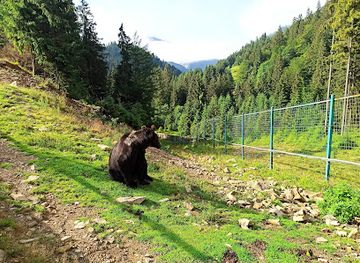
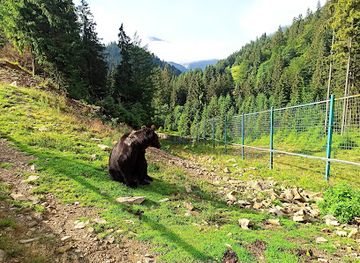
Lake Synevyr is the park’s defining attraction, a high mountain lake encircled by spruce forest and reached by a short approach from the surrounding road and visitor area. Walks around the lake provide changing views of the water and its small central island, while the wider slopes offer a sense of the Upper Tereblia mountain landscape. Kolochava is a major cultural stop, with museums and an open-air museum complex interpreting traditional buildings, village occupations, schooling, religion and the region’s changing political history. The park’s forests, streams, wetlands and upland meadows are best explored through permitted walks and scenic drives between settlements rather than through a single continuous route. Wildlife-related attractions include the brown bear rehabilitation facility associated with Synevyr, where visitors should follow current access and conservation guidance. The surrounding valleys also reveal wooden rural architecture, hay meadows and working villages that help place the natural scenery within its living Carpathian context.
-
State park
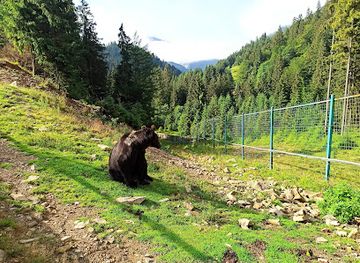
Rehabilitation center of brown bears
Discover the Rehabilitation Center of Brown Bears in Zakarpattia, where conservation meets adventure in a stunning natural setting.
-
Lake
Synevir-Polyans'ke Lake
Discover the tranquil beauty of Synevir-Polyans'ke Lake in Zakarpattia Oblast, a perfect escape for nature lovers and adventure seekers alike.
-
National reserve
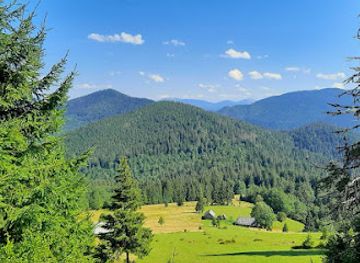
Polonyna Nad Ozerom Synevyr
Experience the serene beauty of Polonyna Nad Ozerom Synevyr, a stunning national reserve in Ukraine's Carpathian Mountains, perfect for nature lovers and adventurers.
Best landmarks in Synevyr National Park
Lake Synevyr is the park’s principal natural landmark and one of the most recognisable mountain lakes in Ukraine, occupying a forested basin high in the Carpathians with a small island near its centre. Its surrounding slopes, streams and spruce woodland express the geological and hydrological character of the upland landscape. The Tereblia valley system, mountain ridges and high meadows form a broader network of natural landmarks rather than a single dramatic summit. Kolochava’s wooden buildings, village museums and open-air collections are important cultural landmarks because they preserve the architecture and material history of Carpathian rural life. The brown bear rehabilitation centre represents the area’s modern conservation identity, while traditional churches and village structures reflect the region’s religious and community heritage. Landmark significance here lies in the relationship between lake, forest, pasture, settlement and protected habitat.
-
State park
Rehabilitation center of brown bears
Explore the Rehabilitation Center of Brown Bears in Zakarpattia Oblast, a sanctuary dedicated to rescuing and rehabilitating brown bears amidst stunning natural beauty.
-
Lake
Synevyr
Experience the serene beauty of Synevyr Lake in Zakarpattia Oblast, a must-visit destination for nature lovers and adventure seekers.
-
Lake
Synevir-Polyans'ke Lake
Explore the serene beauty of Synevir-Polyans'ke Lake in Zakarpattia Oblast, a hidden gem for nature lovers and adventure seekers alike.
Explore Synevyr National Park on the map
Plan your trip on one map. See where the top attractions, landmarks, restaurants and hotels are, and book hotels and experiences in a few clicks.
Best hotels in Synevyr National Park
Best restaurants in Synevyr National Park
Dining in and around Synevyr National Park is closely linked to village guesthouses, small cafés and traditional establishments in settlements such as Synevyr, Kolochava and Mizhhiria, rather than to a large restaurant scene inside the protected landscape. Regional cooking reflects Transcarpathia’s mixed cultural history and mountain agriculture, with soups, potatoes, mushrooms, forest berries, salo, dairy products, maize-based dishes and homemade preserves commonly associated with local food traditions. Menus may also show Hungarian and broader Carpathian influences, particularly in the use of paprika, sour cream and substantial stews. Trout and other fish may appear in the region, but availability varies and should not be assumed at every venue. Guesthouse meals can be a useful way to encounter home-style cooking, while larger settlements provide more choice and opportunities to buy provisions for walks. Carry food and water when spending a full day away from villages.
-
National park
Synevyr National Park
Explore Synevyr National Park's stunning landscapes, rich biodiversity, and enchanting lake nestled in Ukraine's Carpathian Mountains.
-
State park
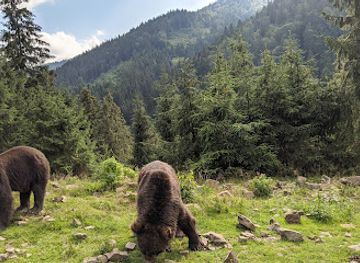
Rehabilitation center of brown bears
Explore Zakarpattia's unique Rehabilitation Center for Brown Bears - A sanctuary dedicated to wildlife conservation amidst stunning natural beauty.
-
Lake
Synevyr
Explore Synevyr Lake - A Stunning Natural Gem in Zakarpattia Oblast Surrounded by Majestic Mountains and Lush Forests.
-
Hotel
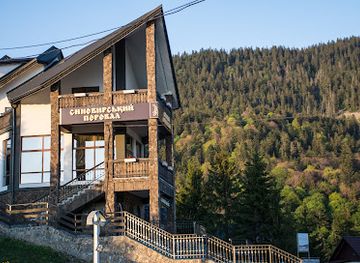
Synevyrsʹkyy Pereval
Discover the breathtaking beauty and culinary delights at Synevyrsʹkyy Pereval in Zakarpattia Oblast, Ukraine.
Best shops in Synevyr National Park
Shopping within Synevyr National Park is modest and concentrated in villages and regional centres rather than in a dedicated retail district. Kolochava, Synevyr and Mizhhiria are the most practical places to look for everyday provisions, while guesthouses and local producers may offer homemade preserves, honey, dairy products, dried mushrooms or berry products when available. Small craft and souvenir outlets may carry Carpathian-style textiles, carved wood, ceramics or locally themed objects, but product ranges and opening arrangements vary. Kolochava’s museums provide a useful context for understanding traditional tools, clothing and household crafts, even when displays are not commercial shops. Larger towns such as Khust, Mukachevo and Uzhhorod offer broader retail choice and more dependable supplies. Visitors should buy food, medication and outdoor necessities before heading into remote valleys, where shops and cash facilities are limited.
-
National park
Synevyr National Park
Explore the majestic Synevyr National Park, a hidden gem in Ukraine's Carpathian Mountains, offering stunning landscapes and diverse wildlife.
-
State park
Rehabilitation center of brown bears
Discover the Rehabilitation Center of Brown Bears, a sanctuary dedicated to the care of rescued bears in the heart of Zakarpattia Oblast's stunning landscapes.
-
Lake
Synevyr
Experience the serene beauty of Synevyr Lake, the largest lake in the Carpathian Mountains, where nature and tranquility unite.
-
Lake
Synevir-Polyans'ke Lake
Discover the serene beauty of Synevir-Polyans'ke Lake in Zakarpattia Oblast, where nature's wonders await in a tranquil escape.
Get your free copy of our complete guide to Synevyr National Park, delivered straight to you.
Everything on this page, from attractions and restaurants to essentials and local phrases, in one PDF you can read offline, print or share.
Already have an account? Sign in
Your Synevyr National Park guide is ready.
We'll send it to · Not you? Sign out

Getting your guide ready…
We are putting together a fresh copy of the Synevyr National Park guide. This can take up to a minute.
This can take a few moments. If your browser asks, choose Allow so the download can start. You'll find the guide in your Downloads folder.
Nothing happened? Download it again
Sorry, the guide is taking longer than usual. Please try again in a minute, or get it by email instead.
Synevyr National Park essentials
Currency and Payment
Safety
Emergency Situations
Do's and Don'ts
Local Tips
From Eve
Local phrases worth knowing
You don't need to get them perfect. A few words go a long way, and locals appreciate the effort.
Basics
| English | Local | Say it |
|---|---|---|
| Hello | Привіт | [pryvit] |
| Goodbye | До побачення | [do pobachennya] |
| Yes | Так | [tak] |
| No | Ні | [ni] |
| Please/You're welcome | Будь ласка | [budʹ laska] |
| Thank you | Дякую | [dyakuyu] |
| Excuse me/Sorry | Вибачте | [vybachte] |
| How are you? | Як справи? | [yak spravy?] |
| Fine. And you? | Добре. А ви? | [dobre. A vy?] |
| Do you speak English? | Ви говорите англійською? | [vy hovoryte anhliysʹkoyu?] |
| I don't understand | Я не розумію | [ya ne rozumiyu] |
Eating & Drinking
| English | Local | Say it |
|---|---|---|
| I'd like to see the menu, please | Я б хотів подивитися меню, будь ласка | [ya b khotiv podyvytysya menyoo, budʹ laska] |
| I don't eat meat | Я не їм м'ясо | [ya ne yim m'yaso] |
| Cheers! | Будьмо! | [budʹmo] |
| I would like to pay, please | Я б хотів заплатити, будь ласка | [ya b khotiv zaplatyty, budʹ laska] |
Emergencies
| English | Local | Say it |
|---|---|---|
| Help! | Допоможіть! | [dopomozhitʹ!] |
| Go away! | Відійди! | [vidiydy!] |
| Call the Police! | Викличте поліцію! | [vyklychte politsiyu!] |
| Call a doctor! | Викличте лікаря! | [vyklychte likarya!] |
| I'm lost | Я загубився | [ya zahubyvsya] |
| I'm ill | Я хворий | [ya khvoryy] |
Shopping
| English | Local | Say it |
|---|---|---|
| I'd like to buy... | Я б хотів купити... | [ya b khotiv kupity...] |
| I'm just looking | Я просто дивлюсь | [ya prosto dyvlyusʹ] |
| How much is it? | Скільки це коштує? | [skilʹky tse koshtuye?] |
| That's too expensive | Це занадто дорого | [tse zanadto doroho] |
| Can you lower the price? | Чи можете ви знизити ціну? | [chy mozhete vy znyzyty tsinu?] |
Time & Numbers
| English | Local | Say it |
|---|---|---|
| What time is it? | Котра година? | [kotra hodyna?] |
| It's one o'clock | Одна година | [odna hodyna] |
| Half past (10) | Пів на (десяту) | [piv na (desyatu)] |
| Morning | Ранок | [ranok] |
| Afternoon | День | [denʹ] |
| Evening | Вечір | [vechir] |
| Yesterday | Вчора | [vchora] |
| Today | Сьогодні | [sohodni] |
| Tomorrow | Завтра | [zavtra] |
| 1 | Один | [odyn] |
| 2 | Два | [dva] |
| 3 | Три | [try] |
| 4 | Чотири | [chotyry] |
| 5 | П'ять | [pyatʹ] |
| 6 | Шість | [shistʹ] |
| 7 | Сім | [sim] |
| 8 | Вісім | [visim] |
| 9 | Дев'ять | [dev'yatʹ] |
| 10 | Десять | [desyatʹ] |
Transport & Directions
| English | Local | Say it |
|---|---|---|
| Where's a/the...? | Де є...? | [de ye...?] |
| What's the address? | Яка адреса? | [yaka adresa?] |
| Can you show me (on the map)? | Чи можете ви показати мені (на мапі)? | [chy mozhete vy pokazaty meni (na mapi)?] |
| When's the next (bus)? | Коли наступний (автобус)? | [koly nastupnyy (avtobus)?] |
| A ticket (to ....) | Квиток (до ....) | [kvitok (do ....)] |
History of Synevyr National Park
Carpathian Formation and Mountain Waters
The landscape of Synevyr National Park belongs to the Ukrainian Carpathians, a mountain system formed through the long geological history of the Carpathian arc. Ridges, rounded summits and deeply cut valleys reflect the structure of the Flysch Carpathians, where layers of sandstone and shale were folded and uplifted. Lake Synevyr occupies a natural mountain basin traditionally understood as having formed through a landslide that dammed a valley, creating the high-altitude lake seen today. Forests, streams, wetlands and mountain pastures are therefore not isolated attractions but parts of a terrain shaped by geology, water and continuing erosion.
Settlement in the Upper Tereblia Valleys
Human settlement developed gradually in the valleys and forest margins of the region, where communities combined small-scale farming, livestock keeping, forestry and seasonal use of high pastures. The population has included Rusyn and Ukrainian communities alongside groups connected with the wider Carpathian borderlands. Village life was organised around wooden houses, churches, mills, household crafts and the movement of animals between lower settlements and upland meadows. Kolochava preserves particularly strong links with this rural history, while the name Synevyr is associated with the lake, surrounding village and wider mountain area.
Forestry, Timber and Borderland Rule
For centuries, the forests and valleys were influenced by the changing political administrations of the Carpathian borderlands, including the Kingdom of Hungary and later Austria-Hungary. Timber became one of the region’s important resources, with forestry, sawmilling and the transport of wood supporting local economies and outside markets. Roads and other infrastructure followed these economic activities, but the mountainous terrain kept communities relatively dispersed. The cultural landscape that visitors encounter today reflects this mixture of forest work, pastoral traditions, subsistence agriculture and the region’s position between Central and Eastern European historical spheres.
Twentieth-Century Transformations
The twentieth century brought major political changes to Zakarpattia, including the incorporation of the region into Soviet Ukraine after the Second World War. Forestry and state-managed agriculture continued to shape employment and land use, while village institutions and traditional practices changed under a more centralised system. Kolochava’s museums preserve memories of work, schooling, transport, religion and everyday life across these periods. The surrounding mountains also remained important as a source of timber, water and pasture, making the balance between local livelihoods and environmental protection increasingly significant.
National Park and Conservation
Synevyr National Park was established in 1989 to protect the distinctive mountain landscapes, forests, wetlands, wildlife habitats and cultural environment around Lake Synevyr. Its creation marked a shift from viewing the area primarily as a resource landscape towards managing it as a protected natural and cultural destination. Conservation now operates alongside tourism, forestry interests and the needs of nearby communities. The lake, forest ecosystems and wildlife facilities draw visitors, while park rules and local guidance help regulate access to sensitive habitats and maintain the character of the Carpathian environment.
Synevyr National Park in Photos
Browse through our photo collection highlighting the charm and character of the destination.
Neighbouring destination travel guides
The closest destinations to Synevyr National Park, if you have time for more than one.
-
-

-

-

-


Swipe for more destinations
Explore more

Explore more of Transcarpathia
Discover the untouched beauty and rich cultural tapestry of Transcarpathia, a hidden gem in Ukraine, perfect for nature lovers, history enthusiasts, and wellness seekers.
Explore Transcarpathia
Explore more of Ukraine
Explore Ukraine: From Kyiv's golden domes to the Carpathian Mountains, discover a country rich in history, culture, and natural beauty in the heart of Eastern Europe.
Explore Ukraine