

SS Nomadic, Belfast Travel Guide
Free Guide: The last White Star Line vessel and Titanic's tender ship—a floating museum of maritime elegance and history.


A brief summary of SS Nomadic
The last White Star Line vessel and Titanic's tender ship—a floating museum of maritime elegance and history.
Step aboard the SS Nomadic, the last surviving White Star Line vessel and the tender ship that ferried Titanic's passengers to their fateful voyage. Built in 1911 at Belfast's Harland & Wolff shipyard alongside the Titanic itself, this beautifully restored 70-meter ship offers an intimate glimpse into early 20th-century maritime luxury. Explore four decks featuring original fixtures, restored first and second-class lounges, crew quarters, and interactive exhibits that bring the golden age of ocean travel to life. Located at Hamilton Dock in Belfast's Titanic Quarter, the Nomadic serves as a living museum and tangible connection to one of history's most iconic ships.
On-site amenities
 Restrooms
 Drink options
 Food options
 Seating areas
 Information boards
 Visitor centre
Opening hours
- Every day11 am–4 pm
Opening hours as listed on the venue’s Google Business Profile. Hours can change for services and special events, so check with the venue before you go.
- Address
- Hamilton Dock, Queens Rd, Belfast BT3 9DT
- Phone
- Website
Getting there
Public Transport from Belfast City Centre
Walking from Belfast City Centre
Car with Parking
Bicycle via Belfast Bikes Scheme
Discover more about SS Nomadic
A Ship Built for Greatness
The SS Nomadic was launched in April 1911 from the legendary Harland & Wolff shipyard in Belfast, the same facility that constructed the RMS Titanic. Designed by Thomas Andrews—the same visionary architect who created the Titanic—the Nomadic was built using identical luxurious finishes and craftsmanship. At 70 meters long and 11 meters wide, she was designed to be exactly one quarter the size of her famous counterpart, earning her the affectionate nickname "mini-Titanic." Powered by coal boilers and steam engines, the vessel achieved a service speed of 12 knots and could accommodate up to 1,000 passengers across four decks plus a hold. Her purpose was specialized: to serve as a tender ship, ferrying first and second-class passengers from the shallow port at Cherbourg, France, out to the great ocean liners that were too large to dock directly.
The Fateful Connection to Titanic
On April 10, 1912, the SS Nomadic completed her most historically significant task. She carried 274 passengers—including the wealthy industrialist Benjamin Guggenheim and Colonel John Jacob Astor IV, one of the richest men in the world—from Cherbourg out to the Titanic as it waited in deeper waters. These passengers, blissfully unaware of the tragedy that awaited them, boarded the "ship of dreams" with excitement and anticipation. Four days later, after striking an iceberg in the North Atlantic, the Titanic sank, taking 1,503 crew and passengers with her. The Nomadic had been the last ship to serve the Titanic, and those three hours on her decks would forever define her place in maritime history. She became the sole surviving connection to the White Star Line and the only living witness to the passengers who boarded that ill-fated voyage.
A Century of Service and Survival
While Titanic's story ended in tragedy, the Nomadic's journey continued for more than a century. During World War One, she served with distinction, and in June 1918, her crew performed an extraordinary act of heroism by hauling a naval mine, its anchor, and connecting chain from the water before defusing the explosive device on deck—an action that could have destroyed the ship instantly. The crew's bravery was rewarded with an extra ration of wine by the commandant of the Saint Nazaire waterfront. Throughout the 1920s and beyond, the Nomadic continued her tender duties, ferrying passengers to the great transatlantic liners. She later served in World War Two and eventually became a floating restaurant in Paris before her engines and boilers were removed in 1974. The ship faced the scrapyard multiple times, coming perilously close to being dismantled for parts.
Rescue and Restoration
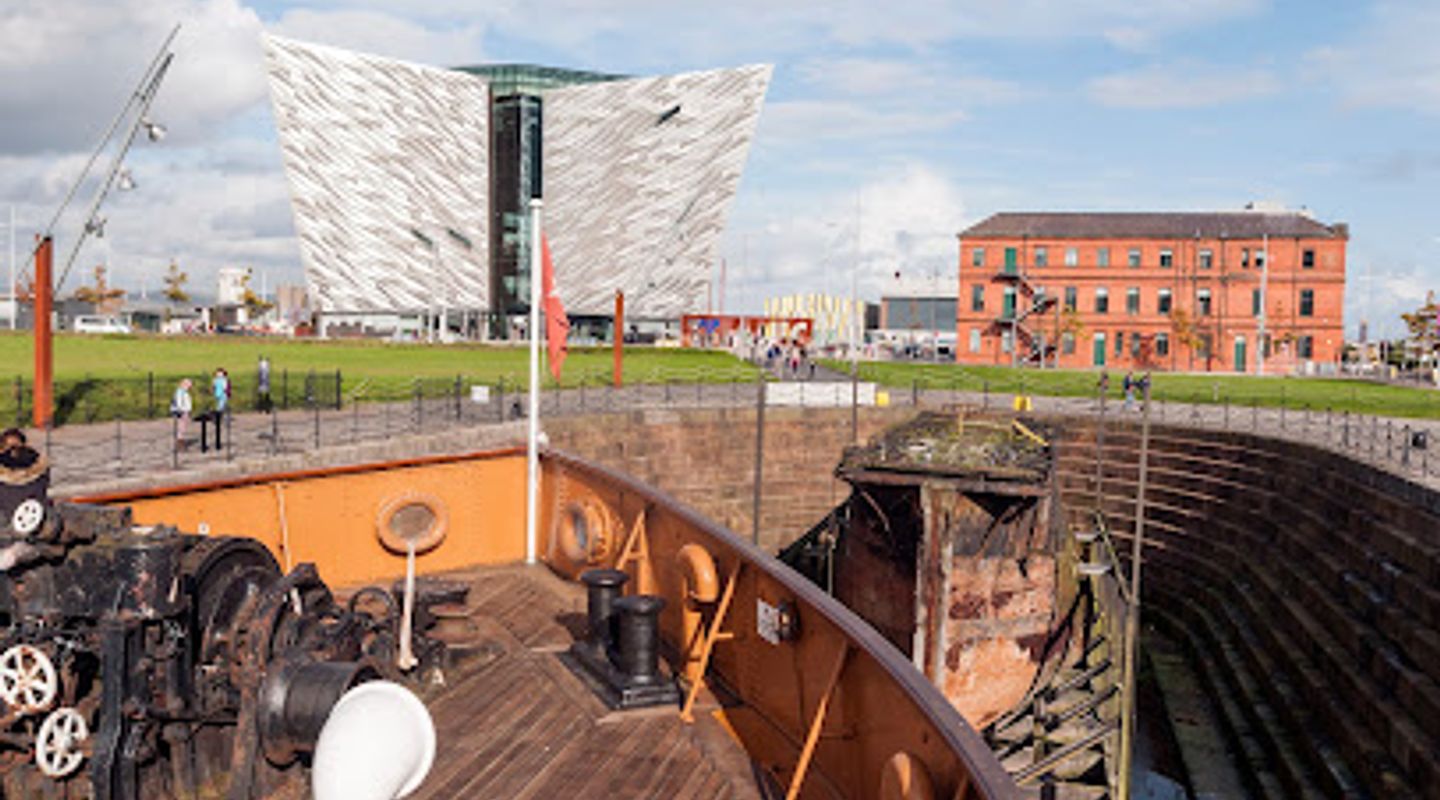
After nearly 95 years away from her birthplace, the SS Nomadic was rescued from a breakers yard in Le Havre, France, in 2006. She was transported back to Belfast aboard a submersible barge in a dramatic homecoming that captured the hearts of the city. The restoration became a true labor of love, managed by the Nomadic Charitable Trust, with thousands of hours of meticulous craftsmanship devoted to returning her to her 1911 glory. The ship was brought back to Hamilton Dock—the very location where her rudder and propeller had been fitted in the summer of 1911—making her restoration complete in both spirit and geography. Today, the Nomadic sits beside the original caisson gate, a rusty structure dating from 1867 that once blocked water from entering the dry dock, a remarkable piece of maritime heritage in its own right.
Walking Through History
Visitors to the SS Nomadic can walk the same decks as Titanic's passengers, experiencing the stark contrast between classes. The restored first-class lounge showcases intricate woodwork and period furnishings that reflect the opulence of early 20th-century ocean travel. The second-class areas offer a glimpse into more modest accommodations, while the cramped crew quarters reveal the reality of life below decks. Interactive displays and audio-visual presentations bring the ship's history to life, introducing visitors to characters from the Nomadic's past and offering insights into the experiences of passengers and crew. Visitors can stand at the ship's wheel, explore the Captain's quarters, and meet digital characters like Pierre, the barman, who share stories of the ship's varied career. The experience is enhanced by multimedia guides and optional guided walking tours that provide deeper context and anecdotes about the vessel and her passengers.
A Living Monument to Maritime Heritage
The SS Nomadic holds a unique place in Belfast's rich maritime heritage. As the only remaining White Star Line vessel and a member of the core collection on the National Historic Ships register, she stands as a tangible link to one of the most famous ships in history. Located in the Titanic Quarter adjacent to the Titanic Belfast exhibition centre, the Nomadic complements the broader story of Belfast's shipbuilding legacy. The city's legendary Harland & Wolff shipyard, whose iconic Samson and Goliath cranes still dominate the skyline, built not only the Nomadic and Titanic but also the Olympic and Britannic. The Nomadic's presence in Belfast represents both the extraordinary engineering prowess of early 20th-century shipbuilders and the poignant human stories connected to the age of great ocean liners.
Evendo Review Centre
 Google
Guest reviews
Best time to go
Quietest: Jan, Feb & Mar · before 9am or from 5pm
Busy times are Evendo estimates for a typical year, to help you plan. Actual crowds vary with events, school holidays and the weather.
Explore SS Nomadic on the map
A handpicked selection of must-see spots near SS Nomadic, mapped for you.
Get your free copy of our complete guide to SS Nomadic, delivered straight to you.
Everything on this page, from opening hours and how to get there to Eve’s tips and the best time to go, in one PDF you can read offline, print or share.
Already have an account? Sign in
Your SS Nomadic guide is ready.
We'll send it to · Not you? Sign out

Getting your guide ready…
We are putting together a fresh copy of the SS Nomadic guide. This can take up to a minute.
This can take a few moments. If your browser asks, choose Allow so the download can start. You'll find the guide in your Downloads folder.
Nothing happened? Download it again
Sorry, the guide is taking longer than usual. Please try again in a minute, or get it by email instead.
Unlock the best of SS Nomadic
Skip-the-line tickets, guided tours with entry, and walking tours of the area, booked in a few clicks.


Other nearby places you may find interesting
The closest places of the same kind, if this one is not quite what you had in mind.
-
-
-
-
-


Swipe for more places
More to explore near SS Nomadic

 Best experiences near SS Nomadic
 Best hotels near SS Nomadic
 Best landmarks near SS Nomadic
 Best attractions near SS Nomadic
 Best shops near SS Nomadic
 Best restaurants near SS Nomadic
 Best bars near SS Nomadic
Do you manage this location?
Take control to get all the benefits, like improved information, better appearance, and stronger visibility across AI-powered discovery.
Explore more

Explore more of Belfast
Discover Belfast, a city of history, culture, and modern charm, where the legacy of the Titanic meets vibrant street life and stunning natural beauty.
Explore Belfast
Explore more of United Kingdom
Discover the United Kingdom: A blend of rich history, stunning landscapes, and vibrant cities, offering a unique travel experience for every visitor.
Explore United Kingdom
