

Titanic Mural/ Мурал На Стене,Титаник, Belfast Travel Guide
Free Guide: A powerful tribute to the RMS Titanic and Belfast’s shipbuilding heritage, painted on a city wall as a memorial to those who built her and those who sailed on her.


A brief summary of Titanic Mural/ Мурал На Стене,Титаник
A powerful tribute to the RMS Titanic and Belfast’s shipbuilding heritage, painted on a city wall as a memorial to those who built her and those who sailed on her.
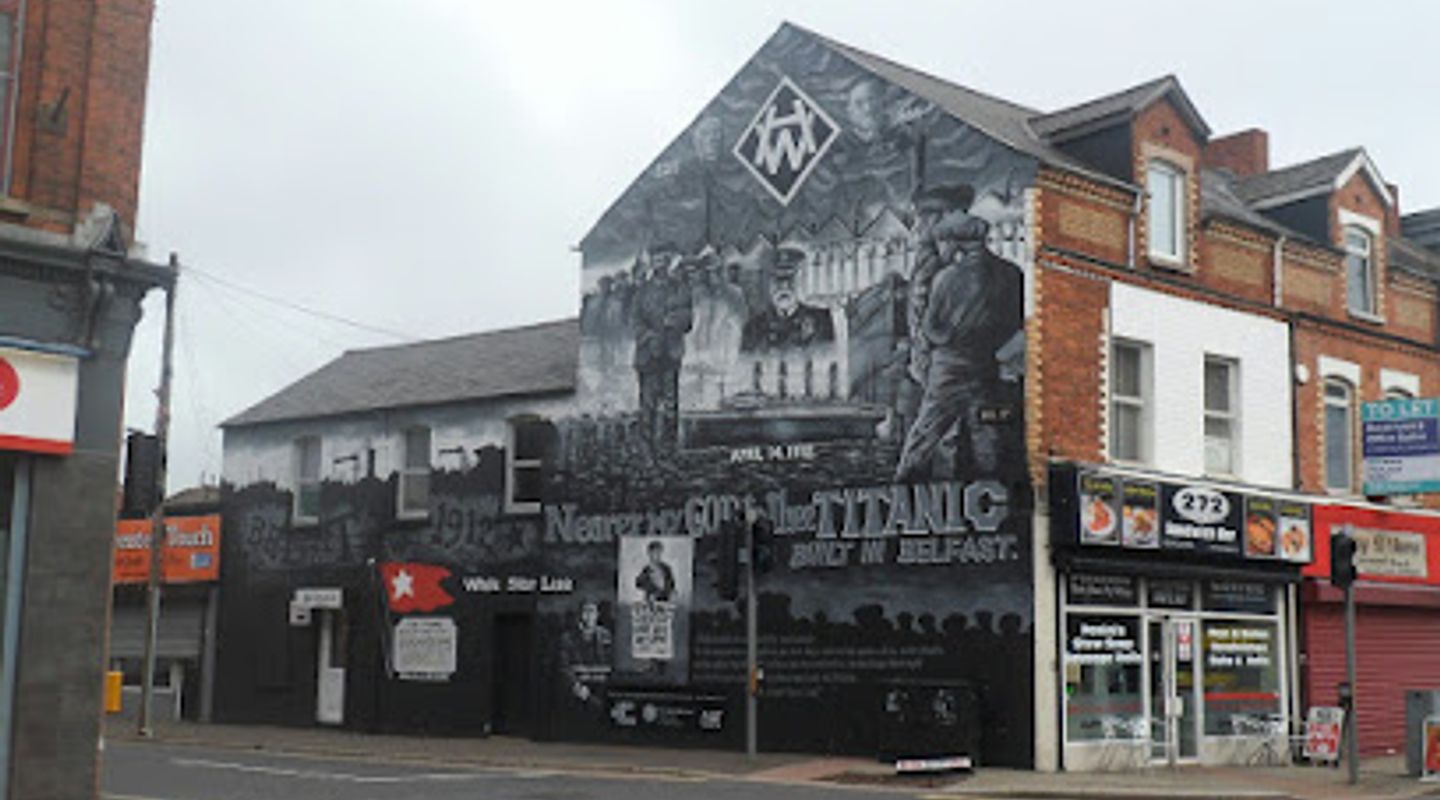
On the lower Newtownards Road in East Belfast, this striking wall mural pays tribute to the RMS Titanic and the city’s shipbuilding legacy. Painted in 2010 and later restored, it depicts the ‘Ship of Dreams’ alongside portraits of key figures like Thomas Andrews, the ship’s designer. The mural honors those who built the Titanic, those who sailed on her, and those who lost their lives in the 1912 disaster. It’s a powerful, locally created memorial that blends maritime history with Belfast’s tradition of public art.
On-site amenities
 Seating areas
 Trash bins
- Address
- 274 Newtownards Rd, Belfast BT4 1HE
Getting there
Walking
Bus
Taxi / Ride‑hailing
Discover more about Titanic Mural/ Мурал На Стене,Титаник
A Monument to Belfast’s Shipbuilding Past
On the gable end of a building at the corner of Dee Street and Newtownards Road, a large, detailed mural commemorates the RMS Titanic and the city that built her. Unveiled in 2010, the artwork celebrates Belfast’s industrial heritage and the thousands of workers at Harland & Wolff who constructed the ‘Ship of Dreams’. The mural prominently features the Titanic herself, rendered in a classic maritime style, with the White Star Line insignia and key dates from her construction and tragic maiden voyage. It stands as a permanent, community-driven tribute to the city’s role in one of the most famous stories in maritime history.
Art and Memory on the Wall
The mural is the work of local artist John Stewart, who later returned in 2015 to restore and refresh the piece. Among the imagery is a portrait of Thomas Andrews, the head of Harland & Wolff’s drafting department and the Titanic’s chief designer, who perished in the disaster. The mural’s dedication explicitly honors the men, women, and children who died in the North Atlantic on 14 April 1912, those who survived with lives forever changed, and the shipbuilders who created the vessel. This blend of historical detail and personal remembrance gives the mural a solemn, reflective quality, distinct from Belfast’s more politically charged murals.
Location and Local Context
Situated on the lower Newtownards Road in East Belfast, the mural is part of the city’s rich tradition of public wall art, but with a focus on industrial and maritime heritage rather than political themes. Its placement in a residential and commercial area makes it easily accessible to both locals and visitors exploring the city’s cultural landmarks. The surrounding streets reflect Belfast’s layered history, and the mural serves as a focal point for conversations about the city’s global impact through shipbuilding and engineering, as well as the human cost of that legacy.
Visitor Experience and Atmosphere
Visitors typically spend a short time here, taking in the scale and detail of the artwork, reading the inscriptions, and photographing the mural against the urban backdrop. The atmosphere is respectful and contemplative, especially for those familiar with the Titanic story. There are no formal facilities at the site itself, so it functions best as a stop on a wider walking tour of East Belfast’s murals and historical sites. The mural is best viewed in daylight, when the colors and text are clearly visible, and it can be combined with visits to nearby landmarks such as the Crumlin Road Gaol or the Peace Wall for a fuller picture of Belfast’s past and present.
Evendo Review Centre
 Google
Guest reviews
Best time to go
Quietest: Jan, Feb & Nov · before 9am or from 8pm
Busy times are Evendo estimates for a typical year, to help you plan. Actual crowds vary with events, school holidays and the weather.
Explore Titanic Mural/ Мурал На Стене,Титаник on the map
A handpicked selection of must-see spots near Titanic Mural/ Мурал На Стене,Титаник, mapped for you.
Get your free copy of our complete guide to Titanic Mural/ Мурал На Стене,Титаник, delivered straight to you.
Everything on this page, from opening hours and how to get there to Eve’s tips and the best time to go, in one PDF you can read offline, print or share.
Already have an account? Sign in
Your Titanic Mural/ Мурал На Стене,Титаник guide is ready.
We'll send it to · Not you? Sign out

Getting your guide ready…
We are putting together a fresh copy of the Titanic Mural/ Мурал На Стене,Титаник guide. This can take up to a minute.
This can take a few moments. If your browser asks, choose Allow so the download can start. You'll find the guide in your Downloads folder.
Nothing happened? Download it again
Sorry, the guide is taking longer than usual. Please try again in a minute, or get it by email instead.
Other nearby places you may find interesting
The closest places of the same kind, if this one is not quite what you had in mind.
-
-
-
-
-


Swipe for more places
More to explore near Titanic Mural/ Мурал На Стене,Титаник
-
 Best experiences near Titanic Mural/ Мурал На Стене,Титаник
-
 Best hotels near Titanic Mural/ Мурал На Стене,Титаник
-
 Best landmarks near Titanic Mural/ Мурал На Стене,Титаник
-
 Best attractions near Titanic Mural/ Мурал На Стене,Титаник
-
 Best shops near Titanic Mural/ Мурал На Стене,Титаник
-
 Best restaurants near Titanic Mural/ Мурал На Стене,Титаник
-
 Best bars near Titanic Mural/ Мурал На Стене,Титаник


Do you manage this location?
Take control to get all the benefits, like improved information, better appearance, and stronger visibility across AI-powered discovery.
Explore more

Explore more of Belfast
Discover Belfast, a city of history, culture, and modern charm, where the legacy of the Titanic meets vibrant street life and stunning natural beauty.
Explore Belfast
Explore more of United Kingdom
Discover the United Kingdom: A blend of rich history, stunning landscapes, and vibrant cities, offering a unique travel experience for every visitor.
Explore United Kingdom
