

Horatio Nelson Statue, Birmingham Travel Guide
Free Guide: Historic bronze statue honoring Admiral Horatio Nelson’s naval victories, located in Birmingham’s Bull Ring since 1809.


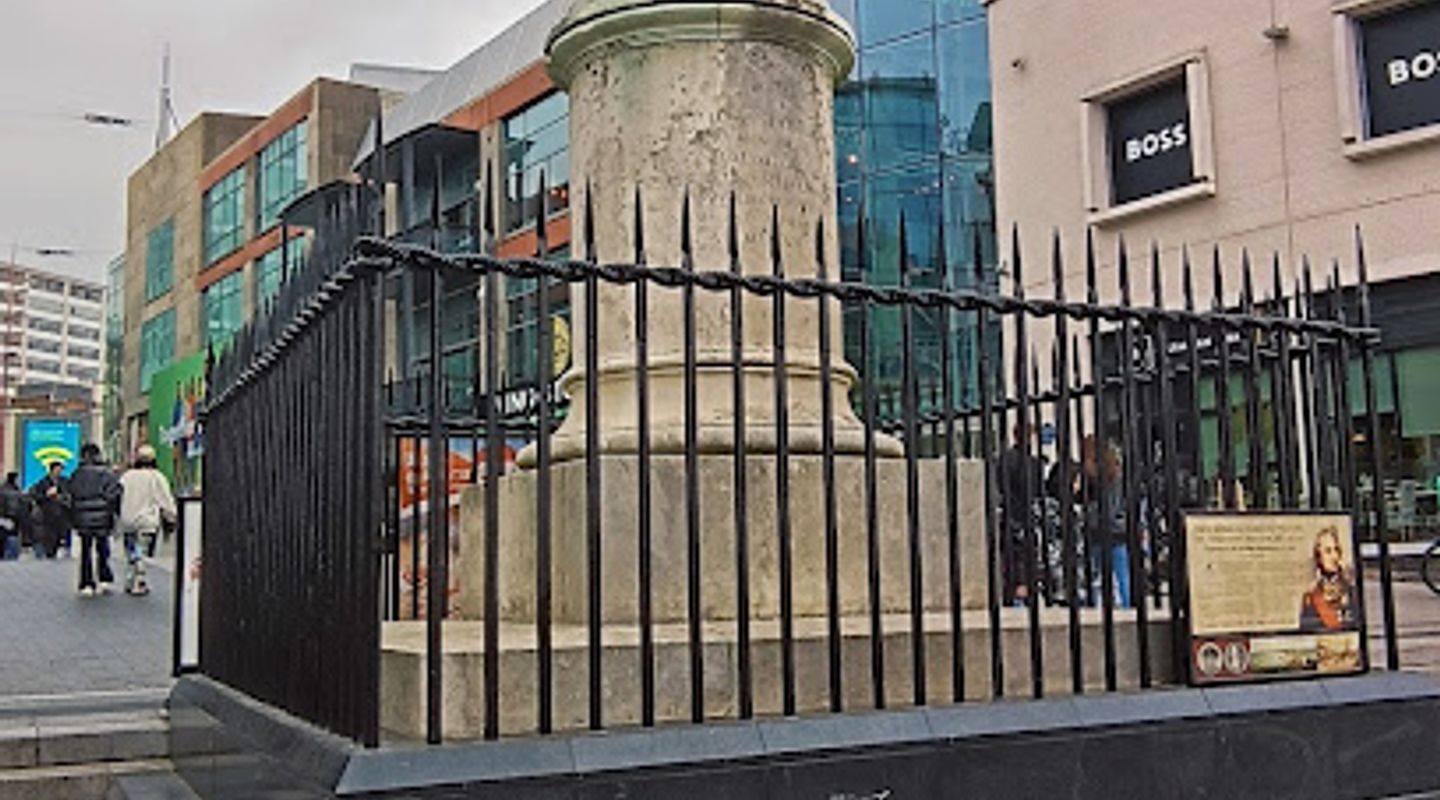
A brief summary of Horatio Nelson Statue
Historic bronze statue honoring Admiral Horatio Nelson’s naval victories, located in Birmingham’s Bull Ring since 1809.
The Statue of Horatio Nelson in Birmingham is a historic bronze monument honoring the famed British naval admiral. Created by Richard Westmacott and unveiled in 1809, it was the first public statue of Nelson in Britain, funded by local citizens. The statue depicts Nelson in naval uniform beside a model of his flagship HMS Victory, symbolizing his naval victories. Located in the Bull Ring area, it stands as a significant cultural and historic landmark in Birmingham.
On-site amenities
 Restrooms
 Drink options
 Food options
 Seating areas
 Information boards
- Address
- Edgbaston St, Birmingham B5 4BU
Getting there
Bus
Train and Walk
Car
Discover more about Horatio Nelson Statue
Origins and Historical Significance
The Statue of Horatio Nelson in Birmingham holds the distinction of being the first public statue of Lord Nelson in Britain, unveiled on October 25, 1809, coinciding with King George III's Golden Jubilee. Funded by a public subscription that raised £2,500, the statue commemorates Nelson’s visit to Birmingham in 1802 and celebrates his naval heroism during the Napoleonic Wars. Sculpted by Richard Westmacott, this was also his earliest public work, marking an important moment in British commemorative art.
Artistic Details and Symbolism
The statue portrays Nelson in his naval uniform, with a relaxed yet dignified pose, resting his left arm on an anchor. Beside him is a detailed model of his flagship, HMS Victory, which includes a facsimile of the flagstaff truck from the French ship L'Orient, sunk at the Battle of the Nile. This symbolism highlights Nelson’s naval victories and his role in securing British maritime dominance. Originally, the statue stood on a circular marble pedestal adorned with carvings representing Birmingham and its citizens, surrounded by iron railings and lanterns mounted on old cannons.
Location and Relocations
Initially placed near the Old Cross, close to the Birmingham Market Hall, the statue has witnessed several relocations due to urban redevelopment. In 1961, it was moved during Bull Ring’s reconstruction, which resulted in the loss of its original carved base, cannons, and lanterns. After further redevelopment, the statue was returned near its original site, now positioned on a high balcony between the Bullring shopping center and Selfridges, overlooking St Martin’s Church. The original iron railings were reinstated in 2005, preserving a link to its historical setting.
Cultural Role and Commemoration
The statue remains a focal point for Birmingham’s Trafalgar Day celebrations, honoring Nelson’s most famous victory. In 2009, the bicentenary of the statue’s unveiling was marked by the creation of a commemorative medal produced in Birmingham. The monument symbolizes local pride and national heritage, reflecting Birmingham’s early 19th-century civic spirit and its connection to British naval history.
Architectural and Artistic Context
Westmacott’s work on the statue is noted for its simplicity and democratic tone, avoiding heroic exaggeration. The composition balances the figure of Nelson with naval symbols and allegorical elements representing the city’s mourning and consolation. This approach contrasts with later, more elaborate Nelson monuments, emphasizing a rugged and approachable heroism.
Preservation and Status
The statue has been designated a Grade II* listed structure since 1952, recognizing its architectural and historic importance. Despite changes to its surroundings and pedestal, it remains a protected landmark within Birmingham’s urban landscape, continuing to inspire reflection on Britain’s naval legacy and the city’s historical identity.
Evendo Review Centre
 Google
Guest reviews
Best time to go
Quietest: Jan, Feb & Mar · before 6am or at 10pm
Busy times are Evendo estimates for a typical year, to help you plan. Actual crowds vary with events, school holidays and the weather.
Explore Horatio Nelson Statue on the map
A handpicked selection of must-see spots near Horatio Nelson Statue, mapped for you.
Get your free copy of our complete guide to Horatio Nelson Statue, delivered straight to you.
Everything on this page, from opening hours and how to get there to Eve’s tips and the best time to go, in one PDF you can read offline, print or share.
Already have an account? Sign in
Your Horatio Nelson Statue guide is ready.
We'll send it to · Not you? Sign out

Getting your guide ready…
We are putting together a fresh copy of the Horatio Nelson Statue guide. This can take up to a minute.
This can take a few moments. If your browser asks, choose Allow so the download can start. You'll find the guide in your Downloads folder.
Nothing happened? Download it again
Sorry, the guide is taking longer than usual. Please try again in a minute, or get it by email instead.
Other nearby places you may find interesting
The closest places of the same kind, if this one is not quite what you had in mind.
-
-
-
-
-


Swipe for more places
More to explore near Horatio Nelson Statue

 Best experiences near Horatio Nelson Statue
 Best hotels near Horatio Nelson Statue
 Best landmarks near Horatio Nelson Statue
 Best attractions near Horatio Nelson Statue
 Best shops near Horatio Nelson Statue
 Best restaurants near Horatio Nelson Statue
 Best bars near Horatio Nelson Statue
Do you manage this location?
Take control to get all the benefits, like improved information, better appearance, and stronger visibility across AI-powered discovery.
Explore more

Explore more of Birmingham
Discover Birmingham, a city that blends rich industrial heritage with vibrant modern culture, offering diverse attractions from historic museums to bustling shopping districts.
Explore Birmingham
Explore more of United Kingdom
Discover the United Kingdom: A blend of rich history, stunning landscapes, and vibrant cities, offering a unique travel experience for every visitor.
Explore United Kingdom
