Alisby Castle Travel Guide
Free Guide: Explore the evocative ruins of Crickhowell Castle, a medieval motte and bailey fortress with commanding views over the Usk valley in mid-Wales.


A brief summary of Alisby Castle
Explore the evocative ruins of Crickhowell Castle, a medieval motte and bailey fortress with commanding views over the Usk valley in mid-Wales.
Crickhowell Castle, also known as Alisby's Castle, is a medieval motte and bailey fortress located in the market town of Crickhowell, Powys, Wales. Built originally in timber in the 12th century by the Turberville family, it was later rebuilt in stone in the late 13th century. The castle occupies a commanding position overlooking the Usk valley and has a rich history involving Norman lords, the Mortimer family, and the Glyndŵr rebellion. Today, its ruins and earthworks remain a striking landmark in the town centre.
On-site amenities
 Seating areas
 Picnic areas
 Information boards
Opening hours
- Every dayOpen 24 hours
Opening hours as listed on the venue’s Google Business Profile. Hours can change for services and special events, so check with the venue before you go.
- Address
- High St, Crickhowell NP8 1BE
- Website
Getting there
Train and Bus
Car
Walking
Discover more about Alisby Castle
Origins and Early Construction
Crickhowell Castle began as a timber motte and bailey fortress constructed around the early 12th century, probably by Robert Turberville, a Norman vassal of Bernard de Neufmarché. The castle was strategically placed on a low ridge overlooking the River Usk and a tributary stream, providing a commanding vantage point over the surrounding landscape. The initial wooden structures included a motte (a large earth mound) topped by timber buildings, surrounded by a bailey enclosed by a wooden palisade. This early fortification was typical of Norman military architecture designed for rapid construction and defense.
Transition to Stone and Architectural Features
By the late 13th century, the castle was rebuilt in stone, primarily under Hugh de Turberville and later Sir Grimbald Pauncefote, who married into the Turberville family. The stone reconstruction included a shell keep atop the motte and defensive stone walls around the bailey, reinforced with cylindrical and trapezoidal towers. The castle's gatehouse featured a drawbridge over a pit between two large drum towers, one of which still stands precariously today. The bailey, measuring approximately 90 by 65 meters, housed residential and defensive structures, including rooms with fireplaces and large Gothic windows, indicating a blend of comfort and fortification.
Historical Significance and Ownership
Throughout the 14th century, Crickhowell Castle was held by the powerful Mortimer family, Marcher Lords who controlled large territories in Wales. In 1402, ownership returned to the Pauncefote family, with Sir John Pauncefote ordered by King Henry IV to refortify the castle amid the Owain Glyndŵr uprising. Despite these efforts, the castle was captured and sacked by Glyndŵr’s forces in 1403, marking the beginning of its decline. It never regained its former military or residential importance and gradually fell into ruin, with much of its stonework repurposed for local buildings.
Ruins and Present-Day Setting
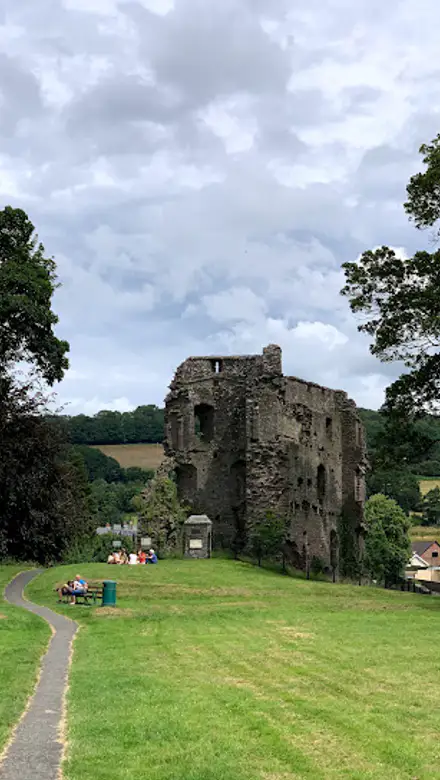
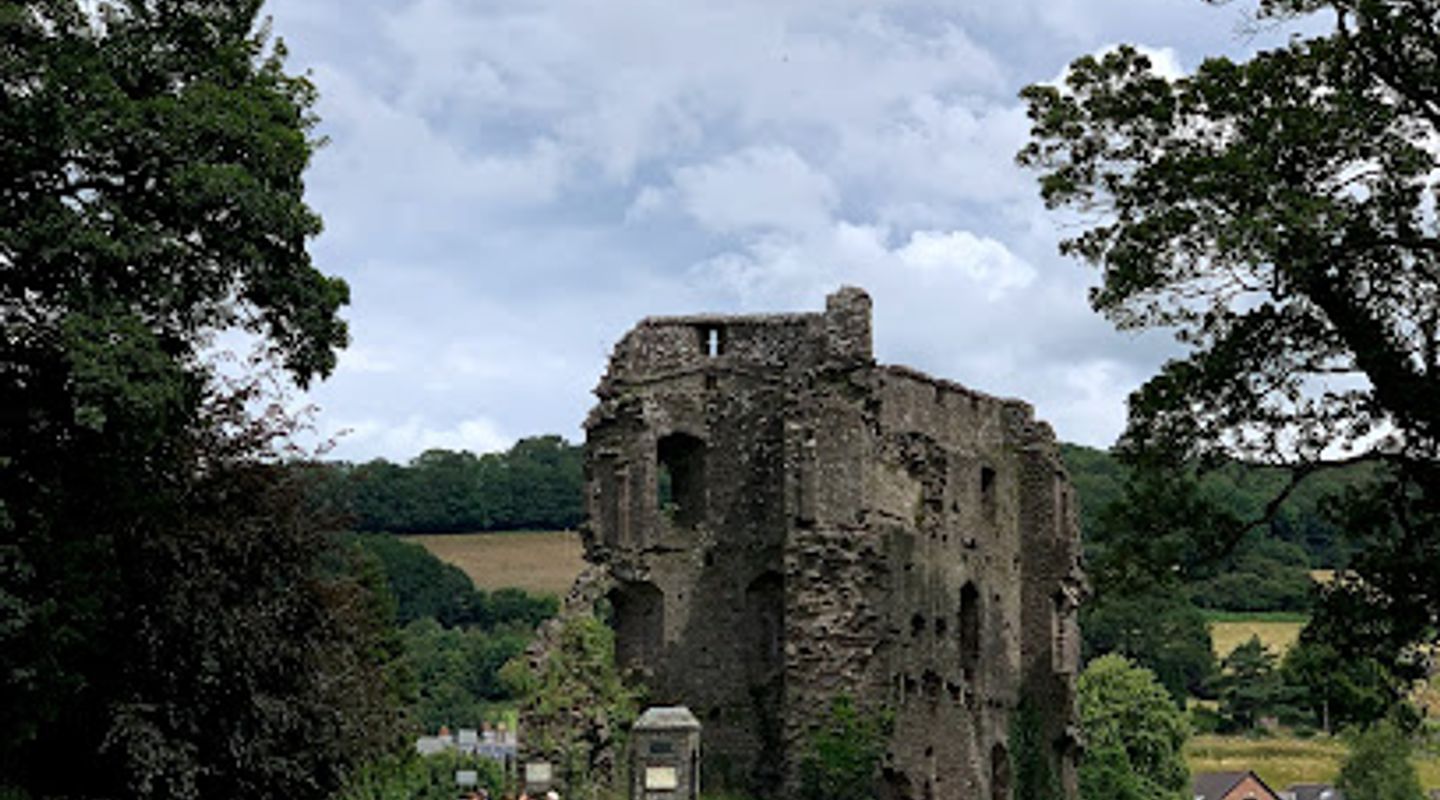
Today, Crickhowell Castle remains a prominent ruin in the heart of the town, with the large motte still covered in trees and the remnants of the gatehouse and defensive towers visible. The castle’s earthworks form part of a public green space often used for recreation and picnics, blending historical significance with community use. The site offers panoramic views along the Usk valley and serves as a tangible connection to the Norman and medieval history of the region.
Legacy and Cultural Context
Known alternatively as Alisby's Castle, named after a former constable, the site reflects the layered history of Norman conquest, Marcher lordship, and Welsh resistance. The castle’s ruins have inspired local heritage interest and archaeological studies, revealing insights into medieval military architecture and settlement planning. The surrounding town of Crickhowell developed around the castle, with its medieval street layout still evident, underscoring the castle’s central role in shaping the community’s identity.
Visitor Experience and Interpretation
Visitors to Crickhowell Castle can explore the motte and surviving masonry fragments, imagining the castle’s former grandeur and strategic importance. The juxtaposition of natural greenery and ancient stone ruins creates a serene atmosphere for reflection and discovery. Informational signs and nearby heritage resources help contextualize the castle’s story, while the adjacent town offers amenities and cultural attractions, making the castle a rewarding historical landmark to visit in mid-Wales.
Evendo Review Centre
 Google
Guest reviews
Best time to go
Quietest: Jan, Feb & Dec · before 6am or at 10pm
Busy times are Evendo estimates for a typical year, to help you plan. Actual crowds vary with events, school holidays and the weather.
Explore Alisby Castle on the map
A handpicked selection of must-see spots near Alisby Castle, mapped for you.
Get your free copy of our complete guide to Alisby Castle, delivered straight to you.
Everything on this page, from opening hours and how to get there to Eve’s tips and the best time to go, in one PDF you can read offline, print or share.
Already have an account? Sign in
Your Alisby Castle guide is ready.
We'll send it to · Not you? Sign out

Getting your guide ready…
We are putting together a fresh copy of the Alisby Castle guide. This can take up to a minute.
This can take a few moments. If your browser asks, choose Allow so the download can start. You'll find the guide in your Downloads folder.
Nothing happened? Download it again
Sorry, the guide is taking longer than usual. Please try again in a minute, or get it by email instead.
Other nearby places you may find interesting
The closest places of the same kind, if this one is not quite what you had in mind.
-
-
-
-
-


Swipe for more places
More to explore near Alisby Castle

 Best experiences near Alisby Castle
 Best hotels near Alisby Castle
 Best landmarks near Alisby Castle
 Best attractions near Alisby Castle
 Best shops near Alisby Castle
 Best restaurants near Alisby Castle
 Best bars near Alisby Castle
Do you manage this location?
Take control to get all the benefits, like improved information, better appearance, and stronger visibility across AI-powered discovery.
Explore more

Explore more of Brecknockshire
Discover the historic charm and natural beauty of Brecknockshire, Wales; a haven for outdoor enthusiasts, history buffs, and those seeking a serene escape.
Explore Brecknockshire
Explore more of United Kingdom
Discover the United Kingdom: A blend of rich history, stunning landscapes, and vibrant cities, offering a unique travel experience for every visitor.
Explore United Kingdom