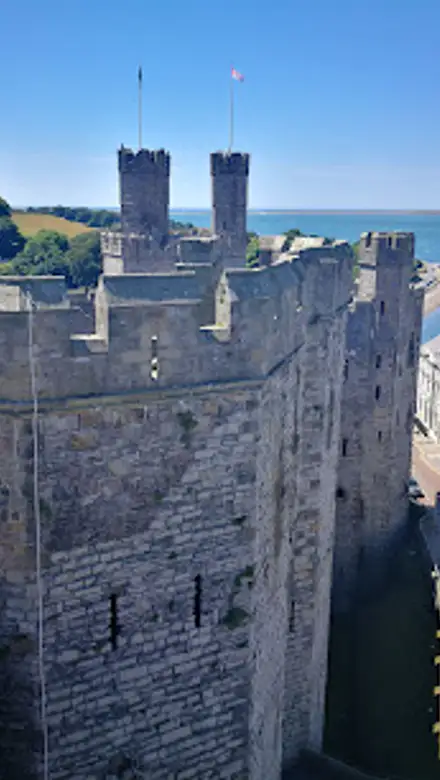
Caernarfon Castle Walls Travel Guide
Free Guide: Walk the nearly complete medieval walls of Caernarfon, a fortress town’s historic shield with panoramic views and rich Welsh heritage.


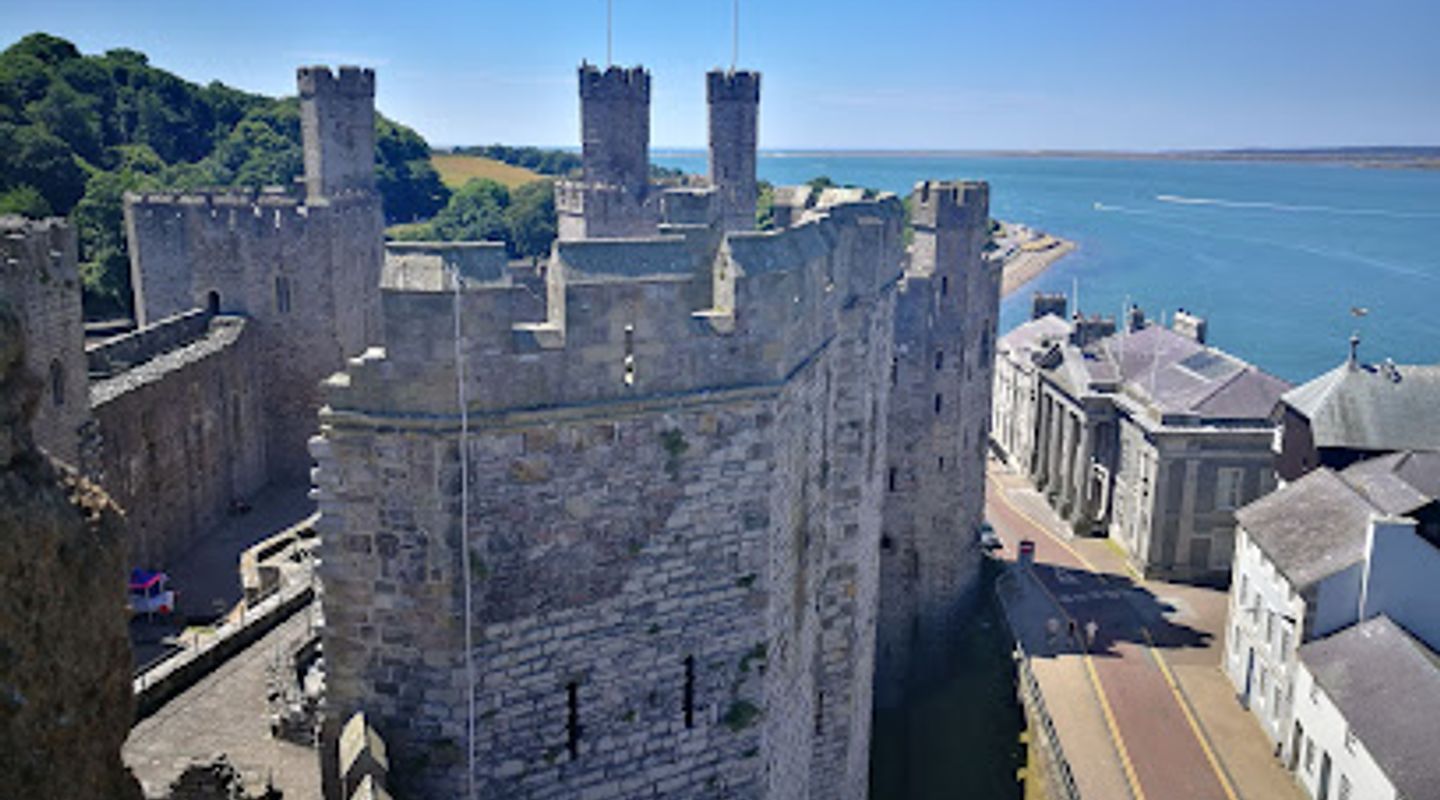
A brief summary of Caernarfon Castle Walls
Walk the nearly complete medieval walls of Caernarfon, a fortress town’s historic shield with panoramic views and rich Welsh heritage.
The Caernarfon Castle Walls form an imposing medieval defensive circuit encircling the historic town of Caernarfon, Wales. Built between 1283 and 1292 by King Edward I as part of his strategic fortress town, these nearly complete walls stretch for approximately 734 meters, featuring eight towers and two gatehouses. Visitors can walk along the ramparts to enjoy panoramic views of the town, the castle, and the surrounding landscape, immersing themselves in a rich heritage of medieval military architecture and Welsh history.
On-site amenities
 Restrooms
 Drink options
 Food options
 Seating areas
 Information boards
- Address
- Hole in the Wall St, Caernarfon LL55 2AY
- Phone
Getting there
Train and Walk
Bus
Car
Discover more about Caernarfon Castle Walls
Origins of a Fortress Town
The Caernarfon Castle Walls were constructed in the late 13th century as a vital component of King Edward I's masterplan to establish a fortified English stronghold in Wales. Built concurrently with the adjacent Caernarfon Castle between 1283 and 1292, the walls were designed to protect the new borough settled by English incomers. Stretching for nearly three-quarters of a kilometer, the circuit is remarkably intact, punctuated by eight robust towers and two medieval gatehouses that controlled access by land and sea. This defensive ring symbolized English authority and military might during a period of bitter conflict with Welsh princes.
Architectural Features and Defensive Design
The walls are constructed of sturdy stone, showcasing medieval military engineering optimized for defense. The towers, polygonal in shape, allowed defenders to cover multiple angles, while the gatehouses—most notably the East Gate and the West (Water) Gate—served as controlled entry points. The walls were part of a comprehensive security system that included the castle’s formidable curtain walls and the town’s quay. Walking atop the battlements offers a tangible sense of the castle’s strategic importance, with views over the River Seiont and the town’s medieval street layout, including the atmospheric Hole-in-the-Wall Street.
Experiencing the Walls Today
Visitors to Caernarfon can stroll the entire length of the walls during reasonable daylight hours year-round. The walk is accessible and relatively level, making it suitable for most visitors, though some uneven surfaces exist. The walls provide stunning panoramic vistas of Caernarfon’s historic core, the castle’s imposing silhouette, and the surrounding Welsh countryside and coastline. Along the route, interpretive signage and nearby shops enhance the experience, allowing visitors to connect with the town’s medieval past while enjoying a leisurely walk.
Historical Significance and Cultural Legacy
The walls are not only a military relic but also a cultural symbol of Edward I’s efforts to consolidate English control over Wales. Their design echoes the imperial aspirations of the era, with architectural influences drawn from Roman and Byzantine fortifications. The walls helped shape Caernarfon’s identity as a fortress town, preserving a chapter of Welsh history marked by resilience and conflict. Today, they stand as a protected heritage site, inviting exploration and reflection on medieval warfare, urban planning, and the complex history of conquest and settlement.
Integration with Caernarfon Castle and Surroundings
The walls form an essential part of the larger Caernarfon Castle complex, itself a UNESCO World Heritage Site. Together, they offer a comprehensive glimpse into medieval military architecture and royal power. While the castle’s interior and towers provide detailed historical exhibits and museum spaces, the walls offer an open-air experience that complements the castle visit. Nearby amenities, including cafes and shops, support visitors’ needs, while the town’s medieval streets invite further exploration beyond the walls.
Preservation and Visitor Considerations
Careful conservation efforts ensure the walls remain safe and accessible, though some areas are restricted for safety reasons. Visitors are advised to respect signage and avoid climbing on unstable sections. The walk along the walls is best enjoyed in mild weather, as exposed sections can be windy. Facilities such as restrooms and refreshments are available nearby, enhancing the visitor experience. The walls remain a living part of Caernarfon’s heritage, cherished for their historical depth and scenic appeal.
Evendo Review Centre
 Google
Guest reviews
Best time to go
Quietest: Jan, Feb & Dec · before 6am or at 9pm
Busy times are Evendo estimates for a typical year, to help you plan. Actual crowds vary with events, school holidays and the weather.
Explore Caernarfon Castle Walls on the map
A handpicked selection of must-see spots near Caernarfon Castle Walls, mapped for you.
Get your free copy of our complete guide to Caernarfon Castle Walls, delivered straight to you.
Everything on this page, from opening hours and how to get there to Eve’s tips and the best time to go, in one PDF you can read offline, print or share.
Already have an account? Sign in
Your Caernarfon Castle Walls guide is ready.
We'll send it to · Not you? Sign out

Getting your guide ready…
We are putting together a fresh copy of the Caernarfon Castle Walls guide. This can take up to a minute.
This can take a few moments. If your browser asks, choose Allow so the download can start. You'll find the guide in your Downloads folder.
Nothing happened? Download it again
Sorry, the guide is taking longer than usual. Please try again in a minute, or get it by email instead.
Other nearby places you may find interesting
The closest places of the same kind, if this one is not quite what you had in mind.
-
-
-
-
-


Swipe for more places
More to explore near Caernarfon Castle Walls
-
 Best experiences near Caernarfon Castle Walls
-
 Best hotels near Caernarfon Castle Walls
-
 Best landmarks near Caernarfon Castle Walls
-
 Best attractions near Caernarfon Castle Walls
-
 Best shops near Caernarfon Castle Walls
-
 Best restaurants near Caernarfon Castle Walls
-
 Best bars near Caernarfon Castle Walls


Do you manage this location?
Take control to get all the benefits, like improved information, better appearance, and stronger visibility across AI-powered discovery.
Explore more

Explore more of Caernarfonshire
Discover Caernarfonshire: Where Medieval Castles, Scenic Landscapes, and Vibrant Culture Meet in the Heart of Wales
Explore Caernarfonshire
Explore more of United Kingdom
Discover the United Kingdom: A blend of rich history, stunning landscapes, and vibrant cities, offering a unique travel experience for every visitor.
Explore United Kingdom