James Fort, County Cork Travel Guide
A haunting 17th-century pentagonal fort commanding Kinsale Harbour, where history whispers through overgrown ramparts.
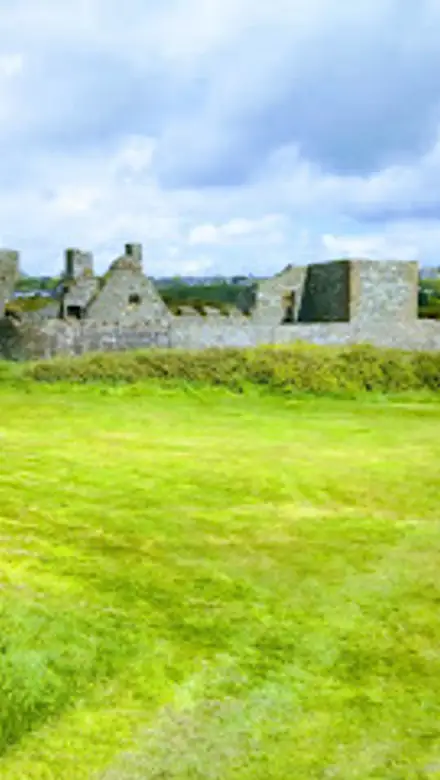
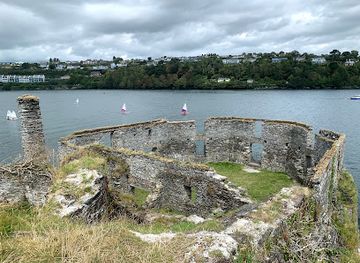
James Fort is a 17th-century pentagonal bastion fort perched on the Castlepark peninsula in Kinsale Harbour, County Cork. Built between 1602 and 1607 to defend the harbour's seaborne approaches, this atmospheric ruin offers commanding views across the water to Charles Fort and the charming town of Kinsale. Free to explore year-round, the fort's earthen ramparts and stone structures remain largely unrestored, creating an evocative sense of stepping back through centuries of Irish military history. A scenic 3-kilometre walk from town leads to this hidden gem, popular with locals and discerning visitors seeking authentic historical atmosphere.
A brief summary to James Fort
- Old-Fort, Co. Cork, IE
- Click to display
- Duration: 1 to 2.5 hours
- Free
-
 Outdoor
- Mobile reception: 4 out of 5

Know before you go
Hi, I'm Eve. Here are a few practical things to know before exploring James Fort.
- Wear sturdy footwear with good grip; the earthen ramparts can be slippery when wet, and broken glass has been reported near stone tunnels. Allow time to explore the interior structures and climb the walls for harbour views.
- Visit during clear weather for the best views across to Charles Fort and Kinsale town. Foggy mornings can obscure the fort's commanding position over the harbour.
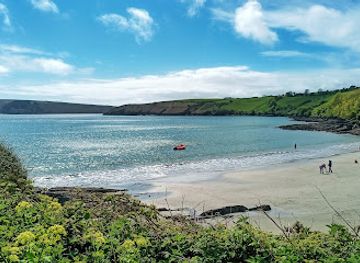
- Combine your visit with Dock Beach at the base of the peninsula—a small sandy beach perfect for a swim or picnic, especially in summer months.
- Plan a 45-minute to 1-hour walk from Kinsale town centre via the footpath along the shoreline. The gentle hill ascent is manageable for most fitness levels, though parents with young children should watch for uneven terrain.
- The Dock Pub near the carpark offers food and refreshments, though hours can be variable. No facilities exist at the fort itself, so bring water and supplies if planning a longer visit.
Do you manage this location?
Take control to get all the benefits, like improved information, better appearance, and stronger visibility across AI-powered discovery. Learn more about listing your business on Evendo
Activate your presenceOther nearby places you may find interesting
The closest places of the same kind, if this one is not quite what you had in mind.
Explore James Fort on the Map
A handpicked selection of must-see spots near James Fort, mapped for you.
Unlock the Best of James Fort
Buy tickets
-
No tickets available
Book tours with entry
-
No tours available


Getting There
-
Walking from Kinsale Town Centre
A scenic 3-kilometre walk from Kinsale town centre to James Fort takes approximately 45 minutes to 1 hour. Follow the well-maintained footpath along the shoreline southward from the town, passing through residential areas and along the waterfront. The route is relatively flat initially, then ascends a gentle hill as you approach the Castlepark peninsula. The path is suitable for most fitness levels, though it involves some uneven terrain. No parking is required for this option, and it provides excellent harbour views throughout the journey.
-
Car to Castlepark Car Park
Drive south from Kinsale town centre towards Castlepark, approximately 3 kilometres. Follow local signage to the Castlepark car park near the Dock Pub and marina. Parking is available at the car park, though spaces can be limited during peak summer months and weekends. From the car park, walk uphill via the marked pathway to reach James Fort, a 10 to 15-minute ascent. The car park also provides access to Dock Beach and the marina facilities.
-
Access via Dock Beach
An alternative approach to James Fort is via Dock Beach at the base of the Castlepark peninsula. From the car park near the Dock Pub, access the beach and walk along the shoreline. You can ascend to the fort from the beach side, which offers a different perspective of the fortifications and adds approximately 20 to 30 minutes to your visit. This route is particularly popular in summer months when the beach is active with swimmers and picnickers.
For the on-the-go comforts that matter to you
-
 Food Options
-
 Drink Options
-
 Picnic Areas
-
 Trash Bins
Discover more about James Fort
A Fortress Born from Conflict and Conquest
James Fort emerged from the ashes of the Siege of Kinsale in 1601, one of the pivotal moments in Irish history. When English forces defeated the combined Ulster and Spanish armies, the strategic importance of Kinsale Harbour became undeniable. Construction commenced in 1602 under the direction of military engineer Paul Ive, and by 1607 the fort was complete—a pentagonal bastion fort designed to command all approaches to the harbour and the River Bandon. Named in honour of King James I of England and VI of Scotland, the fort represented the new English dominion over this vital southern port. The central stone fortification was surrounded by massive earthen bastions, each capable of mounting artillery to sweep the water and approaches with devastating firepower.Witness to Centuries of Conflict
Though built in peacetime, James Fort saw action repeatedly throughout the 17th century. In 1649, Cromwell's forces took control without resistance, but the fort's most dramatic moment came in 1690 during the Williamite War in Ireland. Held by Jacobite forces under Colonel O'Driscoll, the fort was captured by Williamite troops led by the Duke of Württemberg and the young John Churchill—later to become the famous 1st Duke of Marlborough. An explosion within the gunpowder stores damaged the fortification during this assault, a catastrophic event that marked the beginning of its decline. Unlike Charles Fort across the harbour, which remained an active military garrison into the 20th century, James Fort gradually fell into disuse during the 18th century and was described as a ruin by the 19th.The Landscape of Defence
What makes James Fort remarkable is its sheer scale and sophisticated design, though these qualities are easily overlooked by the untrained eye. The fort occupies almost the entire Castlepark peninsula, with five massive bastions arranged in a pentagonal configuration. Tunnelled earthen walls, now overgrown with brambles, ivy, heather, and ferns, create the illusion of an ancient Iron Age hillfort rather than a carefully engineered military installation. Beneath this wild vegetation lie impressive bones—firing platforms positioned to cover every conceivable approach, ditches and ramparts engineered to withstand siege, and stone structures reinforced in 1611 and again in 1667. A hexagonal blockhouse once stood at the water's edge, serving as a water battery to control the narrowest point in the channel. From the fort's vantage point, visitors can spot what is believed to have been a signal station on the northern hill, used to facilitate communications with the water battery below.A Landscape of History and Harbour Views
Today, James Fort presents itself as a place of contemplation and discovery. The grassy headland is maintained in excellent condition, inviting leisurely walks around the fortifications while panoramic views unfold across Kinsale Harbour, the town itself, and Charles Fort on the opposite shore. The proximity to Dock Beach adds another dimension—a small sandy strand popular with swimmers and picnickers in summer months. The fort's location on the Castlepark peninsula, just 3 kilometres south of Kinsale town centre, makes it accessible via a well-maintained footpath that follows the shoreline. The approach itself is part of the experience, a gentle ascent offering glimpses of the harbour before the full majesty of the fort's earthworks comes into view.Conservation and Contemporary Significance
James Fort is protected as a National Monument under state guardianship by the Office of Public Works, reflecting its importance to Ireland's cultural heritage. Archaeological excavations in the late 20th and early 21st centuries have revealed much about the fort's construction and use, though conservation challenges remain. The site requires ongoing management to prevent deterioration, yet its unrestored state contributes to its unique character—a place where history feels tangible rather than sanitised. Unlike the well-maintained Charles Fort with its visitor facilities and guided tours, James Fort rewards those who seek it out with authenticity and solitude, a fortress that speaks directly across the centuries without interpretation or mediation.












Your all‑in‑one travel companion app
Explore expert travel guides, compare and book tours, experiences, hotels, and more—all from the palm of your hand. Download now for seamless trip planning wherever your wanderlust takes you.


Explore More of County Cork

Looking beyond James Fort? Discover County Cork for broader travel guides, local hot-spots, and regional highlights.
Explore County Cork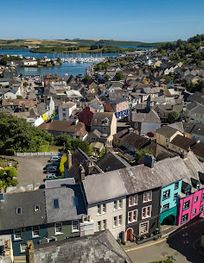
Stay at The Old Presbytery in Kinsale for a charming self-catering experience, blending historical elegance with modern comfort and easy access to local attractions.
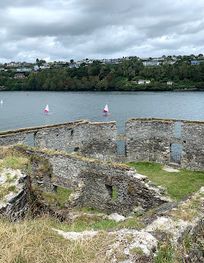
Explore the historic James Fort Blockhouse in Kinsale, Co. Cork, where Ireland's military history meets stunning coastal beauty.