

Derry Round Towere, Derry Travel Guide
Free Guide: Medieval bell tower from the 13th-14th century—Derry's only surviving medieval structure and symbol of monastic power.


A brief summary of Derry Round Towere
Medieval bell tower from the 13th-14th century—Derry's only surviving medieval structure and symbol of monastic power.
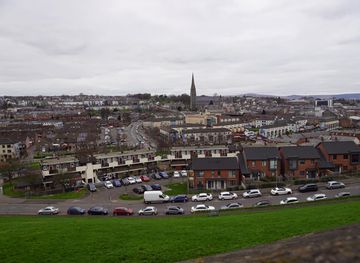
A remarkable medieval monastic round tower dating to the 13th or 14th century, hidden in plain sight on the grounds of Lumen Christi College in Derry~Londonderry. This is the only surviving medieval structure still standing in the city, representing the bell house (cloigtheach) of St Columba's monastery. Rediscovered through radiocarbon dating of mortar samples, the tower stands as powerful evidence of Derry's significance as a leading monastic centre in medieval Ireland.
On-site amenities
 Information boards
Opening hours
- Mon–SatOpen 24 hours
- Sun12 am–11:59 pm
Opening hours as listed on the venue’s Google Business Profile. Hours can change for services and special events, so check with the venue before you go.
- Address
- 10 Cooke St, Londonderry BT48 6UA
Getting there
Walking from City Centre
Public Transport to City Centre
Train to Derry Station
Driving and Parking
Discover more about Derry Round Towere
A Medieval Monument Rediscovered
For centuries, the Derry Round Tower lay hidden in plain sight, mistaken for the ruins of a 17th-century windmill. Located on the grounds of Lumen Christi College grammar school at 10 Cooke Street, this remarkable structure was scientifically dated to the 13th or 14th century through innovative radiocarbon analysis of mortar samples collected during conservation work in 2013. Researchers from Queen's University Belfast and local historians from the Derry Tower Heritage Group confirmed what had long been suspected: this was no windmill, but a genuine medieval monastic bell tower—the only medieval structure still standing within Derry's city boundaries.
Symbol of Monastic Power and Prestige
Irish round towers, known as cloigtheach in the Irish language, served primarily as bell towers for monastic communities. However, they represented far more than functional architecture. These distinctive structures were symbols of a monastery's power, wealth, and spiritual importance. The presence of a round tower in Derry indicates the exceptional significance of St Columba's monastery in the north-west of Ireland during the medieval period. Of approximately 90 known round towers in Ireland, the Derry example is unique in its urban setting and its survival through centuries of urban development.
From Bell Tower to Windmill
Historical maps from 1600 show the round tower standing in this location. By 1685, however, the structure no longer appeared on maps, replaced instead by references to a windmill on the city's outskirts. Rather than being demolished, the tower's sturdy base was ingeniously repurposed by 17th-century builders who adapted the medieval stump for their new structure. This practical reuse allowed the ancient monument to survive when all other medieval buildings in Derry were demolished or buried beneath centuries of urban construction and development.
Archaeological Significance and Urban Context
Dr Colm Donnelly, Director of the Centre for Archaeological Fieldwork at Queen's University Belfast, emphasised the tower's exceptional importance: "This monument is the only medieval structure still standing in Derry. All other medieval buildings that were once here are now gone, buried under the centuries of building activity that have happened in the city over the past 400 years." The tower's survival makes it an irreplaceable window into Derry's medieval past and its role as a major ecclesiastical centre.
The Discovery Process
The rediscovery of the tower's true age was made possible through cutting-edge radiocarbon dating techniques developed at the 14CHRONO Centre for Climate, the Environment, and Chronology at Queen's University Belfast. This method measures carbon-14 trapped in mortar when lime originally set, allowing researchers to date the building fabric directly. The Derry Tower Heritage Group's five-year study and their foresight in preserving mortar samples during earlier conservation work proved instrumental in confirming the tower's medieval origins.
Evendo Review Centre
 Google
Guest reviews
Best time to go
Quietest: Jan, Feb & Nov · before 7am or at 8pm
Busy times are Evendo estimates for a typical year, to help you plan. Actual crowds vary with events, school holidays and the weather.
Explore Derry Round Towere on the map
A handpicked selection of must-see spots near Derry Round Towere, mapped for you.
Get your free copy of our complete guide to Derry Round Towere, delivered straight to you.
Everything on this page, from opening hours and how to get there to Eve’s tips and the best time to go, in one PDF you can read offline, print or share.
Already have an account? Sign in
Your Derry Round Towere guide is ready.
We'll send it to · Not you? Sign out

Getting your guide ready…
We are putting together a fresh copy of the Derry Round Towere guide. This can take up to a minute.
This can take a few moments. If your browser asks, choose Allow so the download can start. You'll find the guide in your Downloads folder.
Nothing happened? Download it again
Sorry, the guide is taking longer than usual. Please try again in a minute, or get it by email instead.
Other nearby places you may find interesting
The closest places of the same kind, if this one is not quite what you had in mind.
-
-
-
-
-


Swipe for more places
More to explore near Derry Round Towere

 Best experiences near Derry Round Towere
 Best hotels near Derry Round Towere
 Best landmarks near Derry Round Towere
 Best attractions near Derry Round Towere
 Best shops near Derry Round Towere
 Best restaurants near Derry Round Towere
 Best bars near Derry Round Towere
Do you manage this location?
Take control to get all the benefits, like improved information, better appearance, and stronger visibility across AI-powered discovery.
Explore more
Explore more of Derry
Explore Derry: Where history meets vibrant culture in a city bridging Irish and British heritage, offering breathtaking views and captivating festivals.
Explore Derry
Explore more of United Kingdom
Discover the United Kingdom: A blend of rich history, stunning landscapes, and vibrant cities, offering a unique travel experience for every visitor.
Explore United Kingdom
