St. Bernard's Well, Edinburgh Travel Guide
Free Guide: An elegant 18th-century Greco-Roman temple in Edinburgh, famed for its healing mineral spring and classical beauty beside the Water of Leith.


A brief summary of St. Bernard's Well
An elegant 18th-century Greco-Roman temple in Edinburgh, famed for its healing mineral spring and classical beauty beside the Water of Leith.
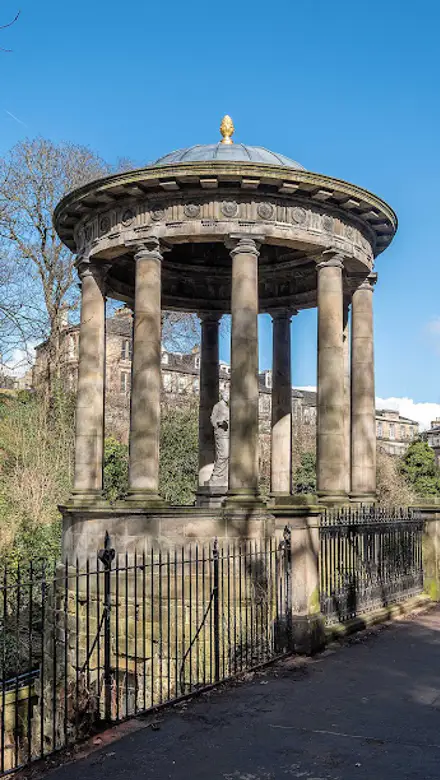
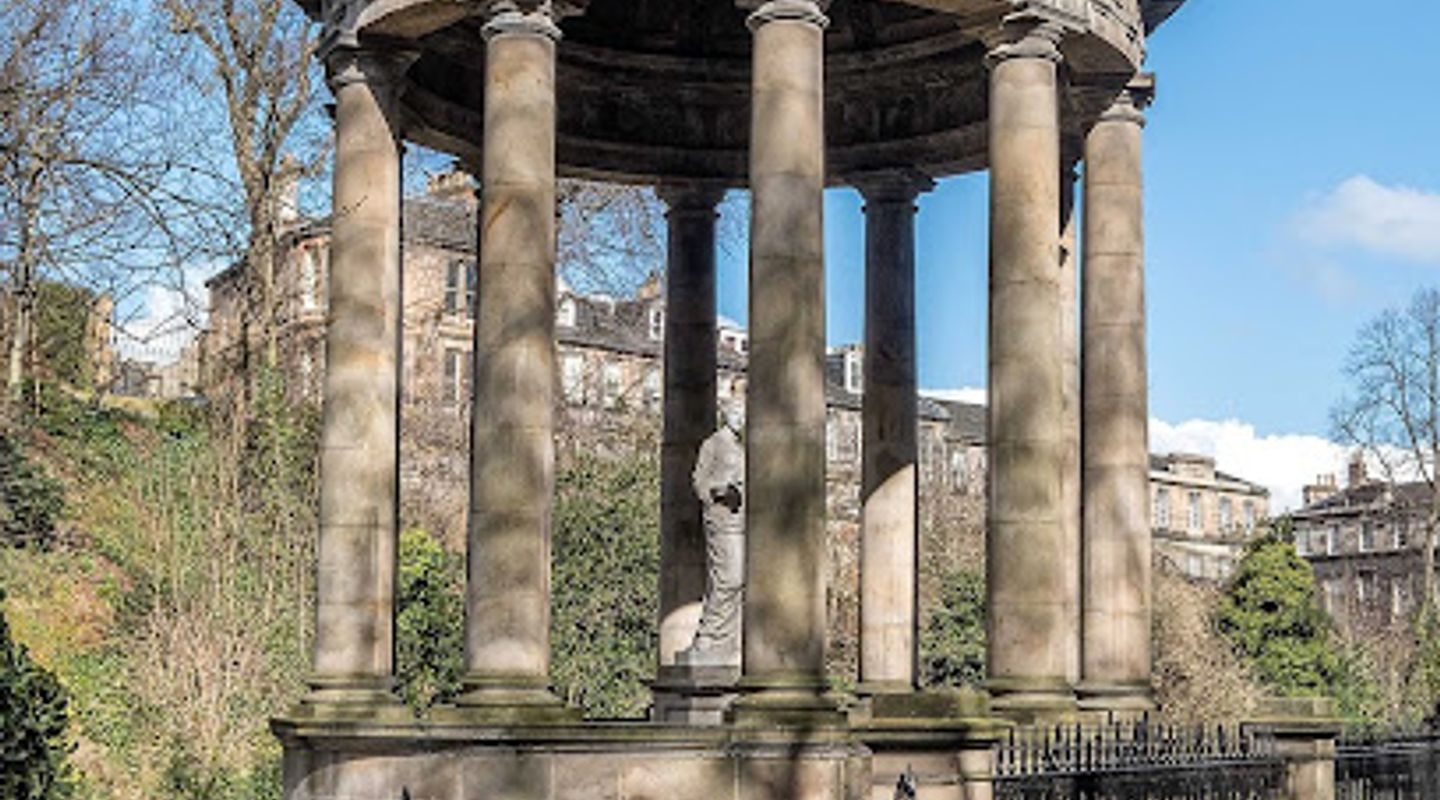
Nestled beside the Water of Leith in Edinburgh, St. Bernard's Well is an exquisite 18th-century monument inspired by ancient Roman temples. Designed by Alexander Nasmyth in 1789, it features a domed roof, Doric columns, and a statue of Hygieia, the goddess of health. Once famed for its mineral spring believed to have healing powers, the well has a rich history linked to Scottish Enlightenment ideals and remains a serene landmark surrounded by woodland.
On-site amenities
 Seating areas
 Information boards
- Address
- 2 Clarendon Cres, Edinburgh EH4 1PT
- Website
Getting there
Public Bus
Walking
Taxi or Ride-Hailing
Discover more about St. Bernard's Well
A Classical Gem by the Water of Leith
St. Bernard's Well stands gracefully on the banks of the Water of Leith, framed by the lush greenery of Edinburgh’s New Town parks. Its design, inspired by the ancient Roman Temple of Vesta at Tivoli, Italy, was crafted by the celebrated Scottish landscape painter Alexander Nasmyth in 1789. The circular temple features ten Doric columns supporting an elegant domed ceiling, crowned with a gilded pine cone finial. At its heart is a marble statue of Hygieia, the Greek and Roman goddess of health, symbolizing the well’s historic association with healing waters.
Historical Roots and Medicinal Legends
The well’s mineral spring was discovered in the mid-18th century, reputed for its restorative properties. Locals and visitors alike believed the water could cure ailments such as arthritis, muscle pain, and even blindness. The site was commissioned by Lord Gardenstone, an abolitionist and prominent figure in Edinburgh’s Scottish Enlightenment, who helped establish the well as a place of health and social gathering. For nearly two centuries, people “took the waters” here, drawn by the promise of wellness. The inscription above the entrance, "Bibendo Valeris" — "Drink and you will be well" — captures this enduring hope.
From Lavish Restoration to Modern Preservation
In 1885, wealthy publisher William Nelson purchased the well and undertook a lavish refurbishment, gifting it to the people of Edinburgh in 1888. However, the well closed in the 1940s due to contamination concerns, including arsenic in the water. After decades of neglect, a major restoration was completed in 2012 as part of Edinburgh’s Twelve Monuments project. This work included careful repairs to the domed roof and the re-gilding of the pine cone finial, preserving the monument’s classical splendor for future generations.
An Enchanting Interior and Serene Setting
Though the interior is usually closed, special events such as the Edinburgh Arts Festival and Doors Open Days allow visitors to enter the small, tiled chamber. Inside, intricate details abound: an ornate marble housing for the waterworks, decorative spigots, and a richly adorned pump handle evoke the elegance of an earlier era. The well’s woodland surroundings and the gentle flow of the Water of Leith create a tranquil oasis within the city, inviting quiet reflection and appreciation of its heritage.
Literary and Cultural Connections
St. Bernard's Well is linked to Edinburgh’s rich cultural tapestry, including a reputed connection to Mary Wollstonecraft Shelley’s "Frankenstein." The novel’s protagonist, Victor Frankenstein, is said to have admired the well and its surroundings, highlighting the site’s place in the city’s literary imagination. The well also honors St. Bernard of Clairvaux, a 12th-century monk believed to have lived nearby, adding spiritual depth to its historical significance.
A Timeless Landmark Amidst Urban Nature
Today, St. Bernard's Well remains a striking landmark visible from the Water of Leith walkway, a testament to Edinburgh’s neoclassical architectural heritage and its historical pursuit of health and enlightenment. Its peaceful location, classical design, and rich stories make it a unique destination for those seeking beauty, history, and a moment of calm in the city.
Evendo Review Centre
 Google
Guest reviews
Best time to go
Quietest: Jan, Feb & Dec · before 6am
Busy times are Evendo estimates for a typical year, to help you plan. Actual crowds vary with events, school holidays and the weather.
Explore St. Bernard's Well on the map
A handpicked selection of must-see spots near St. Bernard's Well, mapped for you.
Get your free copy of our complete guide to St. Bernard's Well, delivered straight to you.
Everything on this page, from opening hours and how to get there to Eve’s tips and the best time to go, in one PDF you can read offline, print or share.
Already have an account? Sign in
Your St. Bernard's Well guide is ready.
We'll send it to · Not you? Sign out

Getting your guide ready…
We are putting together a fresh copy of the St. Bernard's Well guide. This can take up to a minute.
This can take a few moments. If your browser asks, choose Allow so the download can start. You'll find the guide in your Downloads folder.
Nothing happened? Download it again
Sorry, the guide is taking longer than usual. Please try again in a minute, or get it by email instead.
Unlock the best of St. Bernard's Well
Skip-the-line tickets, guided tours with entry, and walking tours of the area, booked in a few clicks.


Other nearby places you may find interesting
The closest places of the same kind, if this one is not quite what you had in mind.
-
Scott Monument Climb 287 steps to Scotland's greatest literary tribute and Edinburgh's most iconic skyline views.
-
Edinburgh Castle Explore Scotland’s iconic fortress atop Castle Rock, where history, tradition, and panoramic city views converge in Edinburgh’s heart.
-
National Monument of Scotland Edinburgh's iconic unfinished Parthenon—a monument to ambition, sacrifice, and Scottish identity perched atop Calton Hill.
-
Flodden Wall Explore Edinburgh’s historic Flodden Wall, a 16th-century fortress that shaped the city’s medieval heart and stands as a testament to resilience and history.
-
Dugald Stewart Monument A neoclassical tribute to philosopher Dugald Stewart, offering iconic views over Edinburgh from historic Calton Hill.
Swipe for more places
More to explore near St. Bernard's Well

 Best experiences near St. Bernard's Well
 Best hotels near St. Bernard's Well
 Best landmarks near St. Bernard's Well
 Best attractions near St. Bernard's Well
 Best shops near St. Bernard's Well
 Best restaurants near St. Bernard's Well
 Best bars near St. Bernard's Well
Do you manage this location?
Take control to get all the benefits, like improved information, better appearance, and stronger visibility across AI-powered discovery.
Explore more

Explore more of Edinburgh
Edinburgh blends a medieval Old Town, Georgian New Town, castle history, literary culture and dramatic Arthur’s Seat views in Scotland’s capital.
Explore Edinburgh
Explore more of United Kingdom
Discover the United Kingdom: A blend of rich history, stunning landscapes, and vibrant cities, offering a unique travel experience for every visitor.
Explore United Kingdom