
Tomb of Sir John de Graeme
Medieval warrior's tomb crowned with iron and legend, where Scotland's independence struggle lives on.
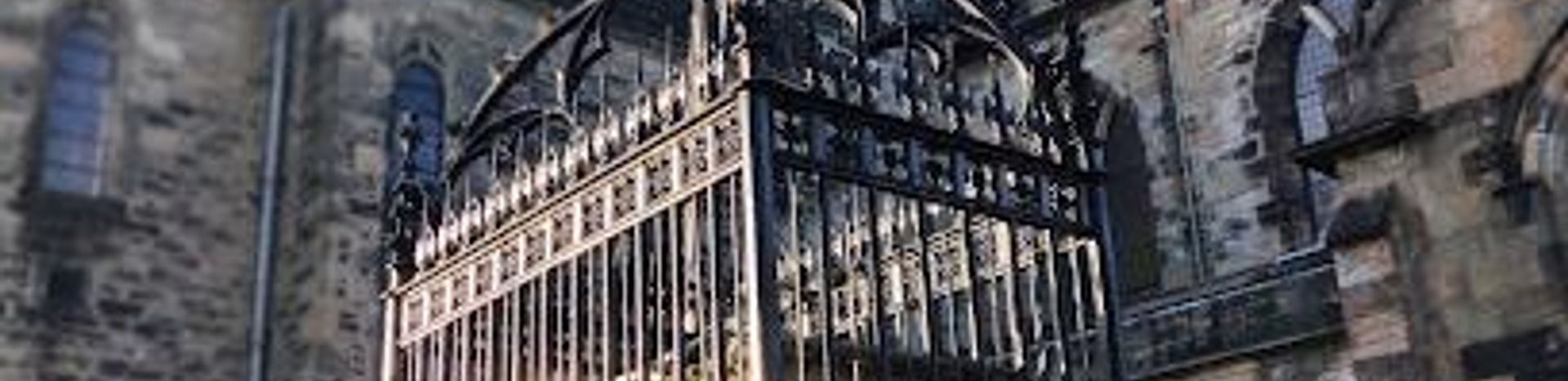
Located in the historic graveyard of Falkirk Old Parish Church, the Tomb of Sir John de Graeme stands as a striking memorial to one of Scotland's greatest medieval warriors. Sir John de Graeme, William Wallace's most trusted lieutenant, fell during the Battle of Falkirk in 1298 and was carried to this sacred ground by Wallace himself. The tomb is instantly recognizable by its ornate cast-iron railings, gilded coronet, and a bronze replica of the two-handed sword de Graeme wielded in battle. This distinctive monument represents both medieval Scottish valor and Victorian-era craftsmanship, making it one of the most significant historical landmarks in Falkirk's graveyard.
A brief summary to Tomb Of Sir John De Graeme
- Manse Pl, Falkirk, FK1 1JN, GB
- +447546054228
- Visit website
- Duration: 0.5 to 2 hours
- Free
-
 Outdoor
- Mobile reception: 4 out of 5
Local tips
- Visit the nearby memorial fountain in Victoria Park to see the spot where Sir John de Graeme fell during the Battle of Falkirk, completing your understanding of his final moments.
- The graveyard contains other significant medieval burials, including Sir John Stewart of Bonkyll, another casualty of the 1298 battle. Explore the entire churchyard to appreciate the broader historical context.
- Contact the Society of John de Graeme for guided tours or historical talks; they offer deeper insights into de Graeme's life, military campaigns, and his relationship with William Wallace.
- The distinctive cast-iron railings and gilded coronet are best photographed in clear daylight; visit during midday for optimal lighting of the ornamental details.
- Combine your visit with a tour of Falkirk's other historical sites, including Stirling Bridge and the various battlefields of the Scottish Wars of Independence nearby.

For the on-the-go comforts that matter to you
- Information Boards
- Seating Areas
- Trash Bins
Getting There
-
Walking from Falkirk Town Centre
From Falkirk High Street, the tomb is approximately 400 meters away on foot, taking roughly 5–7 minutes. Head toward the town centre and follow signs to Falkirk Old Parish Church (also known as Trinity Church). The graveyard entrance is clearly marked and accessible year-round. This is a straightforward walk through the town's historic core, suitable for all mobility levels.
-
By Bus
Multiple local bus services operate throughout Falkirk, with stops near the town centre and High Street. Journey times from surrounding areas typically range from 10–25 minutes depending on your starting point. Buses run regularly throughout the day, with reduced frequency on Sundays. Check local transport schedules for current routes and timetables. No entrance fee is required to access the graveyard.
-
By Car
Falkirk Old Parish Church is located on Manse Place, with limited on-street parking available nearby. The postcode FK1 1JN can be used for GPS navigation. Parking in the immediate vicinity is restricted during peak hours, so arriving mid-morning or early afternoon is advisable. Alternatively, use one of Falkirk's public car parks, which are typically within 200–400 meters of the graveyard and cost approximately £1–2 per hour.
-
By Train
Falkirk Grahamston railway station (named after the Grahamston district, itself named after Sir John de Graeme) is approximately 800 meters from the tomb, a 10–12 minute walk. Regular train services connect Falkirk to Edinburgh, Glasgow, and other Scottish cities. From the station, head toward the town centre and follow directions to Falkirk Old Parish Church. Journey times from Edinburgh are approximately 25–35 minutes; from Glasgow, approximately 40–50 minutes.
Tomb Of Sir John De Graeme location weather suitability
-
 Any Weather
Discover more about Tomb Of Sir John De Graeme
A Knight's Final Resting Place
Sir John de Graeme died on 22 July 1298 at the Battle of Falkirk, fighting alongside Sir William Wallace during Scotland's Wars of Independence. According to historical tradition, Wallace himself carried his fallen comrade's body to the Parish Church of Falkirk, where de Graeme was laid to rest in the graveyard. De Graeme was one of only a handful of notable Scottish casualties from the battle to receive a marked grave, a testament to his significance as a military commander and his close bond with Wallace. The inscription on his tomb reads: "Here lyes Sir John the Grame, baith wight and wise, Ane of the chiefs who rescewit Scotland thrise, Ane better knight not to the world was lent, Nor was gude Graham of truth and hardiment."Medieval Legacy and Literary Recognition
Sir John de Graeme's prominence in Scottish history extended beyond his military achievements. The 15th-century poet Blind Harry immortalized him in *The Wallace*, a major work of Scottish literature that recounts the exploits of William Wallace. Wallace's lament at de Graeme's death is considered one of the finest passages in the poem, underscoring the emotional and strategic importance of their partnership. De Graeme's influence on Falkirk itself is evident in the naming of the Grahamston district, which in turn gave its name to Falkirk Grahamston railway station. Additionally, a memorial fountain was erected in Victoria Park, Falkirk, marking the spot where de Graeme fell in battle.Victorian Restoration and Architectural Splendor
The tomb remained relatively modest for centuries until the mid-19th century, when the Sir John de Graeme Lodge of Oddfellows, established in 1841, undertook extensive renovations. In 1860, the Oddfellows contracted Falkirk Ironworks to fully restore the tomb in the Gothic style. Through public subscription, the monument was transformed into a striking structure featuring a fully enclosed cast-iron railing, a decorative cupola surmounted by a gilded coronet and Scottish Lion, and ornamental ironwork. In 1869, a bronze replica of de Graeme's legendary two-handed sword was fixed above the tomb, adding to its visual prominence. These Victorian-era enhancements reflected both the conservation movement gaining momentum during that period and the enduring reverence for Scotland's medieval heroes.Archaeological Discovery and Verification
In 1927, the grave was opened to construct foundation pillars supporting the combined weight of the tomb's flat stones, heavy iron cupola, and railings, which had sunk considerably into the earth over centuries. During this excavation, remains believed to be those of Sir John de Graeme were discovered embedded in solid clay approximately six feet below the surface. Notably, no coffin was found, and the undisturbed nature of the soil suggested the ground had never been disturbed since de Graeme's original burial in 1298. A local medical authority examined the remains, and contemporary observers concluded that the single set of bones almost certainly belonged to the great warrior himself, providing rare physical evidence of this medieval figure.Modern Stewardship and Community Connection
The graveyard landscape underwent significant changes during the 1960s, when many of the cemetery's memorials and tombs were removed and reburied in nearby Camelon cemetery. This clearing left only a handful of memorials of historical significance, which inadvertently elevated the prominence of Sir John de Graeme's tomb within the space. The monument has continued to attract attention from historians, reenactment groups, and visitors interested in Scottish medieval history. The Society of John de Graeme, an active historical organization dedicated to preserving and promoting knowledge of the knight, has worked vigilantly to maintain the monument and has sought custodianship of the tomb to ensure its preservation for future generations.A Bridge Between Past and Present
The tomb's significance extends beyond its role as a burial site; it serves as a tangible connection to Scotland's struggle for independence and the bonds of loyalty that defined medieval warfare. The fact that Robert Burns, Scotland's national poet, visited the tomb in 1787 and knelt before it in tribute to de Graeme underscores the enduring cultural resonance of this historical figure. Today, the tomb remains a focal point for those exploring Falkirk's rich medieval heritage and the legacy of William Wallace's most trusted companion.Iconic landmarks you can’t miss

Sir John de Graeme Memorial Fountain
0.9 km
A tranquil memorial fountain in Falkirk honoring Sir John de Graeme, a valiant knight who fell at the Battle of Falkirk in 1298.
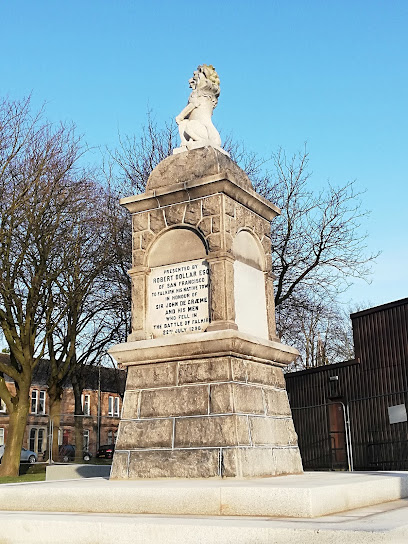
The Cross Well
11.8 km
Discover Linlithgow’s iconic crown-shaped Cross Well, a historic monument and vibrant town centre gathering spot steeped in royal heritage.
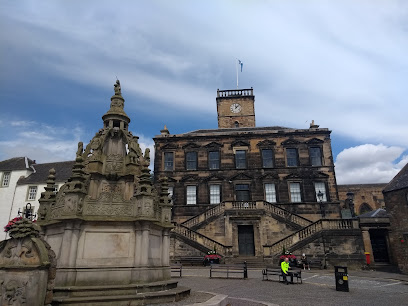
Alloa War Memorial
12.6 km
A poignant tribute in Alloa featuring St Margaret and soldiers, honoring local heroes from both World Wars with powerful symbolism.
Argyll Place
13.3 km
Explore Alloa's charm from Argyll Place, your gateway to stunning landscapes and rich history in Scotland.
Historic Scotland
15.1 km
Discover the artistry of stone-cutting at Historic Scotland, a captivating experience in Stirling that showcases Scotland's rich architectural heritage.

St Ninians Well
15.8 km
Discover Stirling’s historic St Ninians Well, a tranquil stone spring steeped in healing lore and centuries of local tradition.
Black Boy
16.0 km
A Victorian monument to remembrance, marking Stirling's medieval past with ornamental grace.
Stirling City Heritage Trust
16.0 km
Explore the Stirling City Heritage Trust and uncover the stories of Scotland's past through its dedicated preservation efforts.

Stirling
16.0 km
Discover the historic charm of Stirling, where medieval castles meet vibrant culture and breathtaking landscapes in the heart of Scotland.
The Bastion
16.0 km
Discover The Bastion, a remarkable historical landmark in Stirling that reveals Scotland's rich heritage and architectural beauty.
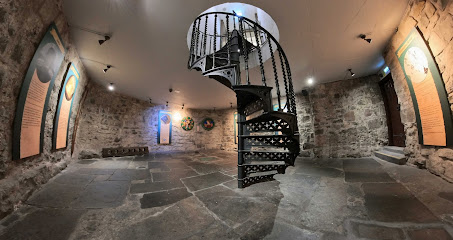
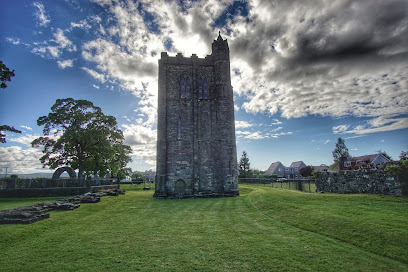
Cambuskenneth Abbey
16.0 km
Explore Cambuskenneth Abbey, a historical landmark in Stirling, where history and natural beauty intertwine for an unforgettable experience.
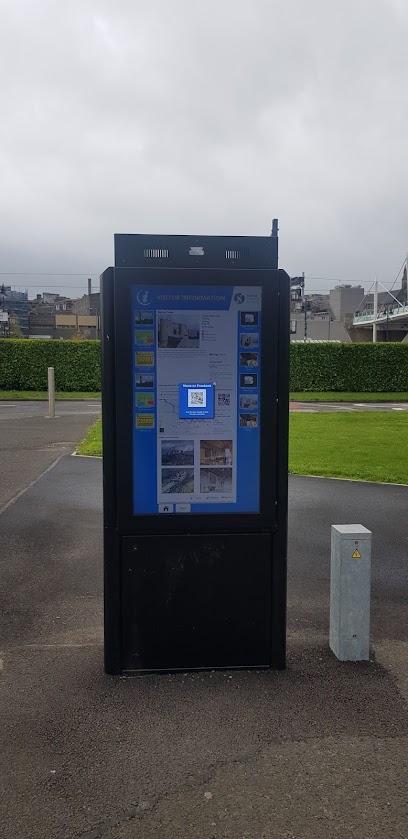
Tourist Information Point
16.1 km
Explore Stirling like a local with insights and resources from the Tourist Information Point, your guide to unforgettable adventures in Scotland.
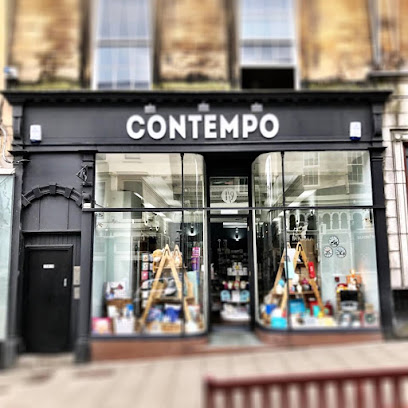
Contempo
16.1 km
Explore Contempo, Stirling's charming gift shop offering unique souvenirs, jewelry, and handcrafted treasures that capture the essence of Scotland.
Castle Walk Bed & Breakfast
16.1 km
Discover comfort and Scottish hospitality at Castle Walk Bed & Breakfast, a charming retreat in the heart of Stirling with stunning views and easy access to local attractions.
Stirling Spiritualist Church
16.2 km
Explore the Stirling Spiritualist Church for a unique spiritual experience in the heart of Stirling, Scotland, where peace and reflection await.
Unmissable attractions to see

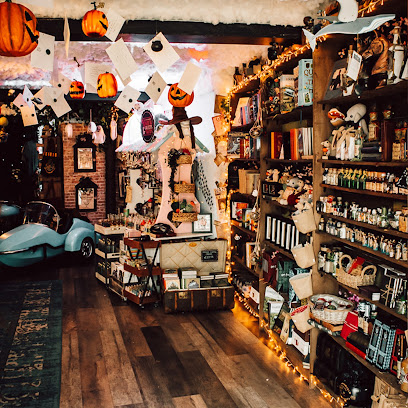
The Lonely Broomstick
0.1 km
Discover Falkirk’s enchanting gift shop where magic, potions, and wizardry come to life for all ages.
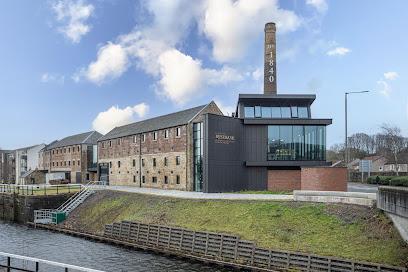
Rosebank Distillery
1.1 km
Historic Rosebank Distillery in Falkirk blends tradition and modernity to craft Scotland’s revered Lowland single malt whisky.
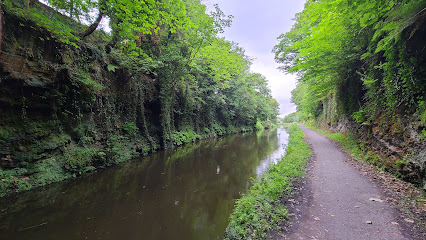
Falkirk Canal Tunnel
1.2 km
Explore the historic underground Falkirk Canal Tunnel, a unique 19th-century passage beneath Falkirk’s streets on the Union Canal.
Callendar Park
1.3 km
Explore Falkirk’s historic 170-acre Callendar Park with its majestic mansion, Roman-themed play areas, scenic woodlands, and family-friendly trails.
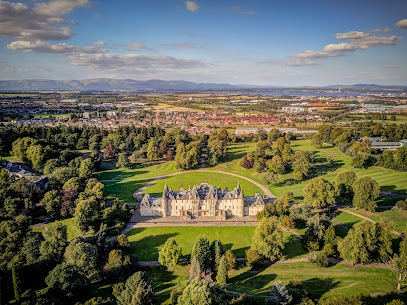
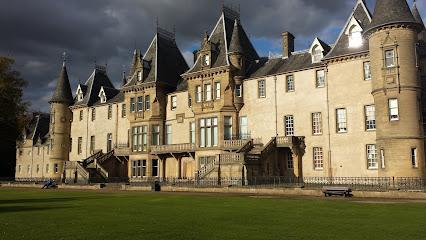
Callendar House
1.3 km
Explore centuries of Scottish history and stunning architecture in the majestic Callendar House set within beautiful Callendar Park.
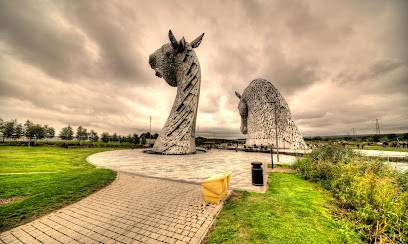
The Kelpies
2.8 km
Giant steel horse heads rising from a vast parkland, blending myth, industry and art in the heart of central Scotland.
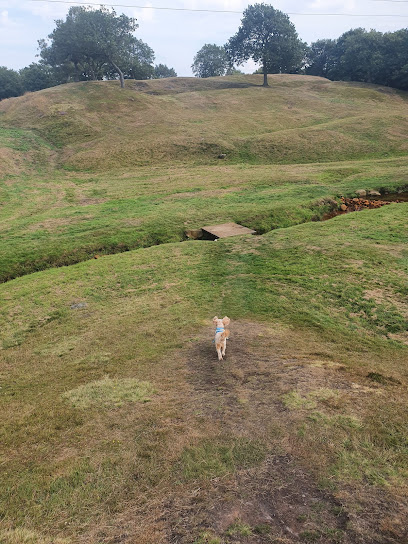
Rough Castle Experiences
3.1 km
Explore ancient Roman history and thrilling outdoor adventures in scenic woodland near the iconic Falkirk Wheel.
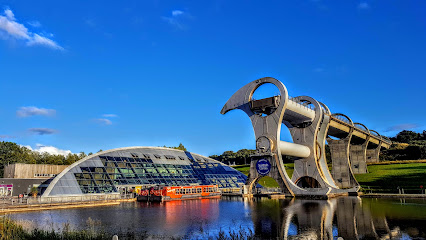
The Falkirk Wheel
3.5 km
Experience the world’s only rotating boat lift, a stunning engineering marvel connecting Scotland’s historic canals with breathtaking views and family fun.
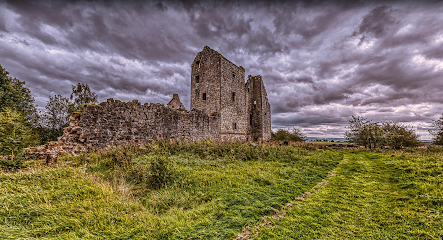
Torwood Castle
6.7 km
Explore the evocative ruins of Torwood Castle, a 16th-century Scots baronial fortress steeped in royal forest heritage and clan history near Larbert.
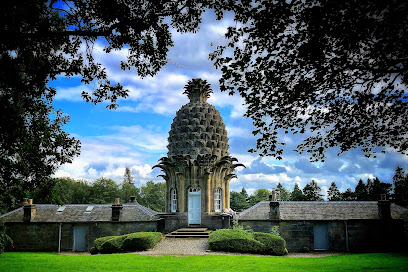
The Pineapple
8.5 km
Discover the whimsical 18th-century Pineapple folly near Falkirk—an architectural gem and unique self-catering retreat set in stunning walled gardens.
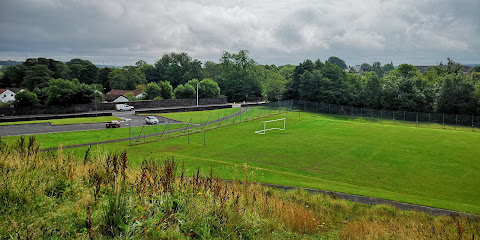
Herbertshire Castle Park
8.7 km
Historic riverside park in Denny offering scenic walks, heritage charm, and tranquil green spaces on the grounds of the former Herbertshire Castle.
Avon Aqueduct
8.9 km
Scotland’s longest aqueduct spanning the River Avon, blending historic engineering with stunning natural views and tranquil canal walks.
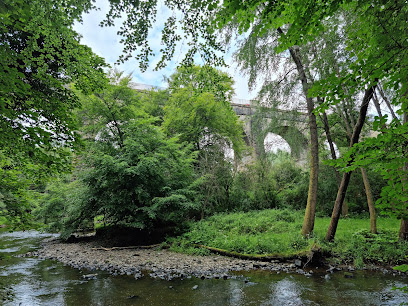
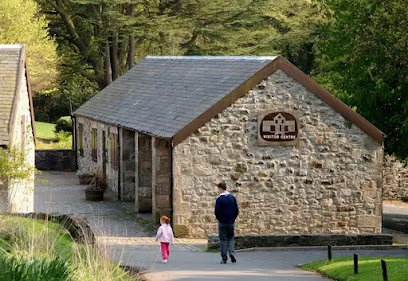
Muiravonside Country Park
9.0 km
Explore 170 acres of woodland, farm animals, play trails, and art in Falkirk’s scenic Muiravonside Country Park.
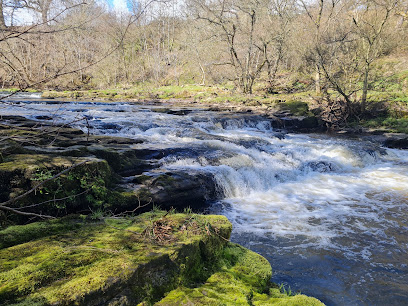
Avon Falls
9.1 km
Discover the tranquil beauty of Avon Falls and its historic aqueduct amidst Falkirk’s scenic woodland and country park.
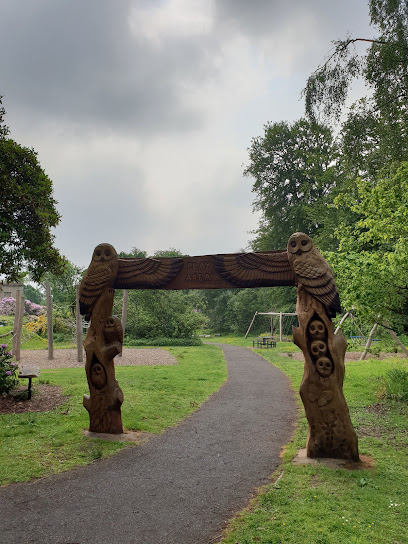
Plean Country Park
9.2 km
Discover 200 acres of peaceful woodland, wildlife, and family-friendly trails just outside Stirling in scenic Plean Country Park.
Essential places to dine

The Unicorn
8.6 km
A cozy Kincardine eatery celebrated for authentic Scottish dishes, warm service, and hearty portions in a welcoming atmosphere.
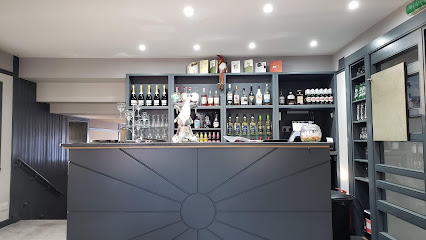
Mason Belles Kitchen
11.9 km
A boutique family-run restaurant in Linlithgow, serving relaxed contemporary Scottish food with a creative twist in a charming hidden setting.
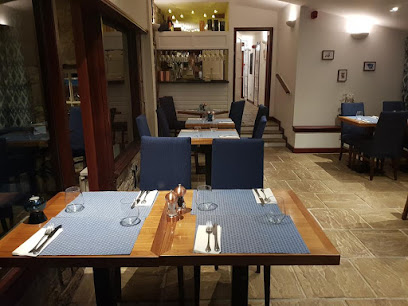
Bar Leo
12.0 km
Contemporary Italian dining on Linlithgow's High Street, blending classical recipes with modern flair.
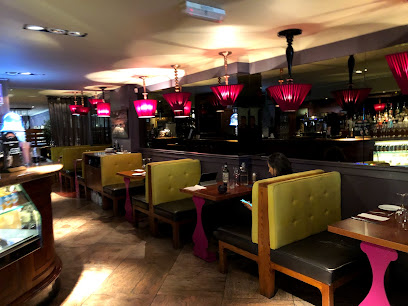
Bar Aldos
12.6 km
Experience authentic Italian flavors and warm hospitality at Bar Aldos, Alloa’s cozy spot for classic homemade dishes and inclusive dining.
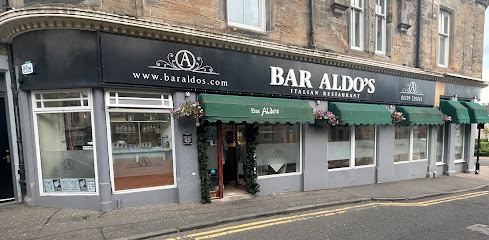
Old Brewery
12.8 km
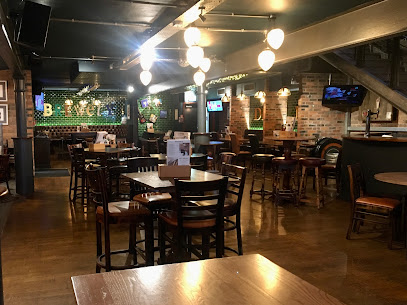
Historic 19th-century brewery turned vibrant Alloa pub with hearty food, diverse drinks, and lively community spirit.
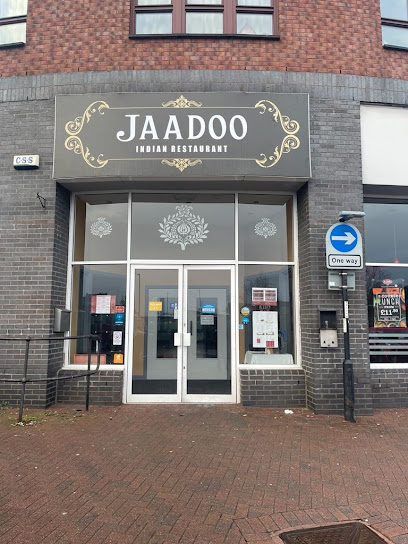
Jaadoo Alloa Indian Restaurant
12.8 km
Experience authentic Indian flavors with a modern twist in a warm, family-friendly setting at Jaadoo Alloa Indian Restaurant.
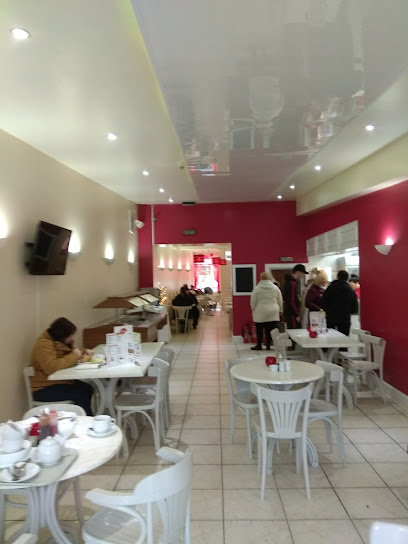
Zhangy's Cafe
12.8 km
A cozy family-run cafe in Alloa serving hearty Chinese and cafe dishes with warm hospitality and great value.
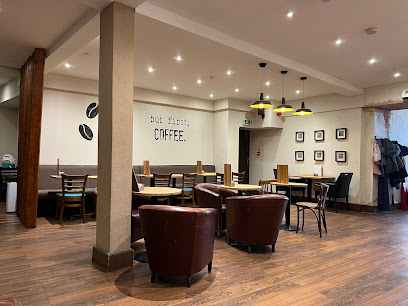
Dnisi
12.8 km
A family-owned Alloa café known for freshly roasted coffee, award-winning scones, and a warm, community-focused atmosphere.
Rock 'N' Rolls
12.9 km
Classic American diner vibes meet friendly service and hearty meals in the heart of Alloa.
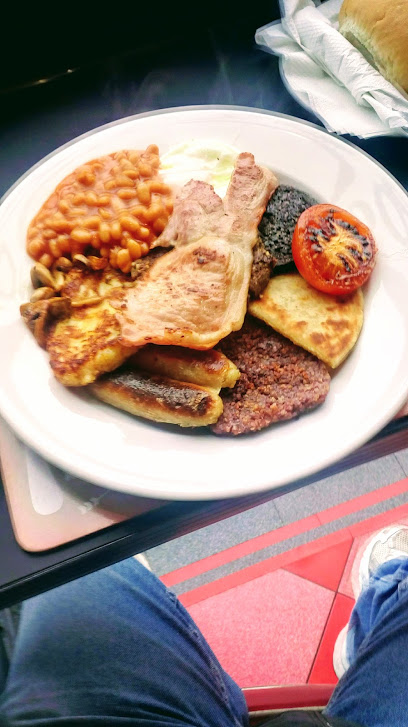
Syriana Restaurant
12.9 km
Experience authentic Syrian cuisine with fresh, flavorful dishes in a warm, welcoming setting on Alloa’s High Street.
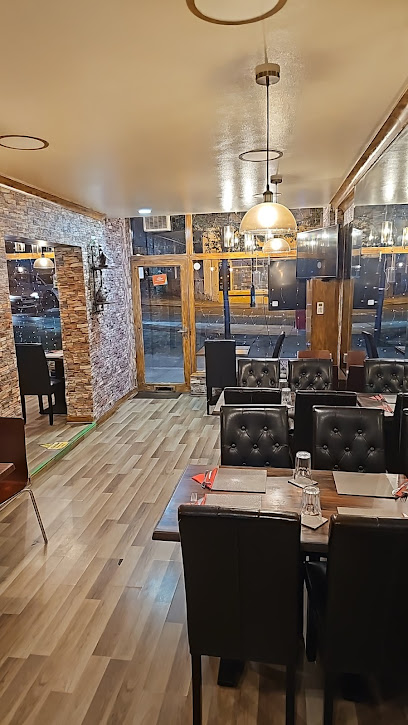
The Tartan Arms & McQ's
12.9 km
Historic family-run pub and restaurant in Bannockburn offering hearty British fare, lively nightlife, and a warm community atmosphere.
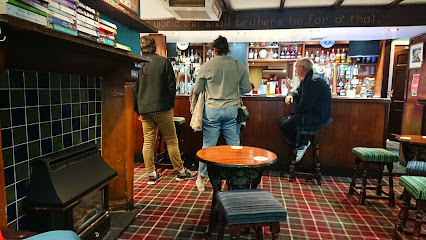
Makers
12.9 km
Inclusive community hub in Alloa offering fresh local food, creative arts, and vocational support for autistic adults and those with learning disabilities.
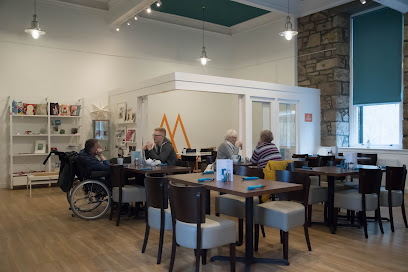
Peppes
13.0 km
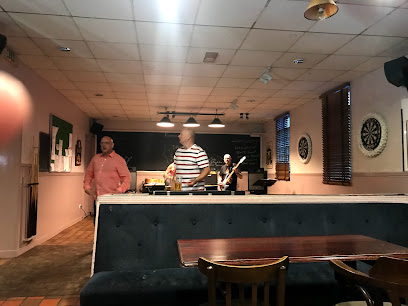
Peppes in Alloa offers a cozy, affordable pub and restaurant experience with lively karaoke nights and a welcoming atmosphere.
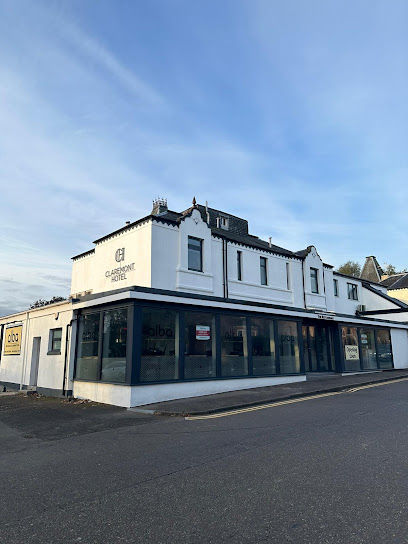
Alba the Restaurant and Claremont Hotel
13.1 km
Experience vibrant Indian and European flavors in a welcoming setting at Alba the Restaurant within the Claremont Hotel, Alloa.
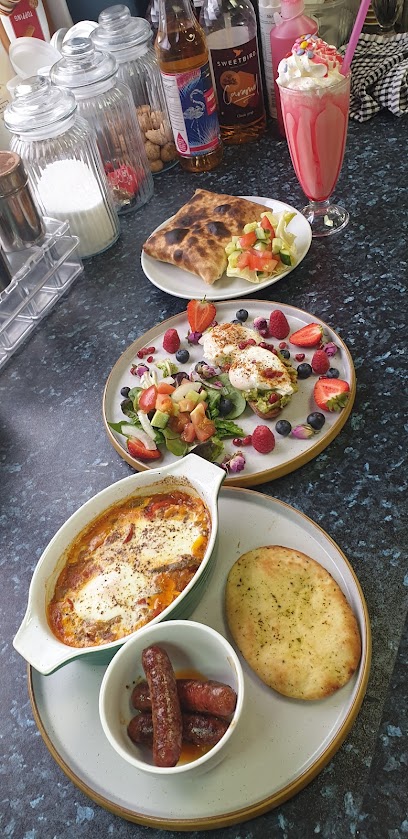
The Fuel House Cafe
13.5 km
A cozy, friendly cafe in Alloa Business Centre serving fresh breakfast and cafe favorites with genuine hospitality.
Markets, malls and hidden boutiques

Whimsic Alley
0.0 km
A whimsical gift shop in Falkirk filled with magical treasures, fantasy novelties, and storybook charm for fans of all things enchanted.
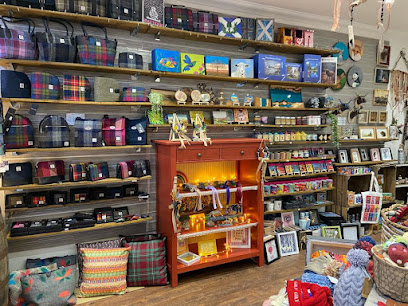
Fair Tradewinds
11.7 km
Discover unique fair trade gifts and sustainable fashion at Fair Tradewinds in Linlithgow’s historic High Street.
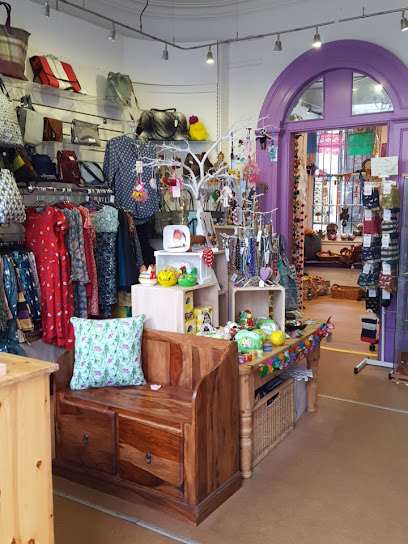
Crafty Little Monkey
12.3 km
Explore Crafty Little Monkey, Alloa's charming gift shop offering unique handmade treasures and local crafts perfect for souvenirs.

Rakaru Lifestyle Creative
12.4 km
Discover unique artisan homewares blending Scottish craft with modern style at Rakaru Lifestyle Creative in Clackmannan.

Buick's (Alloa) Ltd
12.6 km
A trusted family-run hardware store in Alloa offering quality tools, DIY supplies, and personalized service for over three generations.

B&M Home Store with Garden Centre
12.7 km
Affordable home and garden essentials combined in a convenient Alloa retail park location, open daily with extended hours.

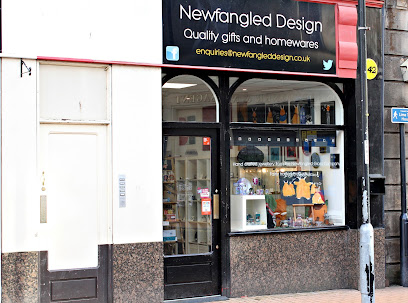
Newfangled Design
12.8 km
Bespoke hand-painted glassware and artisan crafts celebrating Scottish creativity and local talent.
VPZ
12.8 km
Your trusted vape specialist in Alloa offering expert advice and quality vaping products in a welcoming environment.

Baby-Embroider-Me Boutique
12.9 km
Discover personalized baby clothing and heartfelt embroidered gifts at Baby-Embroider-Me Boutique in Alloa’s charming High Street.
We've A Gift
12.9 km
Discover unique gifts and local artisan treasures at We've A Gift, Alloa’s charming boutique for memorable presents.
Celebrations
12.9 km
Explore Celebrations, Alloa's charming gift shop featuring unique souvenirs, local treasures, and artisan crafts perfect for every occasion.
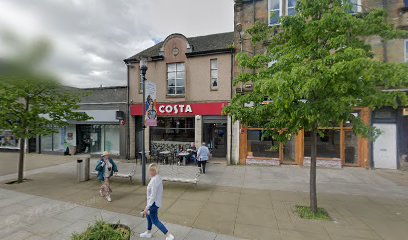
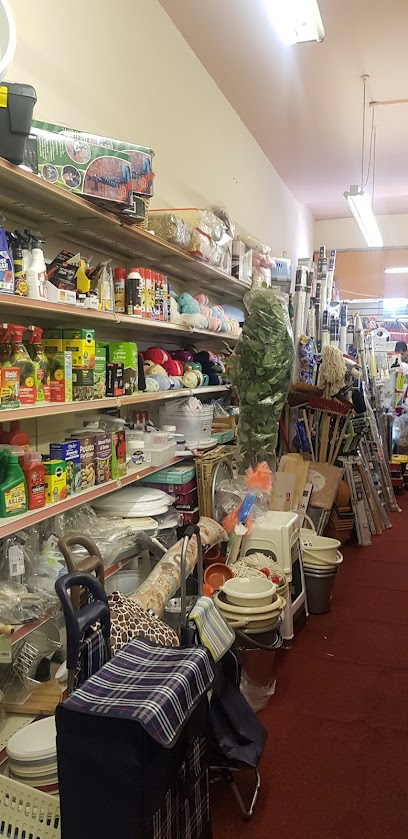
Home Zone
12.9 km
Alloa's trusted source for homeware, gifts, and practical household essentials in the heart of Clackmannanshire.
Peacocks
12.9 km
Affordable and stylish women’s fashion in the heart of Alloa’s vibrant shopping district.

Bolt Base Ltd
13.0 km
Your trusted fastener supplier in Alloa, delivering quality screws, nuts, and bolts with expert service and fast shipping.

Premier, Lornshill Crescent
13.7 km
Premier Convenience Store in Alloa offers essential supplies and local treats, perfect for tourists seeking convenience and value during their travels.

Essential bars & hidden hideouts

Auld Hoose
8.4 km
A lively, dog-friendly pub in Kincardine known for hearty food, extensive whisky, craft beers, and a welcoming atmosphere with rock music and karaoke.
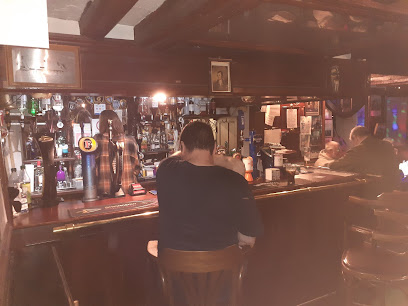
The Railway Tavern
8.5 km
A cozy, friendly pub in Kincardine offering authentic Scottish hospitality and a relaxed atmosphere for casual drinks and socializing.
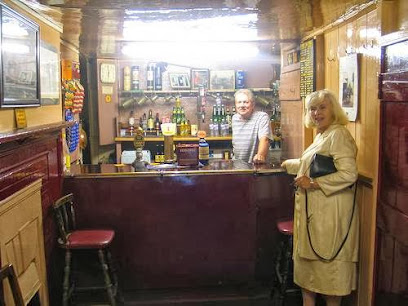
Bridge Bar
8.6 km
Discover the charm of Bridge Bar in Kincardine, a cozy pub offering a wide selection of drinks and a welcoming atmosphere for all travelers.
Garvies
8.7 km
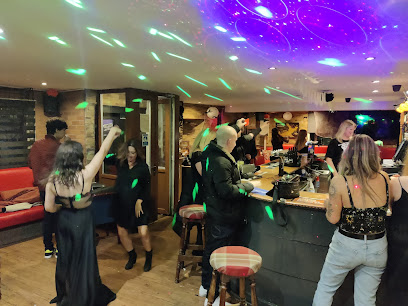
Cozy pub in Kincardine offering local ales, lively events, and a warm, welcoming atmosphere every day from noon to midnight.
Torphichen Inn
11.0 km
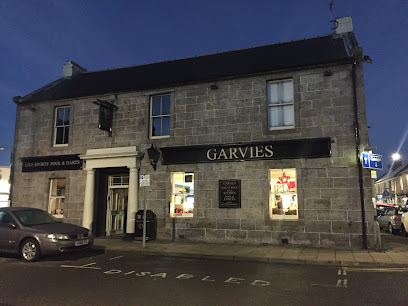
A welcoming Scottish pub in Torphichen offering hearty food, live music, and a warm village atmosphere.
The Willow Tree
11.2 km
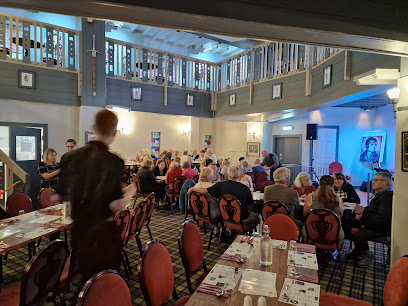
A historic Linlithgow pub reborn as The Willow Tree, blending tradition, local legend, and lively hospitality in a welcoming setting.
The County Bar
12.1 km
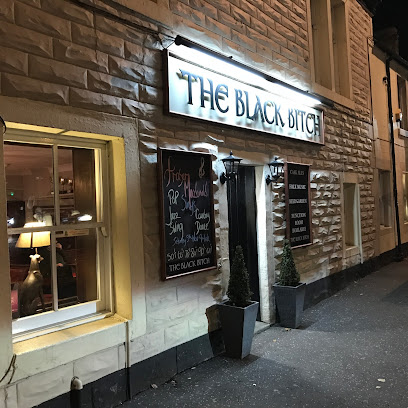
A friendly and affordable pub in Clackmannan, offering classic drinks and a warm community atmosphere in the heart of town.
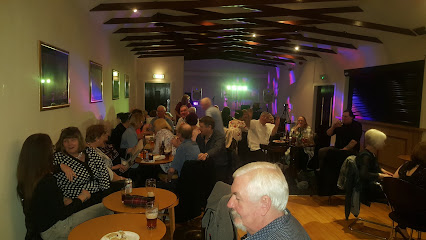
Lodge Clackmannan
12.3 km
Experience authentic Scottish hospitality and local charm at Lodge Clackmannan, a cozy pub in the heart of Clackmannan village.
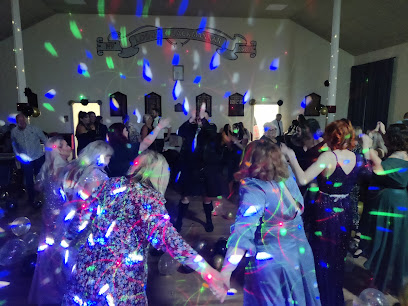
Regal Bar
12.4 km
A welcoming and traditional pub in Armadale offering cozy charm, local drinks, and a friendly atmosphere for regulars and visitors alike.
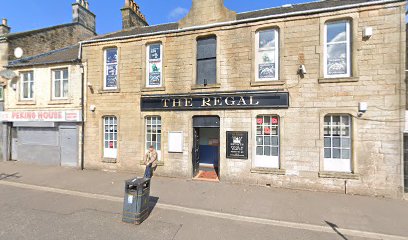
Royal Oak Alloa
12.7 km
A welcoming Scottish pub and hotel in Alloa, blending traditional charm with hearty cuisine and comfortable stays.
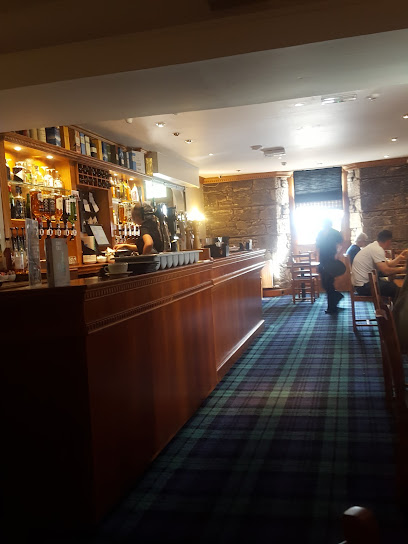
Coppies Bar
12.7 km
A lively and friendly sports bar in Armadale offering great drinks, community spirit, and regular entertainment in a welcoming Scottish pub setting.
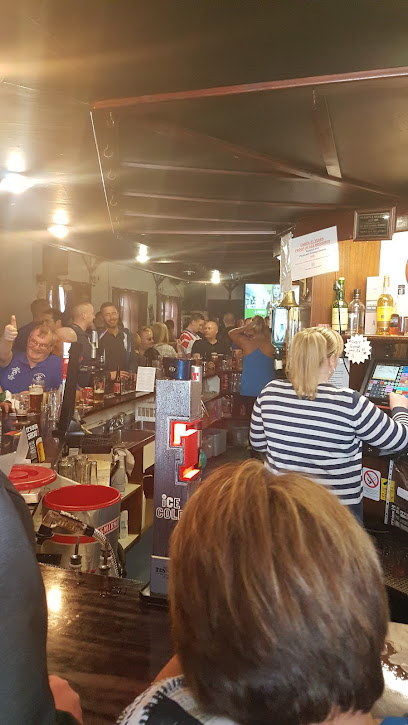
Crams Bar
12.7 km
Historic Alloa bar offering lively entertainment, community spirit, and affordable drinks in a welcoming atmosphere since 1784.
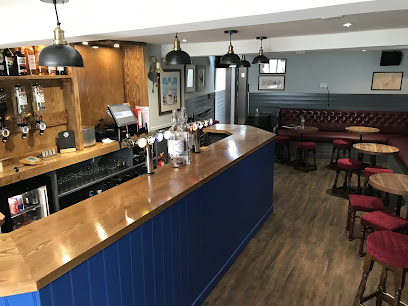
Thistle Bar
12.8 km
A classic Alloa pub blending sports, karaoke, and community spirit in a friendly, lively setting.
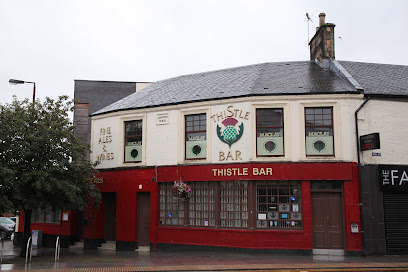
The Bobbing John
12.9 km
Historic sandstone pub in Alloa offering real ales, a large beer garden, and a lively family-friendly atmosphere named after local figure John Erskine.
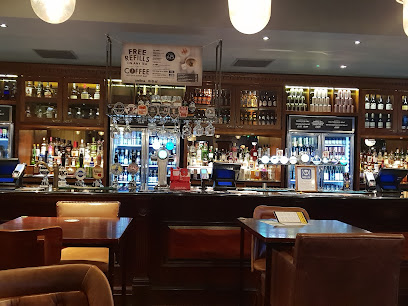
McGregors
13.0 km
A cozy and friendly bar in Alloa offering a relaxed vibe, great drinks, and a welcoming atmosphere for locals and visitors alike.
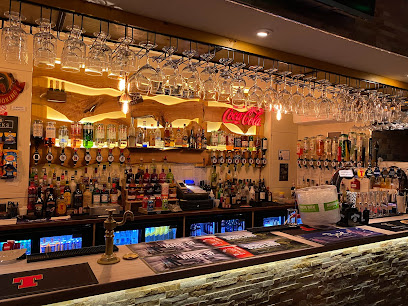
Nightclubs & after hour spots

City Nightclub
0.1 km
Experience Falkirk’s vibrant nightlife at City Nightclub, the town’s energetic weekend hotspot for music, dancing, and late-night fun.
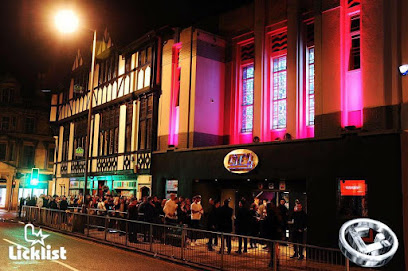
XOXO
0.1 km
Central Scotland’s largest nightclub offering vibrant nightlife, pool hall fun, and private event spaces in the heart of Falkirk.
The Twig Nightclub
13.9 km
Bathgate’s oldest nightclub offering lively, affordable, and historic nightlife experiences every Saturday night.
Slanj-A-Va
16.0 km
Discover Slanj-A-Va: Stirling's premier live music venue offering an unforgettable night out filled with diverse musical experiences.
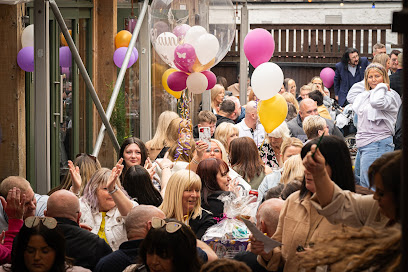
Castle Leisure Group
16.3 km
Discover the lively atmosphere of Castle Leisure Group in Stirling – a perfect blend of dining, nightlife, and entertainment for tourists.

Fubar Nightclub
16.3 km
Experience Stirling’s energetic student nightlife at Fubar Nightclub, where music, lights, and lively crowds come alive late into the night.

Grand Central
18.6 km
Experience the vibrant nightlife and diverse events at Grand Central, Livingston's premier events venue for unforgettable nights out.

I-Kandy Nightclub
18.9 km
Discover the electrifying nightlife at I-Kandy Nightclub in Airdrie, where vibrant music and a lively atmosphere await!

Pulse
19.2 km
Experience Airdrie’s vibrant nightlife at Pulse Nightclub, where music, dancing, and unforgettable moments come alive.
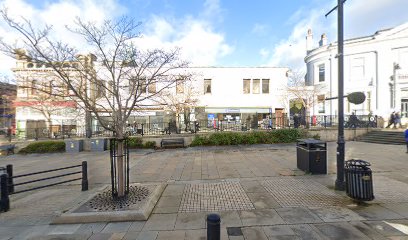
West Lothian Casting Agency
21.0 km
Discover the vibrant adult entertainment scene at West Lothian Casting Agency, where immersive performances and themed events await every visitor.
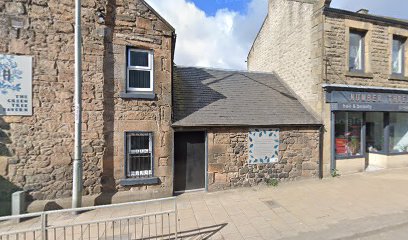
The NewYearField - JD Wetherspoon
21.2 km
Experience the essence of British pub culture at The NewYearField - JD Wetherspoon in Livingston, with delicious food and a vibrant atmosphere.
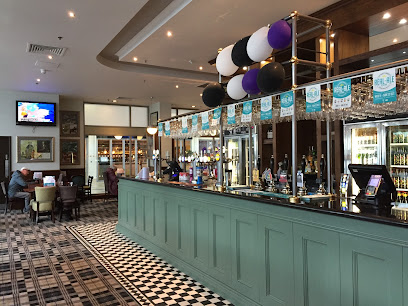
The Tower Bar
21.3 km
Historic Livingston pub with lively entertainment, fresh local food, and welcoming spaces including a beer garden and function room.
Eden Night Club
21.3 km
Vibrant late-night hotspot in Coatbridge offering house, R&B, and chart music with a lively atmosphere and smart dress code.

Avenue Nightclub Coatbridge
21.3 km
Coatbridge’s premier late-night nightclub for over-21s, offering vibrant music, modern vibes, and a lively weekend party scene.
The Paraffin Lamp
21.4 km
Discover the charm of The Paraffin Lamp in Livingston, where great food, drinks, and local culture come together in a cozy pub setting.

For the vibe & atmosphere seeker
- Romantic
- Scenic
- Unique
- Tranquil
For the design and aesthetic lover
- Vintage Styles
- Industrial Designs
For the architecture buff
- Historic
- Heritage Neighborhoods
- Sacred Sites
For the view chaser and sunset hunter
- Iconic Views
For the social media creator & influencer
- Instagrammable
- Photo Spots
- Architectural Shots
For the eco-conscious traveler
- Protected Area
- Locally Managed
- Leave-No-Trace Critical
For the kind of experience you’re after
- Cultural Heritage
- Myth & Legends
- Photowalk
- Day Trip
For how adventurous you want the journey to be
- Easy Access
Location Audience
- Family Friendly
- Senior Friendly
- Solo Friendly
- Couple Friendly


