
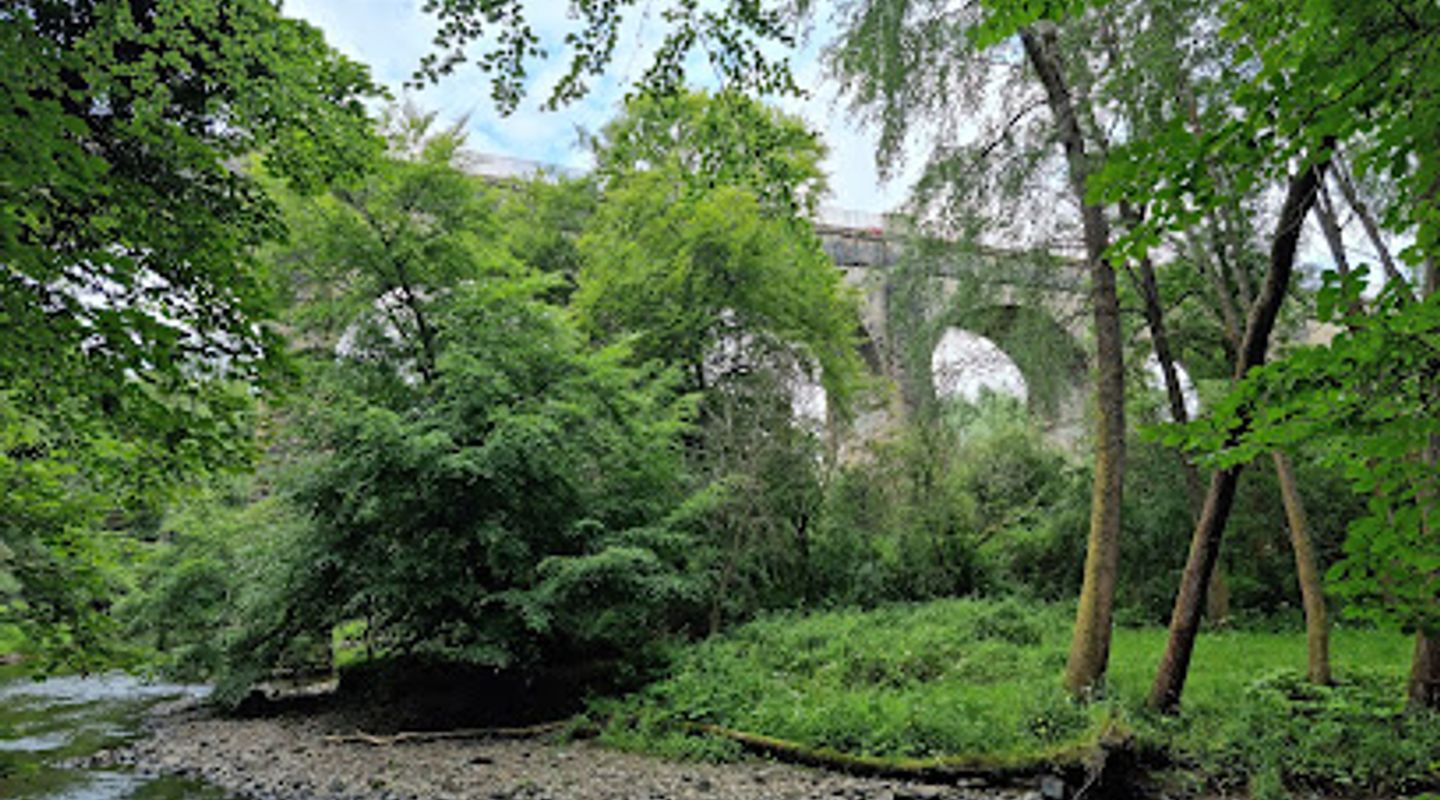
Avon Aqueduct, Down Travel Guide
Scotland’s longest aqueduct spanning the River Avon, blending historic engineering with stunning natural views and tranquil canal walks.
The Avon Aqueduct, near Linlithgow, Scotland, is the longest and tallest aqueduct in Scotland and the second longest in Britain. Built between 1818 and 1821, it carries the Union Canal over the River Avon, featuring 12 elegant arches and a cast-iron trough for the canal water. This historic engineering marvel offers scenic views of the Avon valley and a peaceful walking route along the canal towpath.
A brief summary to Avon Aqueduct
- Linlithgow, EH49 6AJ, GB
- Click to display
- Click to display
- Duration: 0.5 to 2 hours
- Free
-
 Outdoor
- Mobile reception: 4 out of 5

Know before you go
Hi, I'm Eve. Here are a few practical things to know before exploring Avon Aqueduct.
- Wear sturdy, sensible shoes for walking on the cobbled surface of the aqueduct.
- Cyclists should dismount when crossing the aqueduct for safety.
- Explore the steps beneath the arches for dramatic views of the river and structure.
- Bring a camera to capture panoramic views of the Avon valley and canal.
- Parking is available nearby, making it easy to start your walk along the canal.
Do you manage this location?
Take control to get all the benefits, like improved information, better appearance, and stronger visibility across AI-powered discovery. Learn more about listing your business on Evendo
Activate your presenceOther nearby places you may find interesting
The closest places of the same kind, if this one is not quite what you had in mind.



Explore Avon Aqueduct on the Map
A handpicked selection of must-see spots near Avon Aqueduct, mapped for you.
Getting There
-
Car
Driving from Linlithgow to the Avon Aqueduct takes about 10 to 15 minutes via local roads. Parking is available near the canal towpath close to the aqueduct, though spaces may be limited during peak times. No parking fees apply.
-
Bus
Local bus services connect Linlithgow to nearby stops within 2 to 3 kilometers of the aqueduct. From the bus stop, a 30-minute walk along gentle paths leads to the site. Bus fares typically range from £2 to £5.
-
Walking
For those staying in Linlithgow, walking to the Avon Aqueduct is a scenic 1.5-hour route along the Union Canal towpath and countryside trails. The terrain is mostly flat but includes cobbled sections on the aqueduct itself.
-
Cycling
Cyclists can reach the aqueduct via the Union Canal towpath from Linlithgow in about 30 to 40 minutes. Note that cycling is not permitted on the aqueduct itself; cyclists must dismount and walk across for safety.
For the on-the-go comforts that matter to you
-
 Restrooms
-
 Seating Areas
-
 Information Boards
Discover more about Avon Aqueduct
Engineering Brilliance of the Georgian Era
The Avon Aqueduct stands as a testament to early 19th-century Scottish engineering. Designed by Hugh Baird with consultation from renowned engineer Thomas Telford, it was constructed between 1818 and 1821 to carry the Union Canal over the River Avon near Linlithgow. Stretching approximately 810 feet (247 meters) in length and soaring 86 feet (26 meters) high, it is the largest aqueduct in Scotland and the second longest in Britain. Its twelve graceful arches rest on tapering piers, with hollow spandrels characteristic of Telford’s design style, supporting a cast-iron trough that holds the canal water and cobbled towpaths on either side for horses and pedestrians.Historical Context and Canal Significance
The Union Canal was originally built to link Edinburgh with the Forth and Clyde Canal at Falkirk, facilitating the transport of coal and lime vital for the region’s growth. The Avon Aqueduct was a critical structure in this 32-mile waterway, notable for its lock-free continuous watercourse that followed the land’s contours. Although the canal’s commercial use declined with the rise of railways—ironically purchased by railway companies to limit competition—it was restored for leisure and reopened in 2002, preserving the aqueduct as a heritage landmark.Visitor Experience and Natural Surroundings
Today, the Avon Aqueduct is a peaceful spot for walkers and cyclists along the Union Canal towpath, offering spectacular views down into the River Avon valley. The cobbled surface of the aqueduct and its height provide a slightly thrilling experience, with clear vistas of the river, small waterfalls, and surrounding woodland. Visitors can explore underneath the arches via a flight of steps to appreciate the structure’s scale and the river’s beauty below. The area is well suited for quiet reflection, photography, and enjoying Scotland’s tranquil countryside.Architectural and Cultural Importance
Recognized as a Category A listed building, the Avon Aqueduct is an important piece of Scotland’s industrial heritage. It reflects the ingenuity of early canal engineering and the country’s role in the Industrial Revolution. The aqueduct’s design balances functionality with aesthetic grace, making it a landmark of historic and architectural interest. Interpretive plaques at the site provide insights into its construction and significance, enriching the visitor’s appreciation of this engineering masterpiece.Conservation and Accessibility
The aqueduct and surrounding canal are maintained to preserve their historic fabric and natural environment. Parking is conveniently located nearby, serving as a starting point for walks into the valley and along the canal. The towpath is accessible for most visitors, though the cobbled surface on the aqueduct itself calls for sensible footwear and caution, especially for cyclists who are advised to dismount while crossing. The site offers a blend of heritage, nature, and outdoor recreation in a serene setting.Scenic Highlights and Local Charm
From the aqueduct, visitors enjoy panoramic views of the River Avon weir and the lush valley below, punctuated by small waterfalls and wooded slopes. The combination of historic stonework, iron canal trough, and natural landscape creates a striking visual contrast. The site’s quiet charm and the gentle sound of flowing water make it a memorable destination for those seeking a blend of history and nature just west of Linlithgow.












Your all‑in‑one travel companion app
Explore expert travel guides, compare and book tours, experiences, hotels, and more—all from the palm of your hand. Download now for seamless trip planning wherever your wanderlust takes you.


Explore More of Down
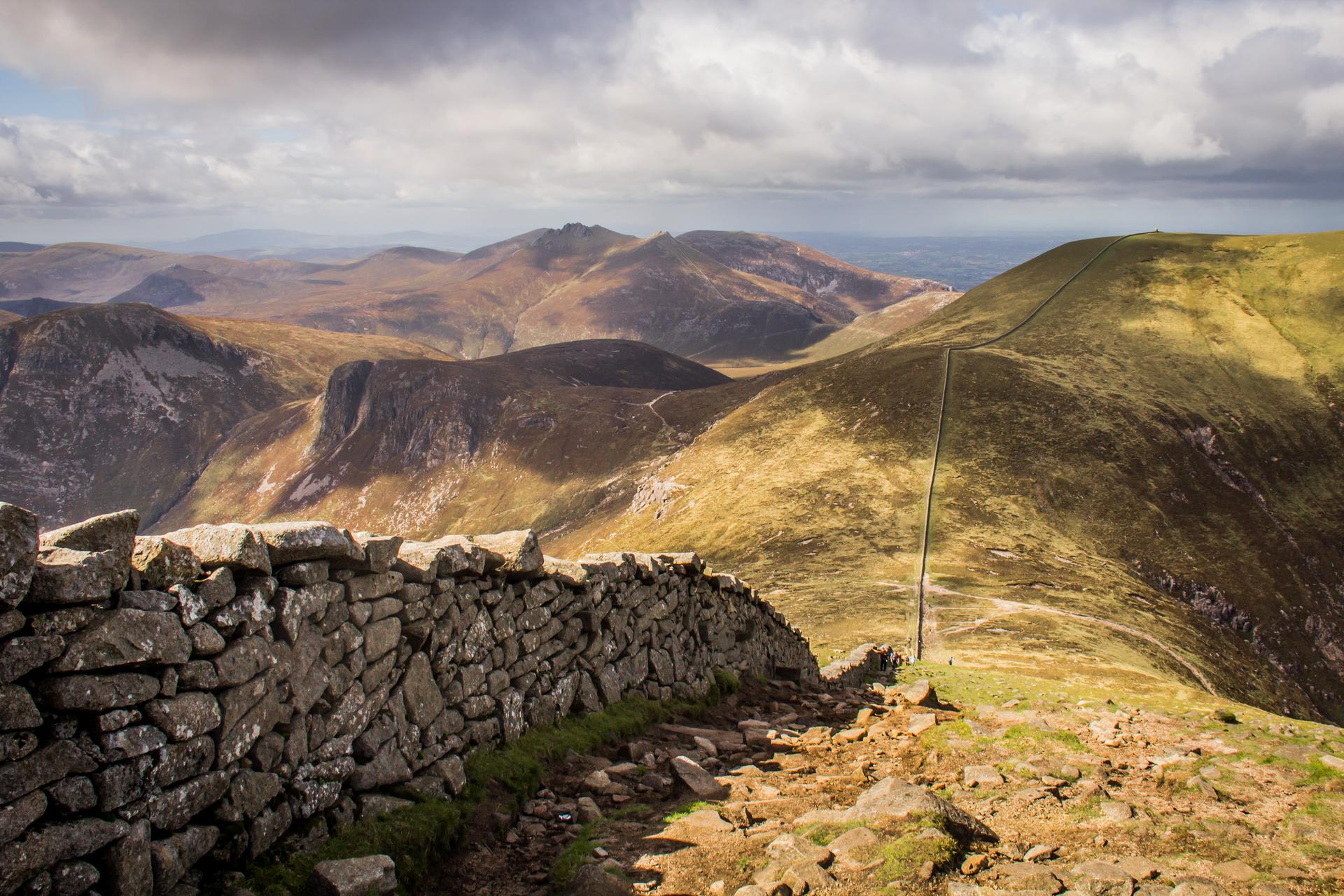
Looking beyond Avon Aqueduct? Discover Down for broader travel guides, local hot-spots, and regional highlights.
Explore Down

